

First off, I apologize for the long lapse between blogs. I haven’t intentionally been ignoring my followers and hopefully you haven’t forgotten me. Life just became extra busy with fall camping excursions, grandkids, and working on my novel—a fictional account incorporating my sailing journey. I’m praying to complete the final draft in 2023 and begin the publishing process. I’ll keep you updated. Besides all of that, I was preparing for a total knee replacement which was done on Dec. 5th. That meant getting everything ready for Christmas ahead of time. I’m thankful to report all went smoothly. I’m in the midst of the long rehabilitation process and am making good progress with strength and endurance. Gaining range of motion back isn’t quite as much fun, but I persevere daily—because when spring arrives I plan to be back out hiking the trails and cycling scenic byways. Sorry for my rambling, but now on to the continuing and captivating saga of our South Africa adventures.
There’s so much more to South Africa than its magnificent wildlife. We soon discovered it’s a country of contrasts and diverse beauty. Sailing from Richard’s Bay we negotiated the swift SW Agulhas current and quick-changing weather windows, seeking sheltered harbors which are few and far between. After a too-long stop in crime-ridden Durban, we moved on to Port Elizabeth and celebrated Christmas with a few cruising friends.

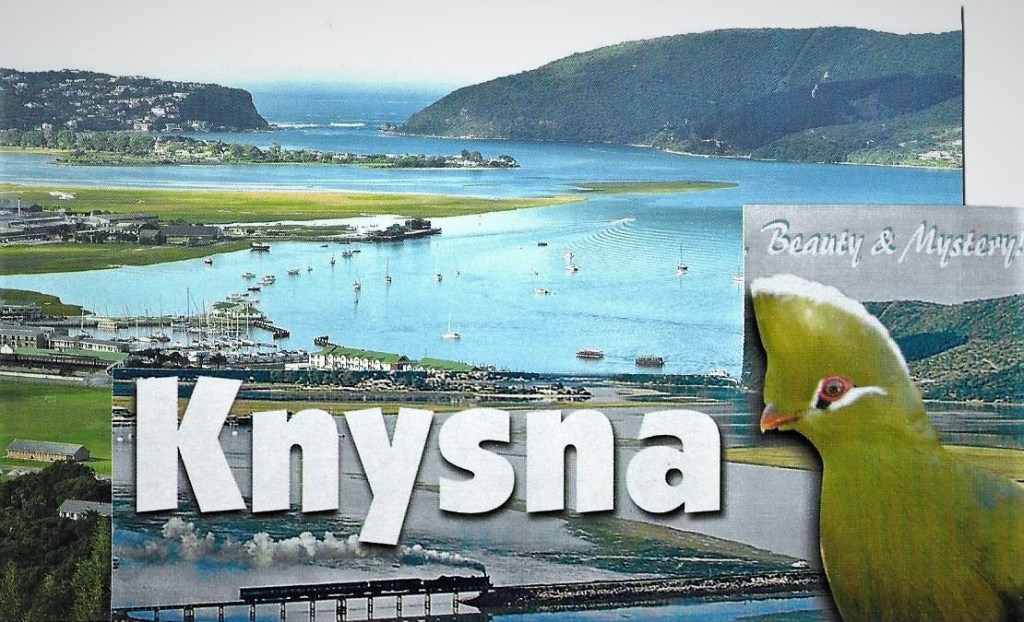
The next weather window allowed us to make Knysna for Wooden Boat Week. The final day of the festival we participated in a sailing parade aboard our friend’s old wooden schooner, Appledore.
The most challenging portion of the hop between safe harbors was navigating through Knysna’s Heads. Twin sandstone promontories flank a rocky channel where many a vessel has met a watery grave. The trick was to stay in the center, wait for an incoming tide and for breaking waves to settle at the entrance.
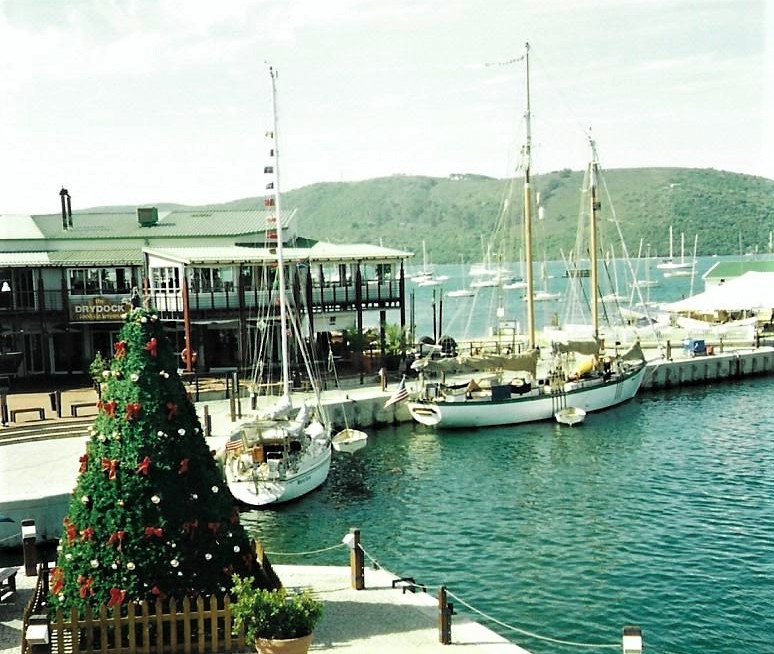
Once inside the huge protected lagoon we tied alongside a wall at the marina for easy access to explore Knysna’s charming and vibrant art and cultural community. Art galleries, shops, museums, and fresh seafood restaurants were reminiscent of Southern California’s Laguna Beach—my old stomping ground. Although I’m not a fan, the area is famous for its oysters and holds a festival in early July. We did take in a couple of happy hours at the local yacht club where drinks were cheap, food was free, and the locals high-spirited.
Located within the heart of the scenic Garden Route, Knysna sits amid a varied habitat of sea, rivers, marsh, grassland, and fynbos- a covering of low-lying heather-like shrubs found only on South Africa’s tip. There are also forests such as the enchanting emerald green Knysna Forest where it’s rumored the last indigenous elephant roams. The area is also a haven for over 280 species of birds including the long-tailed Knysna Loerie and elusive Narina Trogan, both adorning bright parrot colors.
Of course, no stopover would be complete without a few tramps along the many varied pathways within the town and surrounding countryside. There are hikes atop the Heads with fantastic panoramas; a steep descent to the beach at Noetzie for castle views; wheelchair-accessible strolls at Garden of Eden; plus elephant walks through the forest, and many more. One of historic interest was the 5.6 km Millwood Mine ramble through an old mining town and the damp, dark abandoned gold mine with flashlights. We discovered old machinery and an abundance of snoozing bats. Unfortunately, no shiny gold nuggets. There’s also a small museum and casual tearoom where we sipped a warm cuppa.

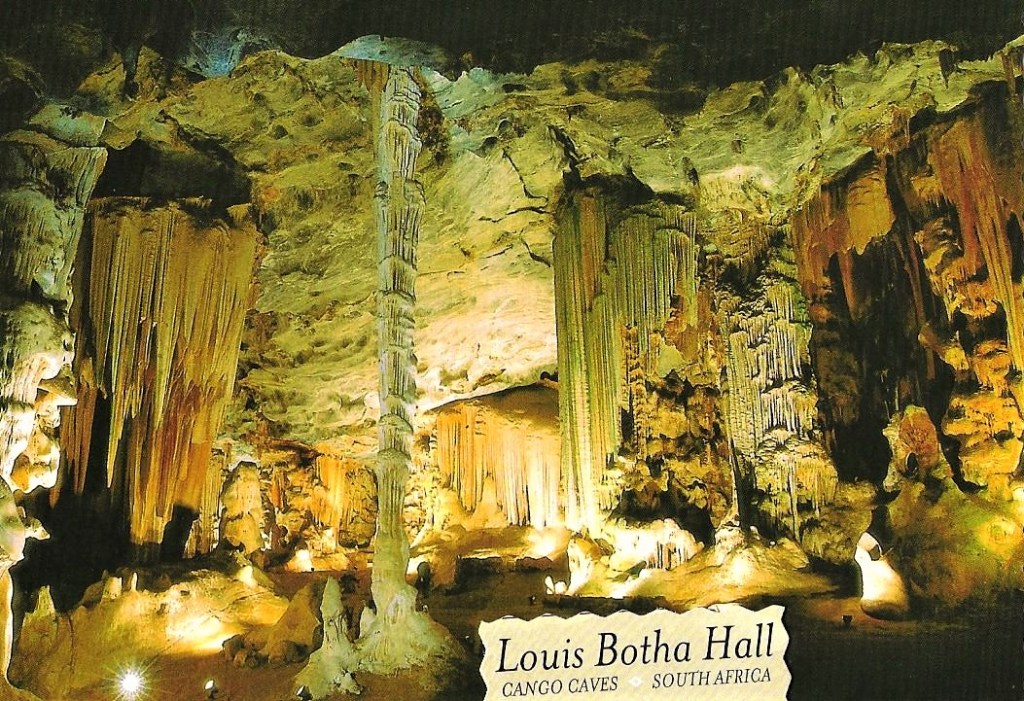
Another day we explored more touristy, but intriguing Cango Cave’s cavernous halls where spectacular limestone formations were enhanced with dramatic lighting. The tour we chose only took an hour and wasn’t too strenuous, bypassing the wet, stomach-sliding “Adventure Tour.”

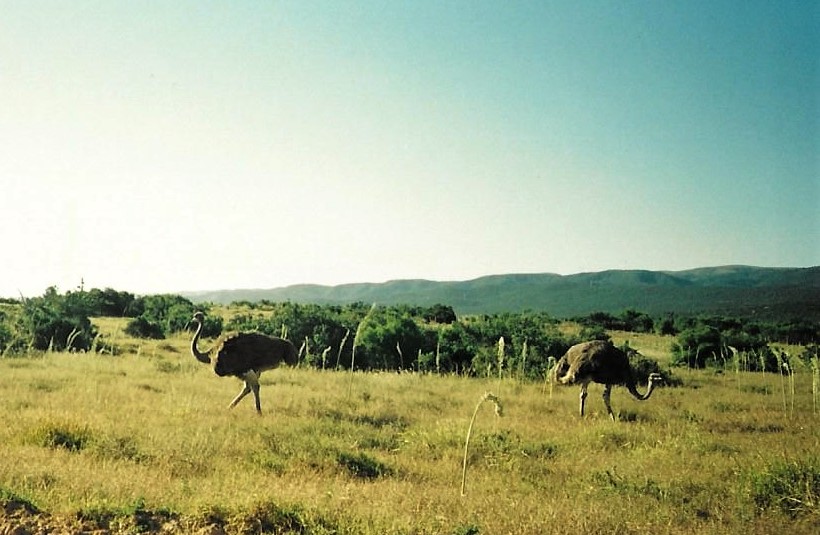
While in Oudtshoorn, the ostrich capital of the world, be sure to stop at one of several breeding farms where you can get up close to these gigantic feathery birds. Quite entertaining!
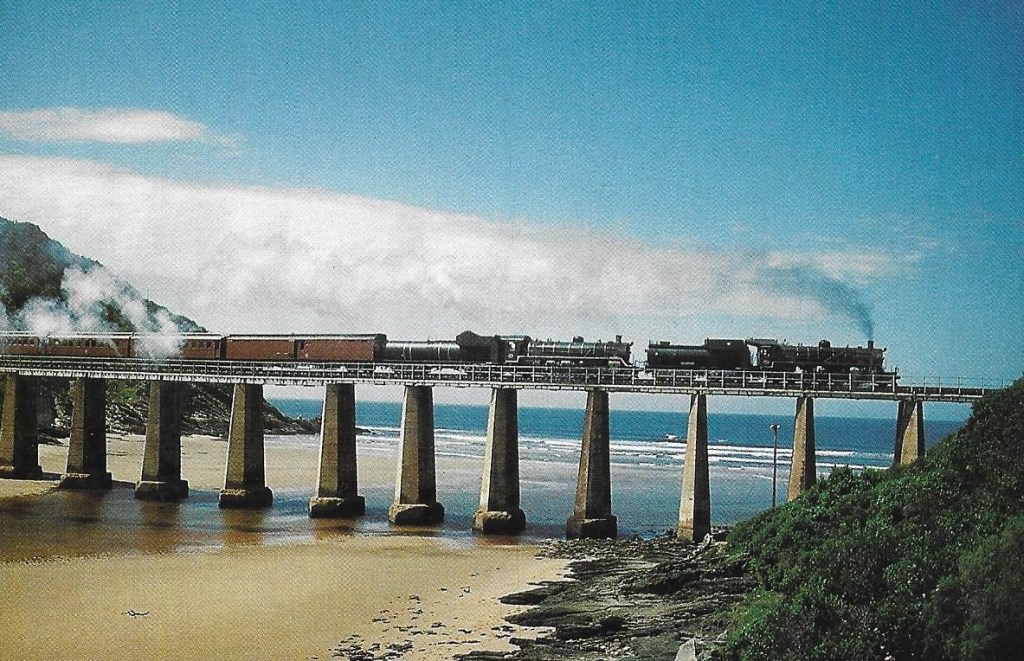
Our favorite day trip was aboard the narrow-gauge Choo-Tjoe, a steam train that wound through rolling hills dotted with pines and eucalyptus, along picturesque coastline, through tunnels, and clacking across the Kaaimans River Bridge between Wilderness and George.
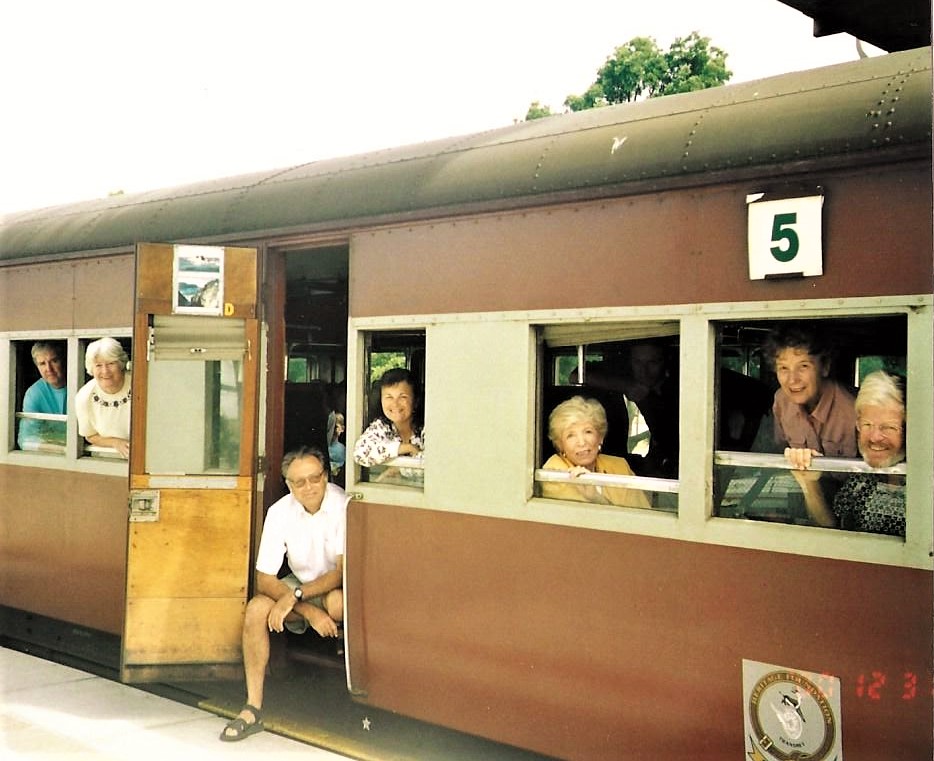
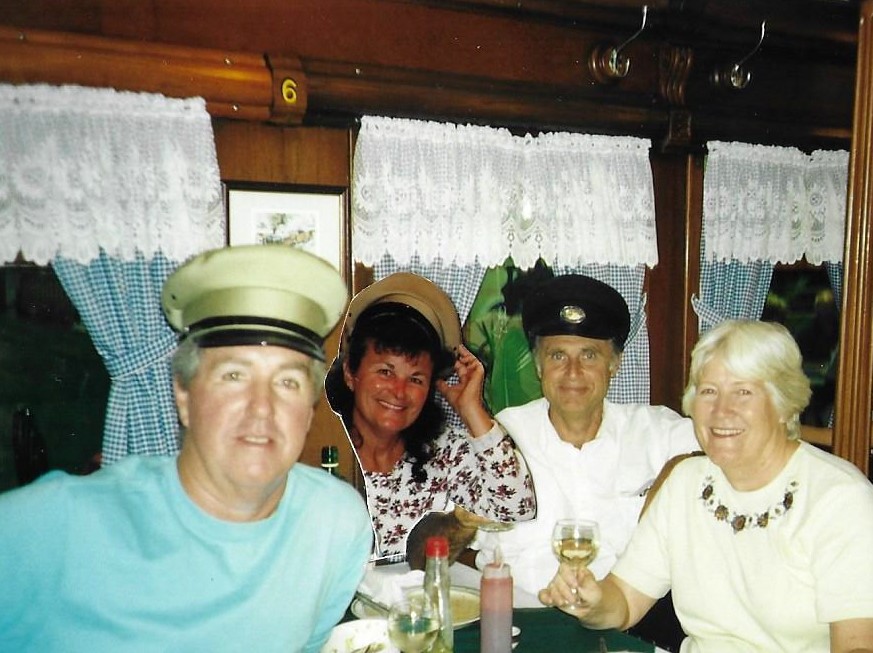
In George we lunched in a converted dining car at the station before exploring the extensive Outenique Railway Museum. It housed a full-size locomotive and white train car used by the British royal family in 1947. For train enthusiasts there’s also a running model train display and many artifacts dating back to the 1920s.
Many more excursions were had in this delightful southern portion of SA, but these stories will have to wait for my next excerpt—hopefully sent out lots quicker than this one!
Steam Trains

Steam trains
Huffing puffing
Belching smoke coal & steam
Traveling down the railway track
Timeless

by David Wood



 cheryldfitzgerald.com