The Winding Road

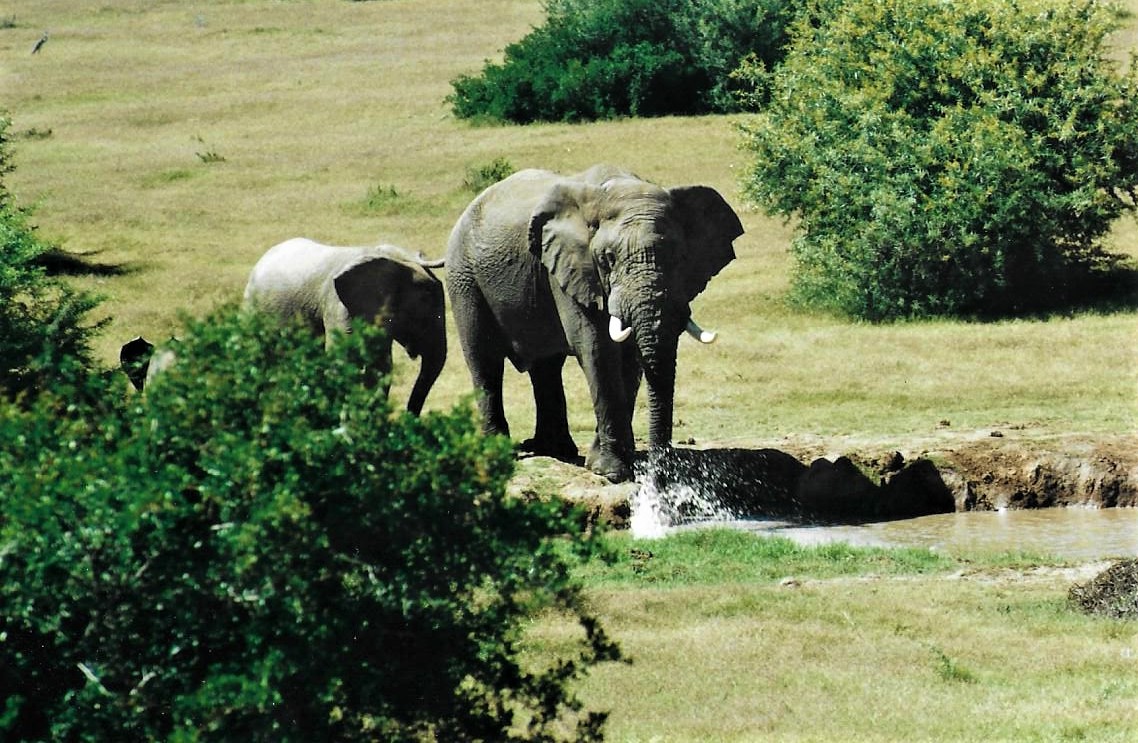
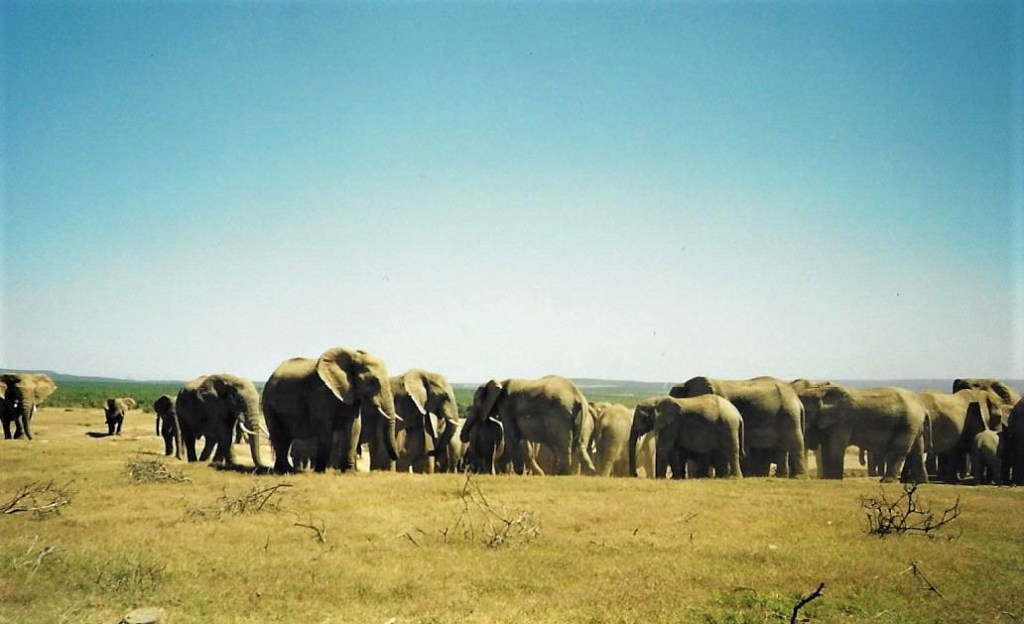
With so much to see in South Africa’s diverse land, it was difficult to choose which path to take. Addo Elephant Park turned out to be one of our favorite jaunts. We observed the interactions between several families of elephants at two different watering holes. Each family took a turn plodding down hillside paths with ears waving, trunks swaying, keeping the little ones in line. At the water they slurped, sprayed, and rolled in the muddy ponds. Adorable babies frolicked, even throwing and fetching sticks.
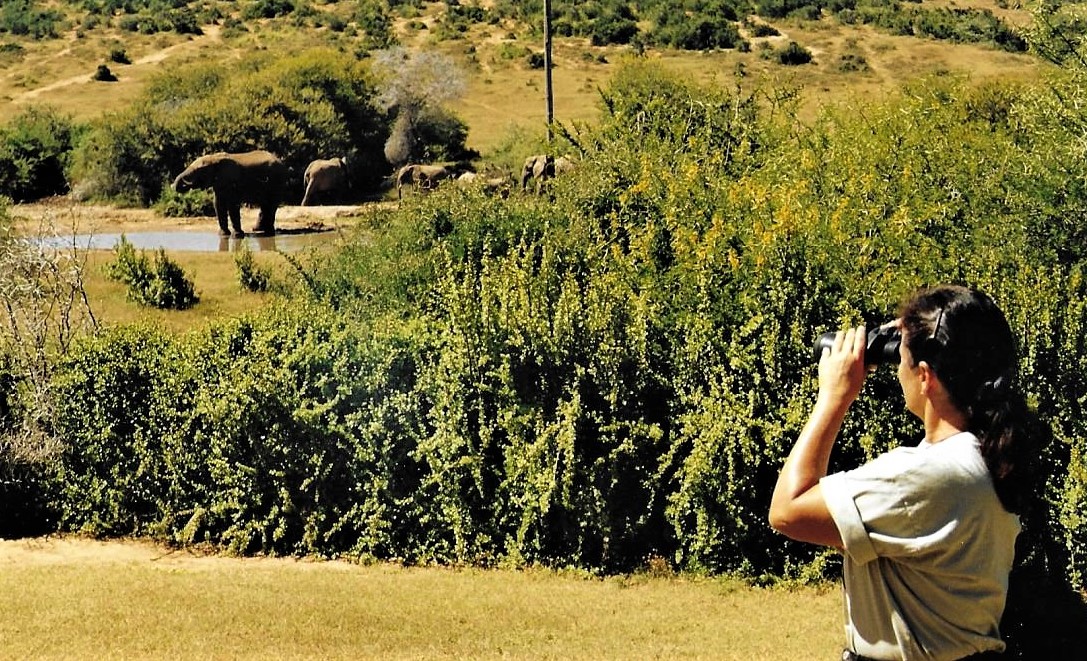
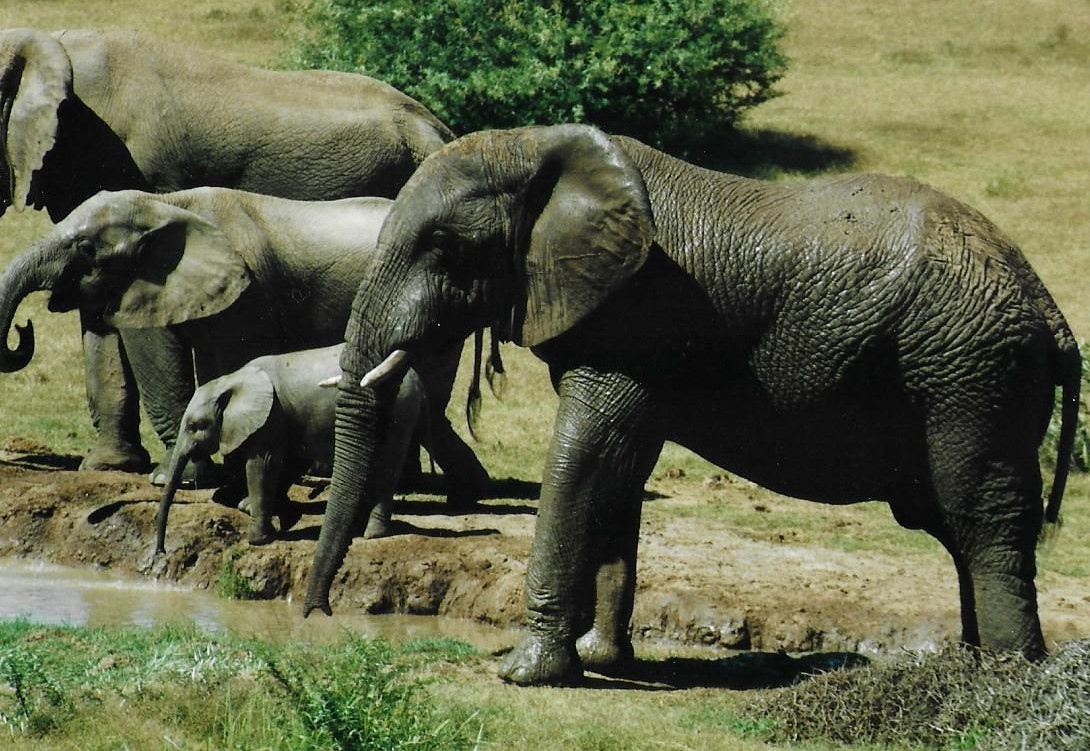
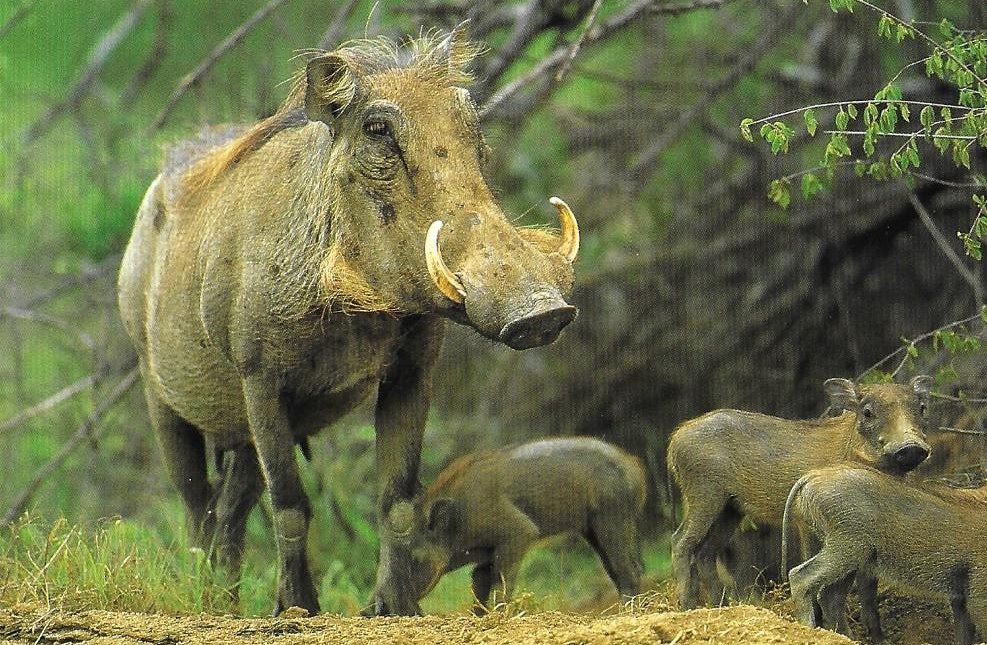
The hierarchy of males was fascinating. Huge bulls sometimes challenged one another for control while protecting their group. While roaming the park’s dusty roads, we came across eland and hartebeest that bounded through the brush, a warthog with babies scurried by, large tortoises lumbered, ostriches sprinted, friendly mongooses stared , and a jackal came close—nice puppy.
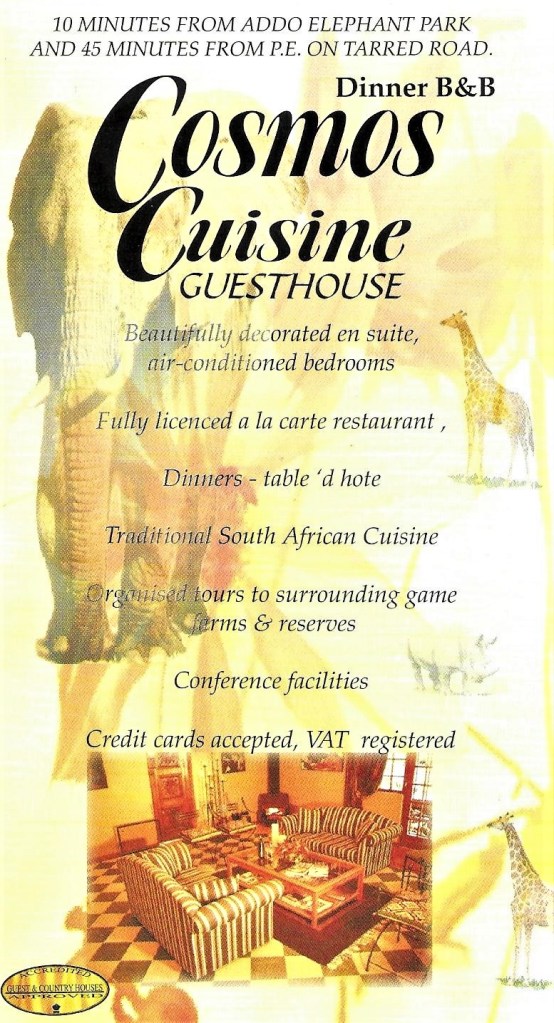
Spending the night at Cosmo’s Cuisine Guesthouse, only a ten minute drive from Addo, was quite a luxurious contrast to boat life. Nestled in the heart of the Sundays River Valley, this quaint B&B contained antiques, artwork, a TV for Jerry, and a bathtub full of bubbles for me. Following a pleasurable soak, we enjoyed a tasty traditional dinner in their elegant dining room. For a very reasonable cost we devoured chicken schnitzel smothered in cheese sauce, spinach pasta salad, baked potato and veggies, along with an appetizer and dessert. All accompanied by a bottle of a superb S.A. wine, of course. As if that wasn’t enough food for a week, we stuffed ourselves in the morning with an enormous breakfast. After that I needed a long stroll through Cosmo’s lavish gardens while sipping my cup of tea.
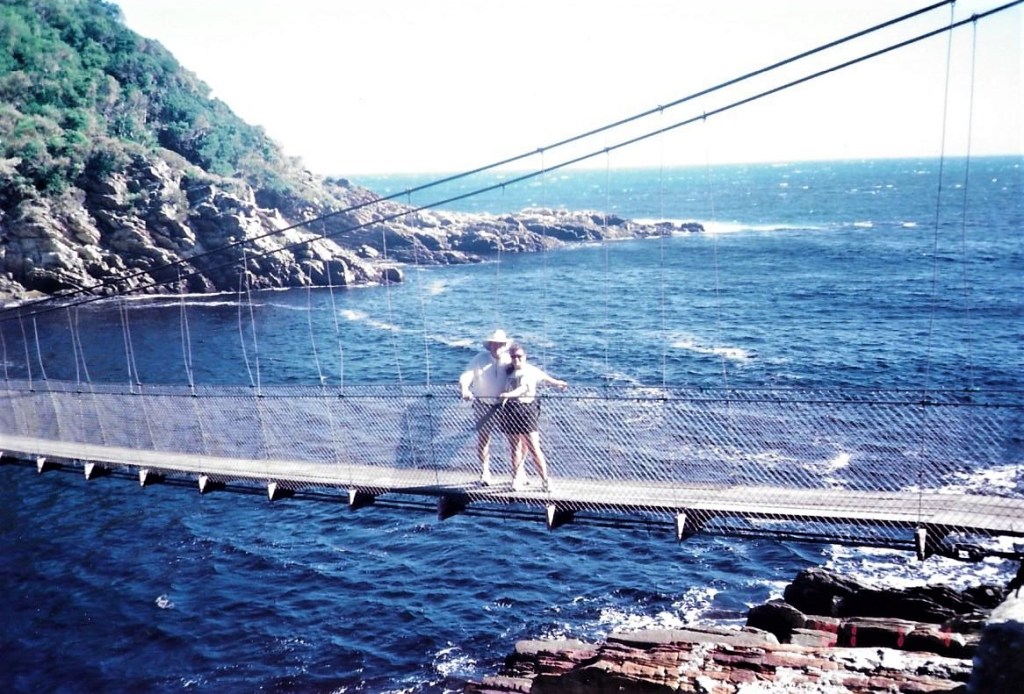
Heading back to Knysna, we detoured to Tsitsikama National Park. We wandered through this spectacular wonderland of forests with 105 species of trees, mountain lakes, tumbling waterfalls, and white sand beaches. Wish we’d had more time to explore, but we did hike along a dramatic rocky coastal trail that was reminiscent of the Northern California coast. Reaching the Storm River, we had to cross a very long suspension bridge that traversed a wide gorge where the river met the sea. Not a fan of high places, especially those that are swinging in a strong breeze, I crept across keeping a firm grip on the cable. More than enough excitement for one day!

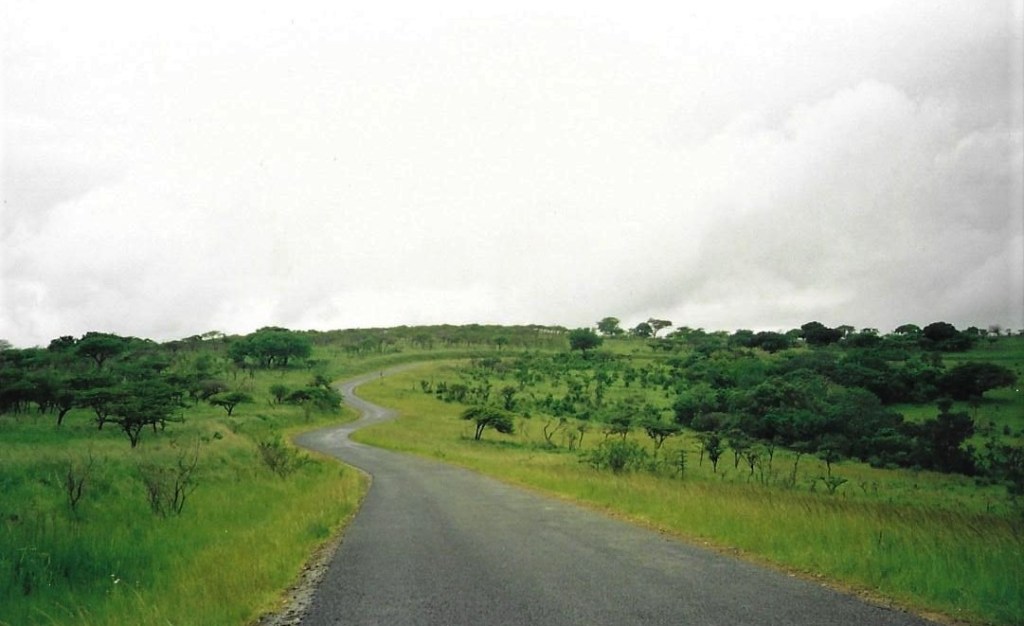
On the winding road back through the mountains, we delighted in gorgeous vistas and groups of baboons and monkeys. The countryside varied from green hills to fertile farms, and scattered with hot, dry savannas. Back in Knysna, we provisioned and prepared for the next safe harbor hop to Mossel Bay. See you next time for more South African adventures.

Nature is not God but God revealing the weight of Himself, all His glory, through the looking-glass of nature.

Ann Voskamp

Knysna-Heart Of The Garden Route

First off, I apologize for the long lapse between blogs. I haven’t intentionally been ignoring my followers and hopefully you haven’t forgotten me. Life just became extra busy with fall camping excursions, grandkids, and working on my novel—a fictional account incorporating my sailing journey. I’m praying to complete the final draft in 2023 and begin the publishing process. I’ll keep you updated. Besides all of that, I was preparing for a total knee replacement which was done on Dec. 5th. That meant getting everything ready for Christmas ahead of time. I’m thankful to report all went smoothly. I’m in the midst of the long rehabilitation process and am making good progress with strength and endurance. Gaining range of motion back isn’t quite as much fun, but I persevere daily—because when spring arrives I plan to be back out hiking the trails and cycling scenic byways. Sorry for my rambling, but now on to the continuing and captivating saga of our South Africa adventures.

There’s so much more to South Africa than its magnificent wildlife. We soon discovered it’s a country of contrasts and diverse beauty. Sailing from Richard’s Bay we negotiated the swift SW Agulhas current and quick-changing weather windows, seeking sheltered harbors which are few and far between. After a too-long stop in crime-ridden Durban, we moved on to Port Elizabeth and celebrated Christmas with a few cruising friends.

The next weather window allowed us to make Knysna for Wooden Boat Week. The final day of the festival we participated in a sailing parade aboard our friend’s old wooden schooner, Appledore.

The most challenging portion of the hop between safe harbors was navigating through Knysna’s Heads. Twin sandstone promontories flank a rocky channel where many a vessel has met a watery grave. The trick was to stay in the center, wait for an incoming tide and for breaking waves to settle at the entrance.

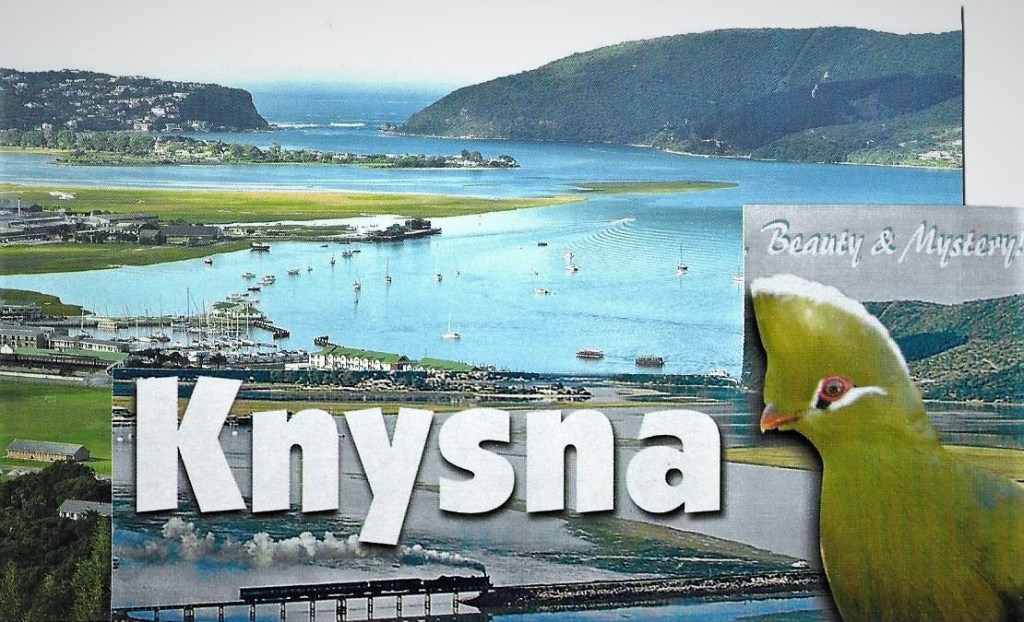
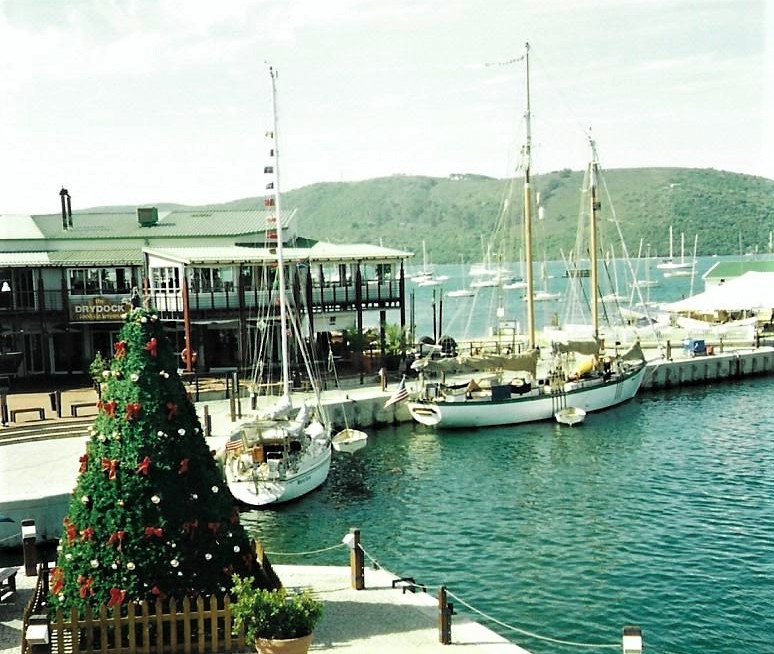
Once inside the huge protected lagoon we tied alongside a wall at the marina for easy access to explore Knysna’s charming and vibrant art and cultural community. Art galleries, shops, museums, and fresh seafood restaurants were reminiscent of Southern California’s Laguna Beach—my old stomping ground. Although I’m not a fan, the area is famous for its oysters and holds a festival in early July. We did take in a couple of happy hours at the local yacht club where drinks were cheap, food was free, and the locals high-spirited.

Located within the heart of the scenic Garden Route, Knysna sits amid a varied habitat of sea, rivers, marsh, grassland, and fynbos- a covering of low-lying heather-like shrubs found only on South Africa’s tip. There are also forests such as the enchanting emerald green Knysna Forest where it’s rumored the last indigenous elephant roams. The area is also a haven for over 280 species of birds including the long-tailed Knysna Loerie and elusive Narina Trogan, both adorning bright parrot colors.

Of course, no stopover would be complete without a few tramps along the many varied pathways within the town and surrounding countryside. There are hikes atop the Heads with fantastic panoramas; a steep descent to the beach at Noetzie for castle views; wheelchair-accessible strolls at Garden of Eden; plus elephant walks through the forest, and many more. One of historic interest was the 5.6 km Millwood Mine ramble through an old mining town and the damp, dark abandoned gold mine with flashlights. We discovered old machinery and an abundance of snoozing bats. Unfortunately, no shiny gold nuggets. There’s also a small museum and casual tearoom where we sipped a warm cuppa.

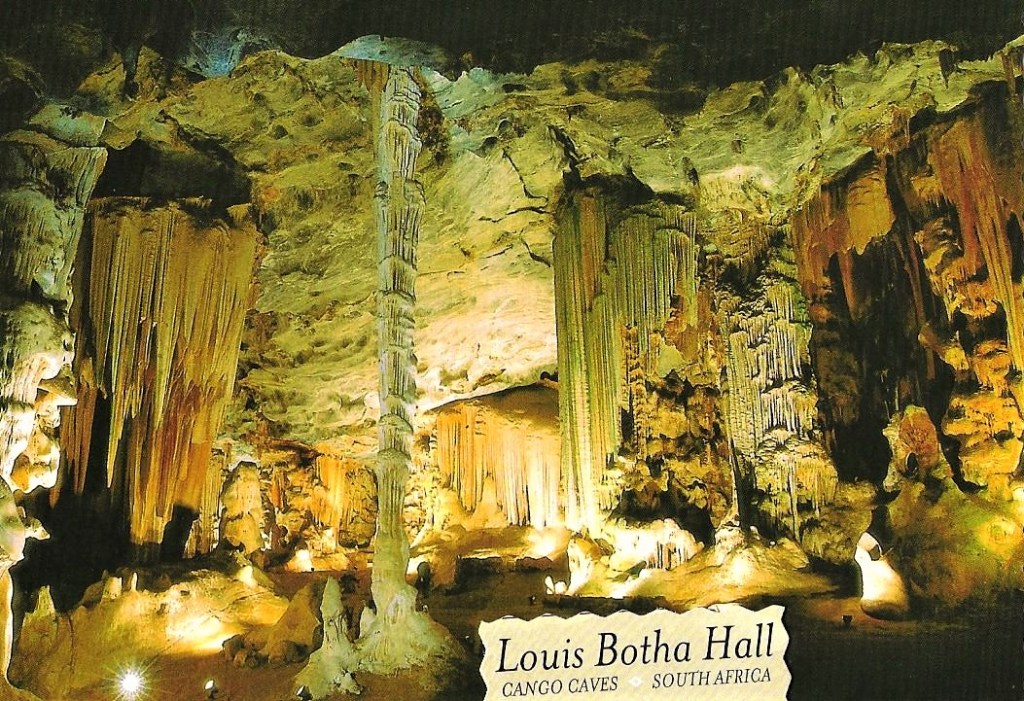
Another day we explored more touristy, but intriguing Cango Cave’s cavernous halls where spectacular limestone formations were enhanced with dramatic lighting. The tour we chose only took an hour and wasn’t too strenuous, bypassing the wet, stomach-sliding “Adventure Tour.”

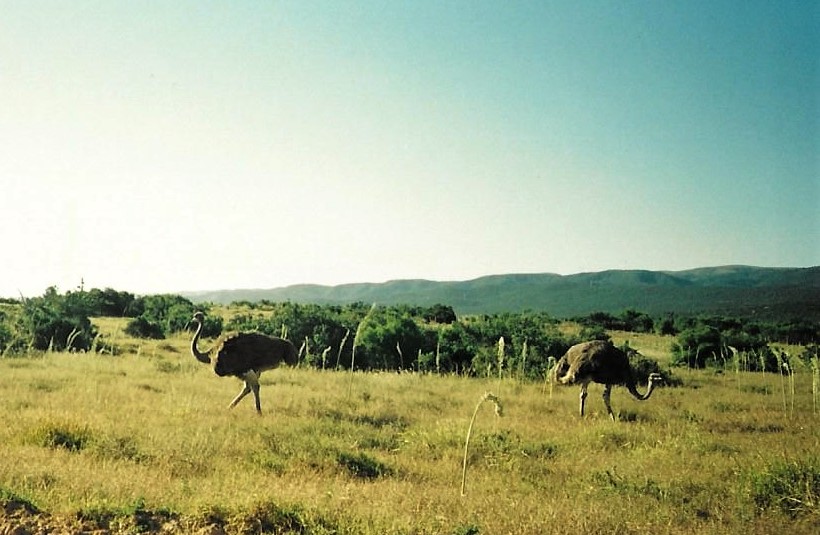
While in Oudtshoorn, the ostrich capital of the world, be sure to stop at one of several breeding farms where you can get up close to these gigantic feathery birds. Quite entertaining!

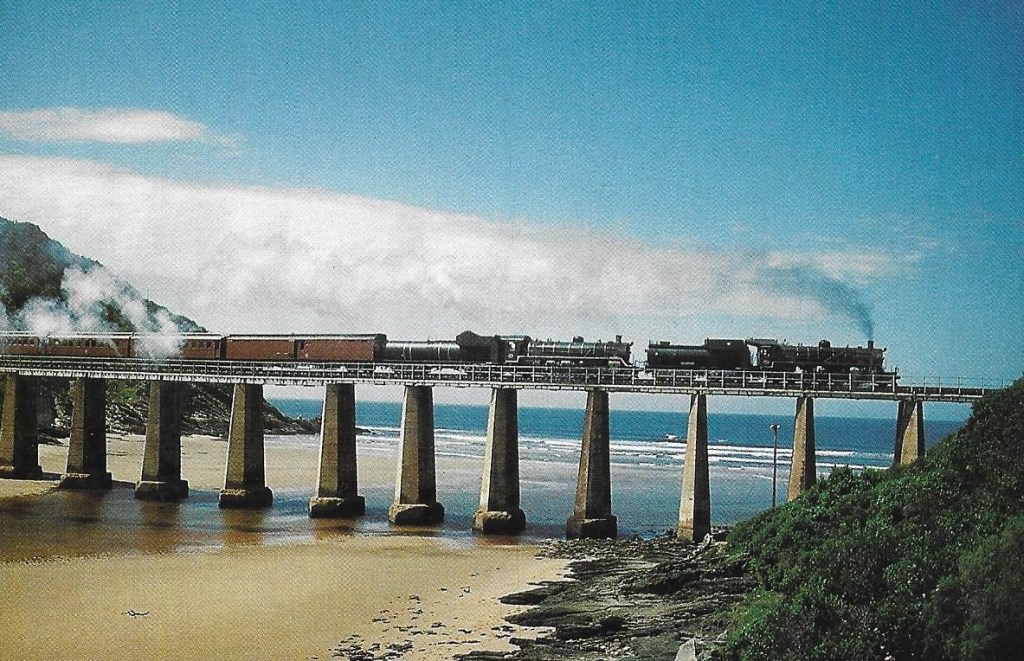
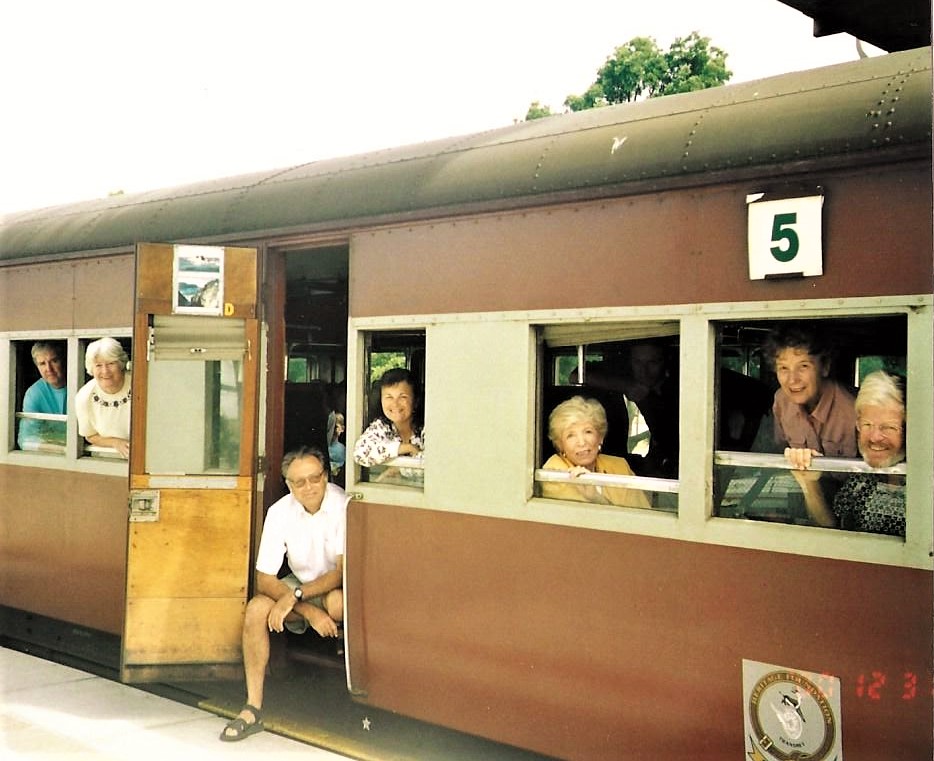
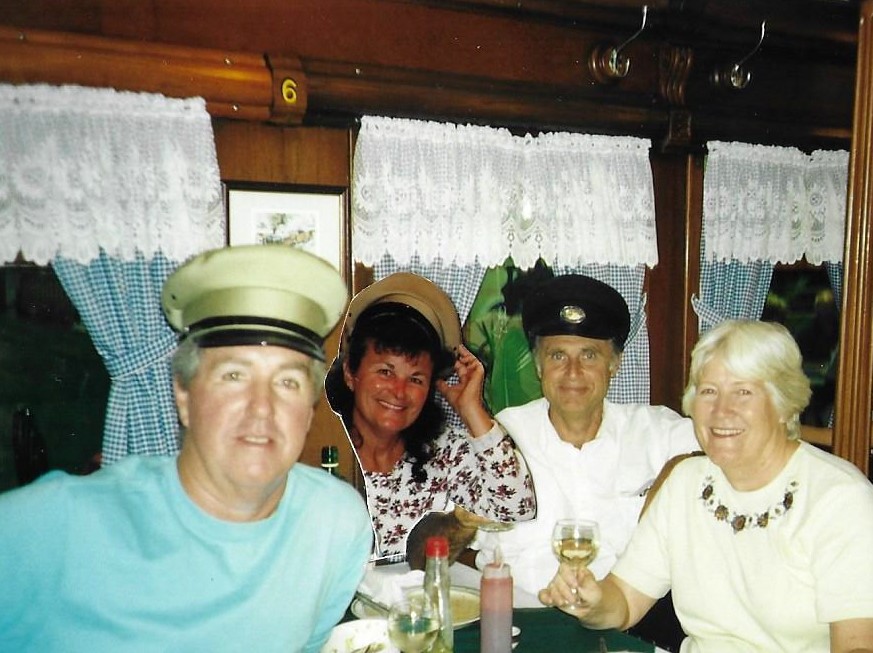
Our favorite day trip was aboard the narrow-gauge Choo-Tjoe, a steam train that wound through rolling hills dotted with pines and eucalyptus, along picturesque coastline, through tunnels, and clacking across the Kaaimans River Bridge between Wilderness and George.

In George we lunched in a converted dining car at the station before exploring the extensive Outenique Railway Museum. It housed a full-size locomotive and white train car used by the British royal family in 1947. For train enthusiasts there’s also a running model train display and many artifacts dating back to the 1920s.

Many more excursions were had in this delightful southern portion of SA, but these stories will have to wait for my next excerpt—hopefully sent out lots quicker than this one!

Steam Trains

Steam trains
Huffing puffing
Belching smoke coal & steam
Traveling down the railway track
Timeless

by David Wood

Indian Ocean Crossing—Rodrigues Is

South Indian Seas

Through the churning wash machine
White Dove plows, decks salty clean
Warning, distant rumbling thunder
Next wave almost rolls us under

Jagged peaks of white-capped swells
Tumble toward us, dip our rails
Waterfalls down open hatch
Scramble quick, secure its latch

Billows boom, explode 'gainst hull
followed by a peaceful lull
Swishing, splashing, muted sounds
Tensely awaiting next round

Torrents rush, again expand
Where's that haven we call land
Racing down the trough's light foam
Hisses, gurgles, creaks, and groans

Sailboat protests ocean's powers
We strive toward shore, counting hours 


Howling winds and swells up to 12-feet propelled White Dove on a bouncy 2,000 mile passage to Rodrigues Island, a territory of Mauritius. Night watch felt like Space Mountain as we dipped and rose, rounding into wide sweeping curves. The highlight of that weary 14 day crossing was witnessing the elusive green flash as blazing sun dived into deep blue sea.

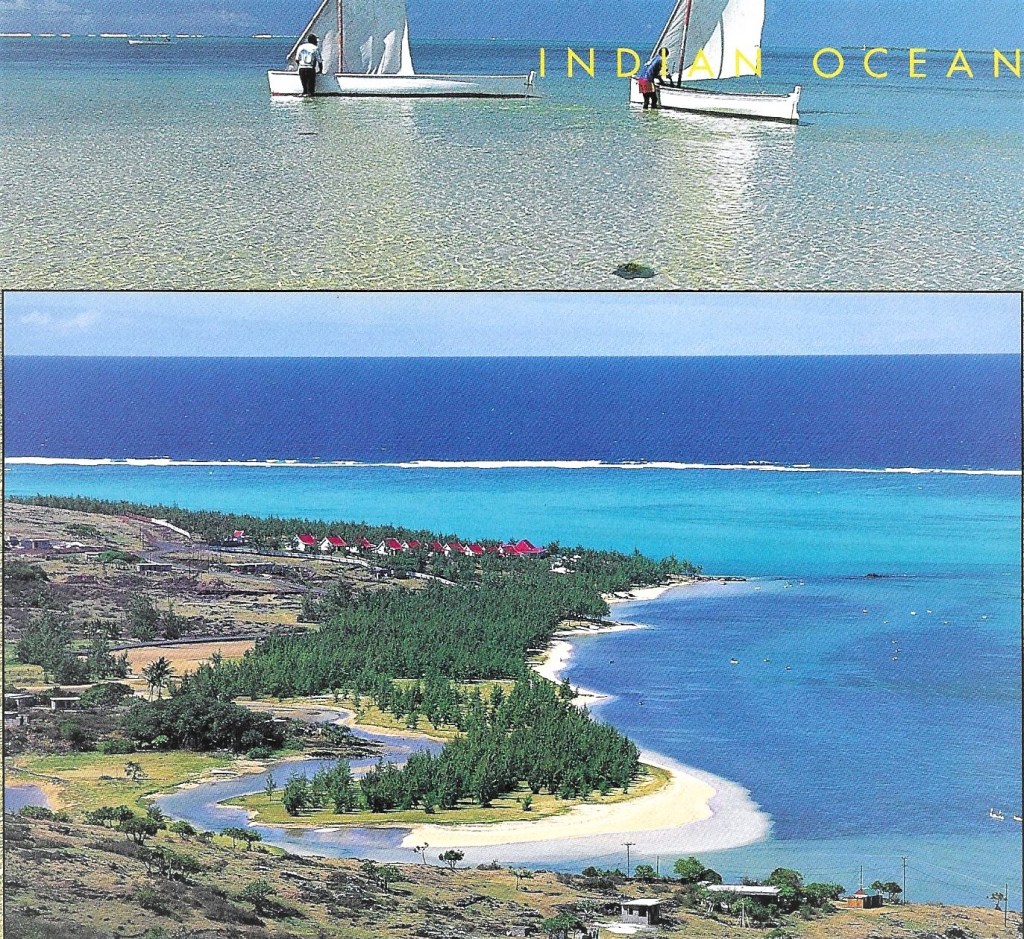
Arrival and check-in at Port Mathurin, capital of Rodrigues, was easy with friendly officials and no charges. Small shops lined alley-like streets, carrying groceries, clothing, appliances, and intricately weaved baskets. Interspersed among these were dim, noisy bars and bright limestone government buildings. Dodging motorists proved a challenge as we strolled the town of this less-traveled tiny, 41-mile island. But handsome locals, varying in shades from black to light-brown, engaged us with curious smiles, speaking a mixture of Creole, French, and broken English.

With cruising friends off Appledore and Alcyone we toured Rodrigues with two local guides. Bumpy roads twisted, leading to unexpected encounters—men herding tribes of goats; Brahma bulls and cows barricading our path; clucking chickens, squealing pigs, hungry dogs; and colorfully dressed women of all ages sauntering along with full baskets balanced perfectly on heads.

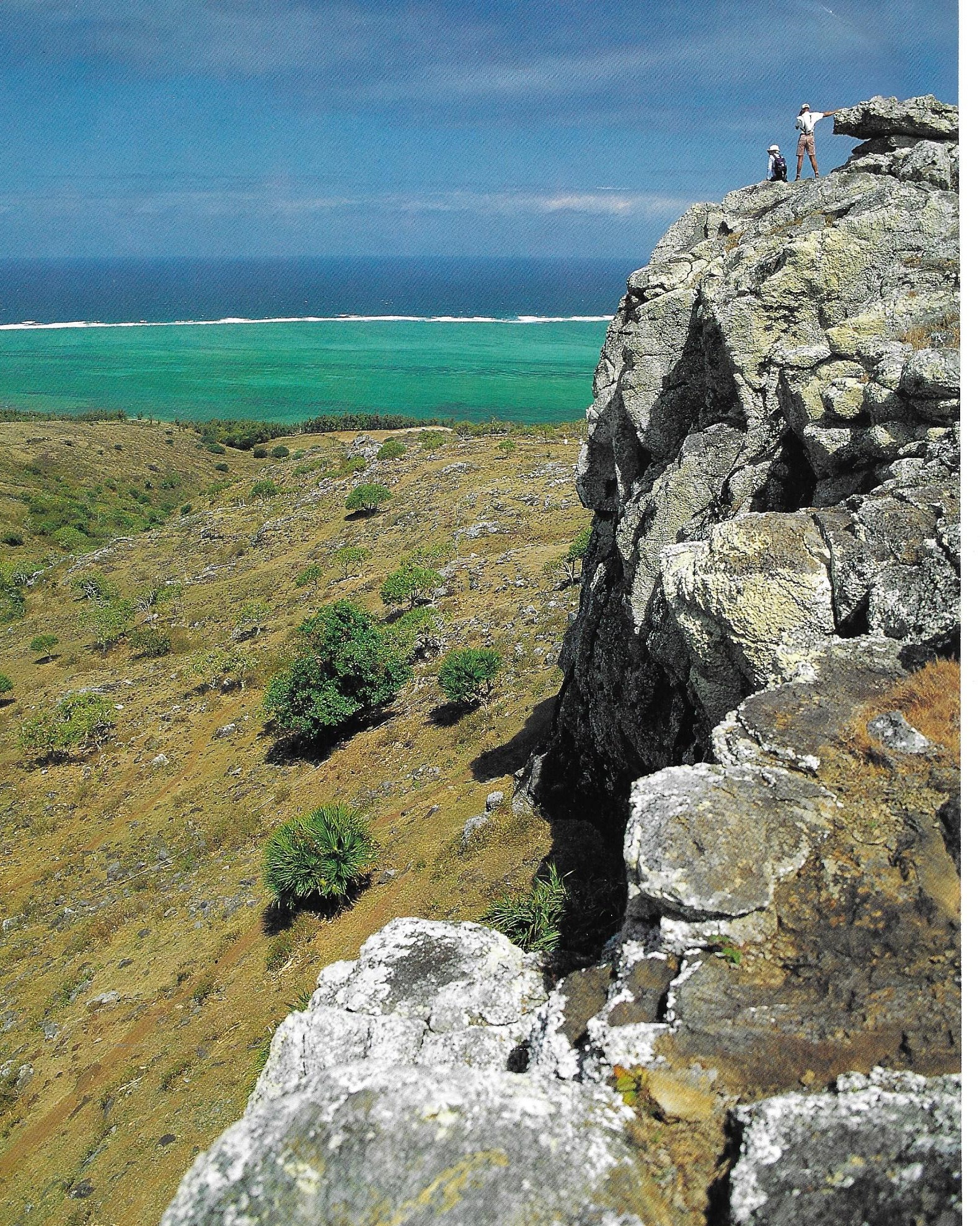
The harsh hilly terrain was splotched with clumps of casuarina (Aus pine), short lataniers (palms), vacoas (pandanus), flowering aloe, and vielle-fille, also called old maid, their pink blossoms used for a special drink. Corn sprouted on terraced hilltops along with tomatoes, onions, and a variety of chilies. A slippery tramp up Mt. Limon, highest point on the island, revealed a landscape dotted with geometric homes trimmed in bright hues. All were built of concrete or limestone blocks to withstand cyclones that blasted across every 2-3 years. I searched for the elusive, rare yellow Rodrigues fody and warbler, but only the occasional burry shrill call of a tern broke the quiet. Bordering the island’s perimeter were mangroves, beaches, and rocky outcroppings. Most captivating were the extensive reefs and lagoons wrapping azure waters around Rodrigues in a warm embrace. There’s net-fishing from local pirogues, snorkeling or diving to explore thriving coral, exotic fish, and octopus, or simply floating on your back, daydreaming as unusual cloud formations drift by. Outside the reef was a big-game-fish paradise sporting dogtooth tuna, grouper, wahoo, marlin, and more.

In-between a picnic and afternoon tea we encountered two intriguing sites:

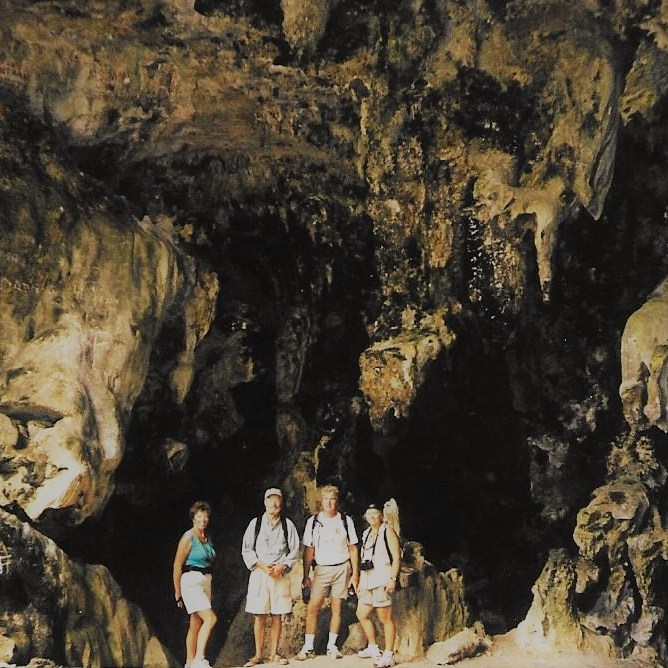
Caverne Patate—Also known as Potato Cave, this 60-meter deep natural cavern has no mounted lights, so we brought strong flashlights. Guides led us on an hour stroll among limestone and volcanic rock formations with enchanting stalactites and stalagmites sometimes joining together.

Plaine Corail—We were dwarfed among the towering white walls as we explored this limestone quarry. Blocks of all sizes are cut here to supply material for various building projects.

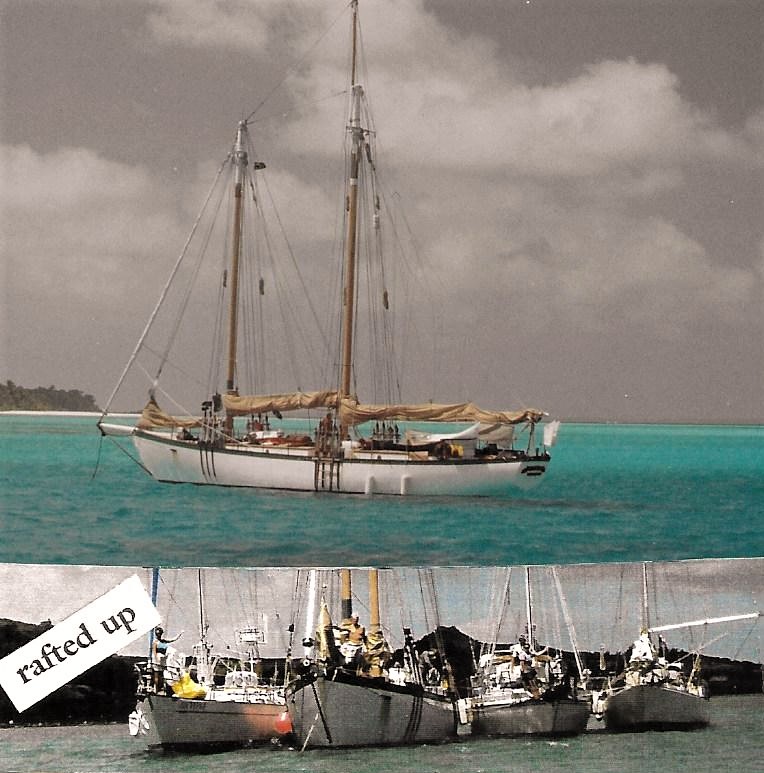
Our final evening the three sailboats rafted together and were joined by a Dutch-American newcomer who’d just arrived from Papua New Guinea after 53 days at sea. The eccentric storyteller provided entertainment during the progressive dinner: appetizers on Alcyone; main course of fish and potatoes on Appledore; and fudgy brownies on WD. It was nothing fancy like the resort restaurants who offer favorites like:

Fish rougaille- a Creole stew with tomatoes, onion, garlic, and thyme, brimming with fresh fish and shellfish.

Octopus salad- with tomatoes, yellow and green peppers, shallots, and lemon juice.

Salade marlin

Gratin de fruit de mer

Bekin baguette- A local favorite during La Fete du Poisson, the Fish Festival held in March. Flakes of bekin fish are combined with tomato, red onion, and lemon juice, then stuffed into a freshly-baked baguette.

However, the camaraderie was so much more delightful and fulfilling than any gourmet dish. We bid an early goodnight since the local meteorologist had predicted a favorable weather window. First light found us raising the anchor and then the sails as we ventured on to Mauritius and more adventures.

If I take the wings of the morning & dwell in the uttermost parts of the sea, even there shall thy hand lead me, & thy right hand shall hold me.—Ralph Waldo Emerson