Patience is a sailor’s virtue, especially in the doldrums—as you wait for wind in a becalmed sea…wait for the storm to diminish…wait for the wind to change direction. As you raise sails. Lower sails. Shift sails. The good news is that you’re very rarely bored when sailing. When you are gifted with a few moments of idleness, take a few deep breaths of pure salty air and savor the sunshine warming your skin as sparkling blue water gurgles against the hull, leaving a bubbly path in your wake.
Sailing is a lot like our lives. It’s not usually calm, perfect conditions, but we need to appreciate every moment of the journey, even the doldrums. Difficult times that challenge us. Seasons when we’re stuck, unable to move forward. Periods of utter fatigue when we feel overwhelmed and want to give up.
We should make the most of those intervals of stagnation. They are blessings that allow you time to catch up—write or call a friend; bake a special treat for a loved one; draw closer to God. Rest! Because life will get crazy again, guaranteed, and you want to be prepared for whatever comes next.
“Patience is not simply the ability to wait—it’s how we behave while we’re waiting” —Anonymous
Although Colors of the Ocean is fiction, several locations within the story are actual places we visited during our 3-year voyage around the world in our sailboat. As I reread my trip journals and paged through photo albums, it made me realize how important it is to record events in our lives. Those tangible items share details of moments that can spark memories which may be accurate or a bit off the beam. As I wrote my book I found great pleasure in reliving portions of our cruising days, sometimes surprised by things I’d forgotten, and a few times grateful I was no longer going through those experiences!
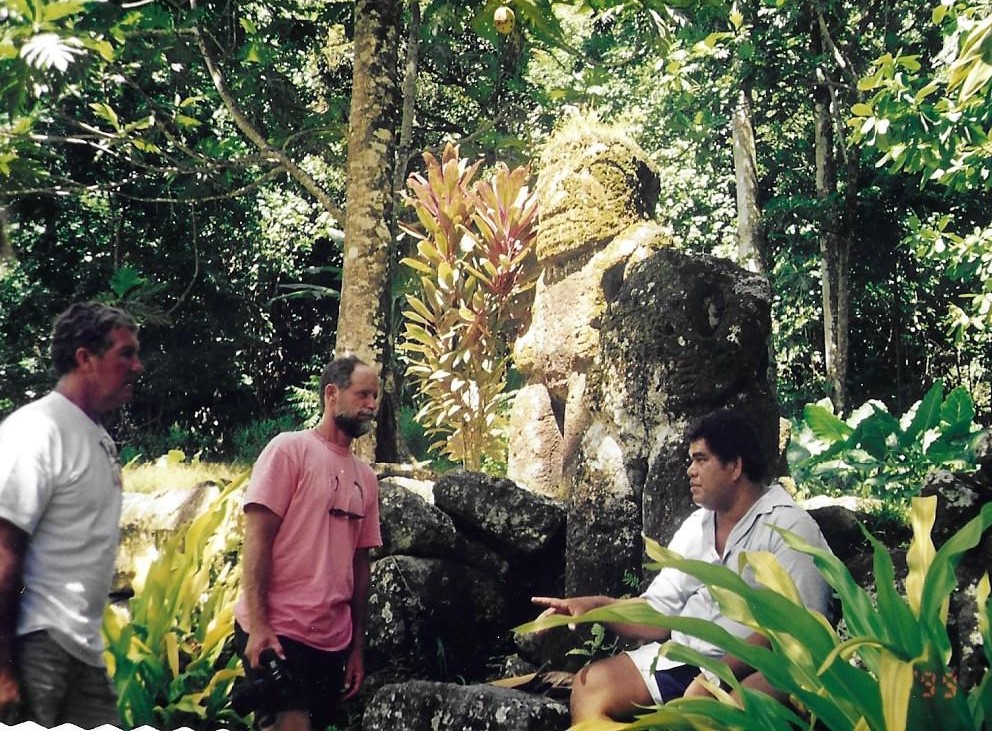
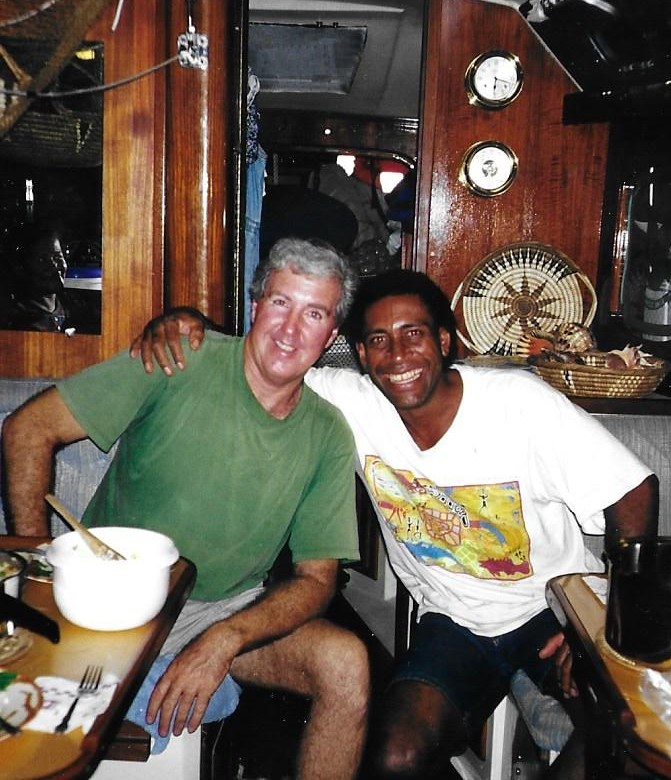
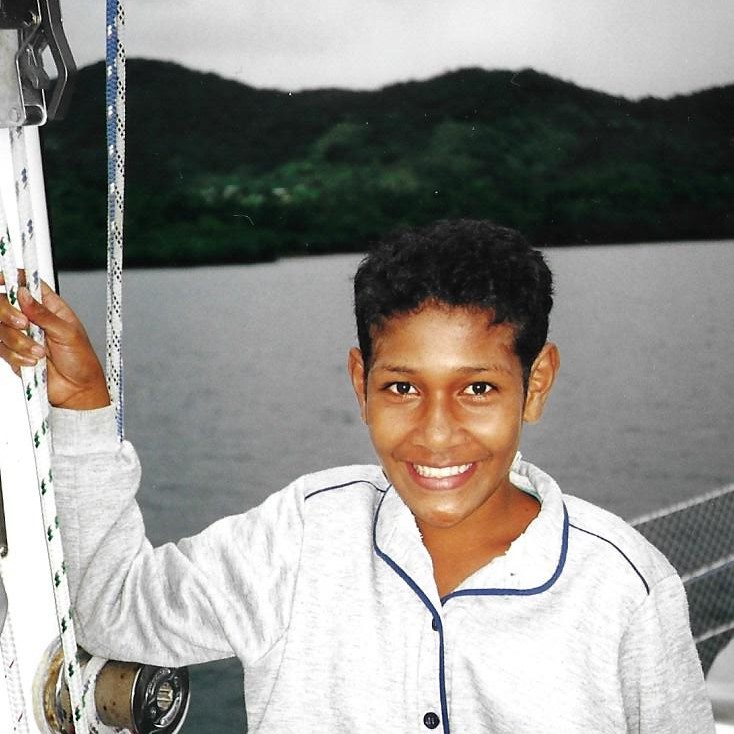
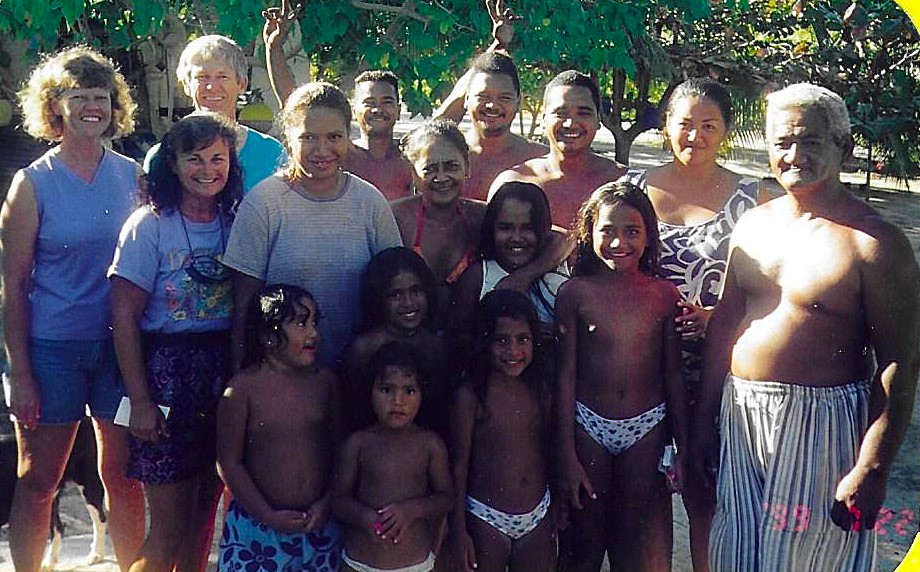
However, my favorite memories from all those adventures were the people—sailors from all walks of life who became part of our cruising family; and immersion into the cultural diversity of Mexico and each island country. What I loved most about everyone we met was their kindness. We might speak different languages, eat different foods, and dress differently, but we were always greeted with warm smiles. Several times we were invited into a family’s home for a beverage or meal, or to attend their church or local festivities. They loved sharing, no matter how little they had and were content in their quiet, less complicated lives.
Those days that we dwelled among the island people gave pause for contemplation—for what was really important and for our purpose in life. It all really came down to one thing. Love each other. If enough people would do small acts of kindness, we could all make a huge impact in our world.
We can do no great things, only small things with great love
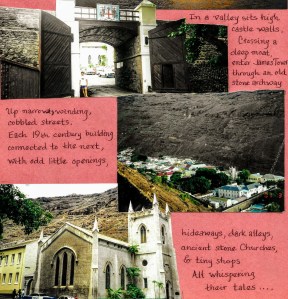
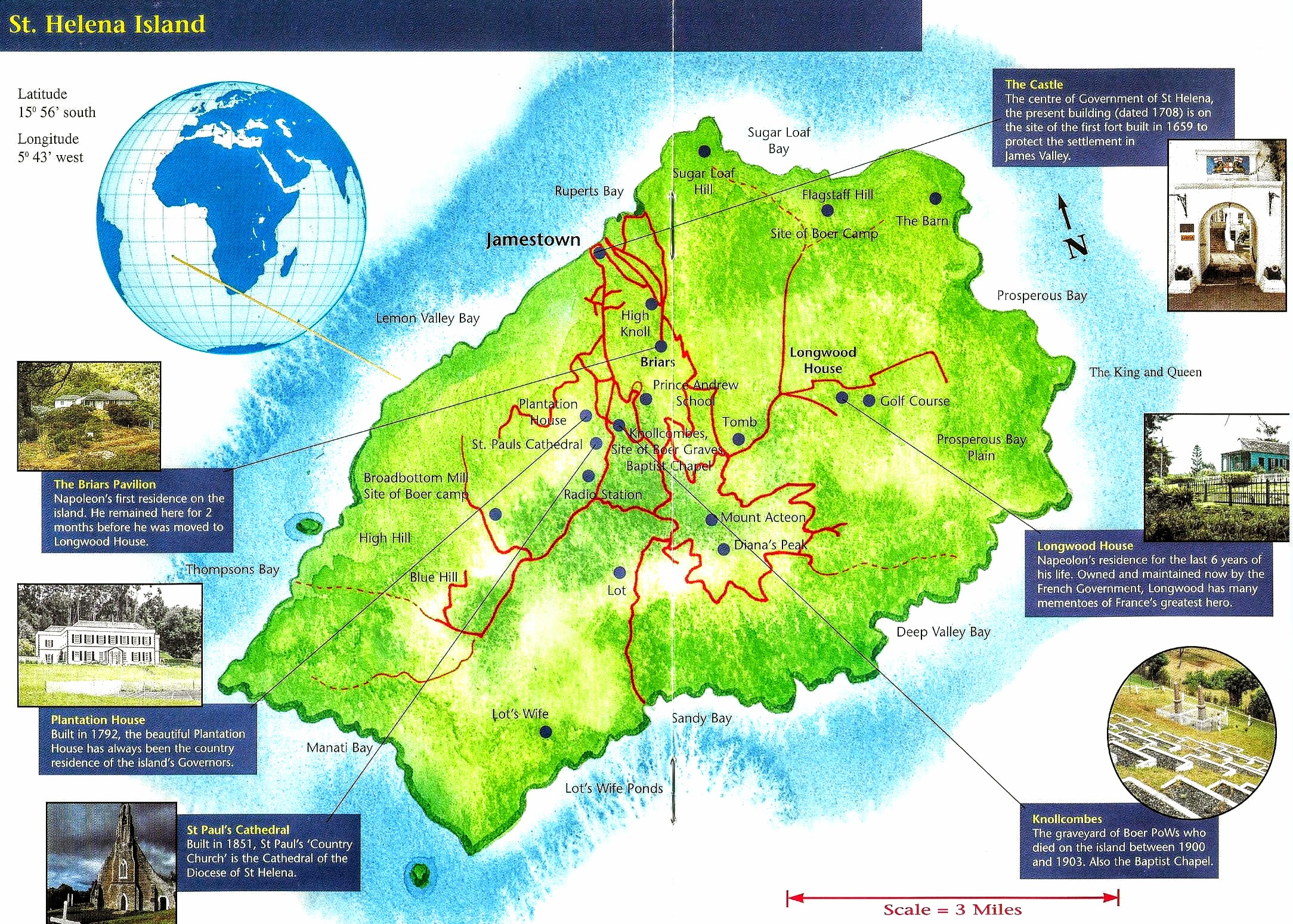
Cape of Good Hope, also known as the Graveyard of Ships, became a distant memory along with prayers of gratitude for light-moderate conditions as we spent the next 14 days sailing 1,500 miles across the South Atlantic. After anchoring in James Bay, Jerry and I dinghied to a high wharf and walked into a history book. Castle ramparts kept guard as we crossed a moat, scampered beneath an old stone archway, and entered Jamestown.
Winding cobbled lanes were lined with 19th century establishments and tiny shops, all scrunched together—except where odd little openings and shadowed alleys beckoned with anecdotes from the olde world. Locals welcomed us with smiles and greetings as we made our way to eat at Anne’s Place set in the Castle Gardens. Amid the endemic flowering ebony plant, pines, ferns, and other colorful foliage, we dined on fishcakes, although the pumpkin stew sounded interesting. Over lunch we ruminated about some of the famous visitors over the centuries who traversed this intriguing land—Naturalist Charles Darwin, astronomer Edmund Halley, Captain William Bligh (think Mutiny), explorer James Cook, and exile Napoleon Bonaparte.
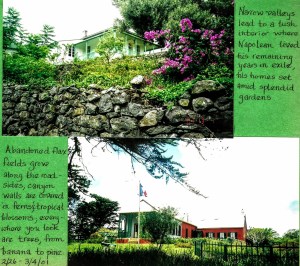
The following day we rented a car and toured the 47 square mile island with cruising buddies. Zigzagging our way along narrow roads and through quiet tidy villages with beautiful gardens and groves of mango and avocado trees, it was a surprise to observe so many contrasting environments. Hilltops surrendered vistas of verdant valleys and abandoned flax fields peppered by volcanic slopes where jagged monoliths sat in watchful quietude.
Within the lush interior we encountered Napoleon’s final homes—a far cry from his lavish lifestyle, pomp and circumstance, and battle cries. For two months he resided at the Briars before moving to Longwood House. Set among splendid gardens of bougainvillea, tree ferns, and tropical blossoms, the home contained French Provincial furniture, artwork, and memorabilia. It may not have been a palace, but his remaining six years were spent in simple comfort. Bonaparte chose to be entombed by the whispering waters in Geranium Valley, although France interrupted this peaceful slumber when they moved his remains back to Paris.
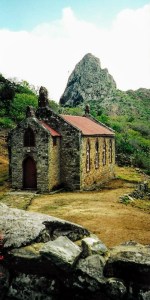
Moving on, we paused at 18th century forts,archaic stone churches, and along rocky paths that often led to unidentified ruins, wondering about the untold stories hidden beneath the rubble.
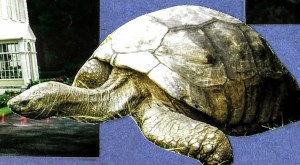
No visit would be complete without a stop at the Governor’s Plantation House to hang out with one-eyed Jonathan and other giant tortoises. Approximately 200 years old! He’s seen the upheaval of several governments, turmoil and heartache of wars, and gradual transformation into a peaceful country now under British rule. The tales he could tell—if only he could talk.
Along the coast near Jamestown bronze-hued cliffs, carved by centuries of crashing surf, are an impenetrable fortress with a 1,000 foot drop to the ocean. History seeps between the cracks of stone walls that line trails to ancient crumbling barracks and lookouts.
Huge cannons lay abandoned, reminders of wars fought and lives lost since the discovery of this island in 1502 by Portuguese explorers. Today one can gaze out to sea and not look upon warships, but whale sharks, humpbacks, and pan tropical spotted dolphins. Seabirds circle above, diving towards a flash of silver, a salty treat. If you’re lucky, you’ll catch a glimpse of the St. Helena plover, aka the Wirebird, due to its long wiry legs.
One final tidbit—Up until 2017 St. Helena could only be reached by boat. Now there’s been a new invasion, the modern world of commercial airlines and cruise ships. Hopefully the tourist industry won’t destroy the quaintness and tranquility of this island in the middle of nowhere.
History is a gallery of pictures in which there are a few originals and many copies—Alexis de Tocqueville, former Minister for Europe & Foreign Affairs of France (1805-1859)
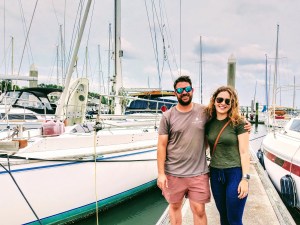
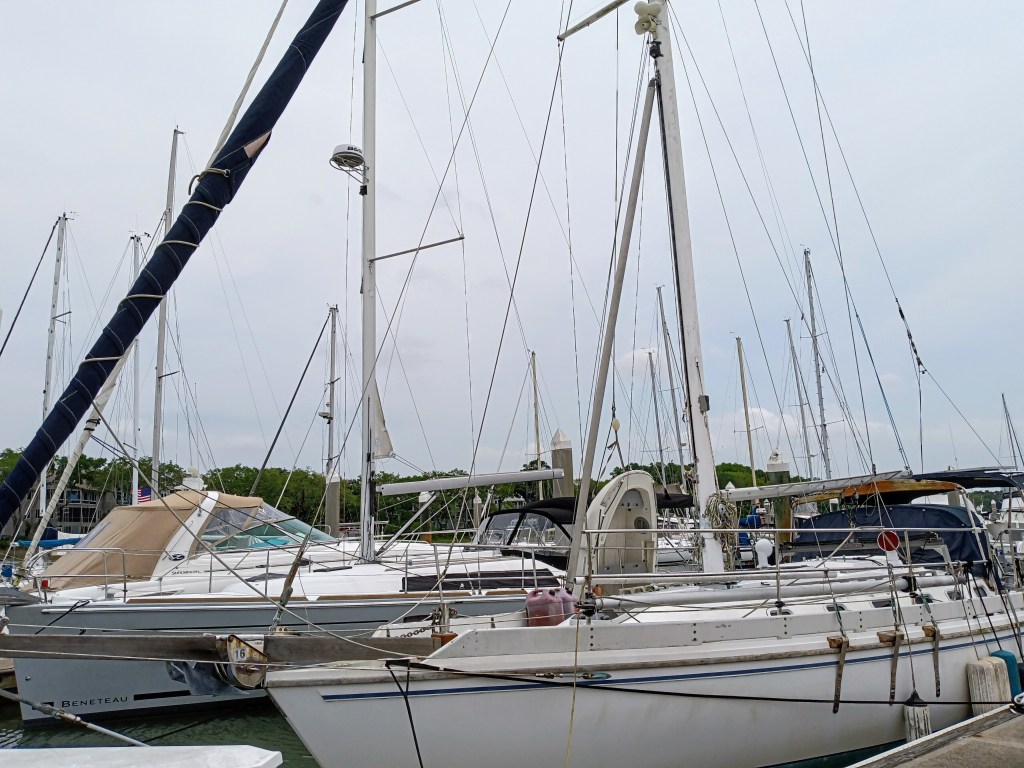
A strange email set in motion an unanticipated journey to Hilton Head Island marina a couple of months ago. In February I received a note from a couple stating they were about to purchase our old boat. They had tracked me down while searching the Internet for info on White Dove. It’s crazy scary what social media can do these days, but in this case they discovered my blog which is a good thing—right?
We landlocked Indiana sailors finally made it to the Atlantic Ocean in May. Actually 3 weeks before that I had enjoyed Pacific Ocean breezes while visiting family and friends in Southern CA. You can never have too much beach time. Any beach, any coast, that’s my motto. I love the crash and swish of waves, scents of the sea, glorious peace that surrounds me at sunset, and of course— seafood! Saltwater runs through my veins as I’ve spent two-thirds of my life living near an ocean. I felt right at home when we set up camp at Hunting Island State Park near Beaufort, South Carolina.
You could easily spend a week here without ever leaving the island. There are 10 miles of easy to moderate hiking and biking trails that wind along a lagoon, traverse maritime forests, and wander through sand dunes where loggerhead turtles were beginning to nest. One of our favorite activities is kayaking and there’s an abundance of nearby coastal lagoons, marshes, blackwater rivers, and swamps to paddle. Be sure to stop by the visitor center where you can have a virtual experience of the island’s historic lighthouse built in 1859. It was destroyed during the Civil War, then reconstructed in 1875. Or you can take a self-guided tour on the grounds of the real structure. To gain info about the flora and fauna of this diverse wonderland visit the nature center located at the fishing pier. Our favorites were white-tailed deer, bottlenose dolphins, and abundant bird life such as painted buntings, egrets, osprey, and eagles. But, beware—there also are alligators and snakes. Not on my Fav list.
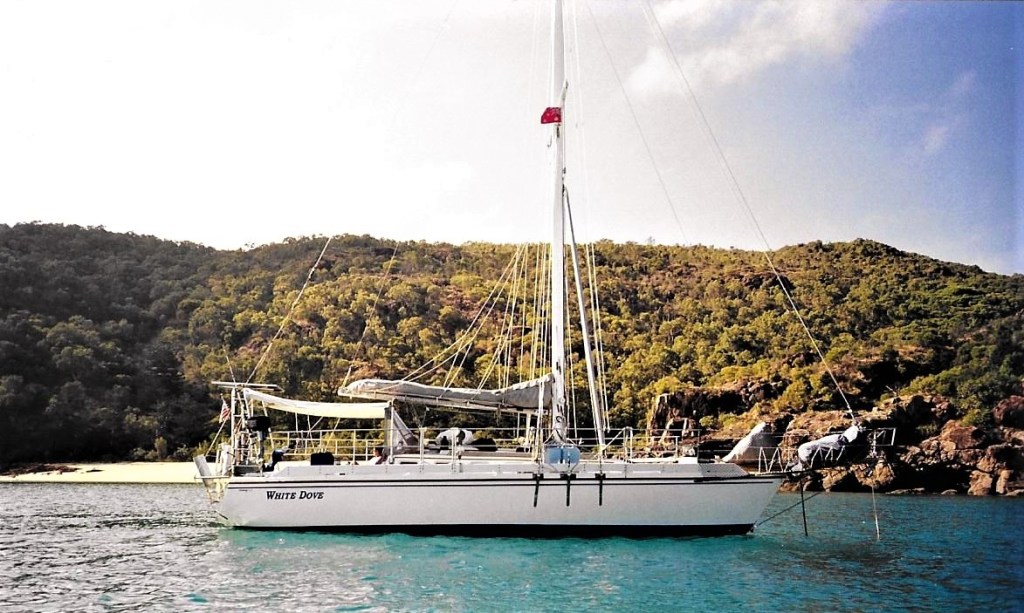
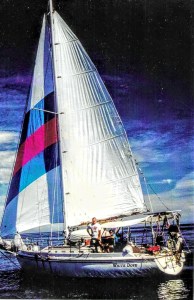
The purpose of this trip, however, wasn’t for exploration of an island, but for something we still held dear to our hearts—our old and cherished sailboat, White Dove which we sold in 2003. It not only served as our home for 10 years, but also as our mode of travel that blessed us with 3 years of cruising several of the earth’s oceans. We gave this special friend our blood, sweat, and sometimes tears and in return she gifted us with life experiences far beyond our expectations.
We developed an instant connection with Matt & Kayla DeVito, her new owners. Although they bought Unless, WD’s new name, for $1, they face countless hours, months, and probably years of challenging work as they repair, restore, and make her their own. Their first job entailed pulling out bags of trash along with rotten food, rodent carcasses, and alien mold forms. They also replaced several ancient thru-hull hoses that threatened to sink their new purchase.
Our time together forged a bond with this enterprising couple who is half our age , yet we share so much in common. Matt and Jerry are both mechanical geniuses who can fix or build almost anything, love woodworking, and all things boats. Kayla and I are creative beings. She’s a talented oil painter who also shares her artistic gift by teaching others. Although I’ve dabbled in oils, my passion is writing and I’m endeavoring to publish my first fiction novel about, you guessed it, sailing! All four of us love the sea, traveling to seek new adventures, and we seem to thrive on challenges.
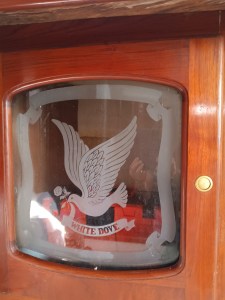
What was my first reaction to our reunion with WD? Tears of disbelief. Sadness as my eyes surveyed this abandoned yacht. Was this really the same boat we’d sailed around the world and shared so may joyful and occasionally difficult times? At first unrecognizable, soon certain details emerged, and with it a flood of memories. The bowsprit Jerry had sprawled across during our rescue off New Zealand and the Monitor windvane, another part of that same story that you can read about in a previous post. In the cabin below all the varnished custom woodworking had severe water damage except a glass door etched with a dove. It had somehow survived and shone in the shadows. It all felt familiar and foreign at the same time. Melancholy yet joyful.Peace and hope flowed through me as I visualized the transformation of this precious sailboat into an art studio and work of art as its new owners pursue their dreams.
A portion of our legacy is being preserved through this next generation of sailors as we witness this ugly duckling emerge into a beautiful new bird. Watch as dock lines are cast off, sails are raised, and the DeVitos embark on their own life adventures, wherever the winds and currents may carry them.
For more information and updates on Kayla & Matt DeVito visit their Instagram at living.devito.loca.
From Knysna White Dove motor-sailed to the tiny, rolly marina at Mossel Bay. While waiting for a weather window, we stayed busy with small projects, scenic walks, and exploration of museums and shops. With some trepidation, we then faced the 220-mile/42-hour sail around challenging Cape Agulhus, the southern-most point of S. Africa, where the frigid Atlantic meets the warm currents of the Indian Ocean. The first half was pleasant with light breezes and flat seas until three hours before the cape. A strong SW wind quickly built up 3-meter seas on our nose, sloshing the deck and found an open hatch. Whoops! After 4-hours of chaotic, potato patch seas, the 40-knot wind came around behind us and we surfed the swells into False Bay.
The peaceful settlement of Simon’s Town offered a protected marina and friendly yacht club, and proved much quieter than the marinas in Cape Town. A 15-minute walk to watch the African penguins became one of my favorite daily activities. They are nicknamed Jackass penguins because of their braying which became especially loud during their mating season and quite entertaining.
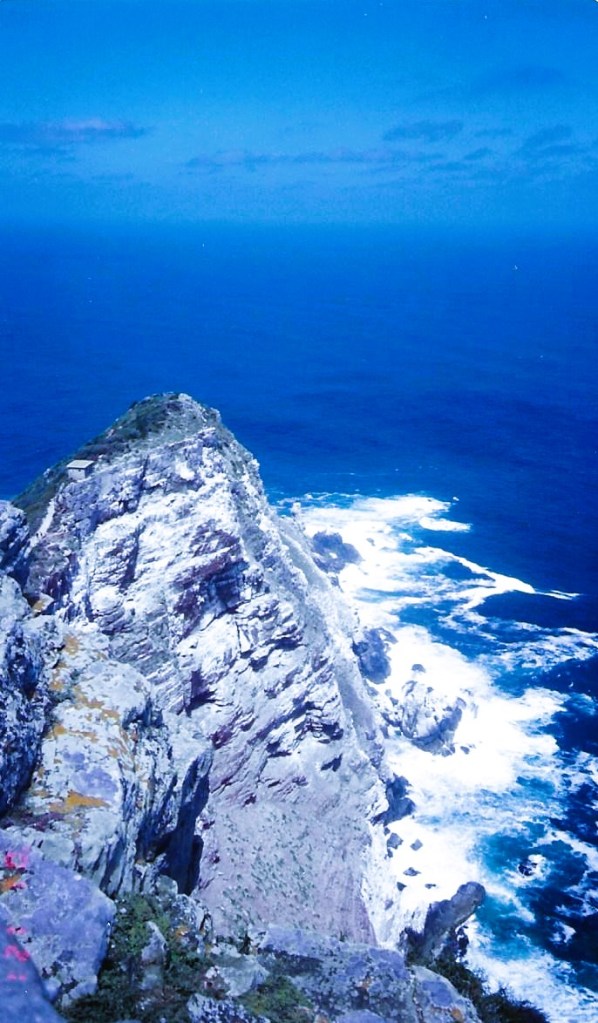
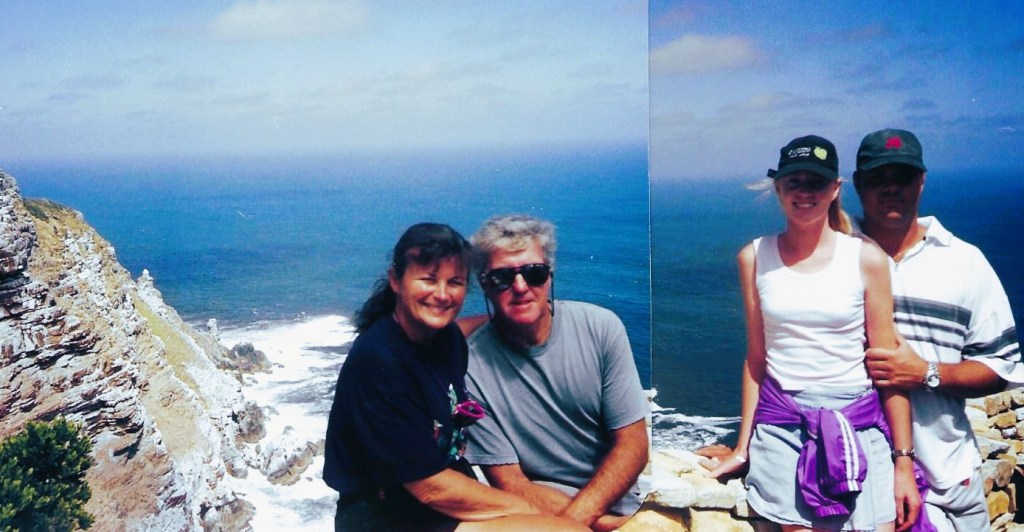
Brett and Jillian, an affable S.African sailing couple became our unofficial tour guides for several adventures. One day we drove out to Cape Point/Cape of GoodHope, situated within Cape Peninsula National Park. Over 250 species of birds have been sited in this nature reserve, but few animals due to limited vegetation, although we were warned to be careful of the sometimes aggressive baboons. Playing tourists, we rode the funicular to the highest point overlooking the rocky promontory which Jerry and I would be rounding once we left the African coast. The views from the top were spectacular.
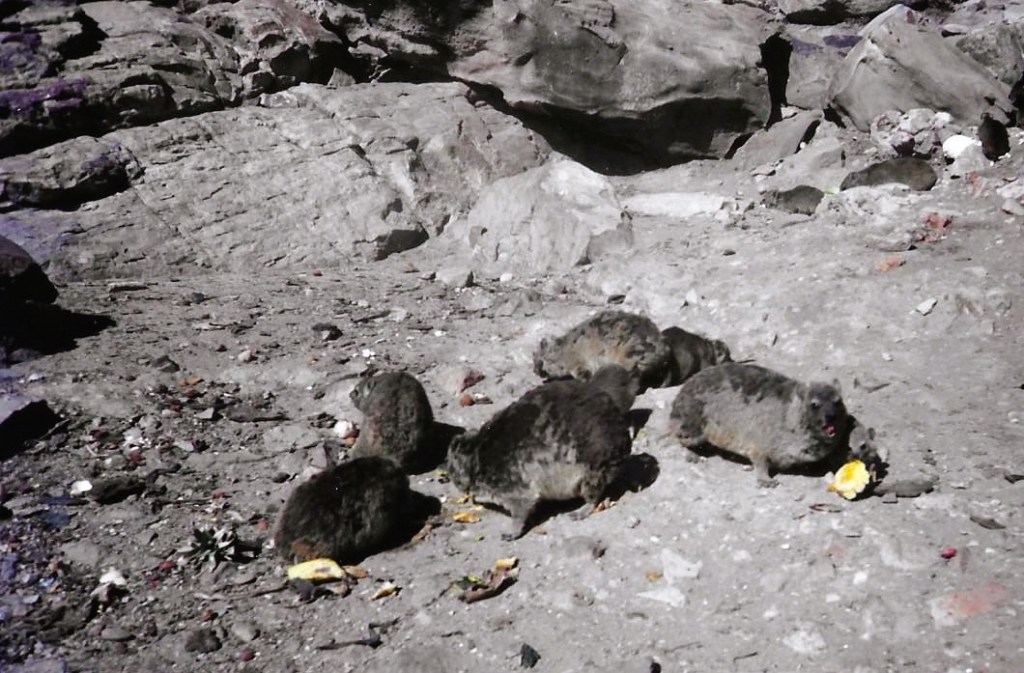
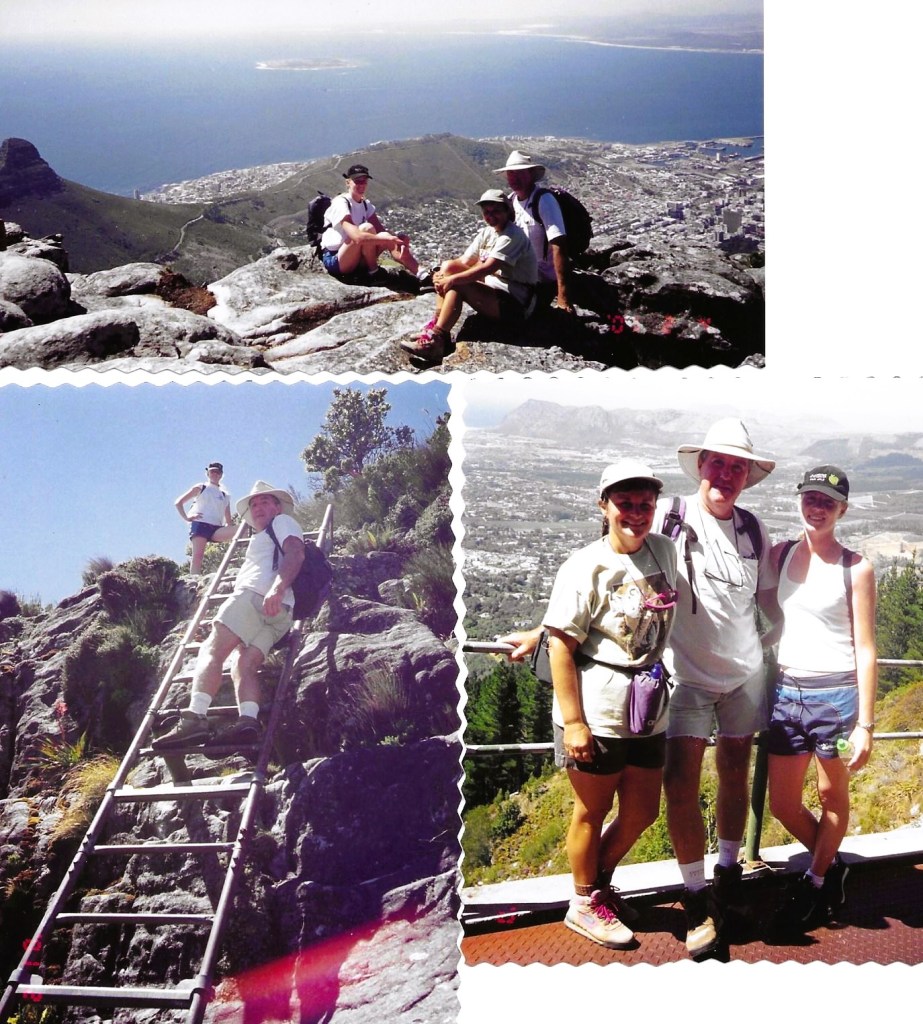
Table Mountain provided a full day of exploits with our S. African friends. We began a 5-1/2-hour hike on the Constantia Nek trail which took us up a curvy, pine tree-lined access road—all uphill, but shady and cooled by a gentle breeze. There were several small reservoirs constructed from stone blocks at the top of the first mountain. Along the route multitudes of wildflowers caught our attention including the elusive Red Disa which only blooms in February. Iridescent Sunbirds sip nectar from this vibrant flower and the Table Mtn Beauty Butterfly only feeds from it. This bio-diverse landscape grows over 2,000 species, many unique to the region, including the rhinoceros bush and several types of alien-looking proteas. We searched for Table Mtn ghost frogs, but they stayed invisible. However, several cute dassies scampered among the rocks.
The road ended at an old museum that displayed a steam locomotive and other artifacts that had been transported up the mountain by cart, cables, and manpower. These had all been used during the 1800s to build the dams. From here the real fun began.
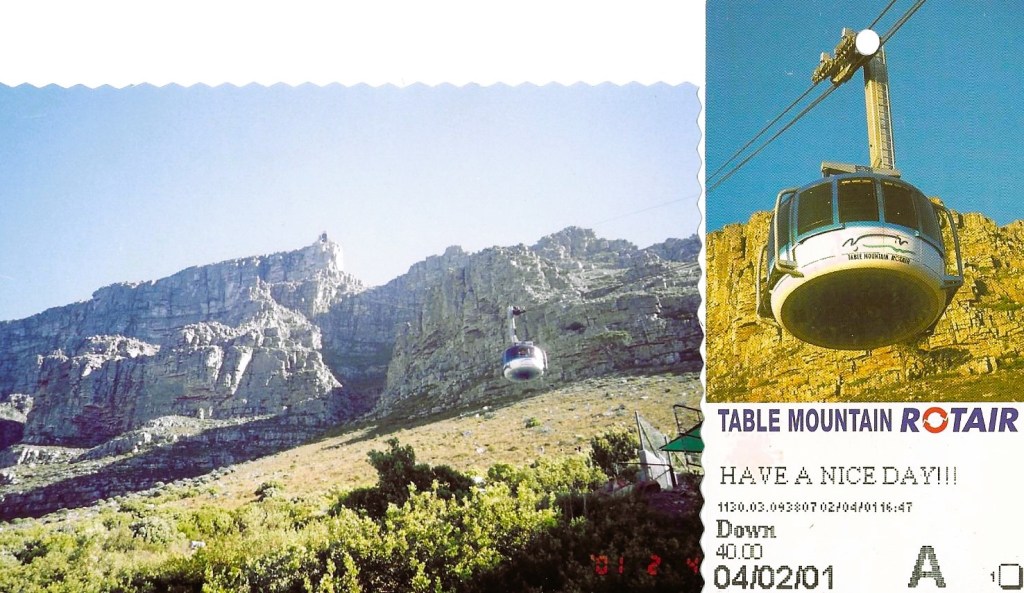
With help from some locals we finally located the right trailhead (there were 3). For the next 3-1/2-hours we tramped a narrow rocky path, clambering over boulders, down steep hillsides into Echo Valley which lived up to its name, crossed logs through marshy bogs, and wound up an even steeper slope while negotiating 3 ladders! Quivering muscles burned, but the sweat and dust were well worth the magnificent vistas of False Bay, Hout Bay, and once on The Table, the sprawling city of Cape Town with its massive harbor. We picnicked before taking the easy, 4-minute route down—the cable car with a rotating floor. The panoramic views were awesome.
No visit would be complete without visiting wine country. There were several areas to choose from: Constantia, Franschhoek, and Paarl, but we only had time for the centuries old village of Stellenbosch.
Vineyards and orchards climbed from valleys and up hillsides, with the dramatic backdrop of purple-hued mountain peaks and sheer cliffs. Dutch manors were set amid stands of oak trees and fragrant flowers. At Fort Simon we toured an authentic-looking castle complete with moat; tasted scrumptious cheeses at Simonsberg; and strolled historic buildings and picturesque gardens at Neethlingshof. Of course, wine-tasting was involved too!
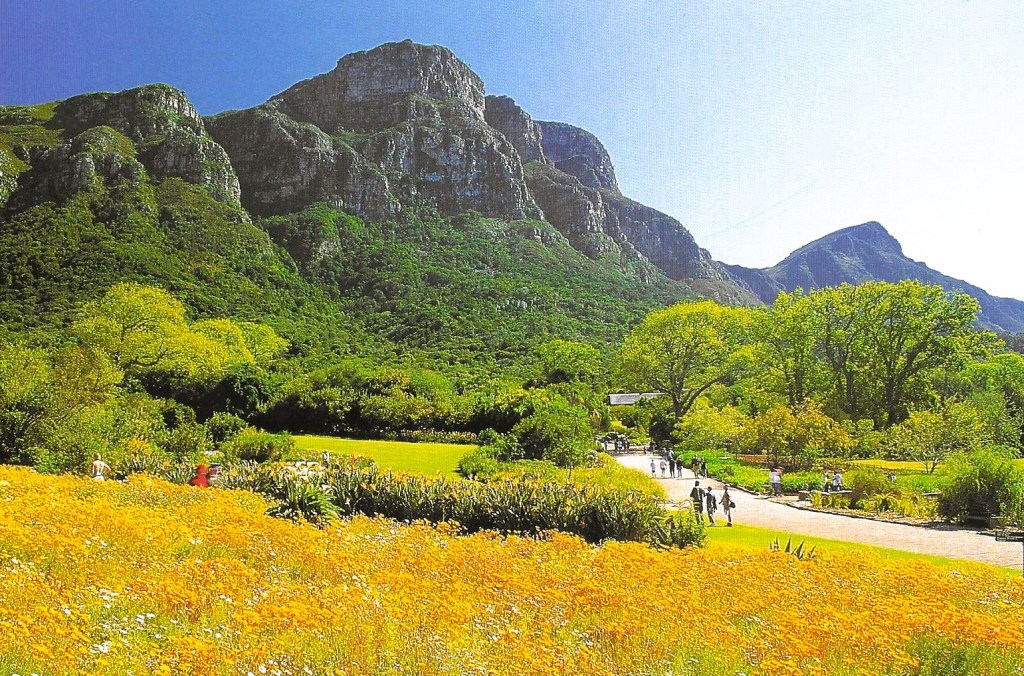
The grand finale: Kirstenbosch National Botanical Gardens. We ambled along winding, sometimes hilly paths, our senses bombarded by a kaleidoscope of smells and colors. Later, sheltered from the hot sun beneath tall trees, we spread our blanket and reclined on a wide grassy area. The sun sank slowly behind the grandiose backside of Table Mtn as we sipped our wine and melodious music from the S. Africa Navy Band wafted among the gardens.
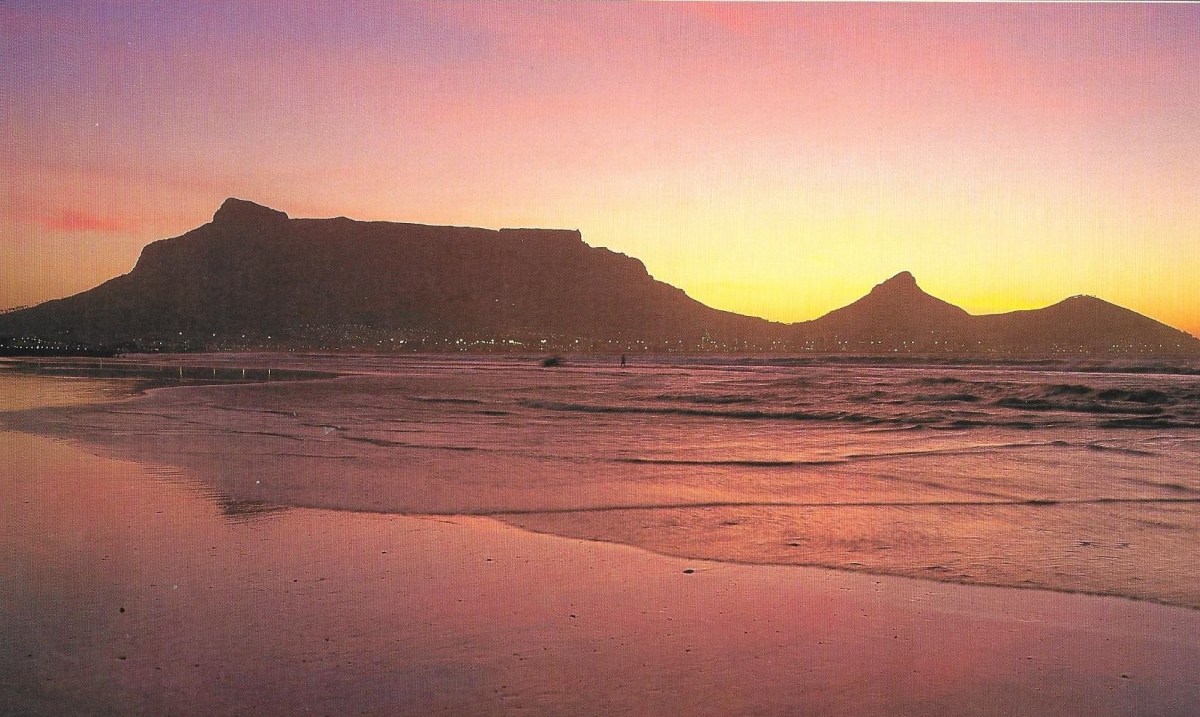
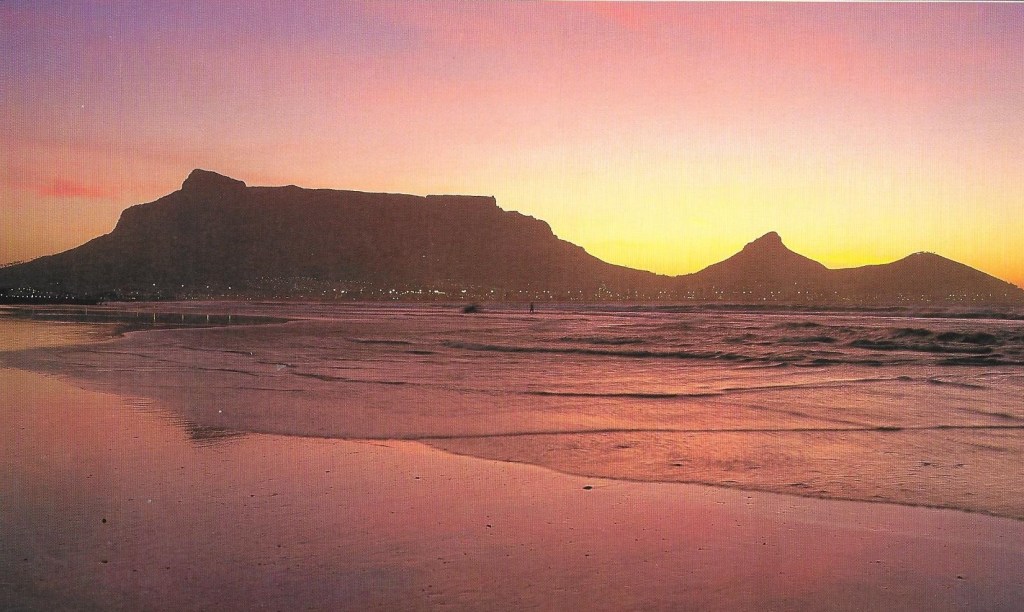
Final preparations were made the following day before setting sail for the long voyage up the Atlantic. Rounding the Cape of Good Hope, we were fortunate to have only light winds, small swells, and no drama! South Africa blessed our farewell with a memorable sunrise—red and gold horizontal bands silhouetted Table Mtn’s dark hulk. In the deep blue sky above, wispy cloud patterns played tag. Ahead, the vast ocean beckoned us to new lands, new cultures, and new adventures. Until next time…
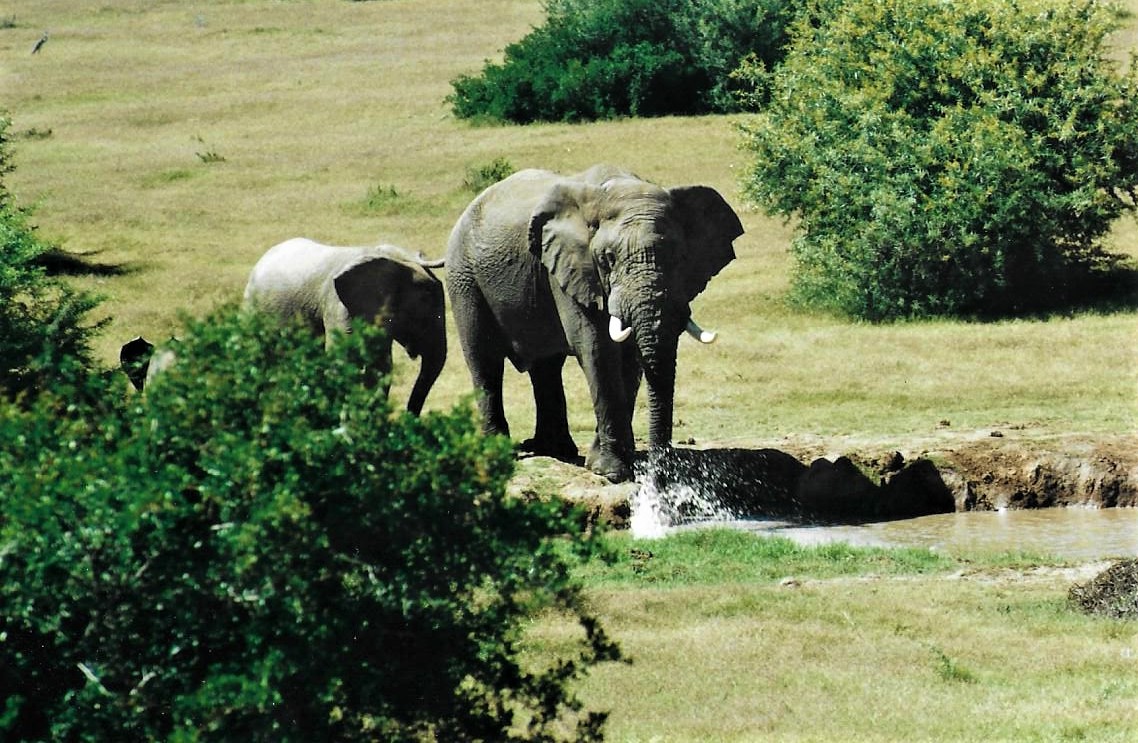
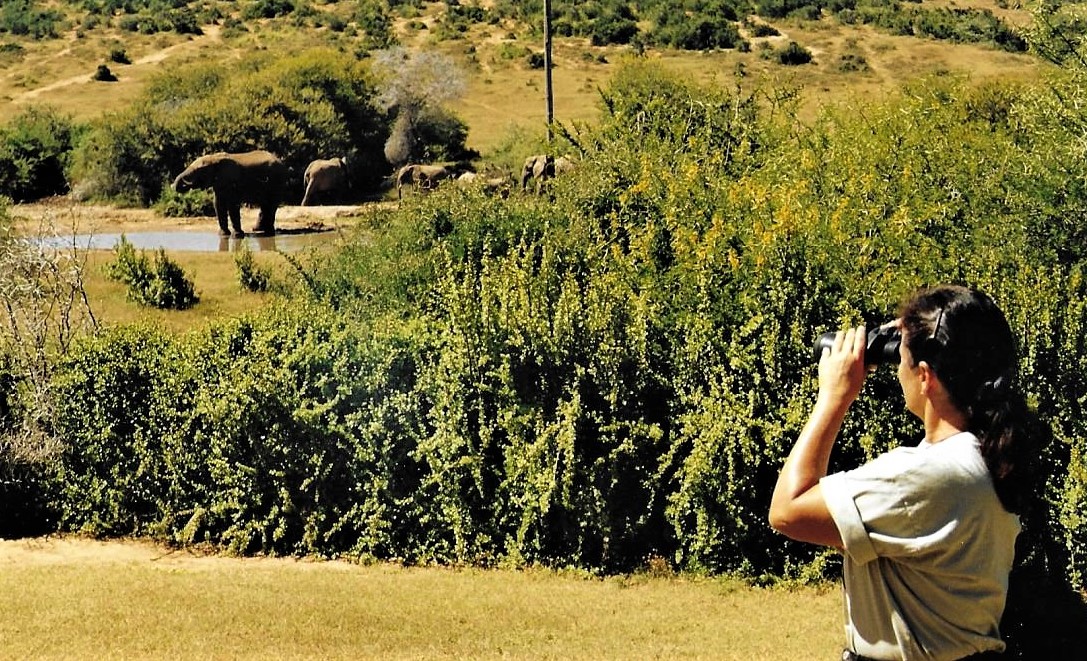
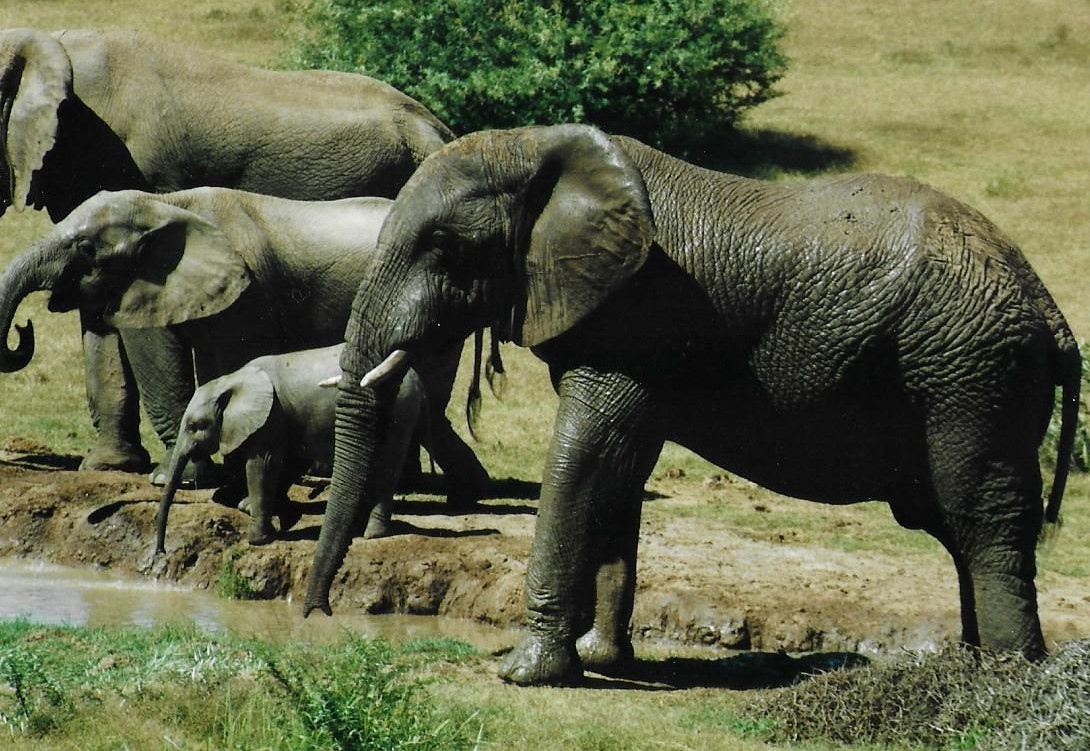
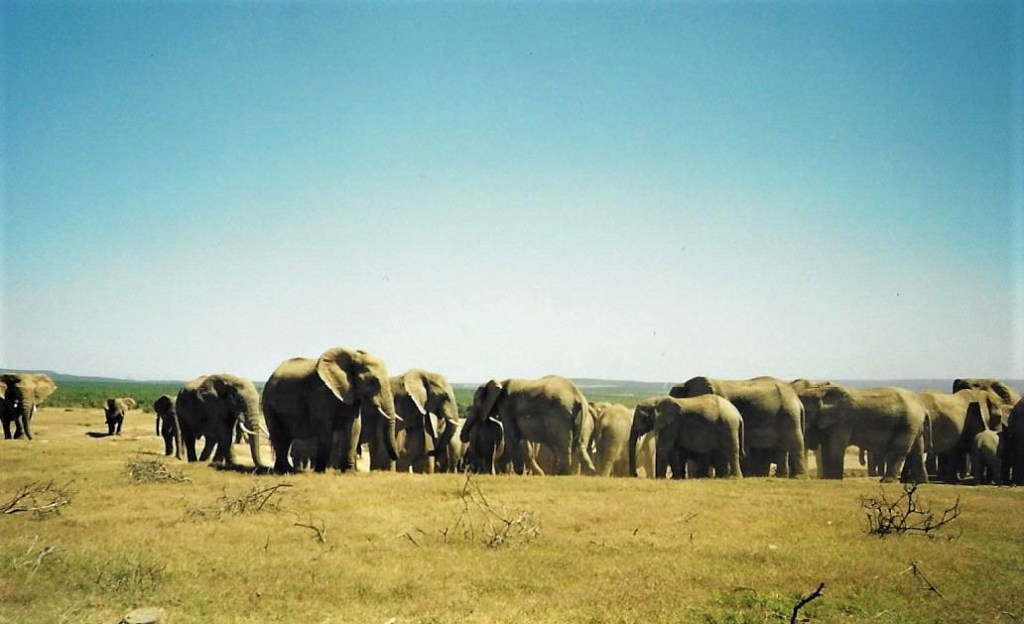
With so much to see in South Africa’s diverse land, it was difficult to choose which path to take. Addo Elephant Park turned out to be one of our favorite jaunts. We observed the interactions between several families of elephants at two different watering holes. Each family took a turn plodding down hillside paths with ears waving, trunks swaying, keeping the little ones in line. At the water they slurped, sprayed, and rolled in the muddy ponds. Adorable babies frolicked, even throwing and fetching sticks.
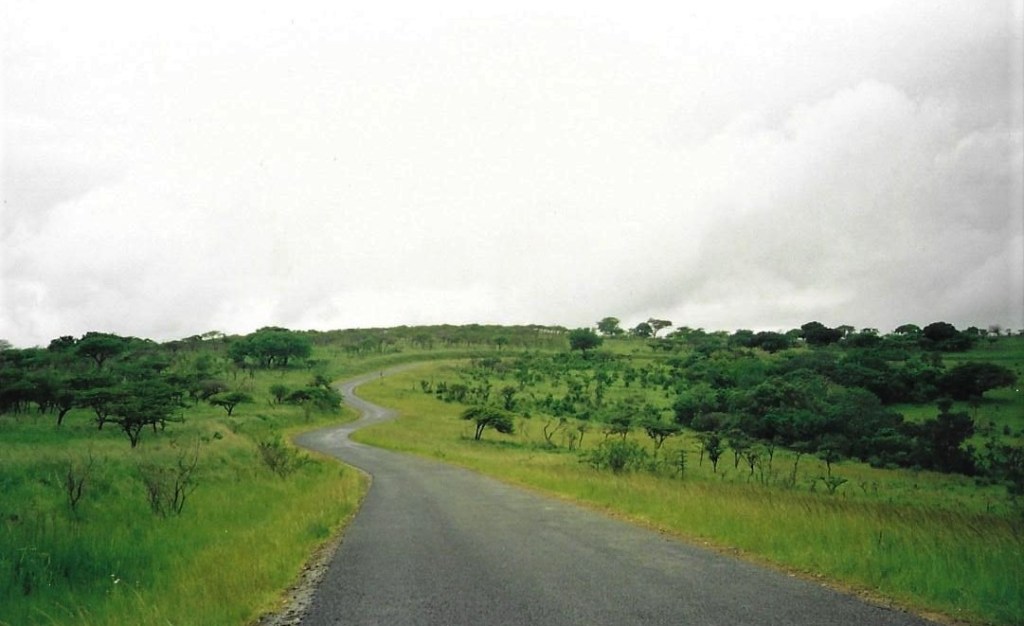
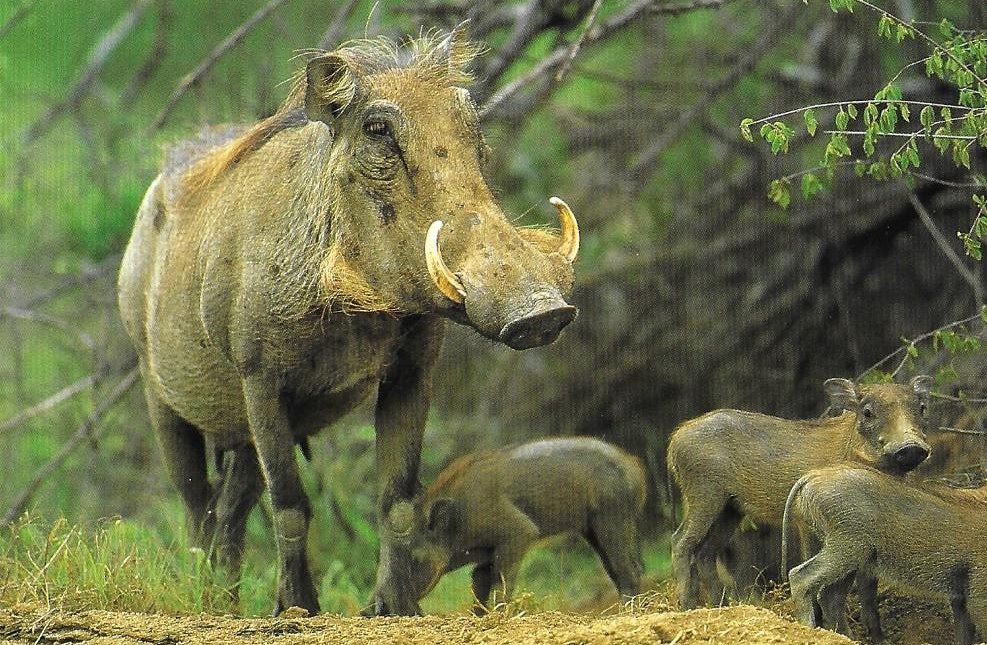
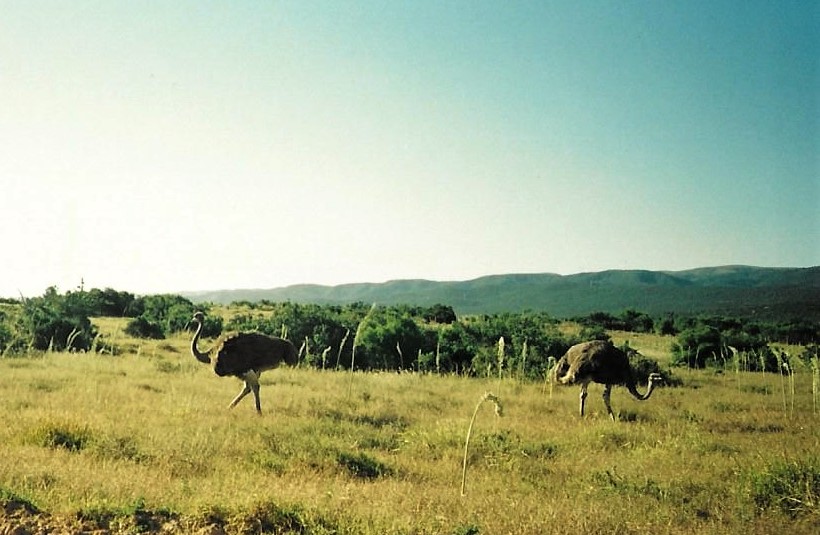
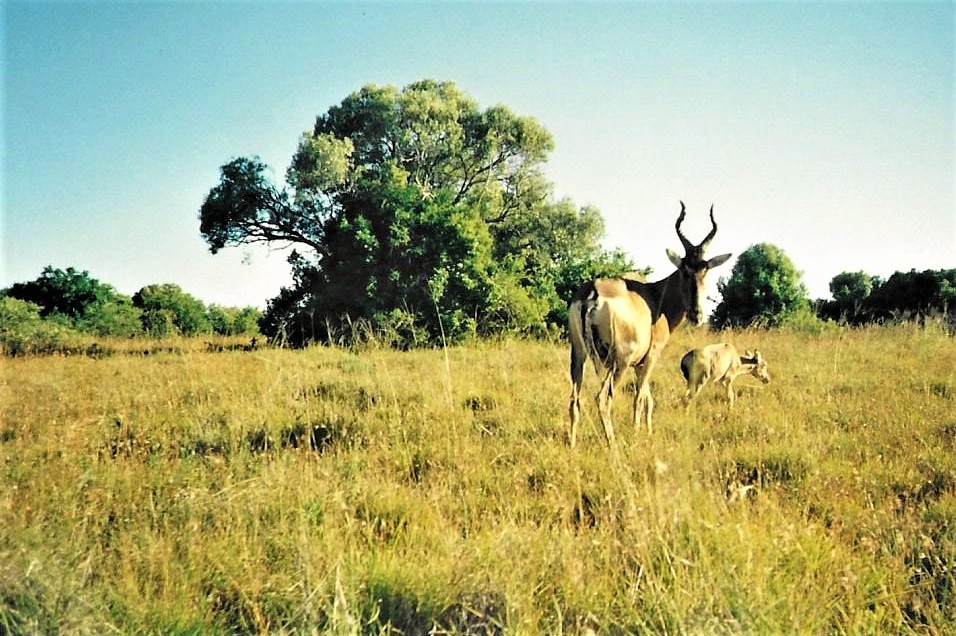
The hierarchy of males was fascinating. Huge bulls sometimes challenged one another for control while protecting their group. While roaming the park’s dusty roads, we came across eland and hartebeest that bounded through the brush, a warthog with babies scurried by, large tortoises lumbered, ostriches sprinted, friendly mongooses stared , and a jackal came close—nice puppy.
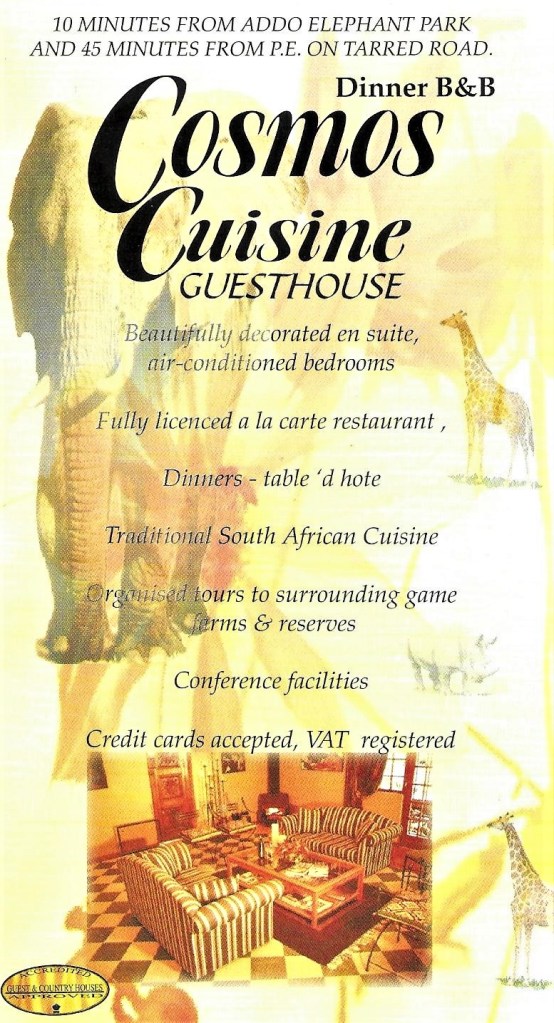
Spending the night at Cosmo’s Cuisine Guesthouse, only a ten minute drive from Addo, was quite a luxurious contrast to boat life. Nestled in the heart of the Sundays River Valley, this quaint B&B contained antiques, artwork, a TV for Jerry, and a bathtub full of bubbles for me. Following a pleasurable soak, we enjoyed a tasty traditional dinner in their elegant dining room. For a very reasonable cost we devoured chicken schnitzel smothered in cheese sauce, spinach pasta salad, baked potato and veggies, along with an appetizer and dessert. All accompanied by a bottle of a superb S.A. wine, of course. As if that wasn’t enough food for a week, we stuffed ourselves in the morning with an enormous breakfast. After that I needed a long stroll through Cosmo’s lavish gardens while sipping my cup of tea.
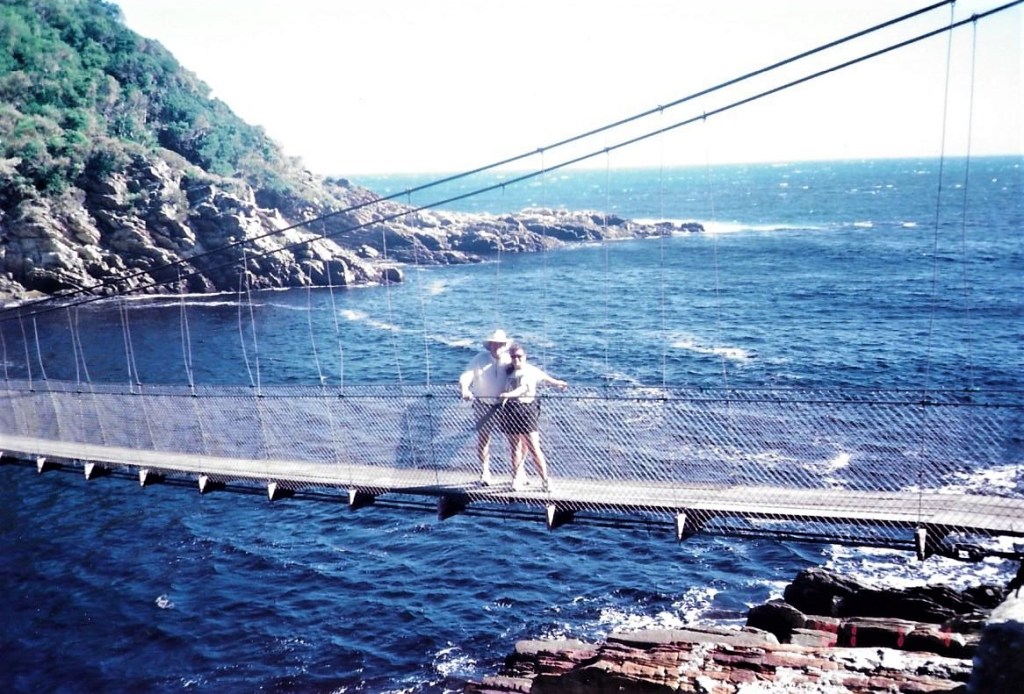
Heading back to Knysna, we detoured to Tsitsikama National Park. We wandered through this spectacular wonderland of forests with 105 species of trees, mountain lakes, tumbling waterfalls, and white sand beaches. Wish we’d had more time to explore, but we did hike along a dramatic rocky coastal trail that was reminiscent of the Northern California coast. Reaching the Storm River, we had to cross a very long suspension bridge that traversed a wide gorge where the river met the sea. Not a fan of high places, especially those that are swinging in a strong breeze, I crept across keeping a firm grip on the cable. More than enough excitement for one day!
On the winding road back through the mountains, we delighted in gorgeous vistas and groups of baboons and monkeys. The countryside varied from green hills to fertile farms, and scattered with hot, dry savannas. Back in Knysna, we provisioned and prepared for the next safe harbor hop to Mossel Bay. See you next time for more South African adventures.
Nature is not God but God revealing the weight of Himself, all His glory, through the looking-glass of nature.
First off, I apologize for the long lapse between blogs. I haven’t intentionally been ignoring my followers and hopefully you haven’t forgotten me. Life just became extra busy with fall camping excursions, grandkids, and working on my novel—a fictional account incorporating my sailing journey. I’m praying to complete the final draft in 2023 and begin the publishing process. I’ll keep you updated. Besides all of that, I was preparing for a total knee replacement which was done on Dec. 5th. That meant getting everything ready for Christmas ahead of time. I’m thankful to report all went smoothly. I’m in the midst of the long rehabilitation process and am making good progress with strength and endurance. Gaining range of motion back isn’t quite as much fun, but I persevere daily—because when spring arrives I plan to be back out hiking the trails and cycling scenic byways. Sorry for my rambling, but now on to the continuing and captivating saga of our South Africa adventures.
There’s so much more to South Africa than its magnificent wildlife. We soon discovered it’s a country of contrasts and diverse beauty. Sailing from Richard’s Bay we negotiated the swift SW Agulhas current and quick-changing weather windows, seeking sheltered harbors which are few and far between. After a too-long stop in crime-ridden Durban, we moved on to Port Elizabeth and celebrated Christmas with a few cruising friends.
The next weather window allowed us to make Knysna for Wooden Boat Week. The final day of the festival we participated in a sailing parade aboard our friend’s old wooden schooner, Appledore.
The most challenging portion of the hop between safe harbors was navigating through Knysna’s Heads. Twin sandstone promontories flank a rocky channel where many a vessel has met a watery grave. The trick was to stay in the center, wait for an incoming tide and for breaking waves to settle at the entrance.
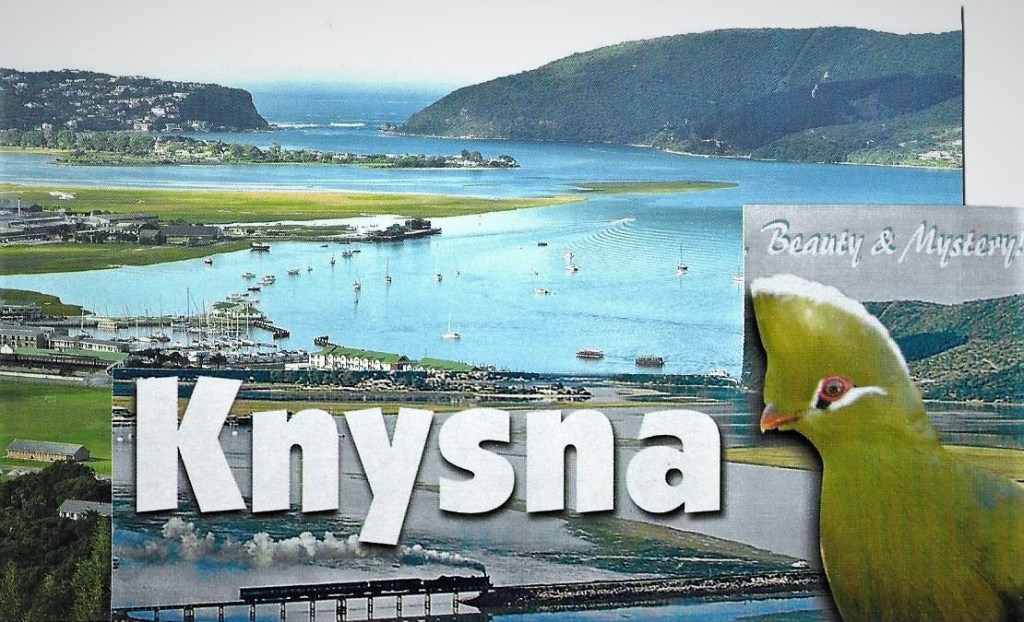
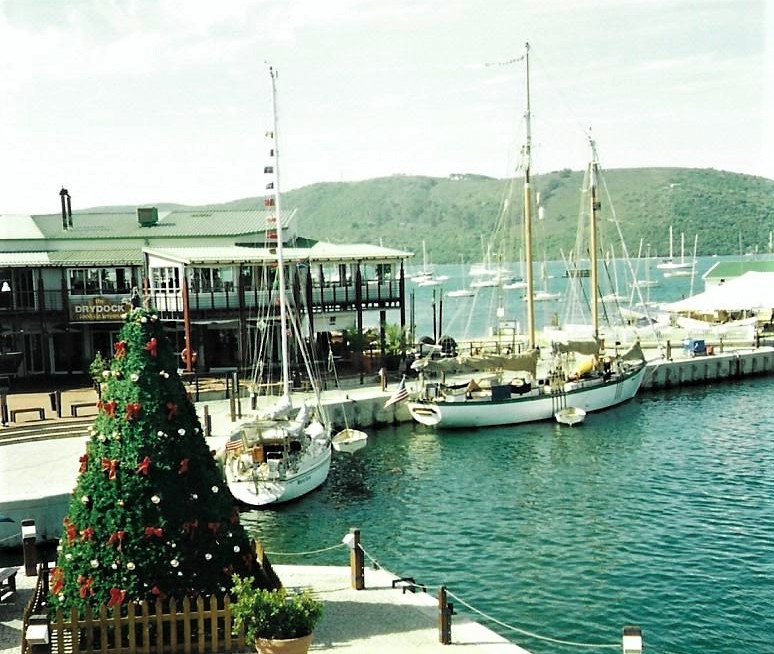
Once inside the huge protected lagoon we tied alongside a wall at the marina for easy access to explore Knysna’s charming and vibrant art and cultural community. Art galleries, shops, museums, and fresh seafood restaurants were reminiscent of Southern California’s Laguna Beach—my old stomping ground. Although I’m not a fan, the area is famous for its oysters and holds a festival in early July. We did take in a couple of happy hours at the local yacht club where drinks were cheap, food was free, and the locals high-spirited.
Located within the heart of the scenic Garden Route, Knysna sits amid a varied habitat of sea, rivers, marsh, grassland, and fynbos- a covering of low-lying heather-like shrubs found only on South Africa’s tip. There are also forests such as the enchanting emerald green Knysna Forest where it’s rumored the last indigenous elephant roams. The area is also a haven for over 280 species of birds including the long-tailed Knysna Loerie and elusive Narina Trogan, both adorning bright parrot colors.
Of course, no stopover would be complete without a few tramps along the many varied pathways within the town and surrounding countryside. There are hikes atop the Heads with fantastic panoramas; a steep descent to the beach at Noetzie for castle views; wheelchair-accessible strolls at Garden of Eden; plus elephant walks through the forest, and many more. One of historic interest was the 5.6 km Millwood Mine ramble through an old mining town and the damp, dark abandoned gold mine with flashlights. We discovered old machinery and an abundance of snoozing bats. Unfortunately, no shiny gold nuggets. There’s also a small museum and casual tearoom where we sipped a warm cuppa.
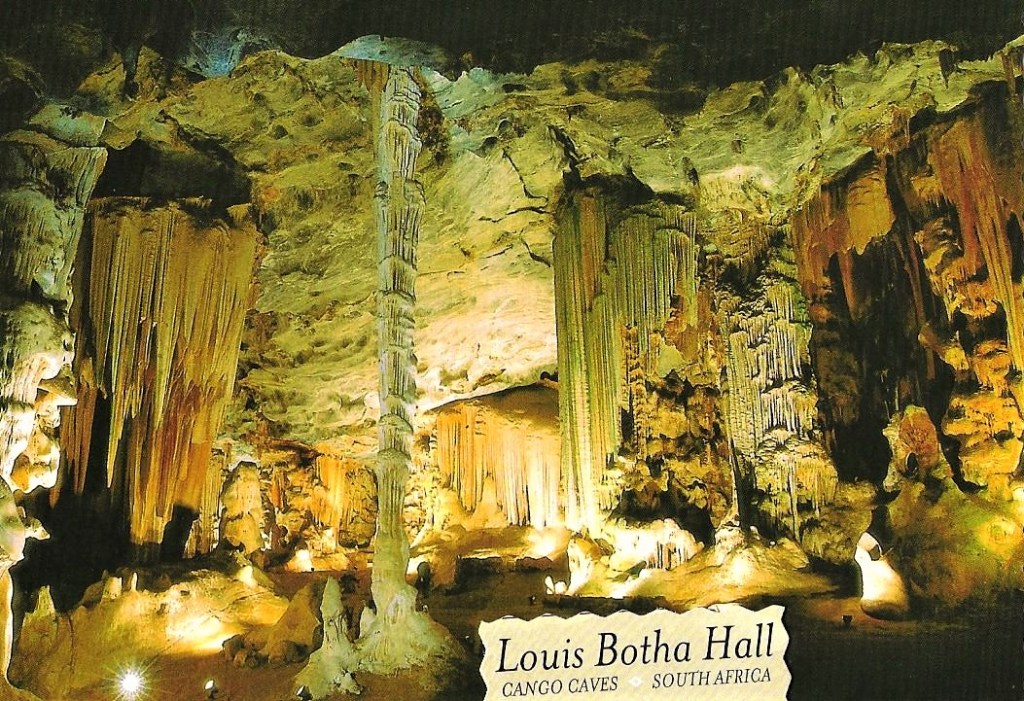
Another day we explored more touristy, but intriguing Cango Cave’s cavernous halls where spectacular limestone formations were enhanced with dramatic lighting. The tour we chose only took an hour and wasn’t too strenuous, bypassing the wet, stomach-sliding “Adventure Tour.”
While in Oudtshoorn, the ostrich capital of the world, be sure to stop at one of several breeding farms where you can get up close to these gigantic feathery birds. Quite entertaining!
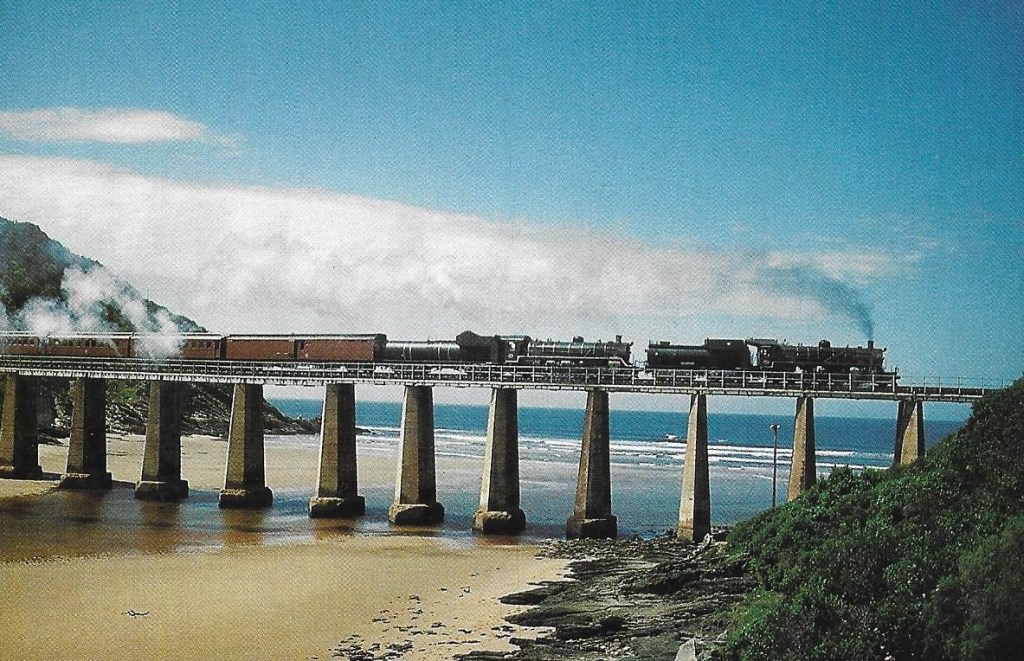
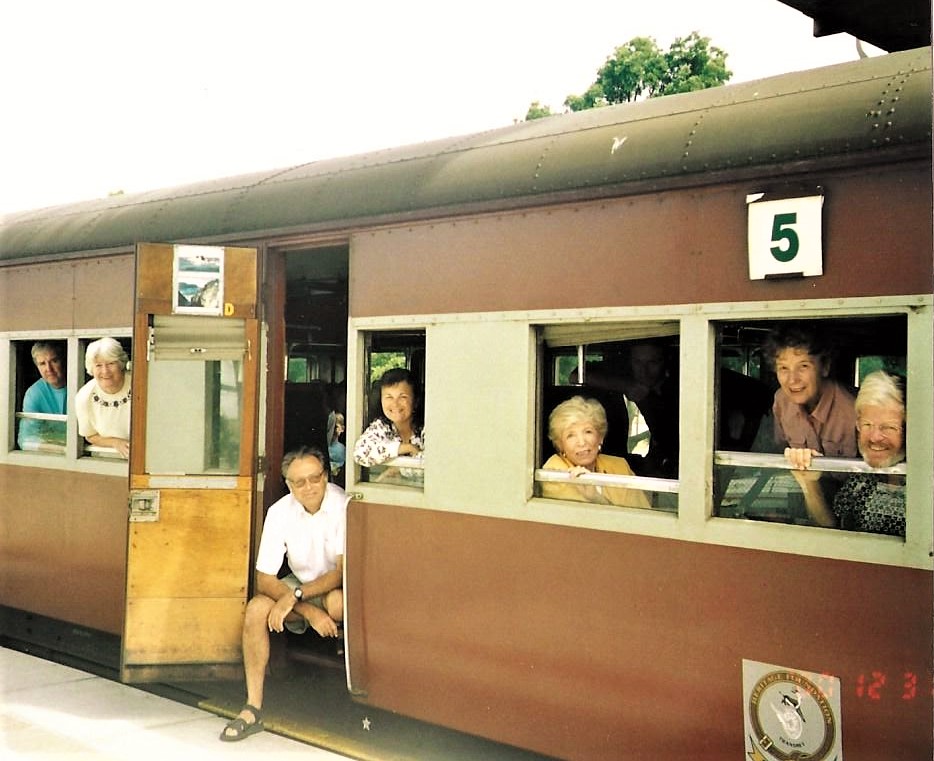
Our favorite day trip was aboard the narrow-gauge Choo-Tjoe, a steam train that wound through rolling hills dotted with pines and eucalyptus, along picturesque coastline, through tunnels, and clacking across the Kaaimans River Bridge between Wilderness and George.
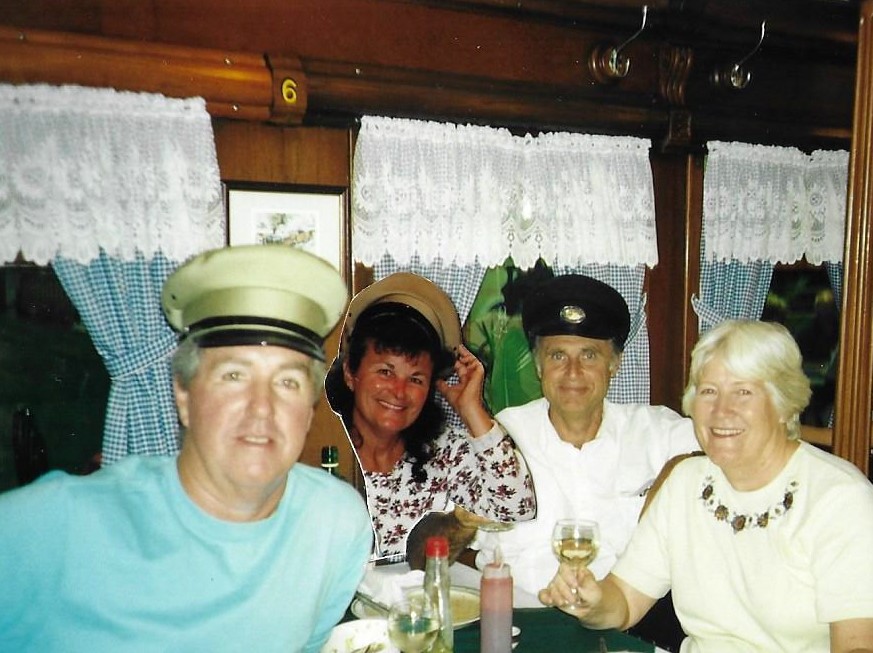
In George we lunched in a converted dining car at the station before exploring the extensive Outenique Railway Museum. It housed a full-size locomotive and white train car used by the British royal family in 1947. For train enthusiasts there’s also a running model train display and many artifacts dating back to the 1920s.
Many more excursions were had in this delightful southern portion of SA, but these stories will have to wait for my next excerpt—hopefully sent out lots quicker than this one!
Steam Trains

Steam trains
Huffing puffing
Belching smoke coal & steam
Traveling down the railway track
Timeless

by David Wood
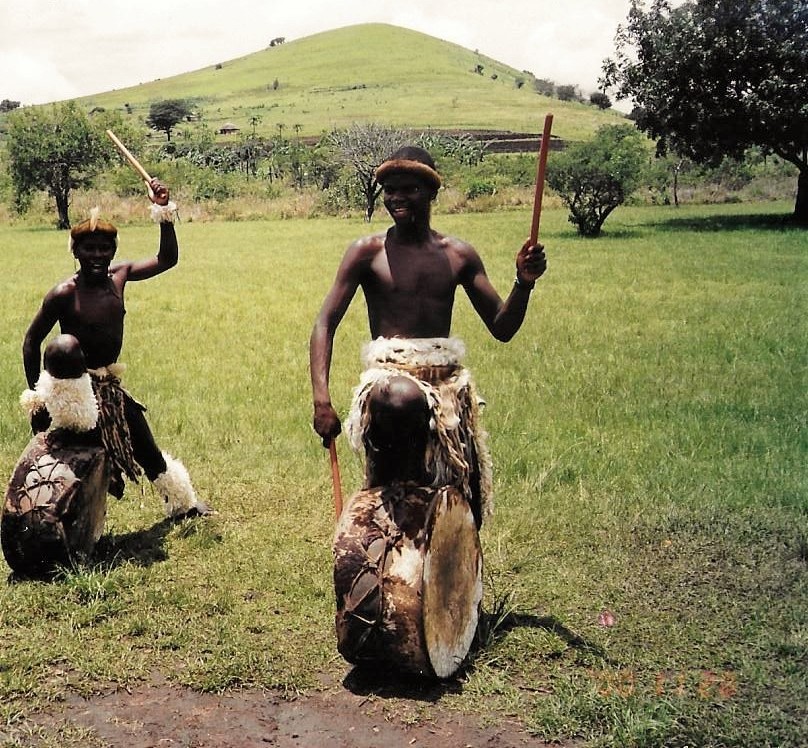
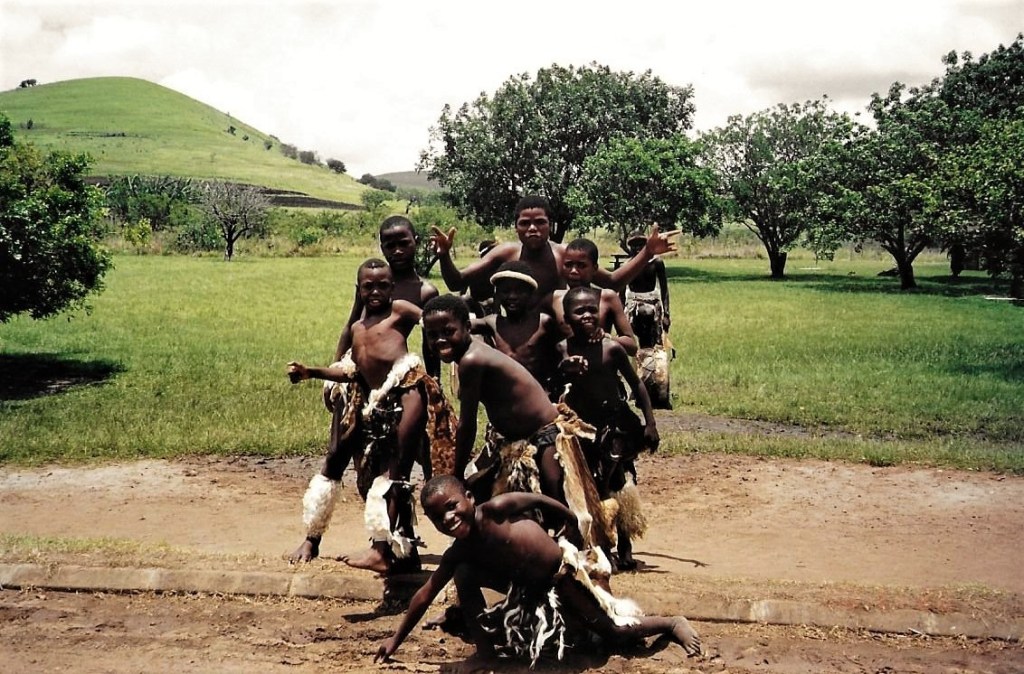
From Richards Bay, South Africa, a small group of cruising friends meandered past acres of gum tree farms and through modern and primitive Zulu villages. Strolling dusty paths, natives balanced bundles on heads babies strapped to backs.
Grinning native boys danced as we entered Hluhluwe-Umfolozi game-park, gateway to an ancient world.
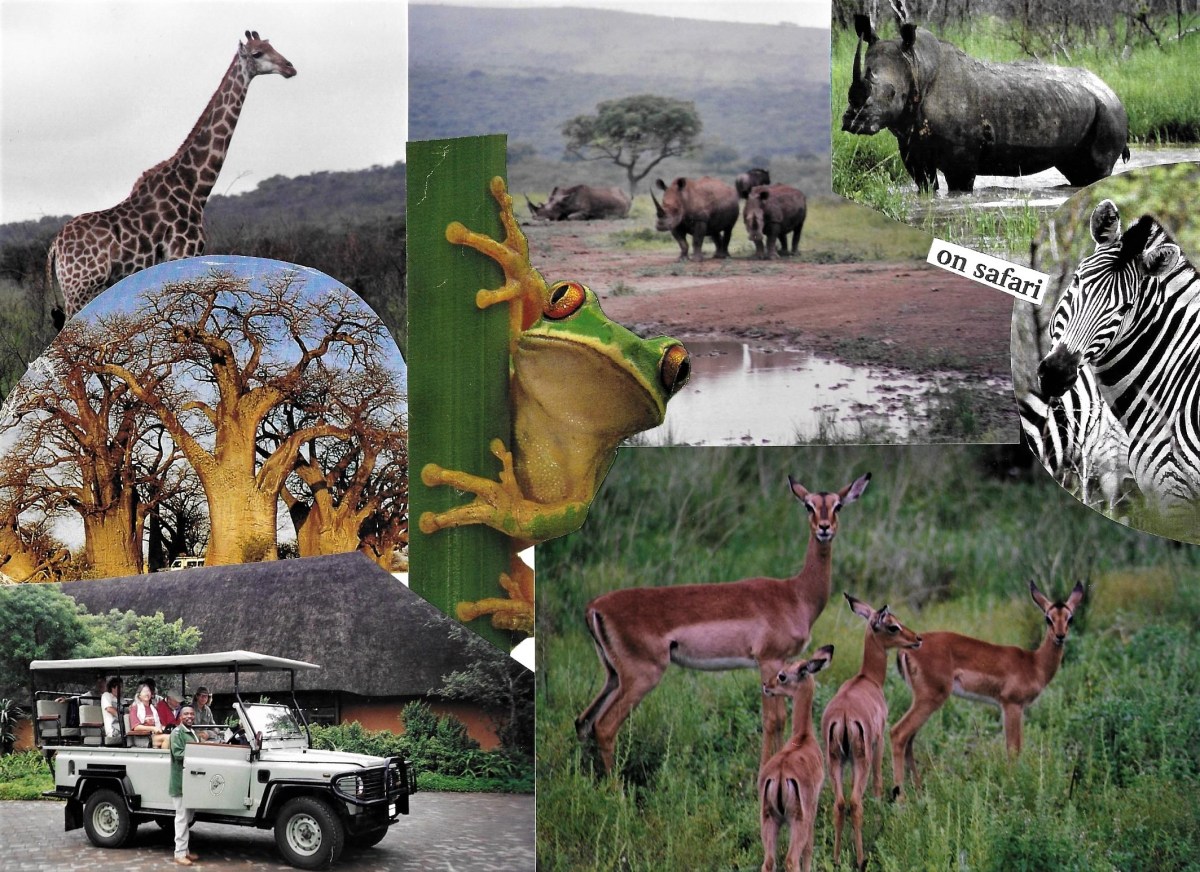
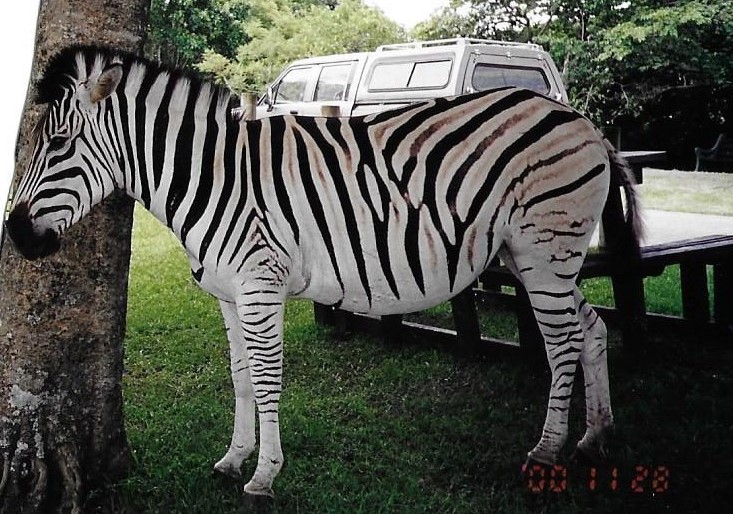
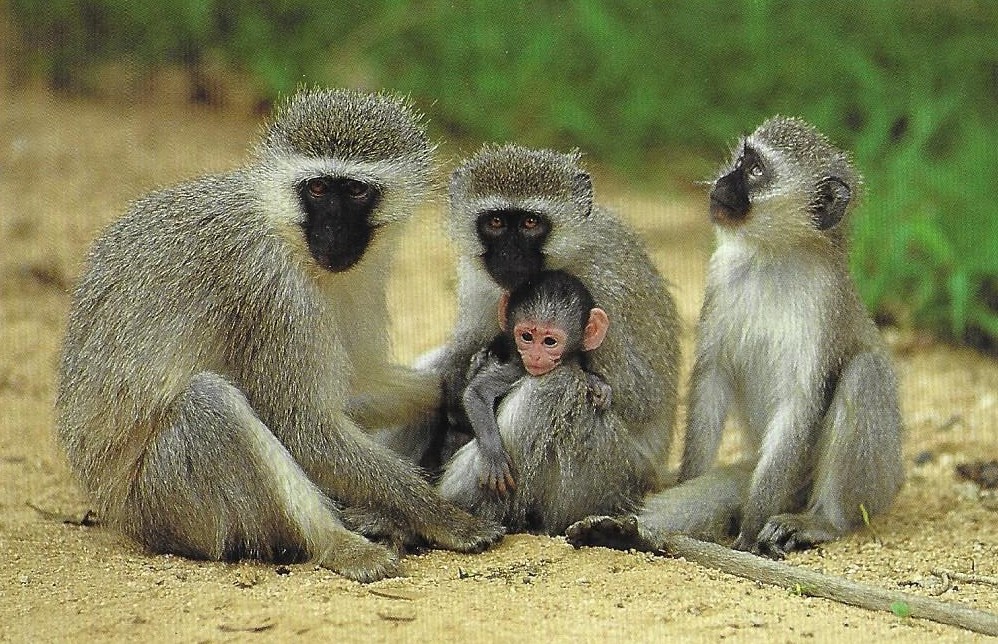
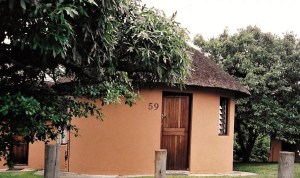
Winding through gentle hills where Cape buffalo grazed, we spotted a black rhino wallowing in mud and baboons lazing among star chestnut trees. At the summit of a forest sprawled Hilltop Camp. Our circular rondavul came furnished with the bare necessities plus two geckos on bug patrol. Outside, Jerry and I strolled a footpath within the compound. Fluttering butterflies gathered nectar among flowery foliage; birds chirped and twittered; velvet monkeys romped; and wandering zebras kept the grass mowed.
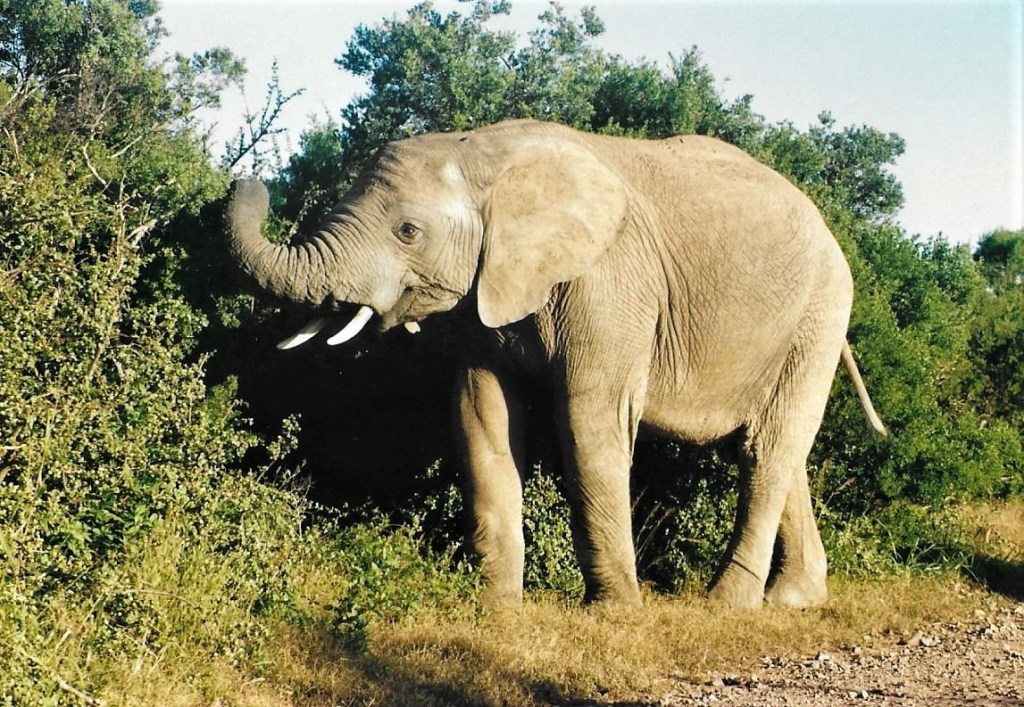
Our guide, Musie, led a 3-hour night drive in an open-sided Range Rover. The air was still as we searched openings in dense brush with two handheld spotlights. A large porcupine waddled across the 1-lane dirt road. A spotted genet with long swishing tail slunk across a thick branch. An owl hooted and in the distance a bushbaby wailed. Rounding a sharp bend, Musie jammed on the brakes. A huge bull elephant with pointed tusks stood in the road, staring directly at us. Our guide held a finger to his lips. I glanced at Jerry beside me—and screamed! An insect the size of my hand sat perched on his shoulder. The elephant’s ears flared a warning. The alien pest was batted off, but I brushed my own shoulders several times in case there were others. Everyone held their breath as Musie slowly backed up the vehicle. Hathi’s ears drooped and he moved into the bush, more concerned with munching than trampling us. Less eventful encounters included small groups of Roan antelope and elands. The finale was observing a lion and two coy lionesses. He tried attracting the first female, but she just swished her tail and ignored him. The other swatted his cheek. Not in the mood. Rejected, the king of the jungle plopped down in the high grass settling for a nap.
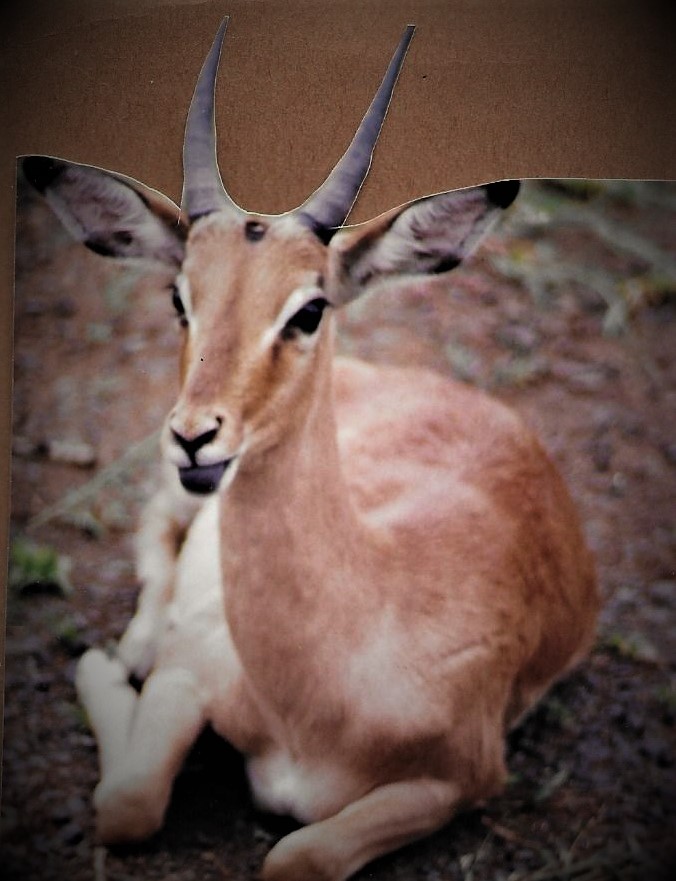
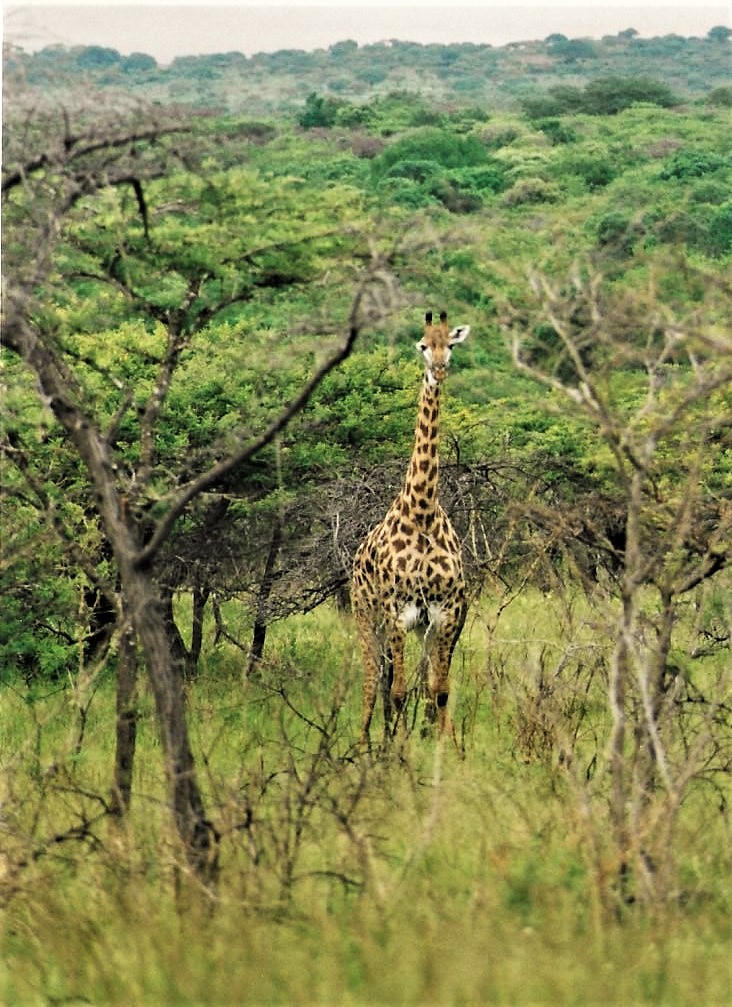
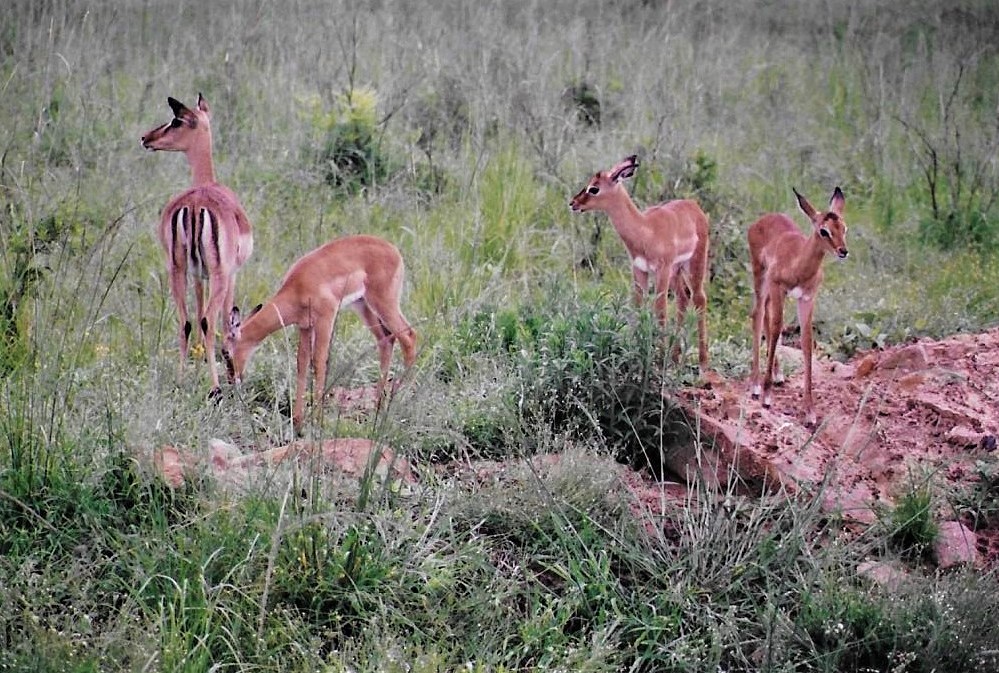
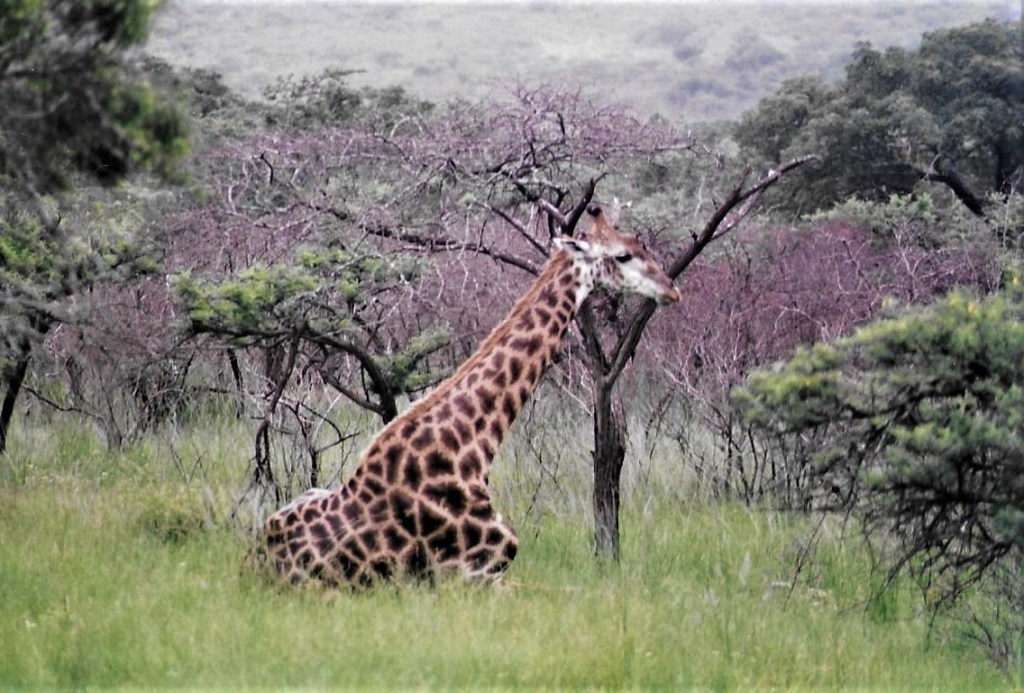
The next morning’s 6a.m. drive with new guide, Welcome, was even more amazing. Wide rivers snaked through an open savanna dotted with umbrella thorn trees and baobab, which I call upside down trees because their massive trunks are topped with root-like branches. Roaming wildlife included herds of elegant impala, cute steenbok with tiny horns and large ears, majestic kudu with long twisty horns, zebras, and African buffalo. A pair of warthogs trotted across low grass and flopped into a muddy waterhole a short distance from a few rhinos. The wooded savanna presented a shy giraffe, chattering monkeys, and the flash of a leopard sprinting through underbrush.
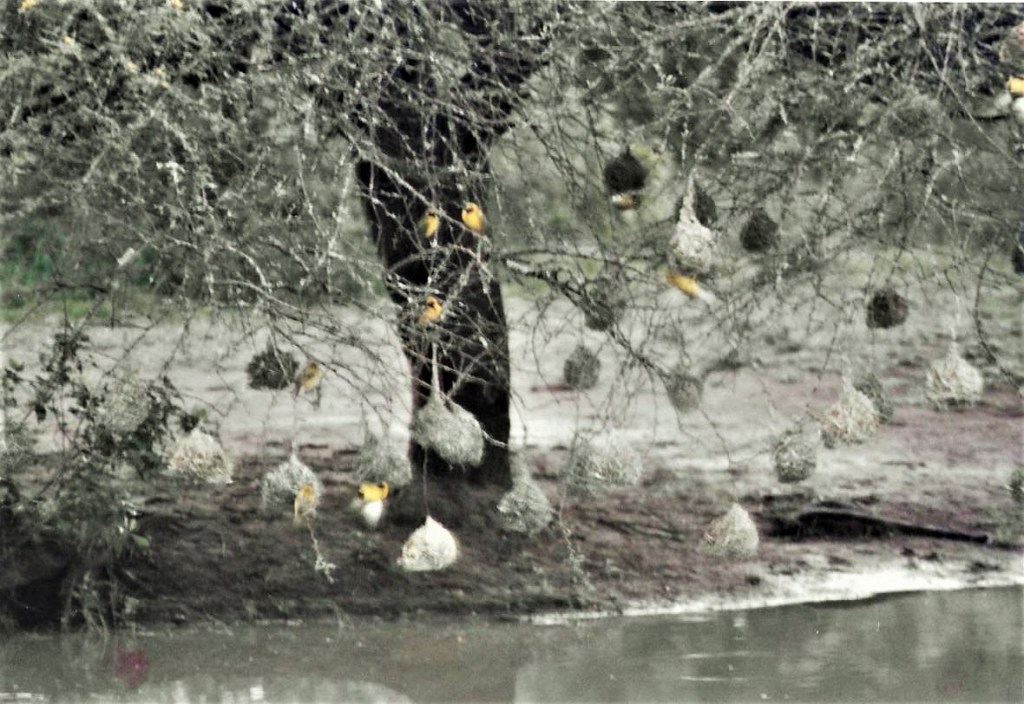
The early morning drive whetted our appetite for more close encounters. Jerry and I drove to a hide, a shelter with seats and a narrow horizontal opening to observe animals without them seeing us. Hundreds of circular grass bird nests hung from low limbs over a wide pond. Bright yellow weavers with black markings busily wove new ones. Kingfishers supervised, swallows swooped, frogs croaked, and small red duiker quenched their thirst in the momentary safety, ready to leap away at the slightest threat.
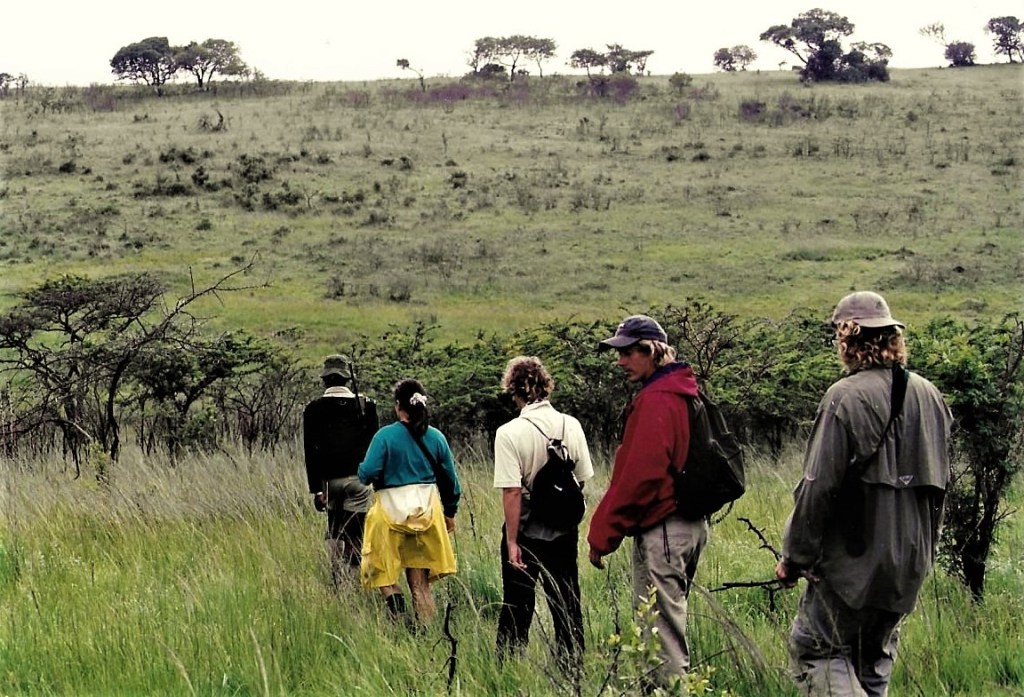
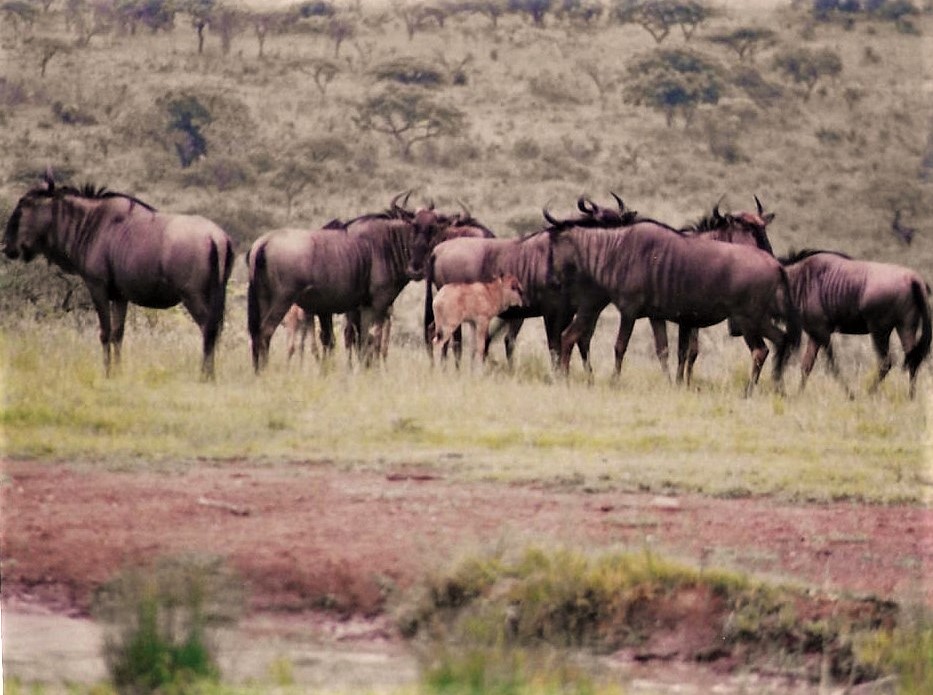
Our 5:30a.m. bushwalk in the cool African morning made me feel more vulnerable. We really were on safari! Our rifle-toting guide led the group single-file through the bushveld. We traipsed barely discernible paths with a mix of paw/hoof prints and scat, tall grass past our knees, where silvery buffalo thorn, fragrant bushwillow, and tall jackalberry grew. Vultures circled in the distance. An eagle soared. Giraffe peered warily and a group of gazelles with long curvy horns sprinted away. We quietly stepped past a grazing herd of wildebeest, not wanting to disturb these powerful animals. Nonchalant zebra peeked from the bushes as we tramped the trail back to civilization.
This National Geographic adventure was way too short, but sparked the desire for much more exploration of this diverse and delightful country. We were thankful to be given glimpses of the Big 5: Lion, leopard, rhinoceros, elephant, and African buffalo—and so much more—A look at how God intended the natural world to be, its creatures roaming free, nature in harmony.
All I have seen teaches me to trust the Creator for all I have not seen.
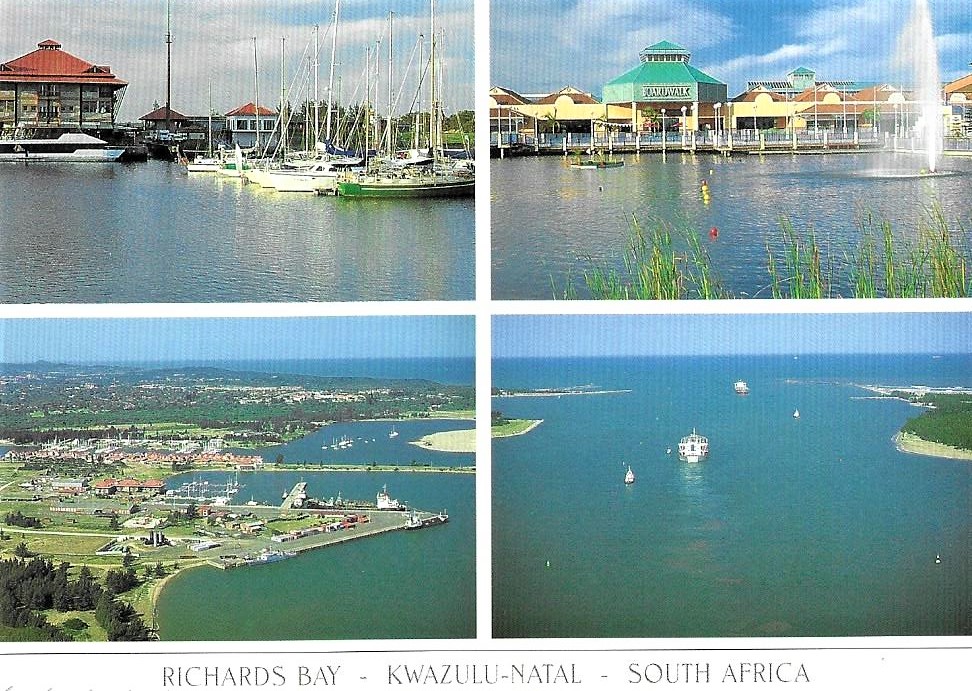
Richard’s Bay welcomed White Dove to S. Africa during their worst storm in 16 years. I will only say at this point, “We made it!”
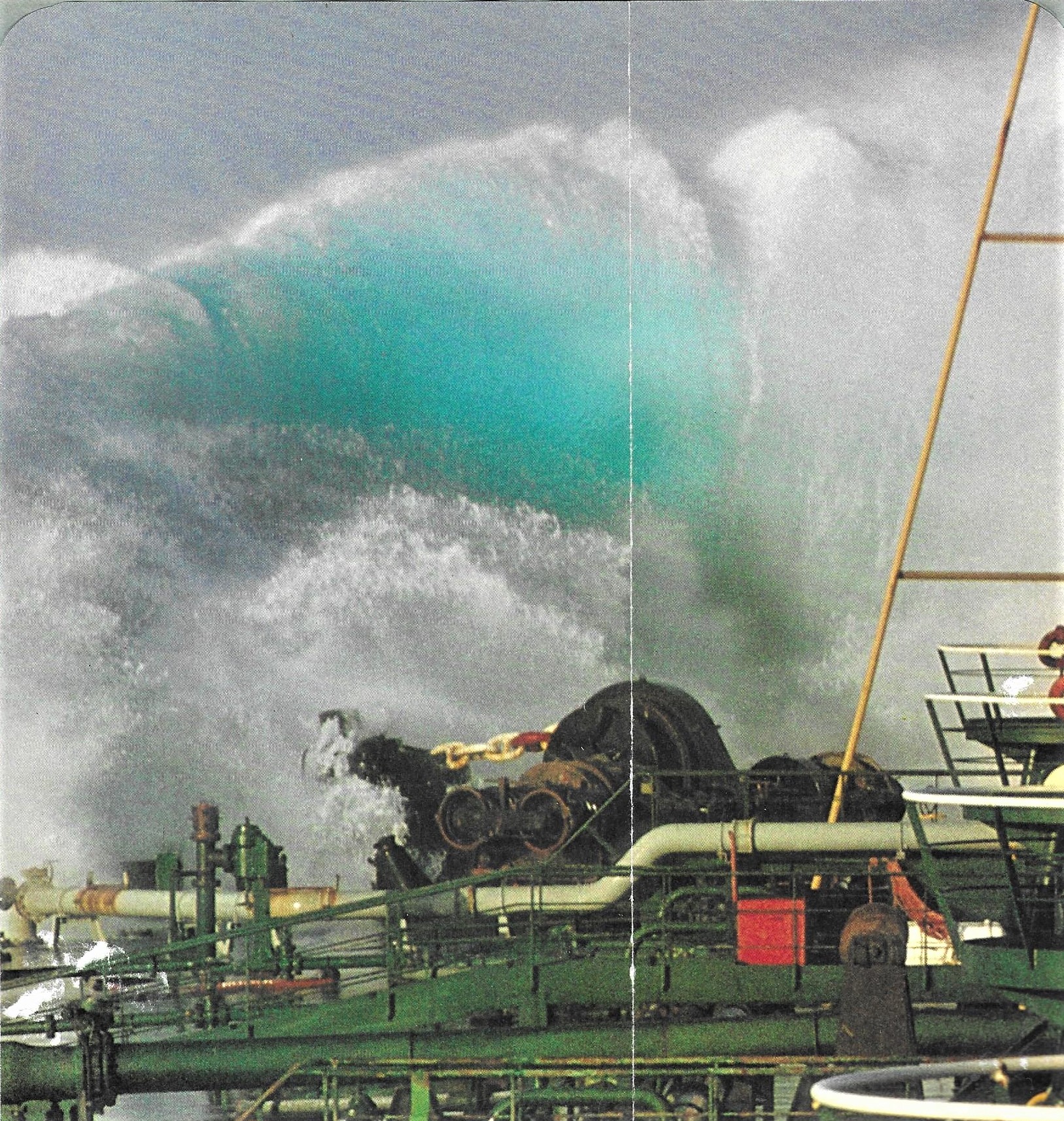
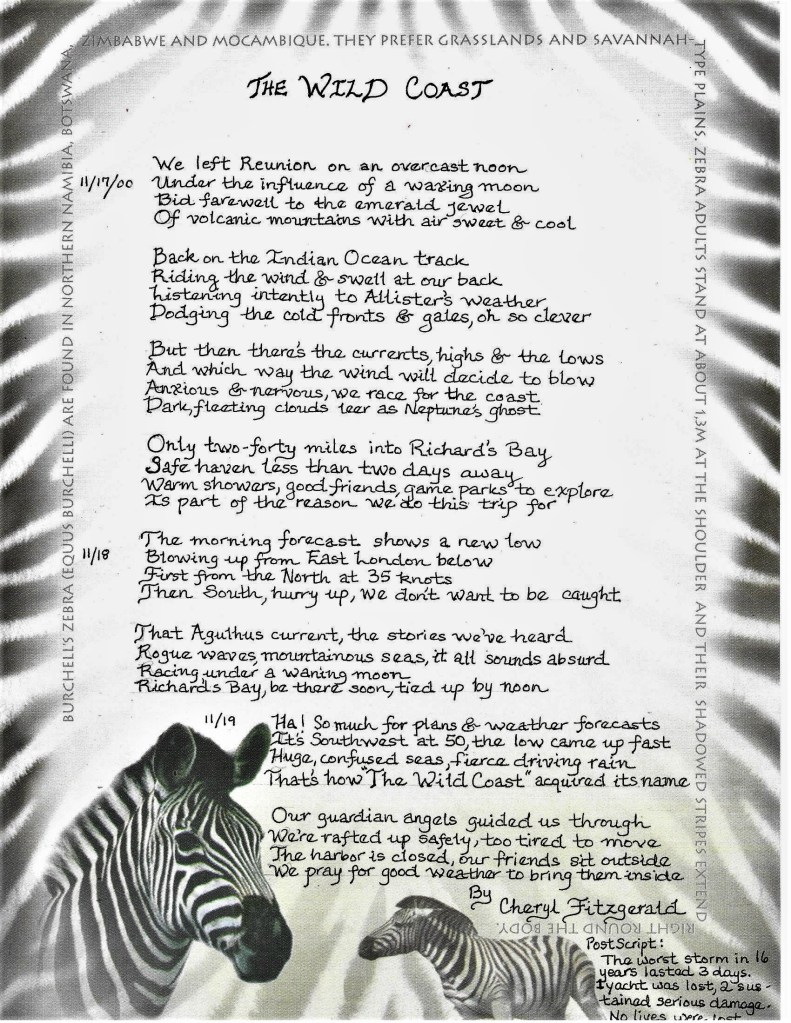
Sailors consider this crossing to be one of the most dangerous in the world. Its 5.8mph warm current runs south along the country’s eastern coast. When strong winds oppose the Agulhas current, it can produce monstrous, boat-breaking swells, like the picture shown above. We’re talking up to 50-feet! Getting updated weather reports is a necessity. We kept a ham radio schedule twice a day with friends on Appledore and checked in on the S. African net with Tony and Allister for changing conditions and the progress of other cruisers. It gave a teensy bit of security amid these turbulent seas.
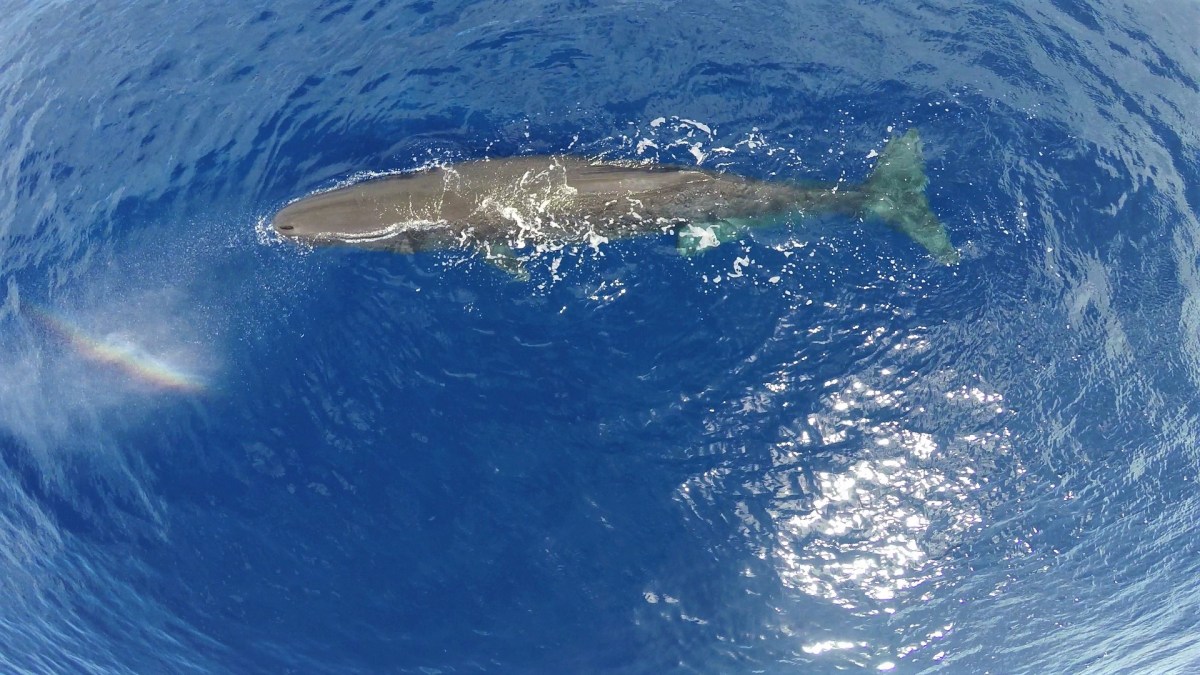
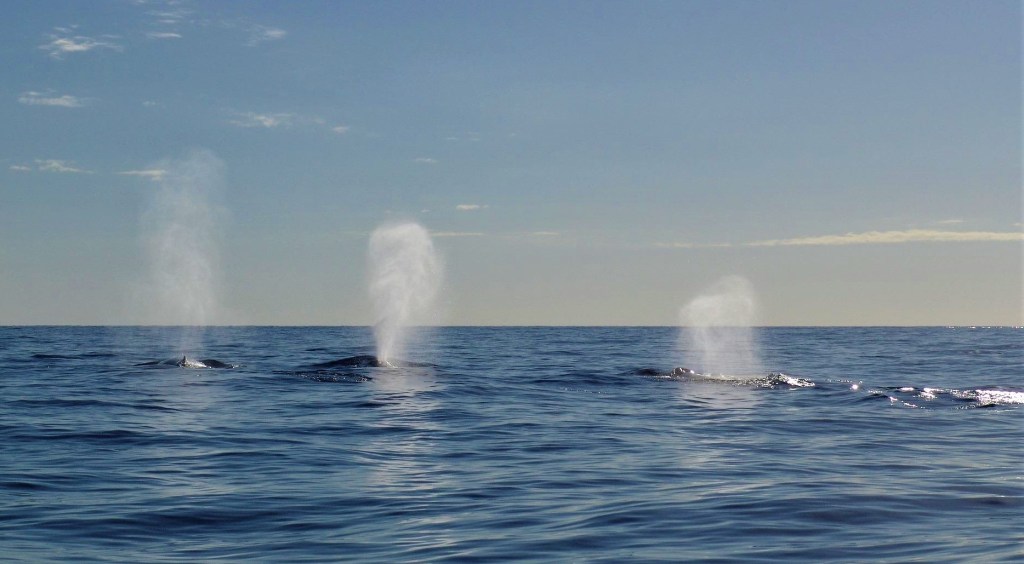
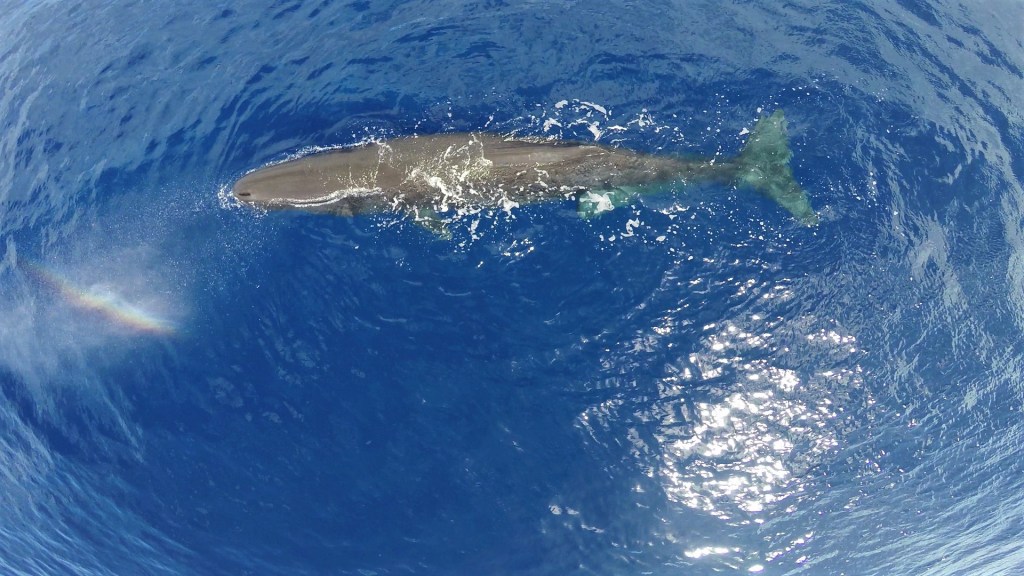
The first 5 days out from Reunion we made excellent progress under mostly clear skies, 10-20 knot breezes, and 1-2 meter seas. Our third day, east of Madagascar, was extraordinary. Relaxing beneath light-wind sails, we first spotted eight 20-ft black false killer whales spouting and feeding. A short time later we came within 40 feet of a pod of dark blue-gray sperm whales. Lined up and floating on the surface, just chilling. Perhaps napping after lunch? For the remainder of the afternoon we kept a close eye out, not wanting to disturb these magnificent creatures. Lots of spouting in the distance, but no more close encounters.
The second half of our voyage proved less than idyllic. Winds continually shifted in speed and direction. One night our spinnaker pole came crashing down. Thankfully not on anyone’s head. However, it was out of commission, along with our lapper that ripped along a seam. Other yachts experienced similar incidents due to uncomfortable 3-4-meter swells on our beams and running with too much sail. Squalls became our constant companion. Reports sounded hopeful that a developing low would stay well south of our destination. The southerly winds were light as we approached the 50-mile wide Agulhas current. The world’s second swiftest , it can interact with low pressure over land, intensifying and spawning secondary lows.
And that’s what occurred during our final 24 hours. Two lows collided! Gale force winds, gusting to 60mph, created huge confused seas with frothy volcanic peaks. During our two years of travel, I’d never seen the ocean look like that. Torrential rain severely reduced visibility.
Believe me, it looked nothing like the pictures above as we crept toward the breakwater entrance. I continuously plotted our position while Jerry steered, ready to turn around if conditions worsened. No breaking surf—so we glided between buoys and entered the harbor. Breathing great sighs of relief, we navigated to the small-craft basin where friends helped us tie to the dock.
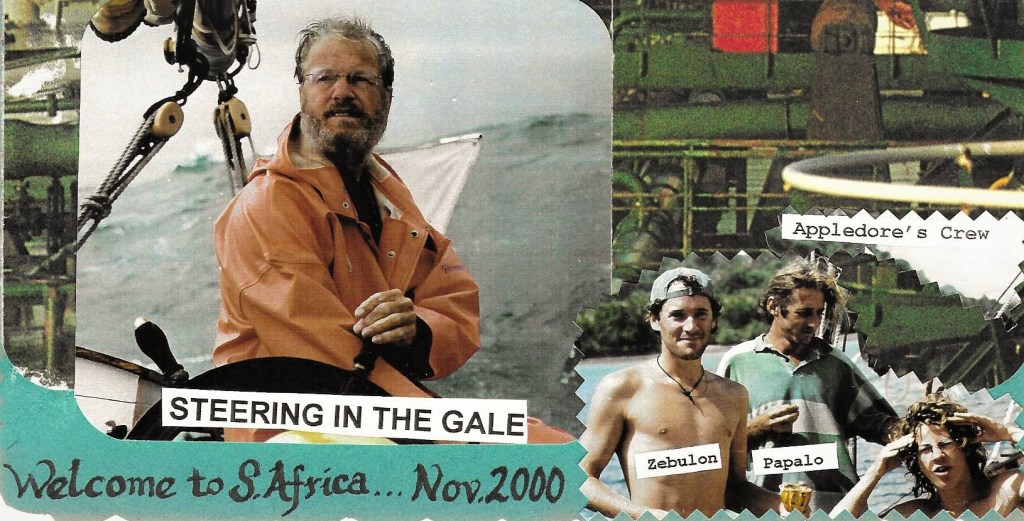
Captain Charlie and Appledore’s crew waiting outside the port
We were the last boat to squeak in safely before the Port Captain closed the port! For 3 days several cruising friends plus large commercial vessels had to anchor or heave-to in dangerous conditions. A couple of boats sank, but no lives were lost. Praise the Lord!
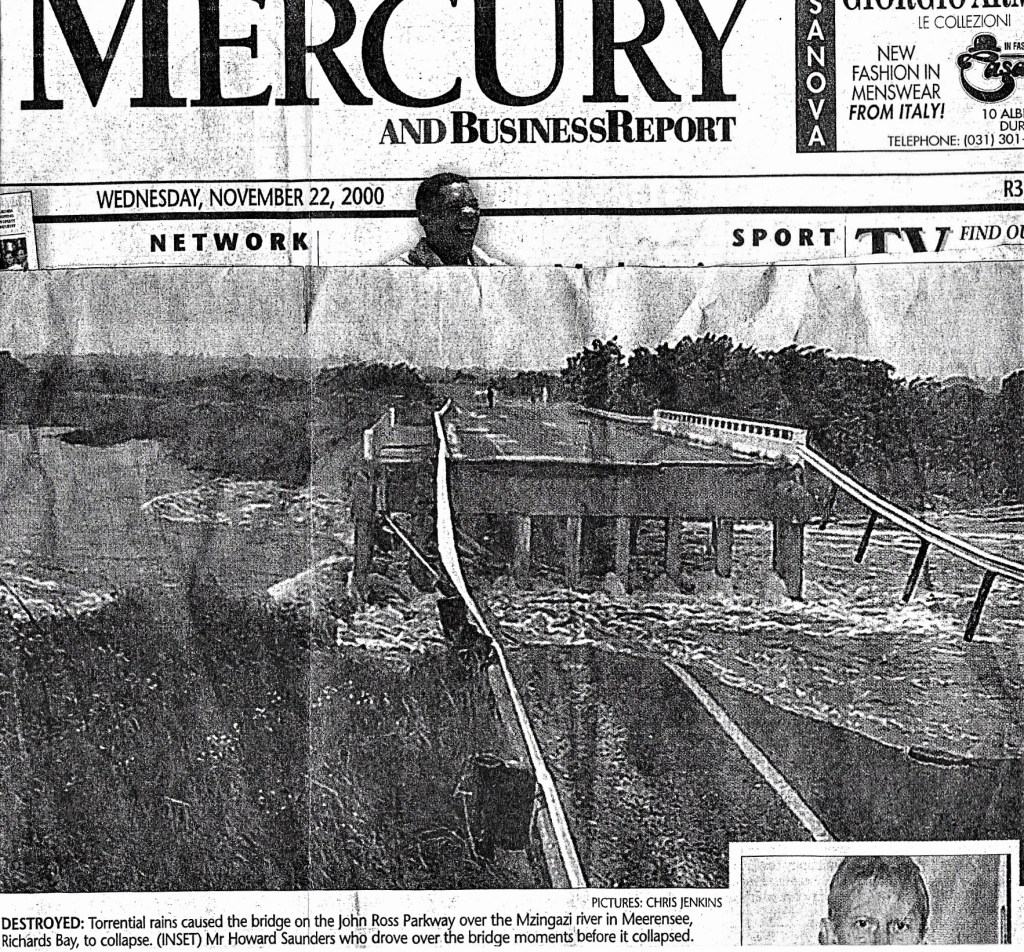
Local papers reported severe flooding which caused a dam to break. That washed out bridges and led to extensive damage. Included was an alligator farm where lucky captives fled back into the wild!
A week after the near-cyclone we celebrated a late Thanksgiving with Charlie, his wife Heather, their crew, and other cruising friends. We gave thanks for gathering in a safe harbor and the miracle of no injuries or major boat damage. After a few days of R&R and some provisioning, we’d be ready to explore. Anyone up for a safari?
Drifting without human charts through light & dark, calm & storm, I have come to so glorious an ocean—John Muir
Last stop of our Indian Ocean westward crossing found us side-tied 3 boats deep to a battered wharf in the noisy, smelly working harbor of Port Galet. We clambered over each yacht before facing the challenging climb up make-shift ladders of rope and chain. The good news? We got to meet our neighbors plus had access to fresh water!
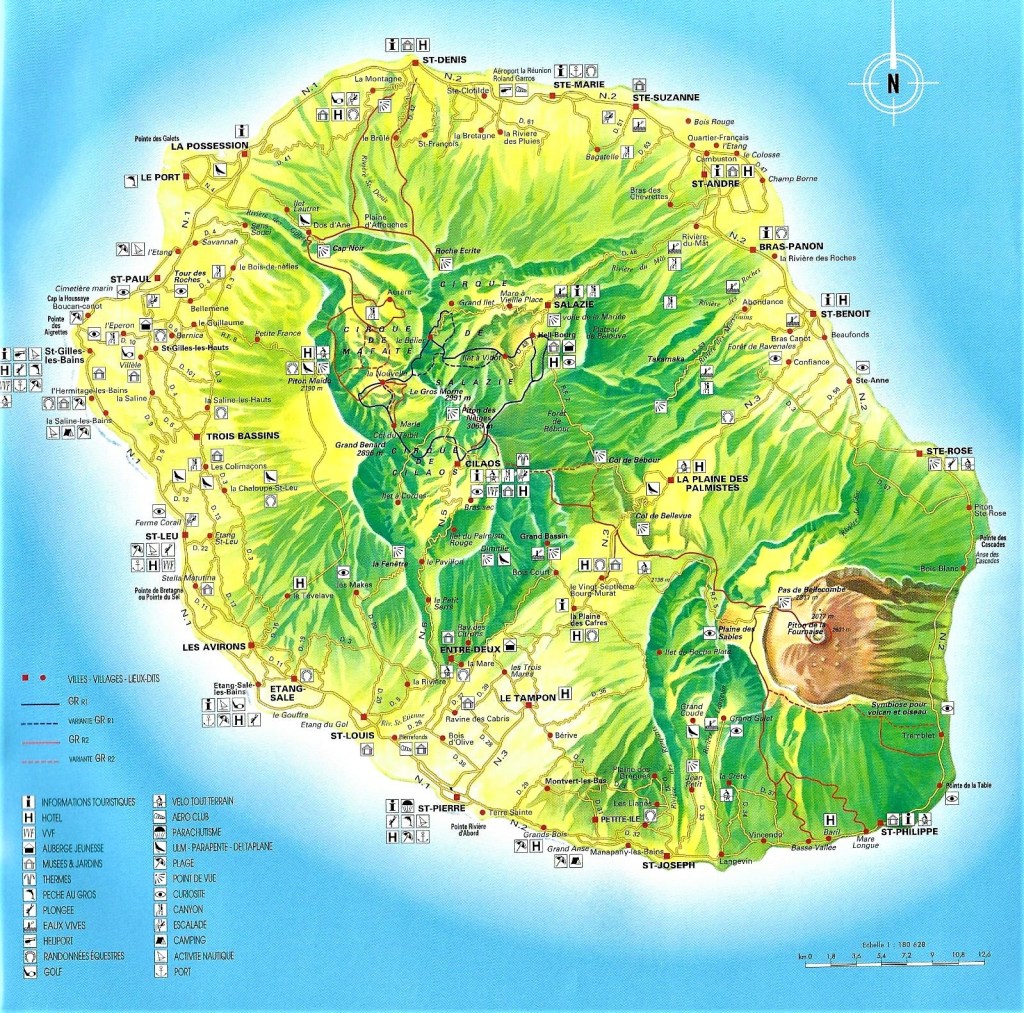
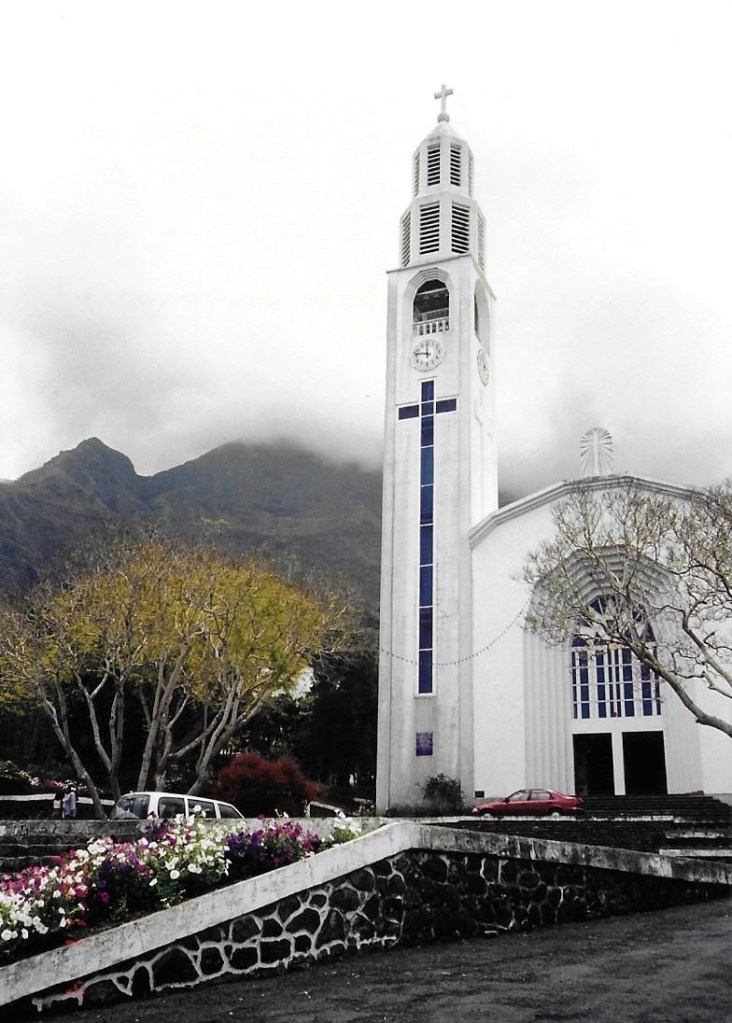
French-owned Reunion is a sub-tropical volcanic rock island country. Our visit was part pleasure/part work. The first day was spent beneath a sweltering sun trudging to the small town of La Possession where we caught a bus into St. Denis, the capital. Located on the northwest coast, it held a mixture of historic and modern architecture, museums, gardens, and various ethnic restaurants and shops. Its varied races and cultures co-existed in harmony, demonstrated by the tolerance of a Catholic cathedral, Muslim mosque, Tamil temple, and Protestant church all within blocks of each other. Our focus lay in obtaining tourist maps and brochures, fresh produce, and of course, a French staple—baguettes. We lunched at Le Roulette trucks amongst a flowering park of centenary trees. Restful seascape and majestic vistas of mountain peaks made me reflect on native writer/artist, Leon Dierx, christened “the prince of poets” by French peers in 1898. He attended college in France and eventually made it his home.
The following two days Jerry and I slogged our way through chores and projects, preparing White Dove for the 10-day voyage to South Africa. Nearing that continent can prove treacherous due to strong-flowing currents, unpredictable winds, and fast-changing weather—as you’ll discover in my next episode! Our main projects: Spreading out the lapper, our largest sail, and repairing its seams with sail tape before wrestling it inside the boat and through our sewing machine; Rerouting the luff lines; engine maintenance; securing all gear inside and out; organizing and preparation of meals. All fun while sweating profusely!
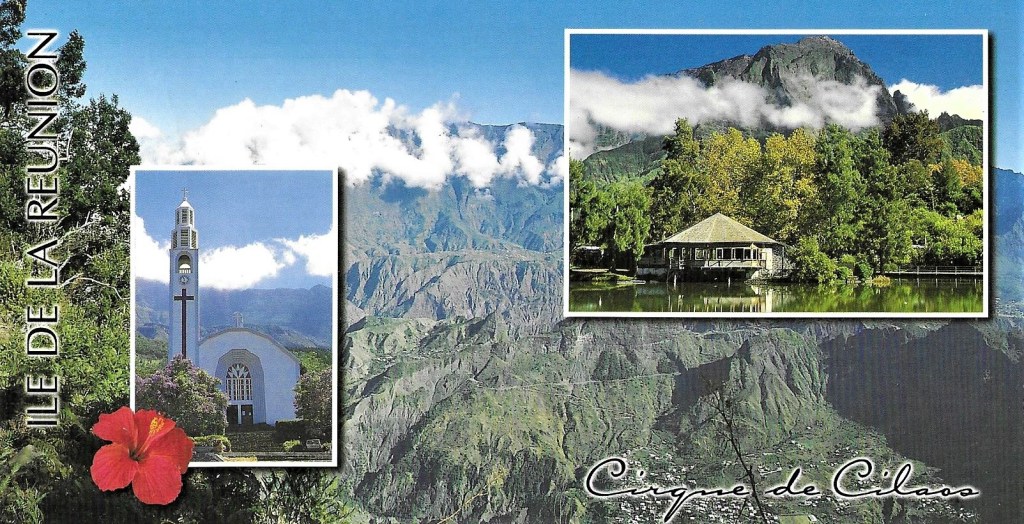
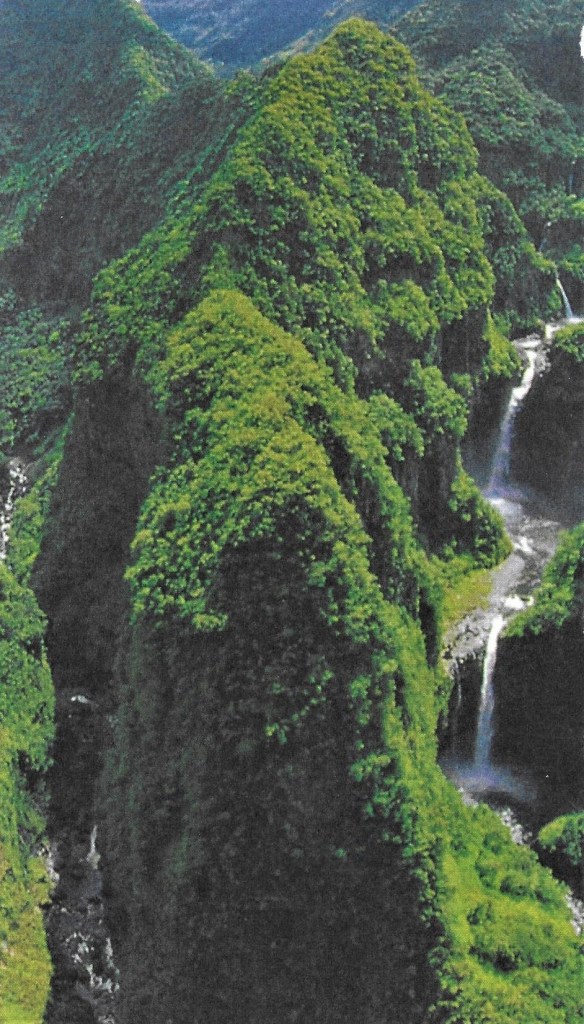
Then it was time to play. Arising at 4am, we caught the 6:15 bus from Le Port. Since most passengers were French, the driver/tour guide spoke French. But that didn’t deter from interpreting the captivating scenery as we passed rugged coastline, turned inland through farmland, then winded past charming European-style villages as we ascended into the Cirques—three natural amphitheaters formed as the inside of Piton des Nieges collapsed, then further through erosion. It was a drive to remember. The one-lane mountain road spun us through S-curves and horseshoe bends. Dark tunnels had only inches to spare on both sides. The only thing between us and sheer drop-offs were short curbs. Many prayers were invoked on that ride. But exhilarating panoramas of deep canyons cut by rivers, tumbling waterfalls, green valleys, and rugged mountains with Yosemite-like granite cliffs helped cloak the dangers.
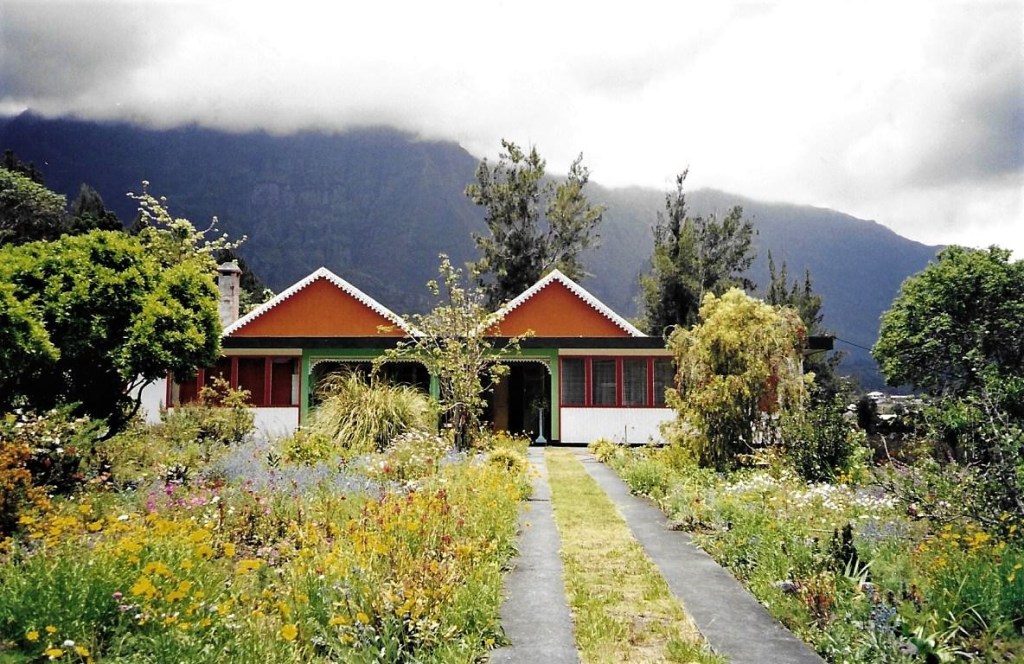
Arriving in Cilaos, the mountain air was sweet and refreshing. Besides therapeutic thermal waters and baths, this quaint village offered wineries, cafes, hiking and mountain biking through dusky conifer forests, and lovely Roche-MerveilleuseBotanical Path. We picnicked beneath scented mimosas and tamarinds des hauts, a tree endemic to Reunion. Feasting on local bread, cheese, fruit, and wine, a freshly-baked strawberry tart was the grand finale.
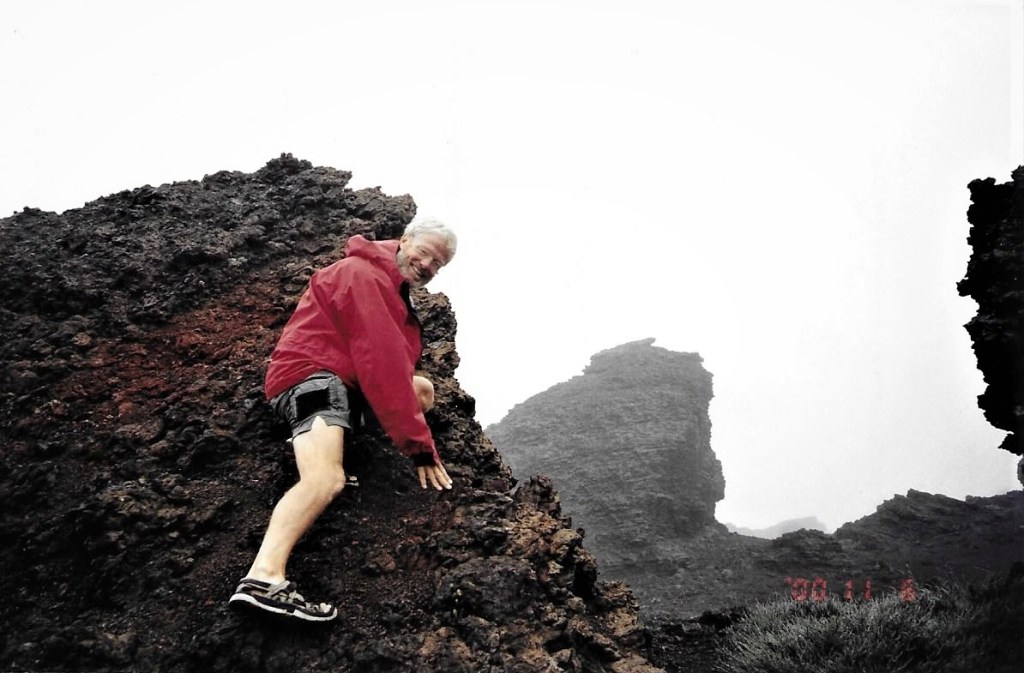
Another day we shared a rental car with cruising friends from Appledore and Horizon to explore the south-eastern portion of the country. We crossed high plains with plantations of sugarcane, vanilla, and coffee; farms growing garlic, chou chou-a tuber vegetable, saffron crocus which produces the costly spice, nutritious goyavier berries, and rosat geraniums whose leaves are distilled to make essential oils. Our main focus was hiking Piton de la Fournaise, meaning furnace peak. Le Volcan is one of the world’s most active volcanoes. Unfortunately, by the time we reached road’s end, where stony trails began, clouds and cold rain enshrouded us. We descended back to Volcano House where we partially satisfied our curiosity of the alien landscape in their theater watching videos of awesome volcanic eruptions, plus enjoying displays of photos and paintings throughout the museum.
Further down we explored Plaine des Sables-Sand Plain. Through misty barren moonscape sat clusters of odd-shaped red scoria from recent lava spews and boulders scattered among the reddish-brown sand and gravel.
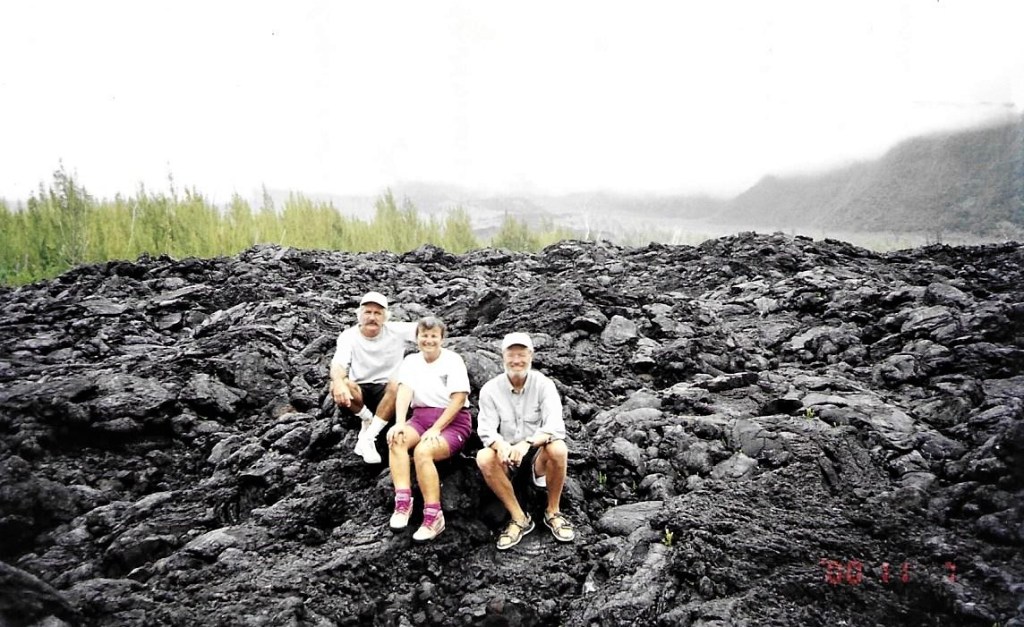
Along the south and eastern coastline tradewinds carry rain to magnificent colonial estates hidden within orchards, winding paths through cryptomeria forests, and gardens of white arum lilies. Lava flows occasionally interrupt this lush landscape. We climbed around a large, 2-year-old flow at Pointe-de-la-Table. This river of porous rocks in shades of red, golden brown, steel gray, and black snaked into the ocean. Only the roaring sea and cries of gulls broke the otherworldly silence.
Wish we’d had time for more activities on this island gem. There’s adventures for all fitness levels:
Canyoning- For more advanced daredevils, canyons beckoned for climbing, rappelling, kayaking, rafting, and waterfall jumping!
A hiker’s paradise for everyone from ramblers to high-peak mountain climbers, with countless footpaths and two major trails through Grande Randonnee.
Horse-trekking- A unique mode of exploration on the back of a gentle Merens horse, imported from the Pyrenees in France.
There’s also catapulting down mountain bike trails, soaring from a para-glider, and all types of ocean sports.
For now I say adieu, and leave you with portions of “October Evening” a poem by Reunion native, Leon Dierx.
A tremor slides from the hill-slopes down to the plains...A tremor of night passes on to the country lanes...
Under a chilly gust the songs grow soft,
Afar the sound of singing and laughter dies.
In the dense mist rising up as a breath uncurls...
Its farewell sighs where the dark wood shakes in dread—
It shakes in dread and the dry leaf eddying whirls,
Whirls and falls on paths that no feet tread.

































 cheryldfitzgerald.com