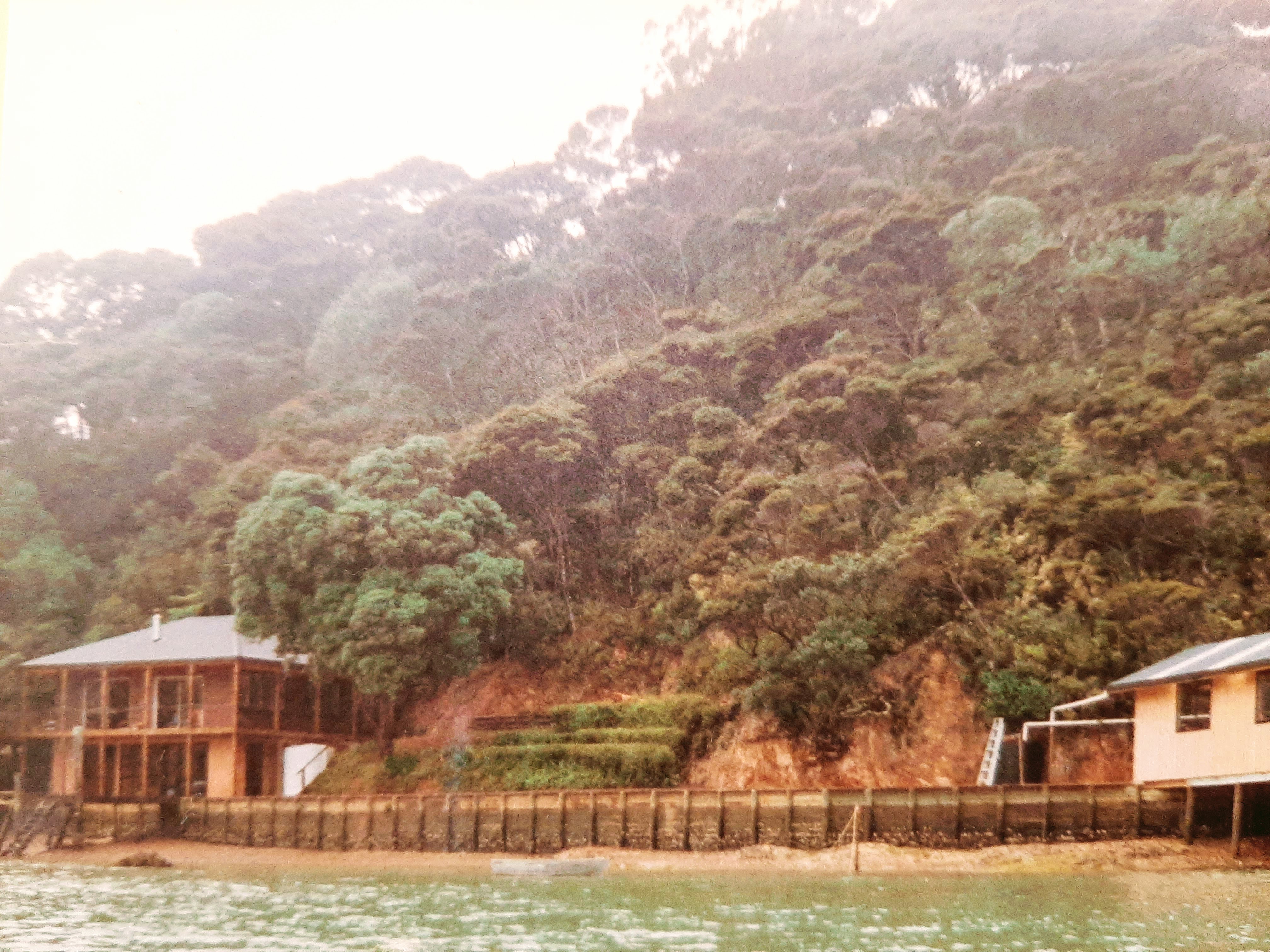
Indian Ocean Crossing—Mauritius

Time is a relentless river. It rages on, respecter of no one. This is the only way to slow time: When I fully enter time’s swift current, enter into the current moment with the weight of all my attention, I slow the torrent by being all here. I only live the full life when I live fully in the moment—Paraphrased from “A Thousand Gifts—Ann Voskamp
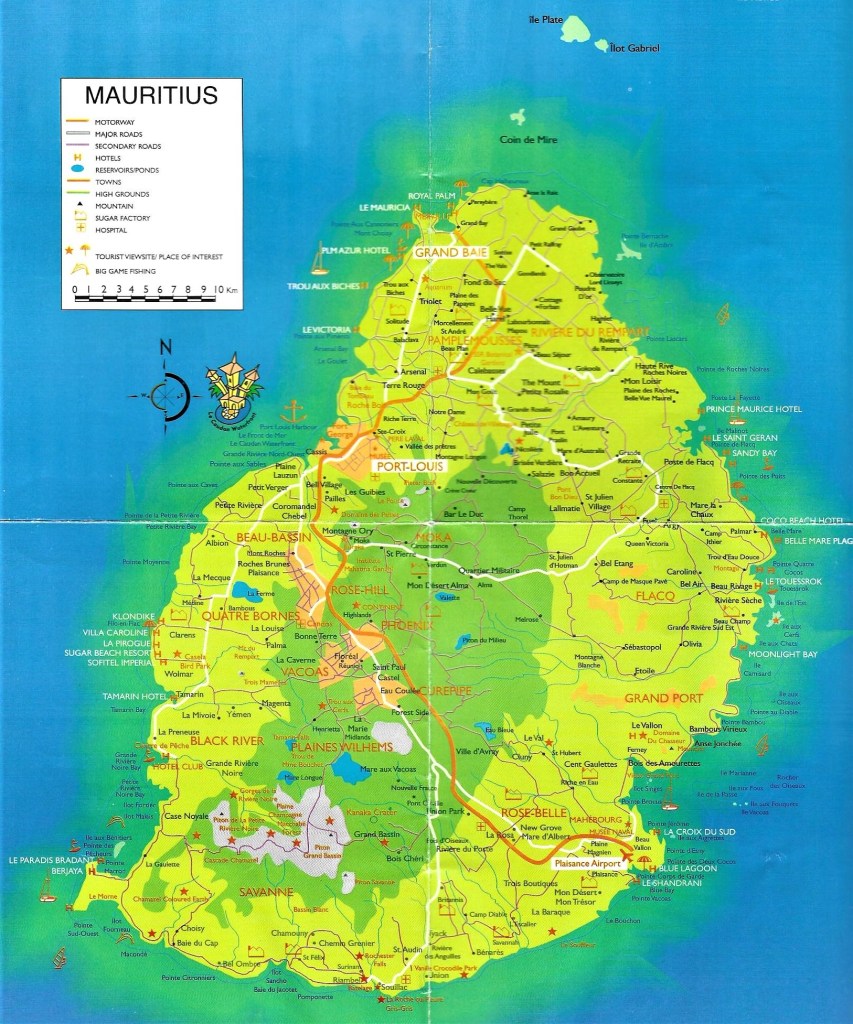
Arriving in Mauritius at the end of October brought an unexpected pleasure—the Hindu Diwali Festival. Clay lamps flickered nightly, creating a mystical ambience to the aptly named, Festival of Lights. Dancers and singers entertained for 5 days. Even the Mauritius Police Band got in on the act, performing a mixture of traditional, American pop, and jazz. There was even tap-dancing and a little Sega—indigenous music, singing, and hip-swaying dances, derived from African slave days.

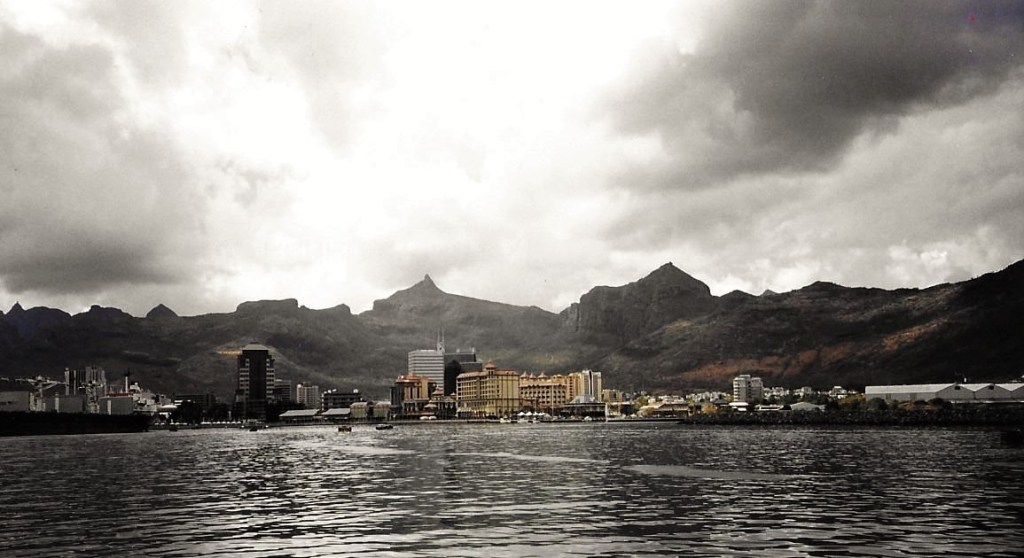
The sheltered harbor of Port Louis lay within a semi-circle of mountains providing a calm anchorage.

This capital and main port buzzed with traffic and people like a disturbed bee hive. But on the plus side, there were several charming 18th century French colonial buildings and a huge Central Market offered scrumptious fresh veggies and fruits. You just had to tolerate loud, obnoxious vendors jockeying to sell their wares. Within the chaos women wove through the hordes of shoppers balancing full baskets on their heads. One day of wandering led us past a strolling Indian wedding party. Attractive women dressed in gorgeous vibrant saris smiled shyly while their beautiful children stared inquisitively with humongous dark eyes. Men shook our hands, greeting us in French Creole and a smattering of heavily accented English, treating us like old friends, then passed out small individually-wrapped cakes.

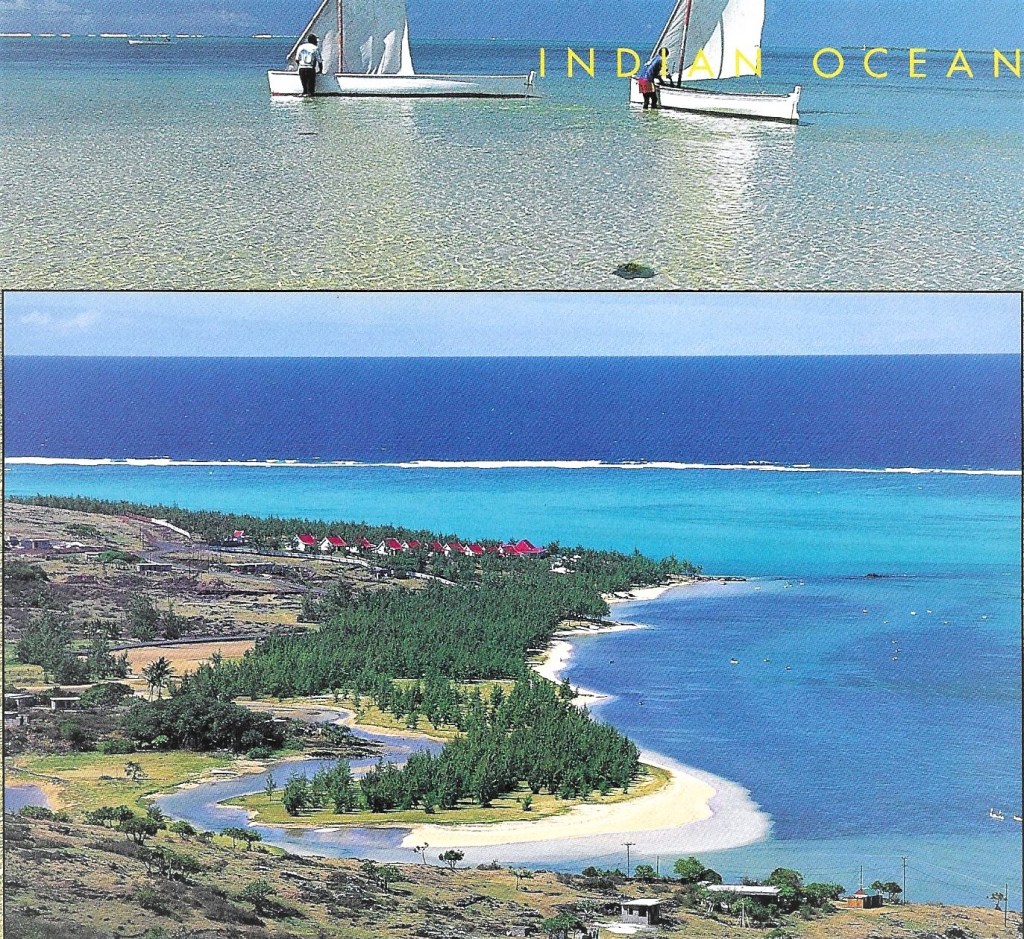
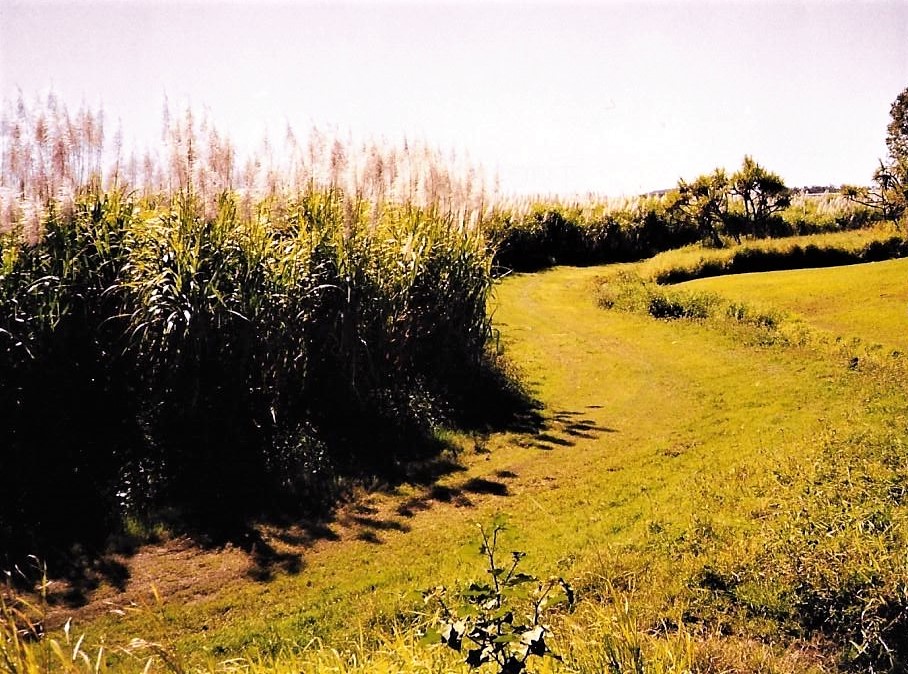
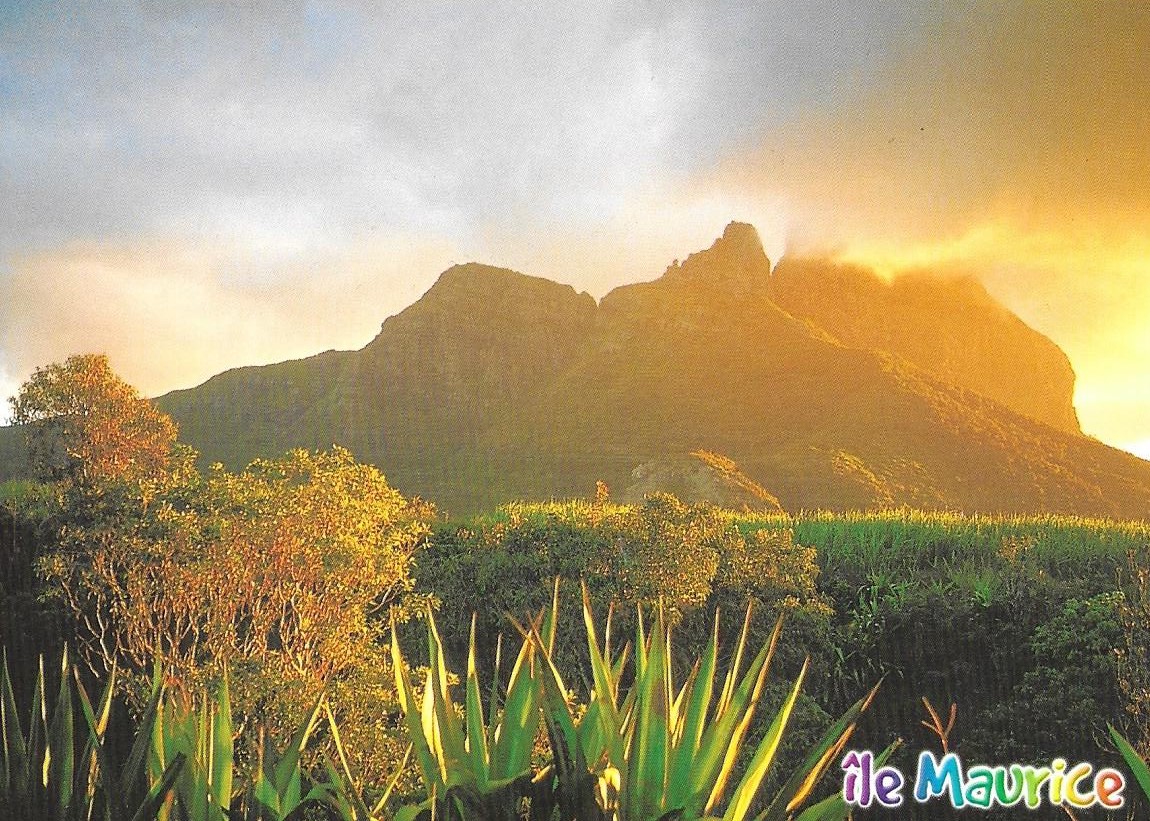
Although nights were pleasantly cool, days were hot and humid. We rented a car with cruising friends to explore the island. A layer of soot had covered our boat since arrival. Along our route we discovered the reason—burning sugarcane fields, preparing for harvest. The leaves and tops would be removed and only the stalk harvested. This island country, encompassed by spectacular coral, teemed with sea life within the reef and was a deep-sea fisherman’s paradise outside. Three rugged mountain ranges exhibited fascinating basalt formations, while a central plateau , crisscrossed by rivers, streams, and waterfalls, held an extinct volcano. There were also several nature parks, including Black River Gorges National Park for varied hikes and birdwatching.
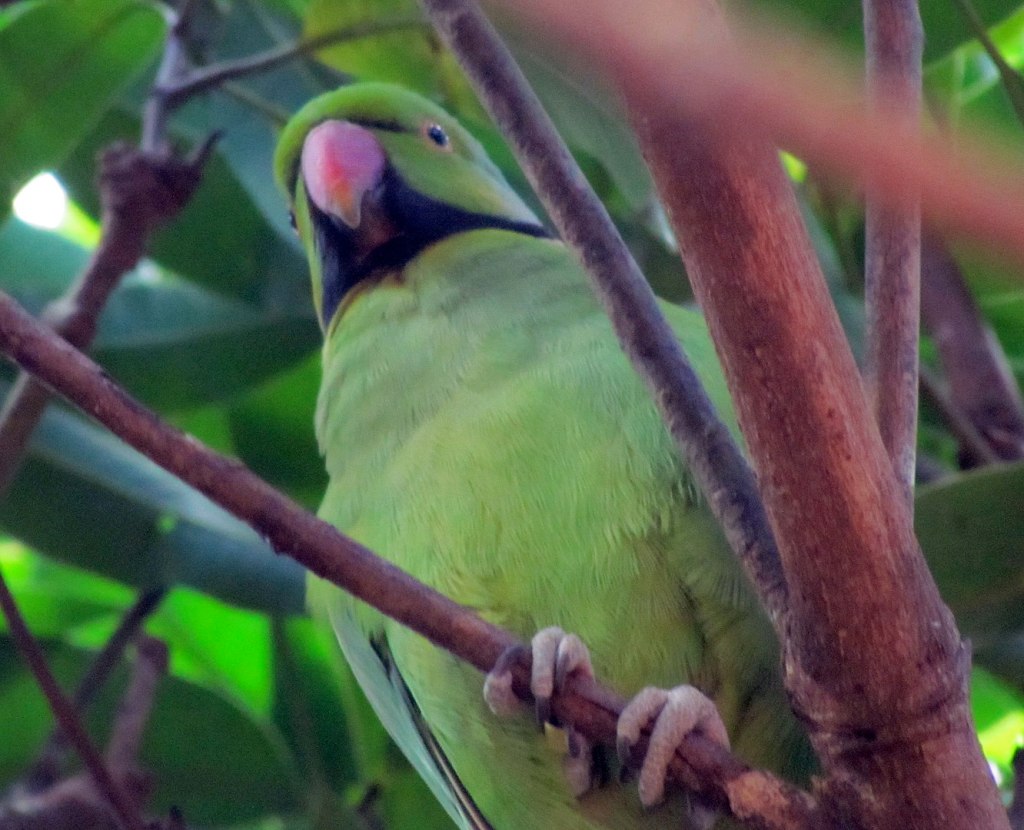
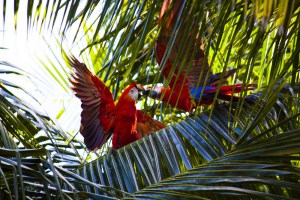
Echo parakeet-Josh Noseworthy/Wikimedia

Keep your eyes sharp for Mauritian pink pigeons, kestrels, and especially the rare Echo parakeets. Their vibrant emerald-green can blend into the foliage of the eucalyptus, palms, and pandanus. There’s also Pamplemousses, with world-renowned gardens of indigenous and exotic plants, including giant Victoria Amazonica water lilies and the Talipot palm which only flowers and fruits once in about 60 years…then dies!

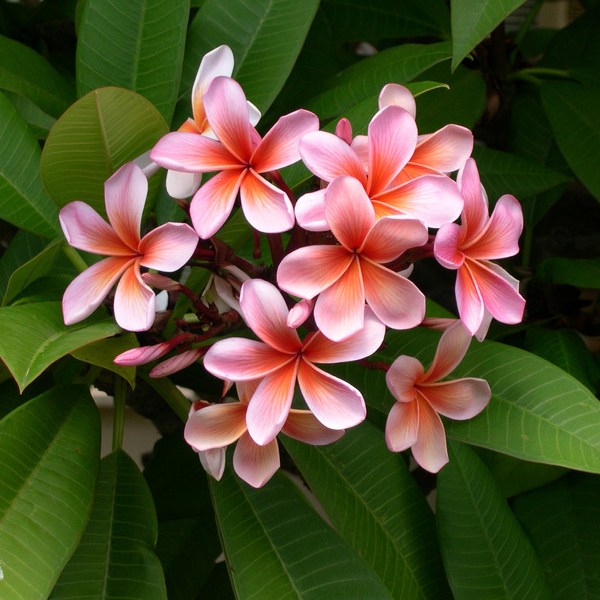
Sprawling communities and plantations dotted the landscape with a mix of wealthy and poor, modern and traditional. Textiles were one of the main industries, but sugar, tea, vanilla, and flower plantations also provided jobs and goods for export. At Le Domaine de l’ Ylang Ylang in Vieux Grand Port, canaga trees produced yellow, star-shaped flowers which they distilled into perfumes and essential oils. Ylang ylang’s sweet floral fragrance had hints of custard, bananas, jasmine, neroli, honey, and earthy, and is used to combat depression, anxiety, and high blood pressure, plus stimulate hair growth and repel insects.
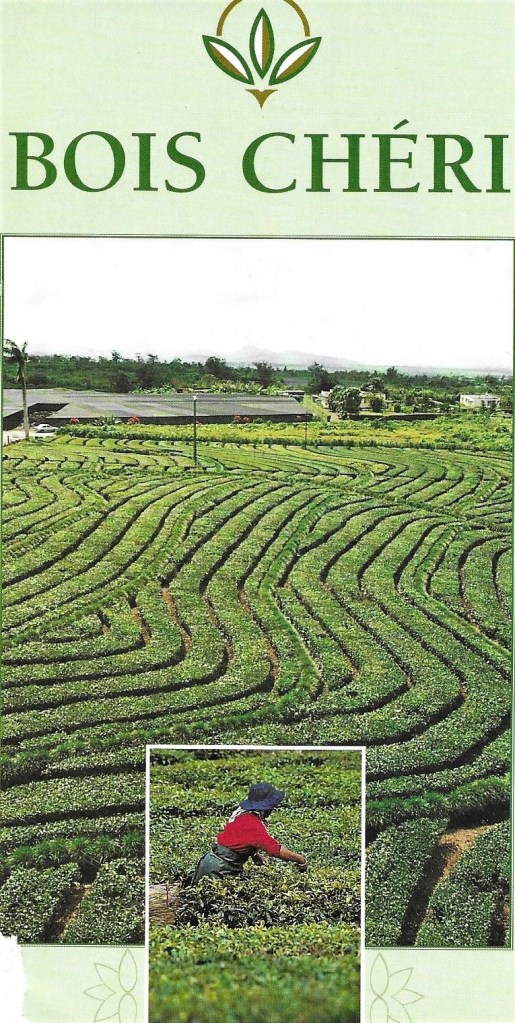
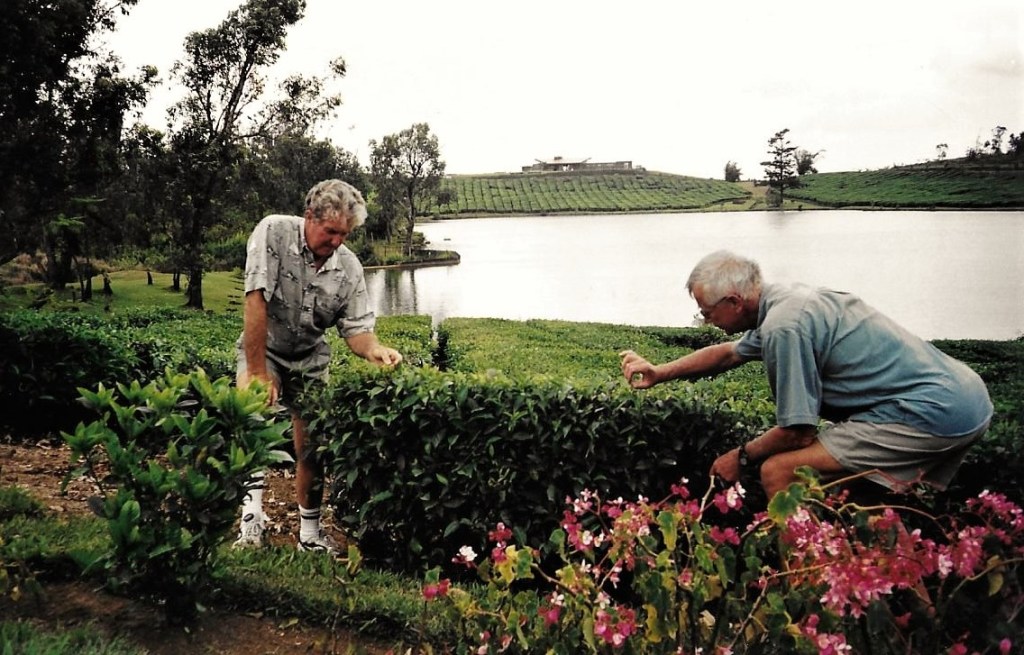
We toured this prolific tea plantation, including its museum and factory, to observe the step-by-step process of tea-making. Afterwards we savored tea and biscuits atop a mountain over-looking the plantation and its lovely lake.
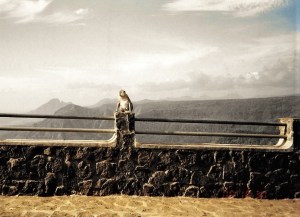
Stopping at a few of the many scenic lookouts, we were greeted by hordes of long-tailed macaques. These intelligent monkeys foraged among the trash cans, emitting high-pitched squeals when we didn’t contribute to their next meal. Not a good place for a picnic as they can get a bit aggressive!

We also passed vanilla plantations and anthurium greenhouses that thrived in the tropical climate. This gorgeous plant has bright-red glorified leaves with a yellow spadix. The spike is the actual flower. Who’d guess?

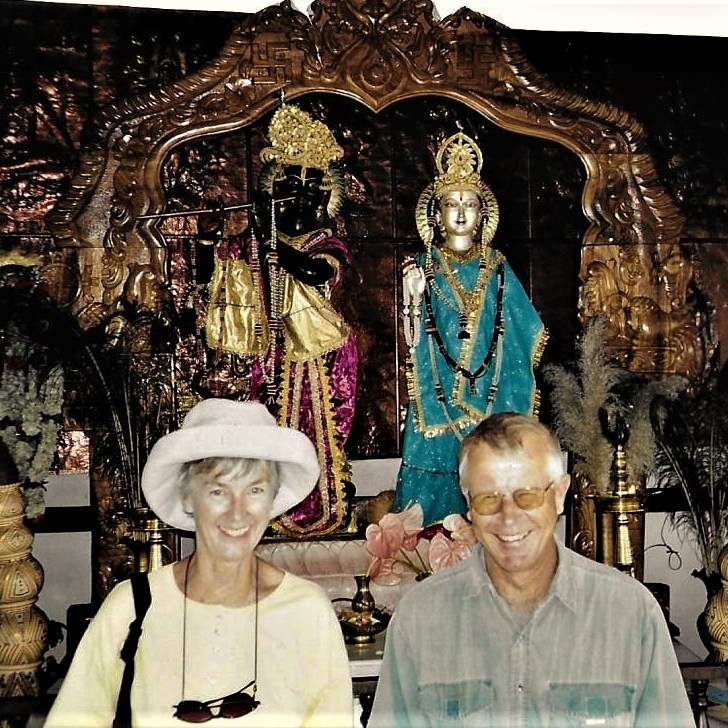
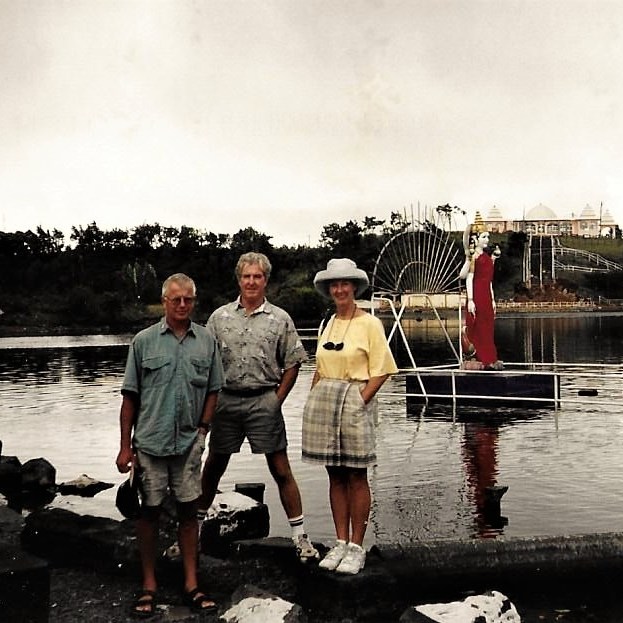
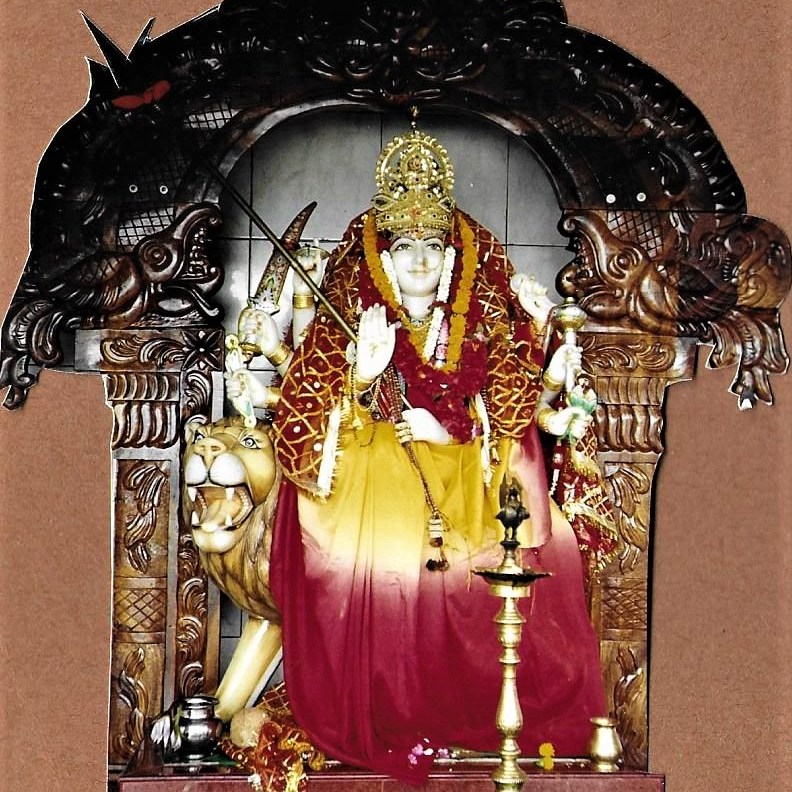
Grand Bassin—A Hindu holy place of pilgrimage. This natural lake, largest in the country, lays within a volcanic crater. Scattered among the paved walkways were elaborate shrines and glowing golden statues.

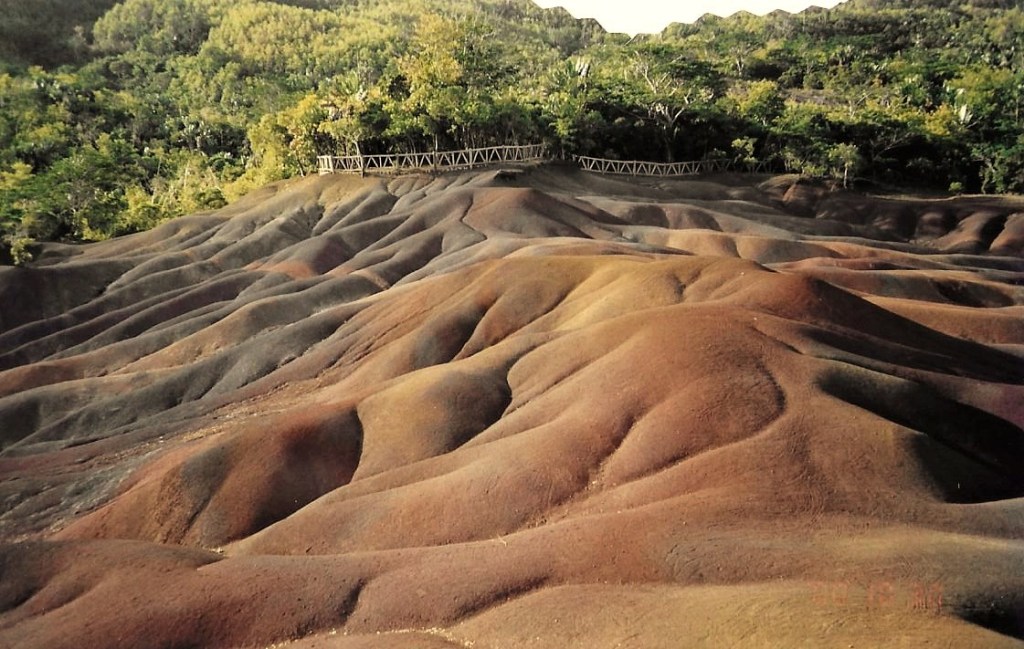
Last stop of the day was at Chamarel where we followed pathways among the Colored Earths, reminiscent of Arizona’s Painted Desert. The undulating layers of red, yellow,blue, and brown cast a subtle magic over the area. A nearby waterfall emerged amidst the moors and primeval vegetation. As the sun slowly sank, colors of the earth melted into purplish hues. A perfect ending to an amazing day in this little-known country afloat in the middle of the Indian Ocean.
Indian Ocean Crossing—Rodrigues Is

South Indian Seas

Through the churning wash machine
White Dove plows, decks salty clean
Warning, distant rumbling thunder
Next wave almost rolls us under

Jagged peaks of white-capped swells
Tumble toward us, dip our rails
Waterfalls down open hatch
Scramble quick, secure its latch

Billows boom, explode 'gainst hull
followed by a peaceful lull
Swishing, splashing, muted sounds
Tensely awaiting next round

Torrents rush, again expand
Where's that haven we call land
Racing down the trough's light foam
Hisses, gurgles, creaks, and groans

Sailboat protests ocean's powers
We strive toward shore, counting hours 


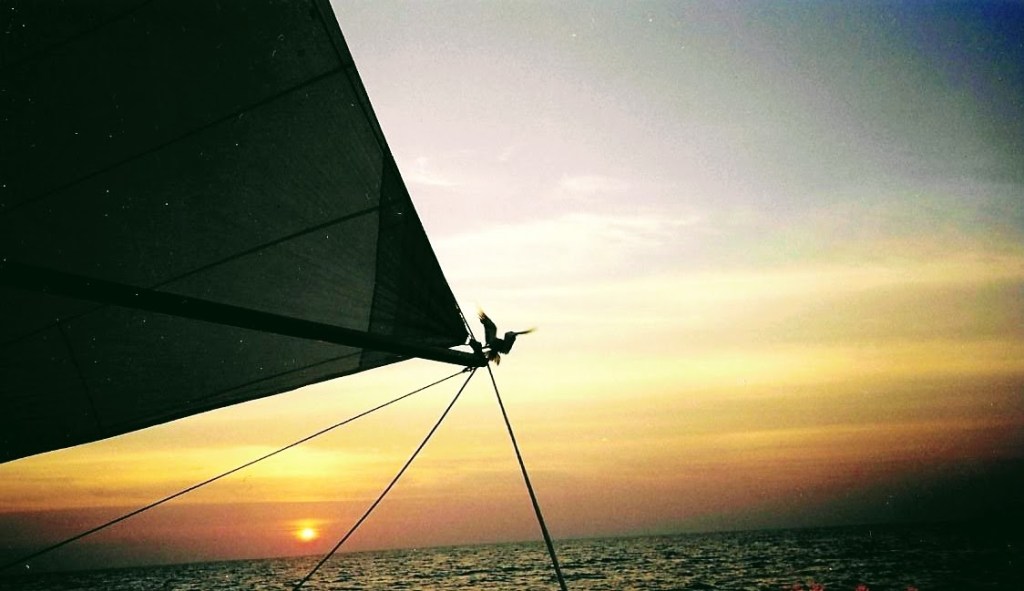
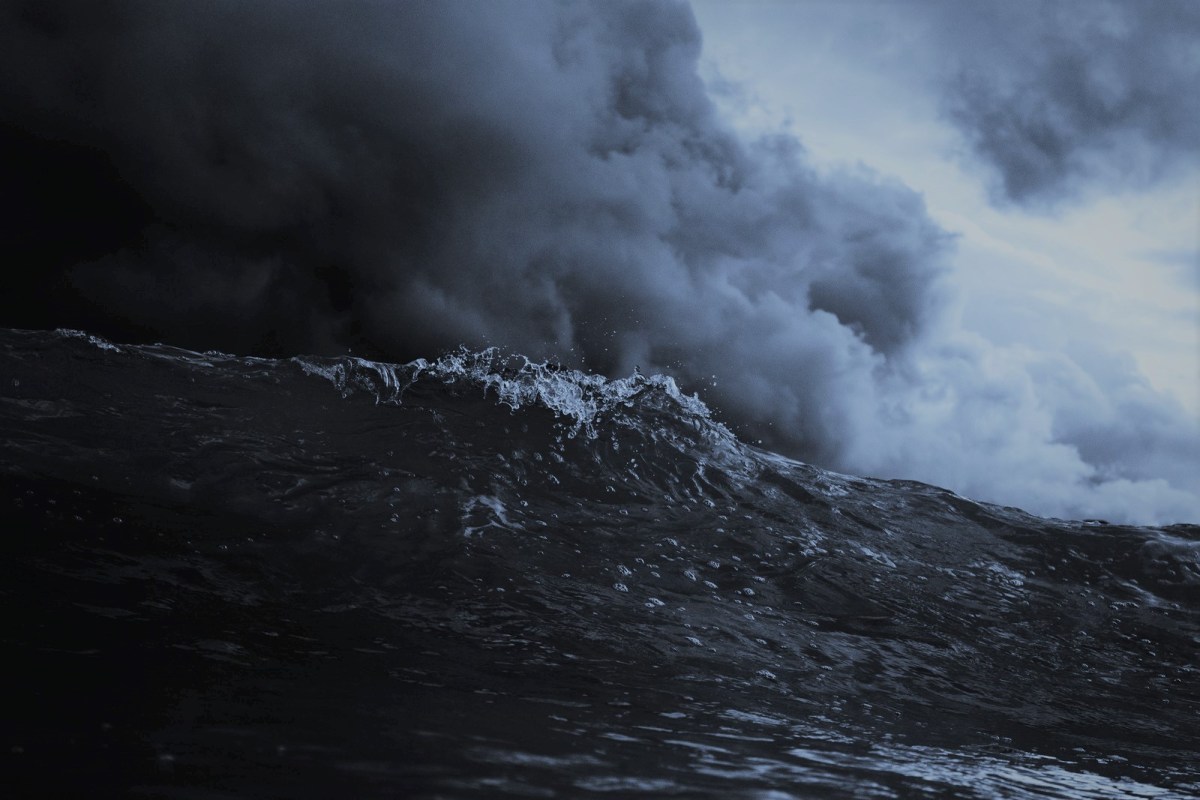
Howling winds and swells up to 12-feet propelled White Dove on a bouncy 2,000 mile passage to Rodrigues Island, a territory of Mauritius. Night watch felt like Space Mountain as we dipped and rose, rounding into wide sweeping curves. The highlight of that weary 14 day crossing was witnessing the elusive green flash as blazing sun dived into deep blue sea.

Arrival and check-in at Port Mathurin, capital of Rodrigues, was easy with friendly officials and no charges. Small shops lined alley-like streets, carrying groceries, clothing, appliances, and intricately weaved baskets. Interspersed among these were dim, noisy bars and bright limestone government buildings. Dodging motorists proved a challenge as we strolled the town of this less-traveled tiny, 41-mile island. But handsome locals, varying in shades from black to light-brown, engaged us with curious smiles, speaking a mixture of Creole, French, and broken English.

With cruising friends off Appledore and Alcyone we toured Rodrigues with two local guides. Bumpy roads twisted, leading to unexpected encounters—men herding tribes of goats; Brahma bulls and cows barricading our path; clucking chickens, squealing pigs, hungry dogs; and colorfully dressed women of all ages sauntering along with full baskets balanced perfectly on heads.

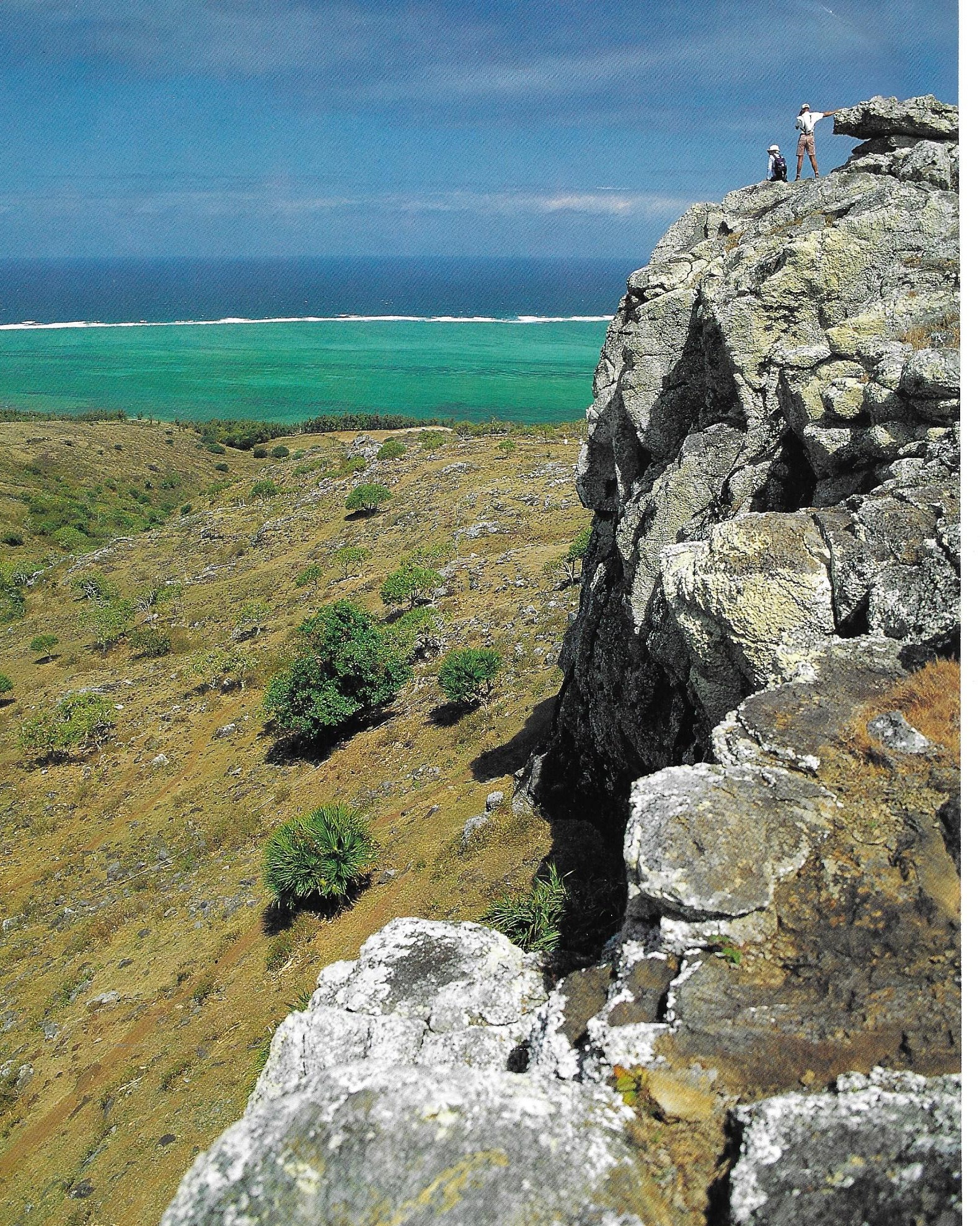
The harsh hilly terrain was splotched with clumps of casuarina (Aus pine), short lataniers (palms), vacoas (pandanus), flowering aloe, and vielle-fille, also called old maid, their pink blossoms used for a special drink. Corn sprouted on terraced hilltops along with tomatoes, onions, and a variety of chilies. A slippery tramp up Mt. Limon, highest point on the island, revealed a landscape dotted with geometric homes trimmed in bright hues. All were built of concrete or limestone blocks to withstand cyclones that blasted across every 2-3 years. I searched for the elusive, rare yellow Rodrigues fody and warbler, but only the occasional burry shrill call of a tern broke the quiet. Bordering the island’s perimeter were mangroves, beaches, and rocky outcroppings. Most captivating were the extensive reefs and lagoons wrapping azure waters around Rodrigues in a warm embrace. There’s net-fishing from local pirogues, snorkeling or diving to explore thriving coral, exotic fish, and octopus, or simply floating on your back, daydreaming as unusual cloud formations drift by. Outside the reef was a big-game-fish paradise sporting dogtooth tuna, grouper, wahoo, marlin, and more.

In-between a picnic and afternoon tea we encountered two intriguing sites:

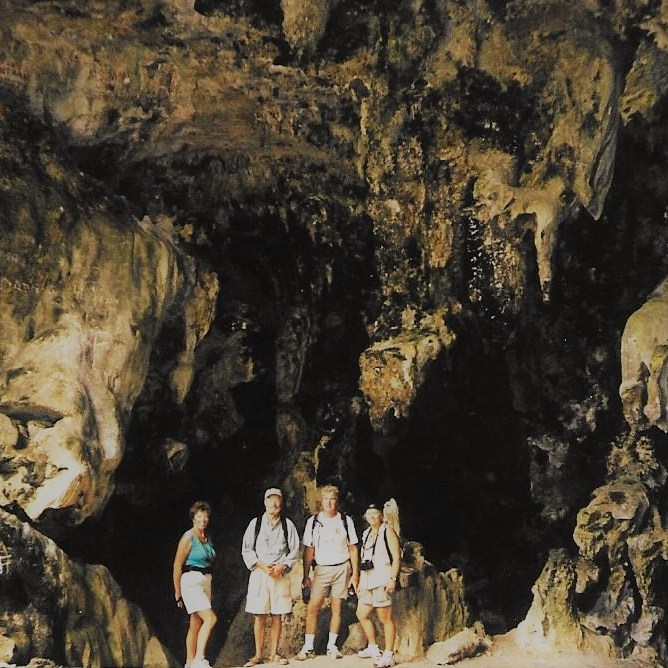
Caverne Patate—Also known as Potato Cave, this 60-meter deep natural cavern has no mounted lights, so we brought strong flashlights. Guides led us on an hour stroll among limestone and volcanic rock formations with enchanting stalactites and stalagmites sometimes joining together.

Plaine Corail—We were dwarfed among the towering white walls as we explored this limestone quarry. Blocks of all sizes are cut here to supply material for various building projects.

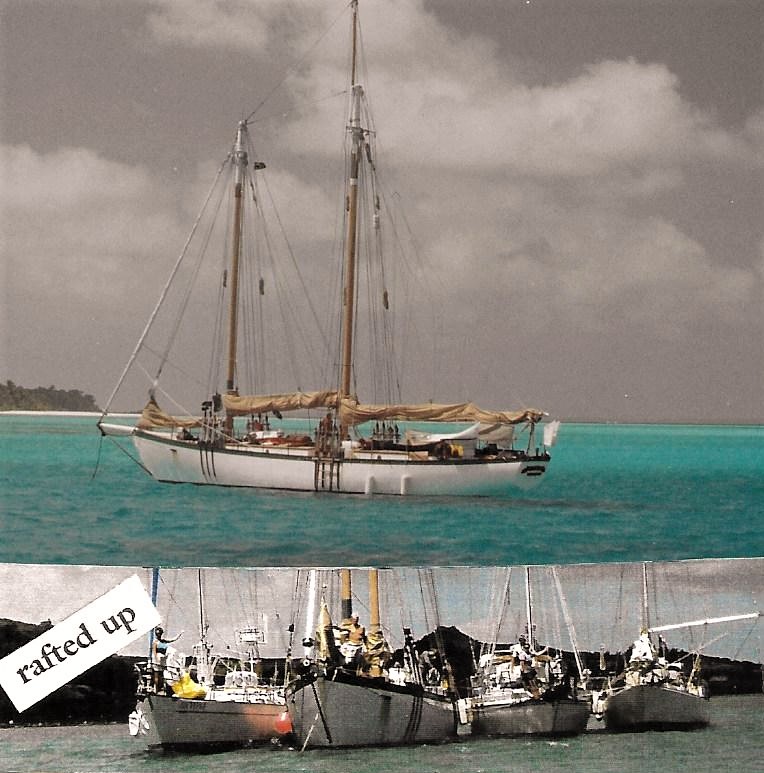
Our final evening the three sailboats rafted together and were joined by a Dutch-American newcomer who’d just arrived from Papua New Guinea after 53 days at sea. The eccentric storyteller provided entertainment during the progressive dinner: appetizers on Alcyone; main course of fish and potatoes on Appledore; and fudgy brownies on WD. It was nothing fancy like the resort restaurants who offer favorites like:

Fish rougaille- a Creole stew with tomatoes, onion, garlic, and thyme, brimming with fresh fish and shellfish.

Octopus salad- with tomatoes, yellow and green peppers, shallots, and lemon juice.

Salade marlin

Gratin de fruit de mer

Bekin baguette- A local favorite during La Fete du Poisson, the Fish Festival held in March. Flakes of bekin fish are combined with tomato, red onion, and lemon juice, then stuffed into a freshly-baked baguette.

However, the camaraderie was so much more delightful and fulfilling than any gourmet dish. We bid an early goodnight since the local meteorologist had predicted a favorable weather window. First light found us raising the anchor and then the sails as we ventured on to Mauritius and more adventures.

If I take the wings of the morning & dwell in the uttermost parts of the sea, even there shall thy hand lead me, & thy right hand shall hold me.—Ralph Waldo Emerson

Indian Ocean Crossing—1st Stop, Cocos Keeling

Man cannot discover new oceans unless he has the courage to lose sight of the shore—”Life’s Little Instruction Book”

A 17-day voyage from Darwin, Australia to the southern atoll of Cocos Keeling, an Australian territory, proved uneventful except for several Indonesian vessels passing way too close. Our 1st thought—pirates! But these unusual boats that curved upward at bow and stern, with gaff-rigged blue and white-striped sails, left us alone. We learned these fishermen came near and circled us so any evil spirits would jump off their boats and onto ours!

Our first sight of this group of 26 palm-covered islands was extraordinary with golden beaches and coral reefs encircling clear blue-hued lagoons. We joined 9 sailboats anchored at uninhabited Direction Island, greeted by cruising friends off Appledore and a 4-ft blacktip reef shark who circled us for 30-minutes. Customs didn’t arrive until Day-2, and on a jet ski! One of our easiest check-ins. And no fee—a common theme for this charming place. A long, wet dinghy ride bounced us over to Home Island. From there a free ferry chugged to West Island, the 3rd smallest capital in the world (pop:120). A free bus drove to a tiny settlement where we did laundry and provisioned.

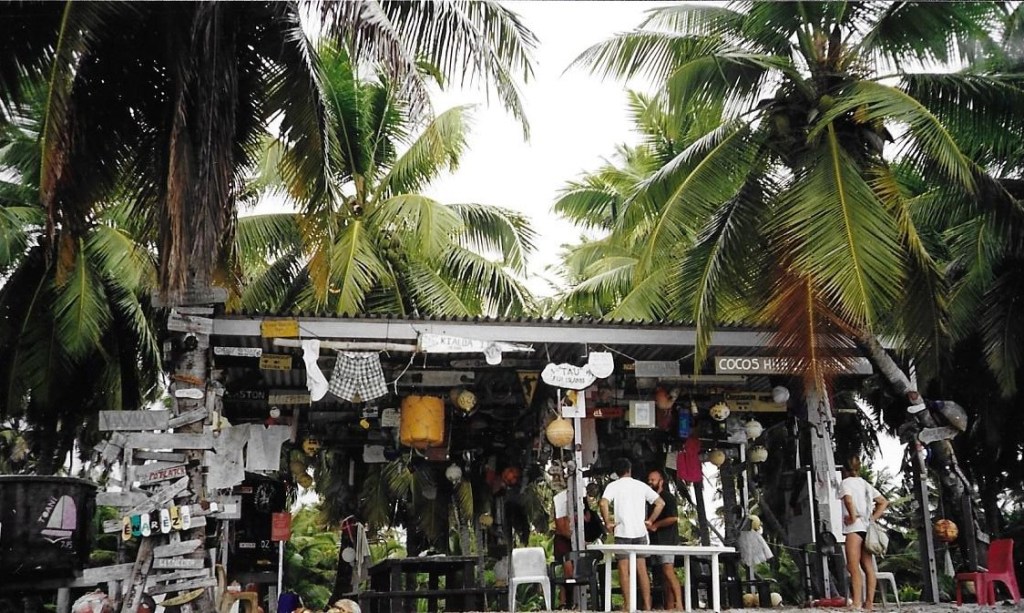
Direction Island: We discovered a unique cruiser’s shelter overflowing with sailing memorabilia from around the world. We recognized names of several friends including a sign from the Pardey’s Talisin, and added our club burgee to the mix. Snorkeling “The Rip” was a rush with a current sweeping us through a narrow coral passage. We encountered 3 blacktip reef sharks who ignored us, several bluish-gray spotted unicorn fish, and at least 2 humphead Maori wrasse. One balmy evening everyone gathered for a potluck on the beach, lit by lanterns and a bonfire as the sun dipped below the horizon.

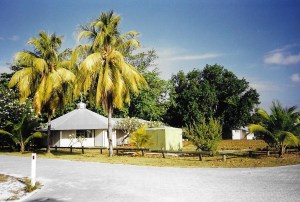
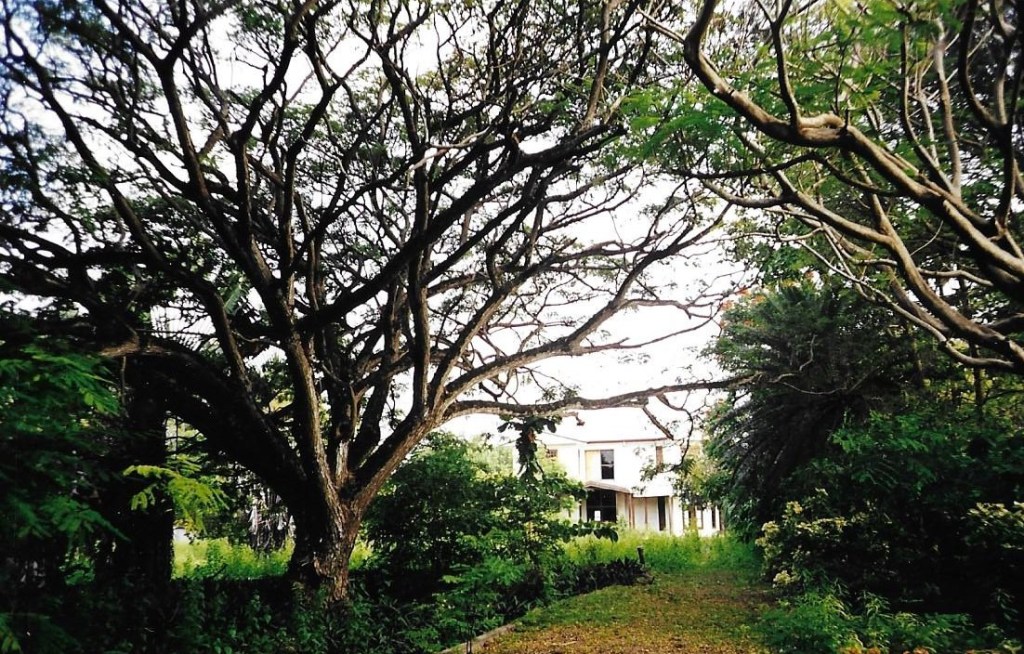
Home Island housed about 500 Cocos Malay who are mostly Sunni Islamic. Shy but polite, their simple, modern houses and villages are immaculate. In Bantam, Pula Cocos, a free natural history museum displayed early history and local culture, Aussie naval history, local flora and fauna, and a few restored ancient wooden boats. We hiked the trail to Oceania House. This Clunies-Ross plantation home is over a century old and been abandoned since the 1980s. The front door was unlocked, so took a self-tour. A few pieces of furniture, carpets, windows, and hanging framed pictures remain intact. Strolling its many rooms, we sought a ghostly vision or voice to share their secret tales of this forgotten place. Outside we sauntered down pathways through overgrown gardens where massive trees shaded a tangle of colorful plants and flowering vines. Lots of potential here…if you don’t mind living on a remote island. Note: We sailed here in 2000. I just discovered during recent research that this home and gardens have been rejuvenated and is now a quaint B&B.

Our final full day was spent in preparation for the Indian Ocean Crossing. I baked bread, carrot raisin muffins, and chocolate chip cookies, staples of any long sail(!), plus several meals to freeze. Jerry scoured the hull bottom and secured everything on deck.

Day 4 we strolled the serene shoreline before lunching with friends. Then set sail with 3 other yachts under reefed main and staysail. A stiff wind of 25 knots and high bumpy seas from the aft quarter made for less than ideal conditions. But we’re on our way west toward more adventures.

The Timor Sea

Soft warm cocoon of night
Pumpkin orb casts dim light
Full moon rises overhead
Star's twinkling petals shed

Tall rolling swells astern
Push us onward as the tern
searches, dives, a shrill call
Shatters quiet far from all

Beneath sea an eerie glow
Nature's strangest creatures flow
Travelers passing swiftly on
Toward Indian Ocean's dawn  

The Great Barrier Reef—Part 2, Oz’s Wild Side

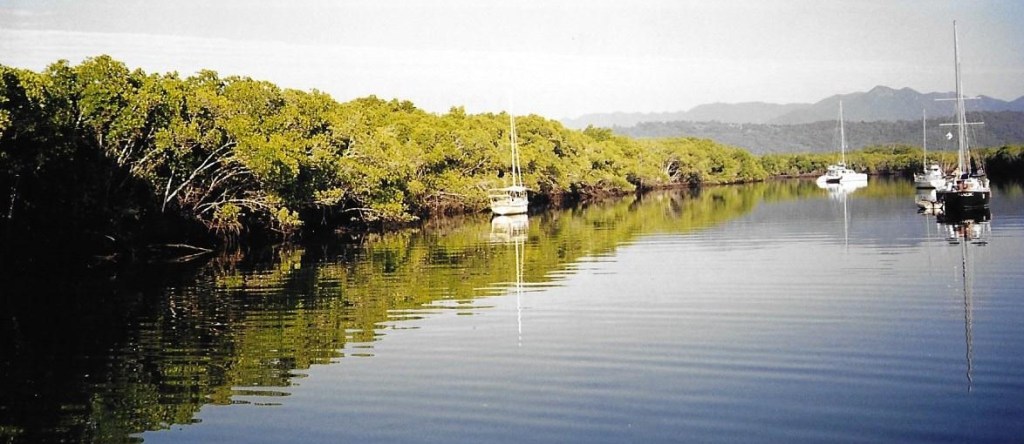
Gliding up Hitchenbrook Channel was like entering a Frederic Church painting. Crocodiles lurked amid thick mangroves, white ibis and blue heron swooped through treetops, and frothy waterfalls skipped down shadowy cliffs of rainforest mountains. Anchored at The Haven, a small cove on the island, we took a walk-about on the beach and creek, keeping an eye out for crocs. Thankfully, only attacked by buzzing mossies. Morning sunlit mist played hide and seek with chattering birds among the valleys.

Motor-sailed to Dunk Island, setting anchor in 15-feet of white sand near a tropical garden resort (which I recently discovered has been sold & is being restored). Tramped a well-maintained trail bordered with shrubs, vines, and lush ferns where yellow-breasted sunbirds darted among the banyans and brilliant blue and black Ulysses butterflies flittered. Wobbling across a swinging bridge over a deep muddy canyon brought to mind “Romancing the Stone”. Spectacular views of islands and the mainland’s vast plains and purple ranges helped us forget about the shiny gray-blue snake sunbathing in the middle of the path! We ended the day’s adventures back in the cockpit with…you guessed it, a cocktail and enchanting sunset.

On our way to Cairns (Aussies pronounce it Canz), had a stopover at Fitzroy Island. Trekked a steep paved road to a lighthouse, then a peaceful stroll among boulders and rainforest to Nudey Beach. Don’t get excited. No naked beach goers—only a casual national park resort with lizards and skinks soaking up rays on the boulder-strewn beach and cockatoos screeching a lively tune.

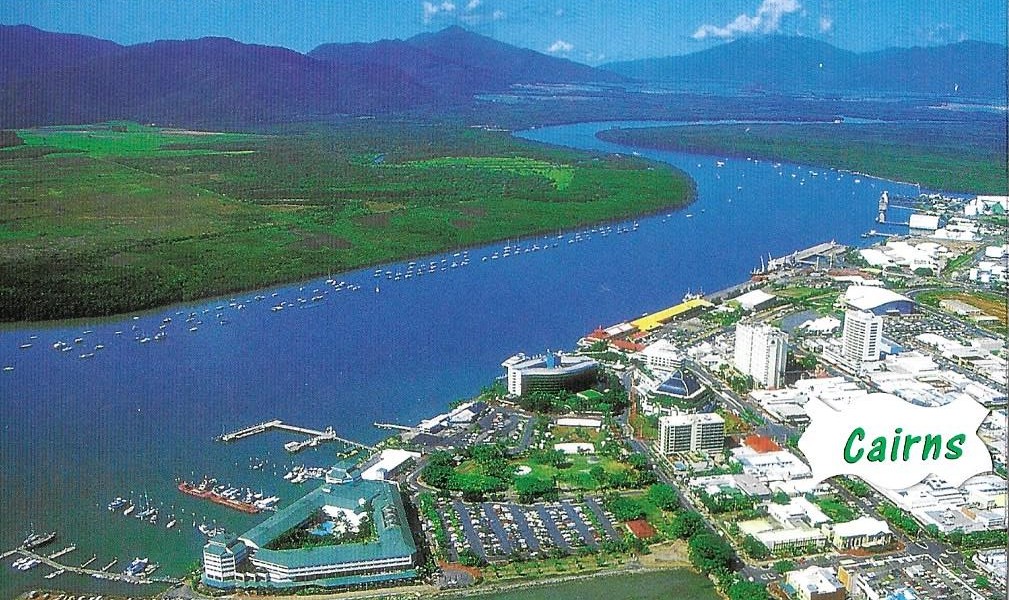
Caught up with several cruising buddies in the anchorage across from City Marina in Cairns. Modern and touristy, the city is a conglomerate of cultures providing a wide variety of food options, art, and fashion. Home base for us cruisers was the yacht club on the river where showers were free and two months of mail awaited us.

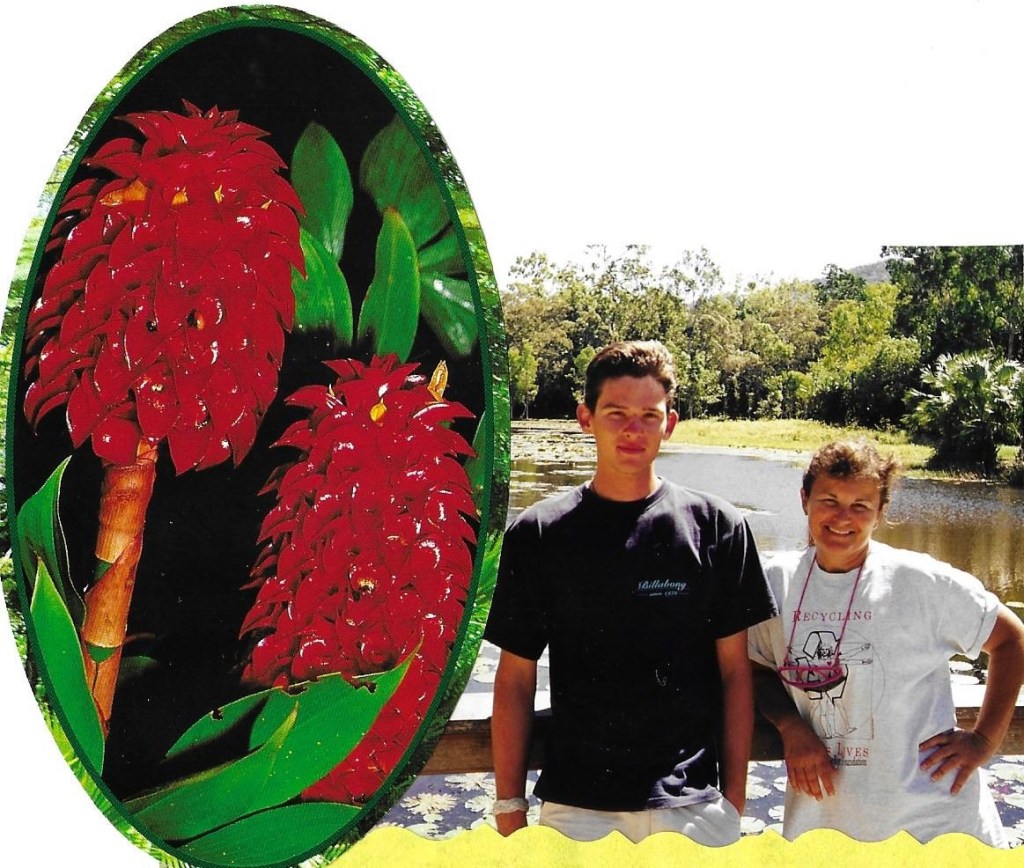
Venturing out on bikes we ran errands, but also explored Flecker Botanical Gardens, a kaleidoscope of palms, bamboo, heliconia, torch ginger, flame of the forest, and much more. Meandering ’round both salt and freshwater lakes, we strolled a rainforest boardwalk and through an orchid house. Cairns birdwing butterflies patterned in shades of yellows and greens shimmered in the sunlight. A steep walking track led to Mt. Whitfield Conservation Park where kangaroos, scrub turkeys, cassowaries, and other wildlife hid out above the city jungle far below.

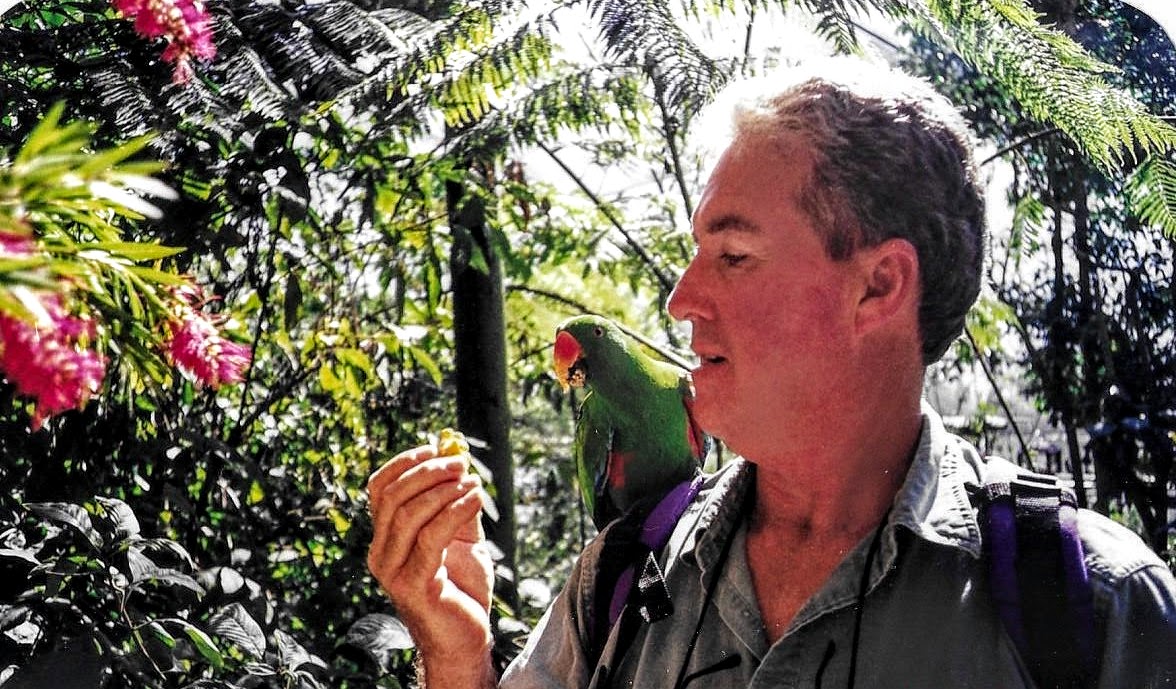
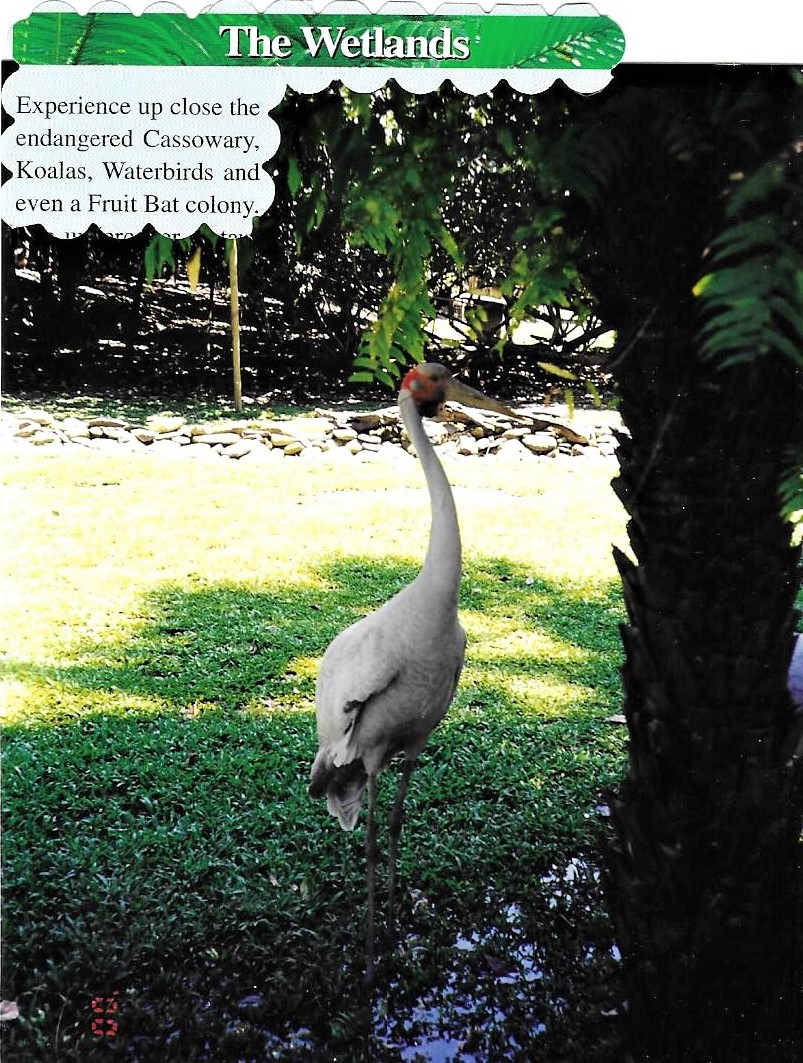
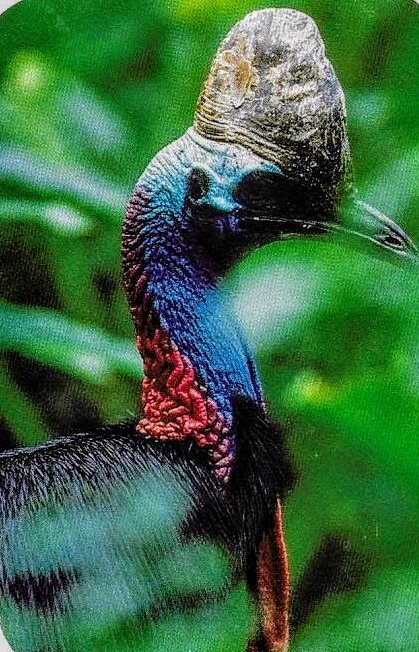
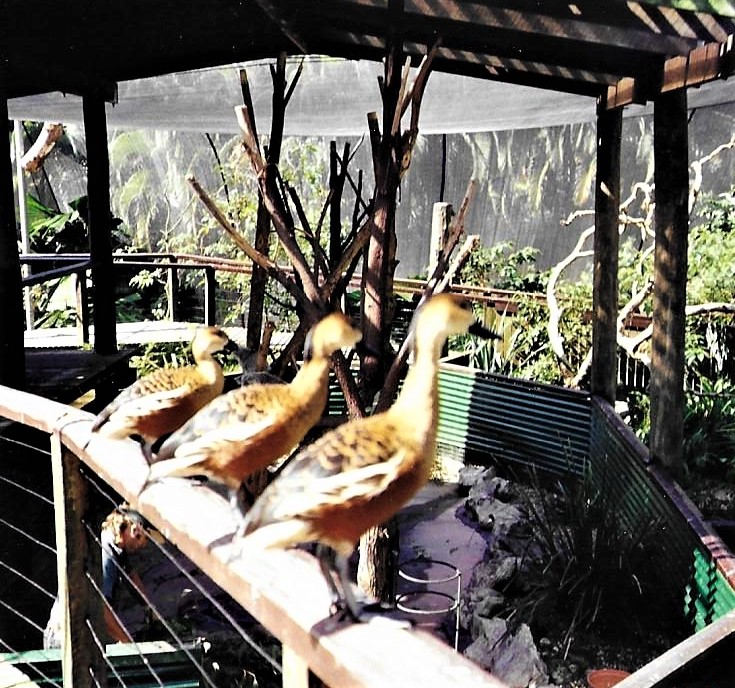
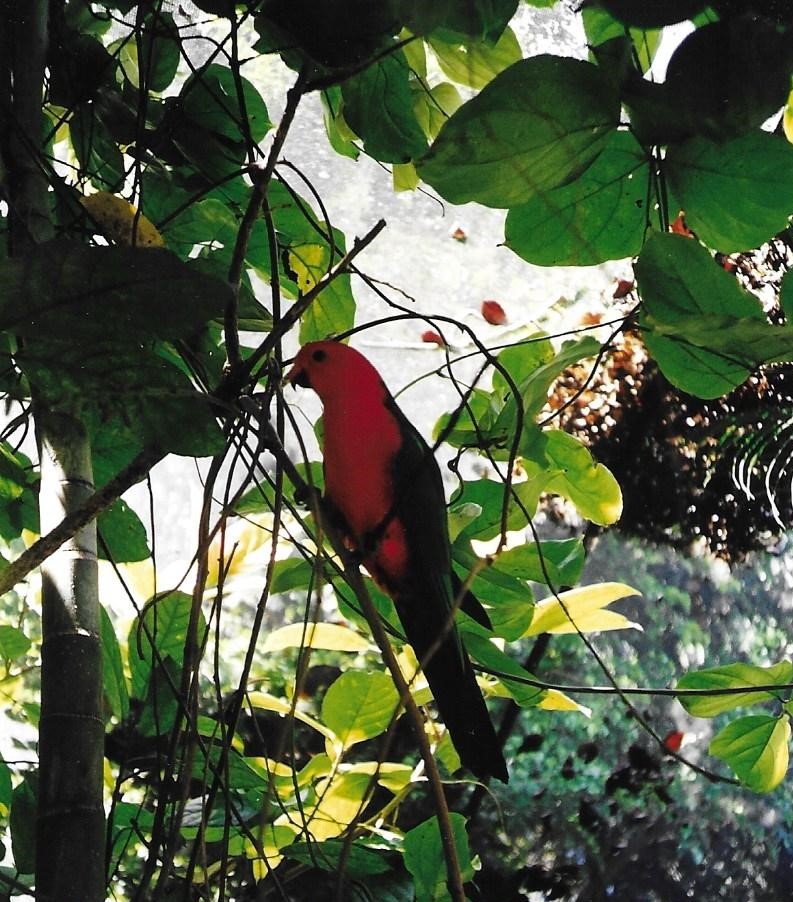
After a few days we popped around to Fort Douglas and a quiet anchorage. Cycling along a scenic path, we encountered one of our favorite Aussie experiences, Rainforest Habitat, where we roamed the aviary’s multi-leveled paths. Flashes of bright feathery friends everywhere, including Jerry’s shoulder! Andy, a very hospitable parrot, sat contented as we fed him bits of fruit, corn, and celery. Taking a turn on my shoulder, all was well until a rainbow lorikeet perched on my head. What a racket those two made! Like a National Geographic documentary, we observed mating dances including the Victorian Riflebird who spread its feathers around himself like a black velvet cloak and puffed out his iridescent chest. Diverse birdlife from huge emus and casqued cassowaries with dagger-like claws to gentle doves cooed, squawked, chattered, whistled, chirped, and trilled.

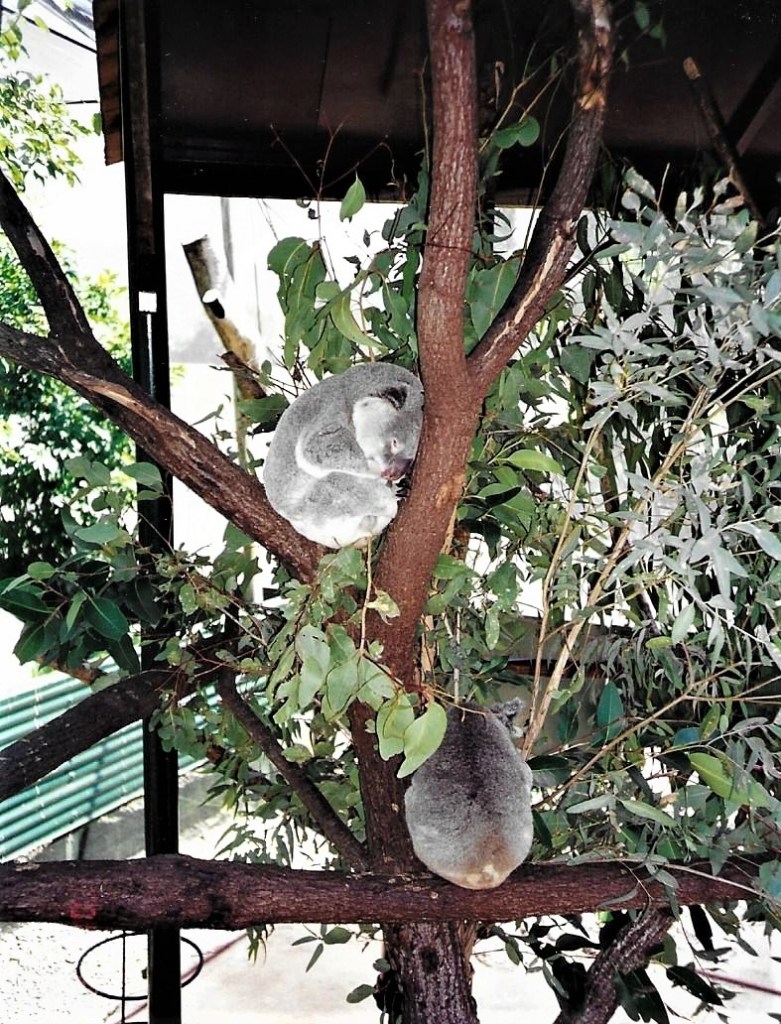
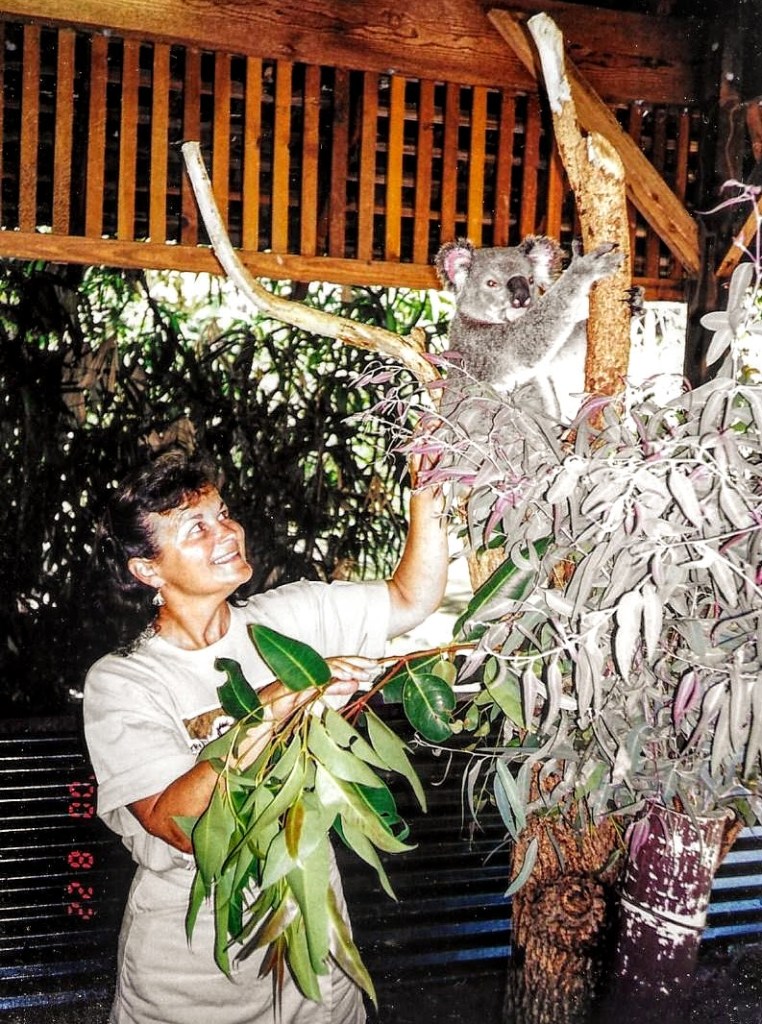
Next we wound along a walkway high in a eucalyptus forest where sleepy koalas eventually awoke. They stretched, scratched, and lumbered across thick branches searching for succulent leaves.

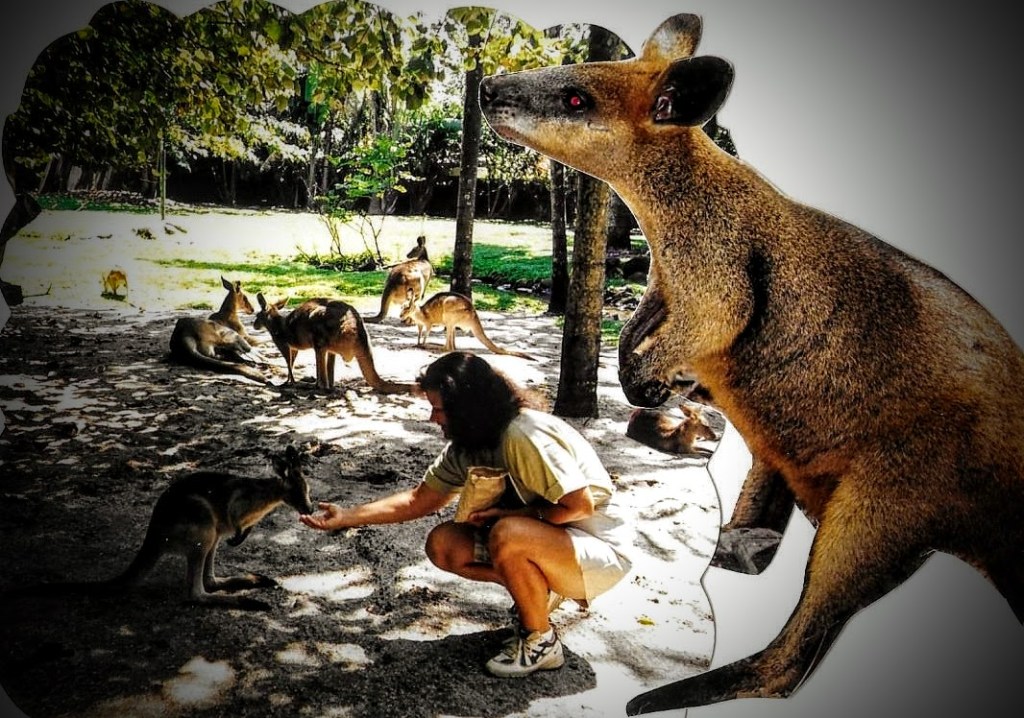
Back on the ground Jerry and I leisurely wandered a grassy koppie with trees lining the banks of a lazy stream. A few gentle, shy roos and wallabies rested while others hopped about, eager for a treat. One entertaining joey kept climbing in and out his mama’s pouch. An amazing day at an amazing sanctuary.

James Cook struck a reef at our next destination—tiny Hope Island. You can walk the sandy perimeter in 20-minutes. Aborigines continue to hunt, fish, and collect here. Hordes of egrets and Pied Imperial pigeons perched in beach almond and red coondoo trees, their faint coos an early morning wake-up call. Extensive reefs brimmed with exotic sea life, previewing things to come at our next anchorage. Just BEWARE of crocs and stingers-jellyfish!

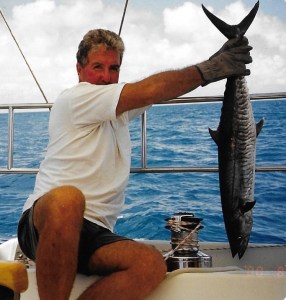
Sailing wing & wing under glorious conditions led us to Cape Flattery and then Lizard Island, even catching a 30″ Spanish mackerel using our silver spoon lure. Barbecued, it was delicious! Fantastic Watson’s Bay offered a wide selection of activities. Climbing the strenuous trail to Cook’s Look, who arrived in 1770, displayed breathtaking panoramas of outer reefs and their seven intricate passes. We rambled the white sand beach, mangrove boardwalk, and trail leading to Watson House. A tragic tale transpired here in the late 1800s.

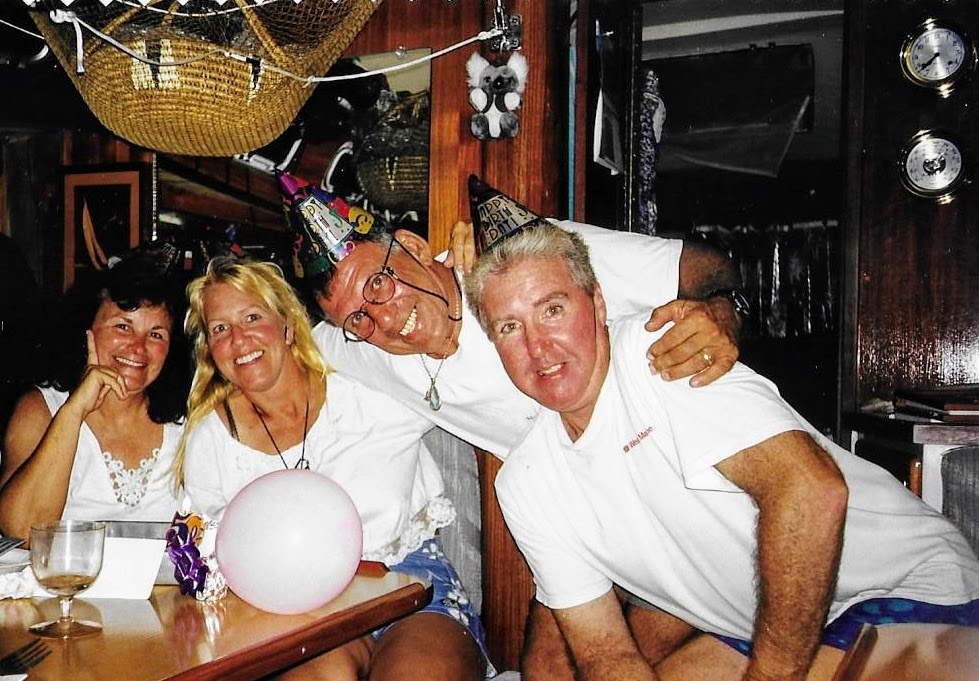
These protected waters have bestowed some of the Great Barrier Reef’s finest snorkeling and diving—delightful flickers of color darted among brilliant corals; a cloud of silver swirled around us with several 30″ fish within its midst; and an astounding assortment of 6-ft giant clams with velvety lips speckled with iridescent shades of blue, green, and brown beckoned us closer. The grand finale was a wonderful surprise visit from cruising friends who came to celebrate my 50th birthday.

From this magical place light winds blew White Dove toward Australia’s Northern Territory, through the Torres and Endeavor Straights, and across the Gulf of Carpenteria. After 12 days of sailing we arrived in Darwin. Here we prepared for the next leg of our voyage from the Land Down Under. Stay tuned for more adventures as we sail east across the Indian Ocean.
The Great Barrier Reef Adventure—Part 1, Cockatoos & Cocktails

G’day mates! Made it to Mackay, our port of entry on Australia’s eastern shore. After checking in with friendly custom agents, we pedaled bikes around town, a mixture of late 1800s historical to current architecture; a river port for exporting sugar, with modern marina and local fish market; beaches, eateries, and diverse shopping. All this surrounded by national park rainforests and mountains. We only stayed long enough to provision and scrub ourselves, the boat, and laundry. Islands and birds of the Great Barrier Reef were calling.

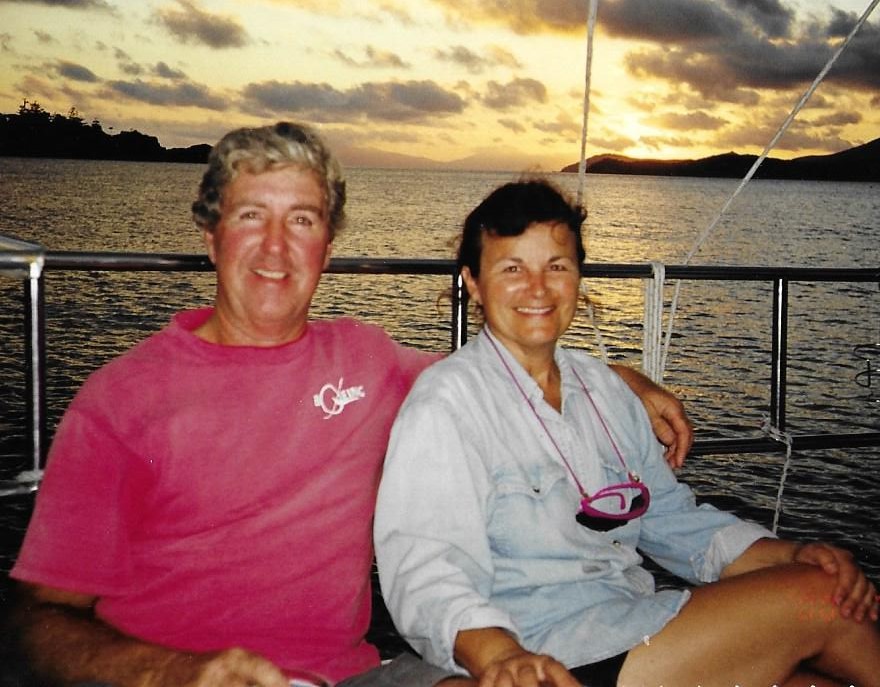
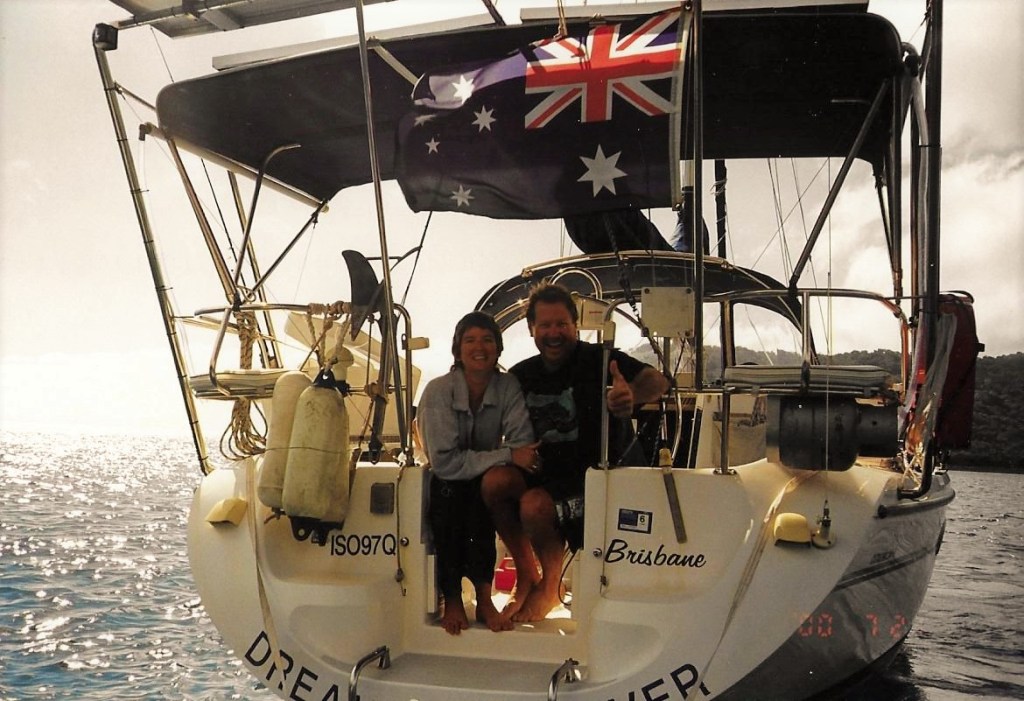
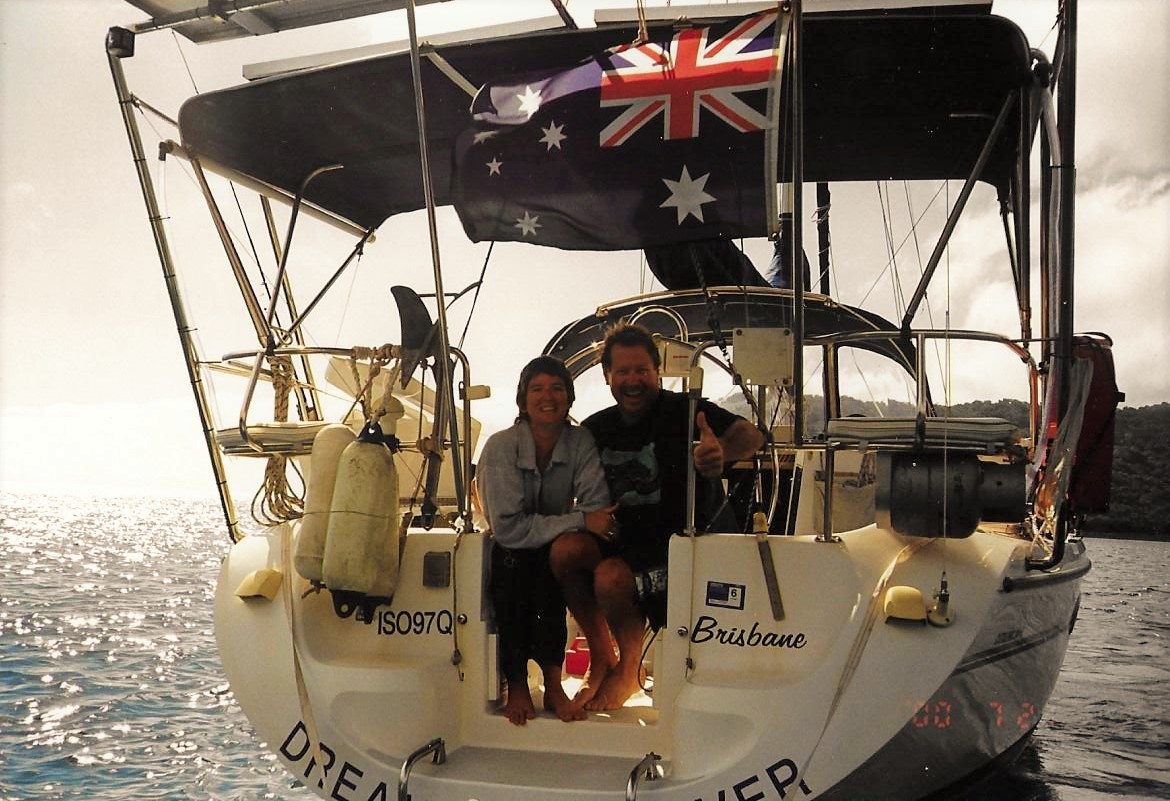
Sixteen miles out of Mackay we anchored in a secluded cove at Keswick Island next to Matt and Donna on their Catalina 36, Dream Weaver. At dusk, strains of Glenn Yarbrough’s “I Could Have Been A Sailor” filtered through the cockpit. We toasted beginning our cruises up the GBR—us for 3 months, the Aussies for 3 years. With Bundeburg rum and coke, of course. Cheers!

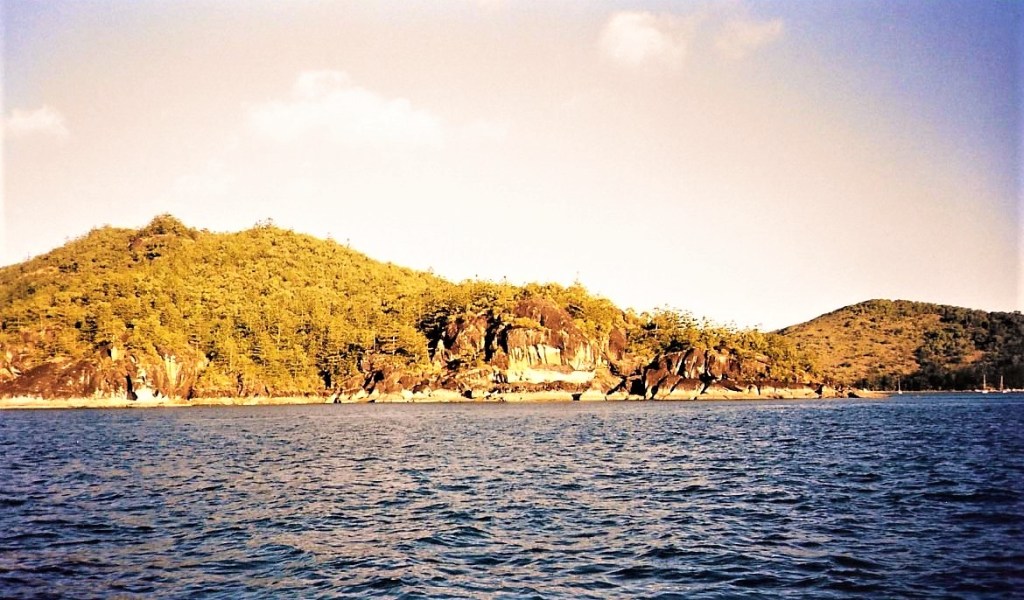
A light-wind, 20 mile sail guided us next to hilly Goldsmith Island planted with huge boulders interspersed with bushy white cypress and 100-ft hoop pine.

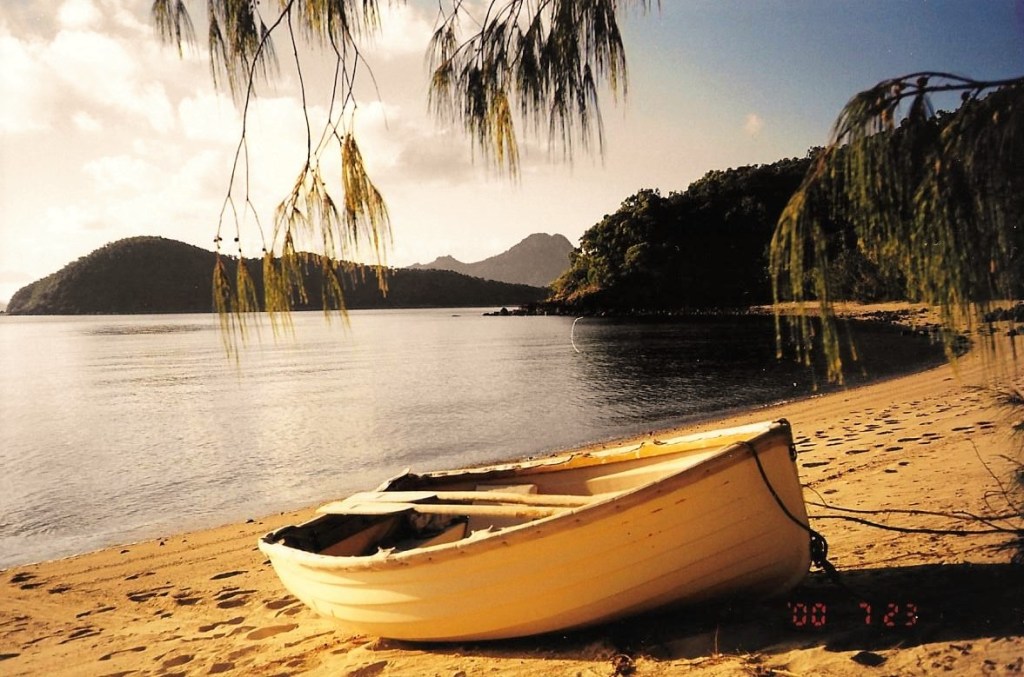
At Thomas Island our cove was fringed by 3 lovely beaches where we basked in sunshine and gentle breeze amid soft wispy Australian pines and rocky outcroppings. No worries here.

Moving north up the GBR, we discovered enchanting Lindemann Island clothed in rainforest. White cockatoos screeched and black pied currawong croaked in treetops while rainbow lorikeets chattered and whistled riotously, inebriated from the fermented nectar of umbrella and other flowering trees. We wound our way on a track with thick monkey rope and flowery wonga vines draping red-berried kamala trees, pines, and eucalypti. Mount Oldfield Lookout rewarded us with a scenic vista of islands dotting the Coral Sea where dolphins frolicked and multitudes of sea creatures thrived.

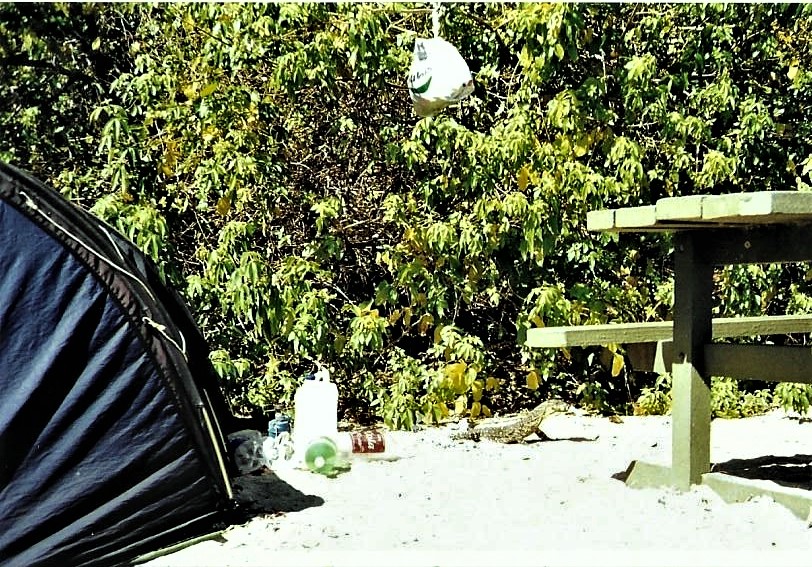
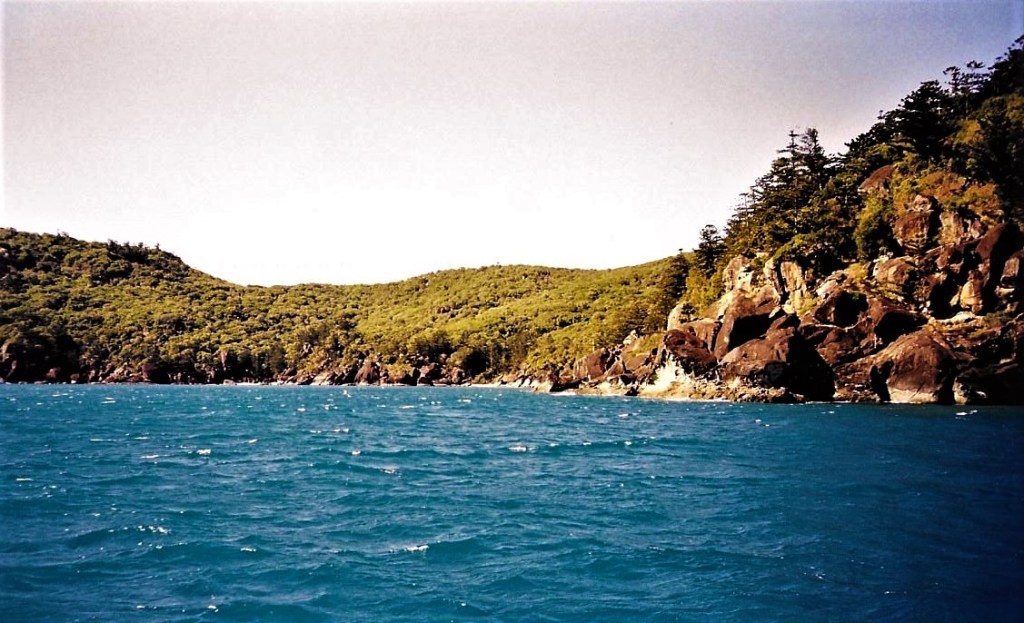
We dropped anchor in Cid Harbor, Whitsunday Island. Windsor-blue sky reflected in its calm water. Deep green forested hills hid Aboriginal caves, wallabies, and brushtail possums. Finches chirped and sacred kingfishers flapped iridescent blue wings, swooping to catch small lizards, crustaceans, and insects. Hiking between Dugong and Sawmill Beaches, we searched the shallows for the elusive dugong. These whiskery, grey-bronze creatures only eat plants like their closest relative, the elephant. No dugongs, but a 3-ft goanna (monitor lizard) ransacked a tent, foraging for delectables while others sunbathed on golden sand.

Aussie friends suggested we pop over to Hook Island, only a 6-mile sail. The fiord-like anchorage of Nara Inlet was shadowed by rugged mountains. A 20-minute bush track led to 9,000 year old Ngaro, an Aboriginal cultural site where middens covered the ground and caves held ancient rock paintings. Hawks and eagles soared overhead as we later clambered up a promontory with inspiring views of Pebble beach and beyond from Bluff Lookout.

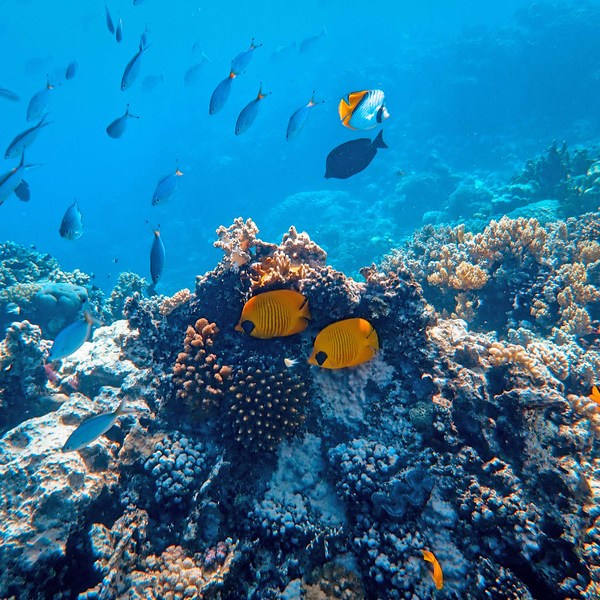
As beautiful as the mountains and beaches were, it didn’t compare to the underwater landscape we splashed into at Manta Ray Bay. We were greeted by clouds of bright blue and yellow surgeonfish and pouty-mouth triggerfish nipping at gloved hands serving bits of bread. Feeding frenzy! Drifting among vivid red and cool blue corals near the beach was exhilarating, but never spotted a manta ray.

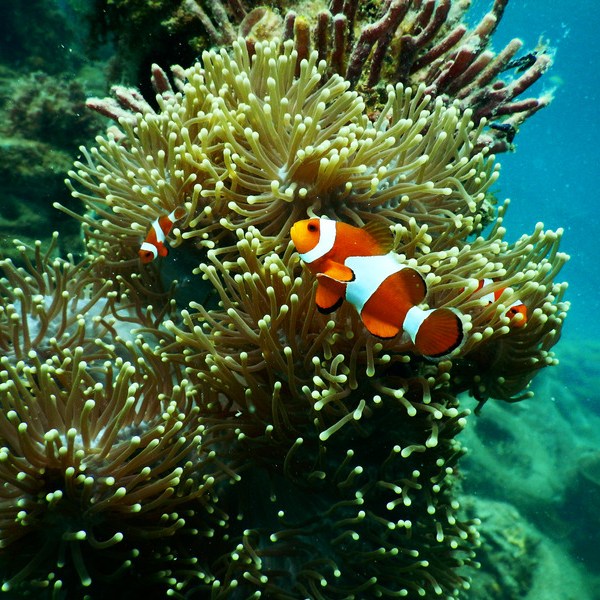
Windy conditions prompted us to move to a mooring ball in Butterfly Bay, more protected from prevailing southeast winds. We snorkeled among staghorn, blue organ pipe, sea fans, and pink cauliflower corals. Orange and white clownfish popped out of anemone, bright yellow butterfly fish, blue damsels, green and flatback turtles glided, and large grouper drifted within this quiet wonderland reef.

After 3 days of tranquility on Hook Island we spent a restless night in a poor-holding anchorage of Gloucester Island before a day sail to Upstart Bay. The national Park’s barren sandy hills with desert scrub, clumps of giant boulders, and a few cinder-block buildings were reminiscent of Joshua Tree National monument in California—minus the ocean!

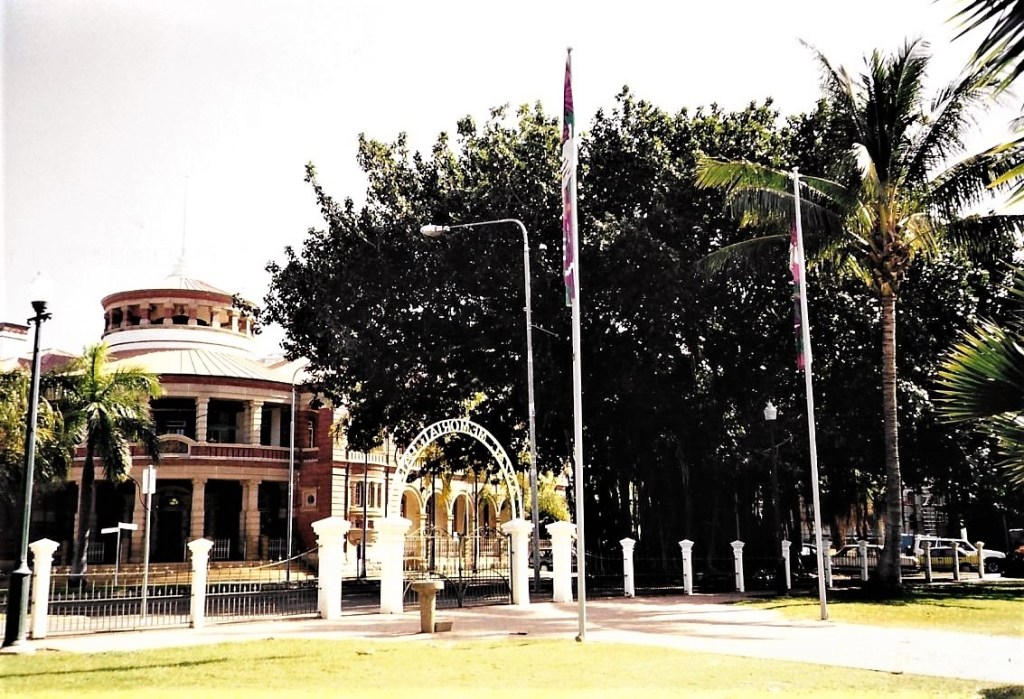
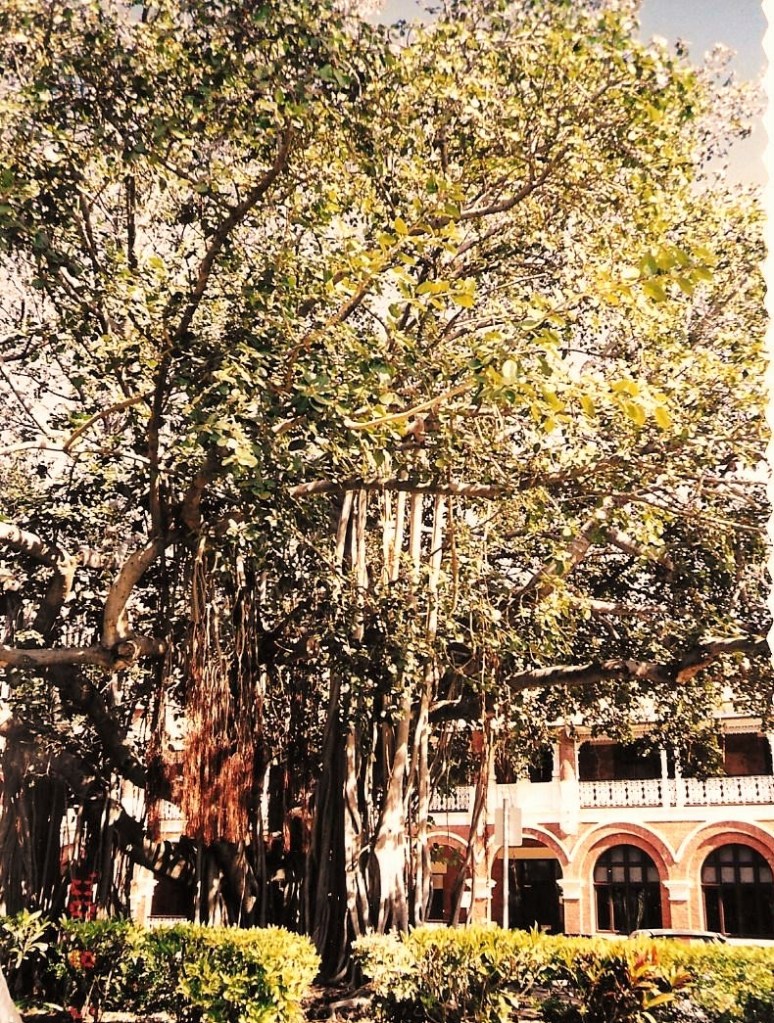
Another sailing day delivered us to an undulating anchorage at Cape Bowling Green, and then on to Townsville. Dramatic red cliffs spotted with eucalypti backdropped the blended early 1900s architecture with modern and tropical. The sun shines 320 days a year in this laid back capitol of the north where you can visit military and maritime museums, art galleries, or shop and dine at Flinder’s Mall, housed in restored historic buildings. For you Foodies, here’s some Aussie favorites: Barbecued snags (sausages); Minced meat pies (with gravy, onion, & cheese); Burger with “the lot” (lettuce, tomato, pineapple, beet, onion, cheese, bacon, & egg)—a whole day’s worth of calories in that one! For desert their favorite is Lamingtons, the national cake (a butter cake coated in chocolate & dipped in coconut).

There’s also peaceful areas of natural beauty such as:

  • Mount Elliott in Bowling Green Bay National Park. Craggy mountains rise from wetlands with plenty of birdwatching along Alligator Creek where water cascades into deep pools and waterfalls. Alligator Creek Falls Track is a difficult 10-mile trail while Alligator Creek Lookout is an easy, 1/2-miler.
  • On your way, stop at Crystal Creek where cassowaries charge through rainforest and orchids twine among branches near a mountain stream tumbling over granite boulders and beneath a Roman arch stone bridge.
  • We strolled beautifully landscaped Anzac Park, beside the marina, with its war memorial and indigenous trees; and along The Strand with protected swim areas, fishing pier, and sidewalk for skaters and cyclists.
  • For a longer walk, try Townsville Town Common Conservation Park, an immense wetland habitat with tidal estuaries fringed with mangroves, venturing through grasslands and swamps to woodlands and vine thickets. You may spot honking magpie geese, melodious red-backed wrens,high-pitched buzzing golden-headed cistacolas, or stilt-legged brolgas.

After 2 days in civilization it was time to head back out to a serene retreat. Rocky Magnetic Island, nicknamed Maggie, is a nature-lover’s paradise. White cockatoos and sea eagles glided over horseshoe Bay. A 20-30 minute bushwalk through eucalypti, hoop and Norfolk pines, and around monstrous boulders brought us to picturesque Balding Bay. We picnicked in seclusion on soft white sand as small shorebirds skittered around for a meal. Rowing ashore late one afternoon we were surprised by raucous squawking. A rare flock of black cockatoos with orange-red or yellow tailfeathers feasted in the trees on sea almonds. Party time!

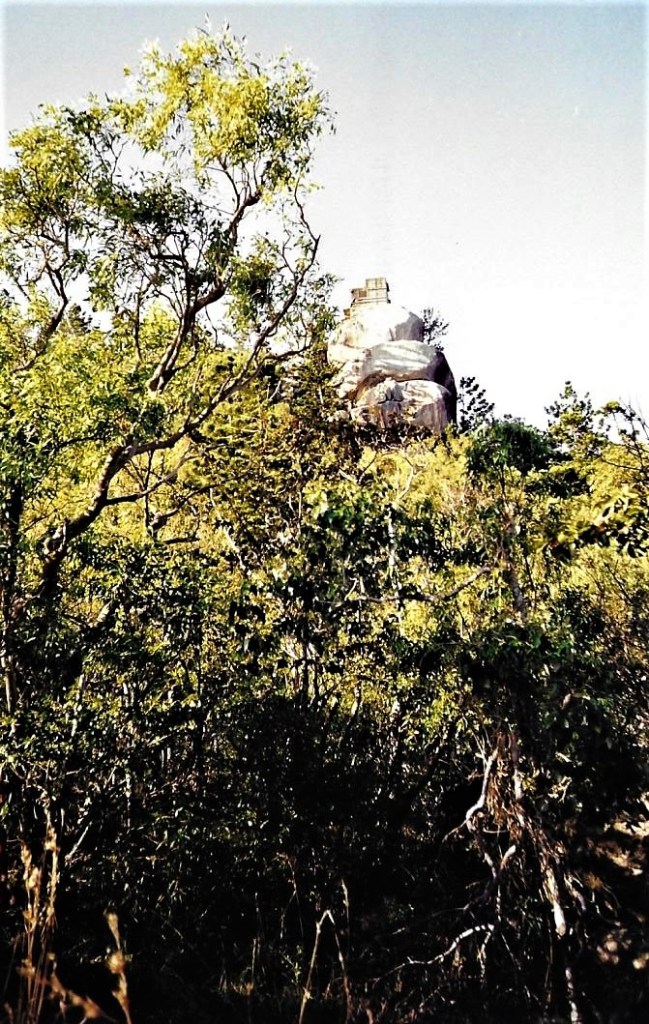
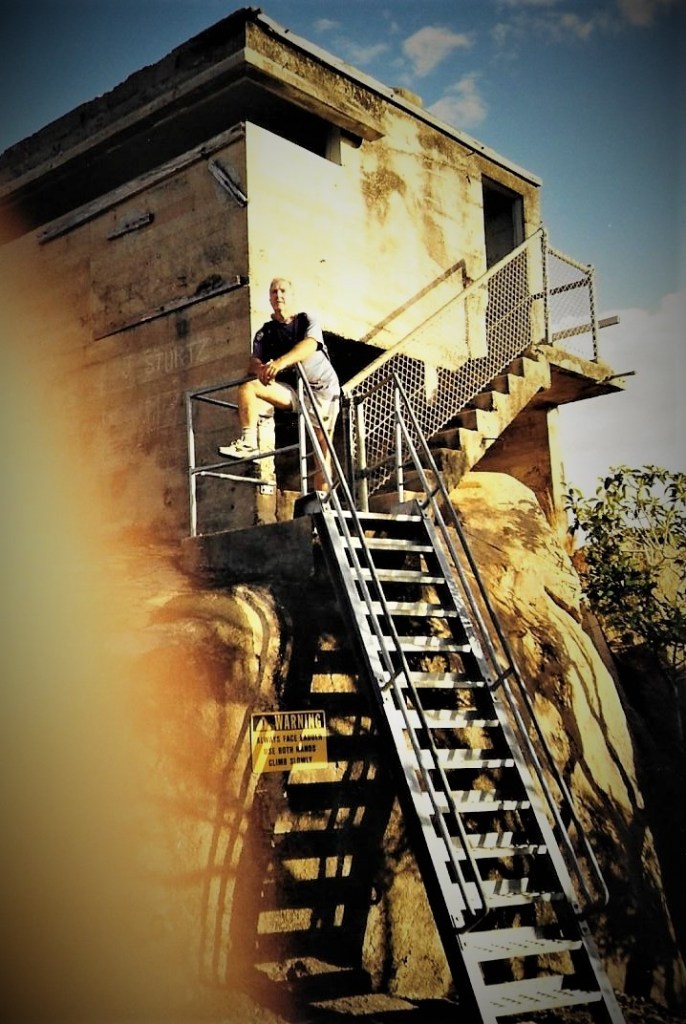
Another day we climbed a twisty bushtrack to the Forts. Remnants of WWII structures competed with the magnificent views of wooded coves, boulder-strewn beaches, and mainland, only 16-miles across the sea. Although a haven for koalas, none were spotted, but a trilling staccato laugh punctured the silence on our hike down. What on earth? We glimpsed a delightful brown and white laughing kookaburra peering through the trees, and sounding eerily human.
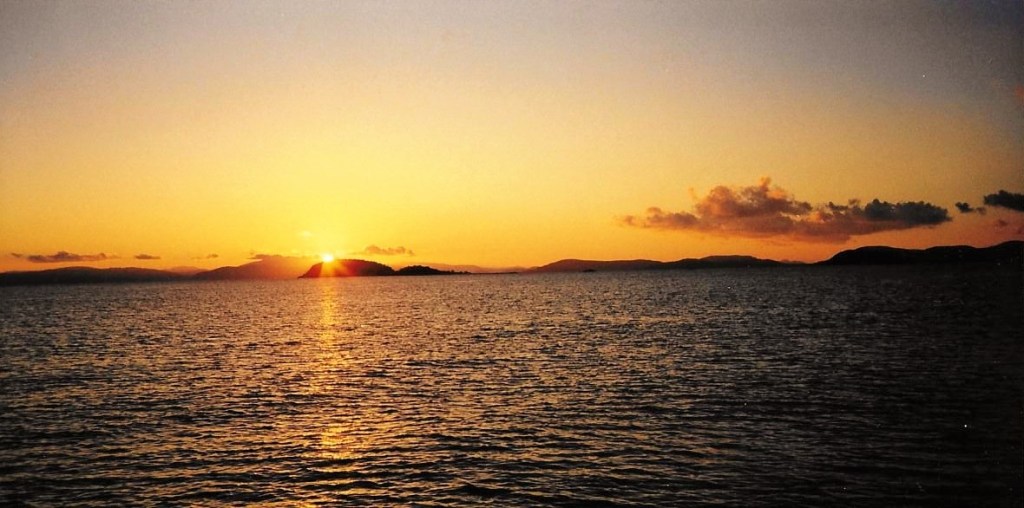
No time left for snorkeling several bays where fringing reefs of coral flourish, moray eels hide, and unicorn fish dart through submerged wrecks. Next time around… A final happy hour aboard White Dove was cherished as the sun set casting dazzling splashes of oranges, yellows, and pinks on the bay. Time to say Hoo roo, farewell, until we meet again in Part 2 of “The Great Barrier Reef Adventure”.

Fiji, Part 2—Magical Days

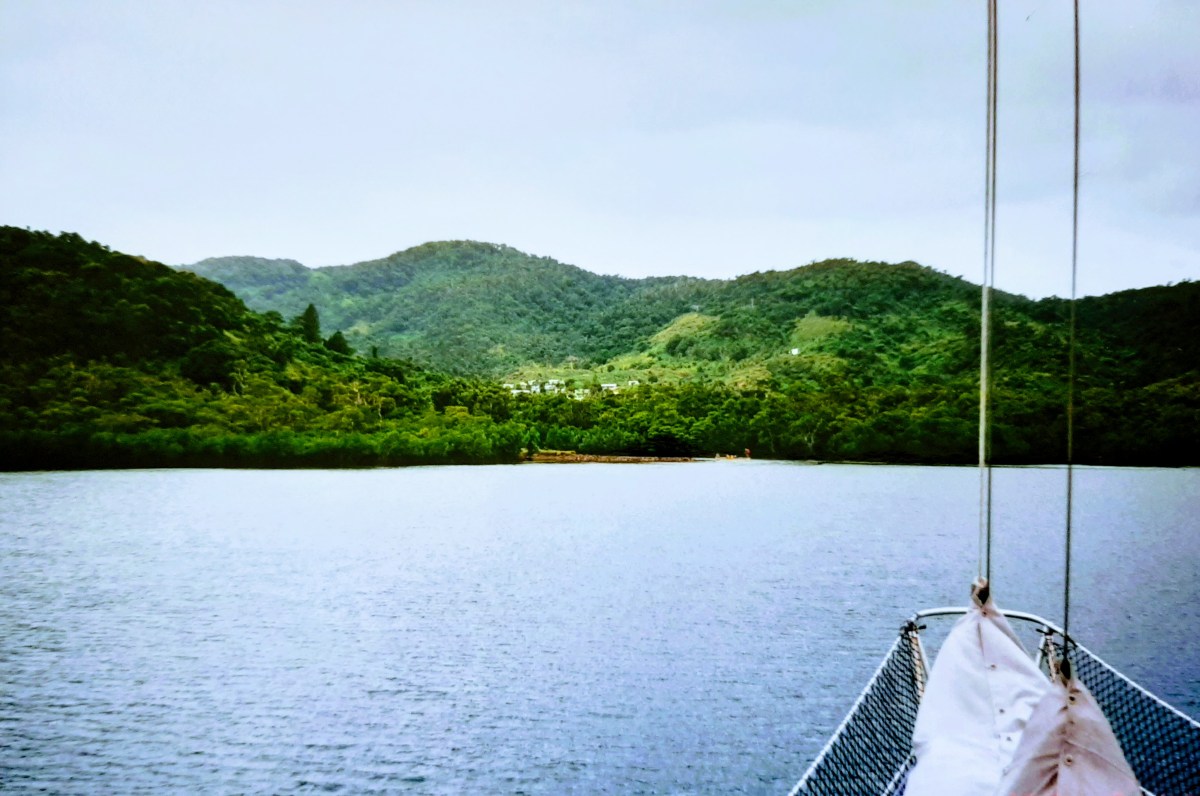
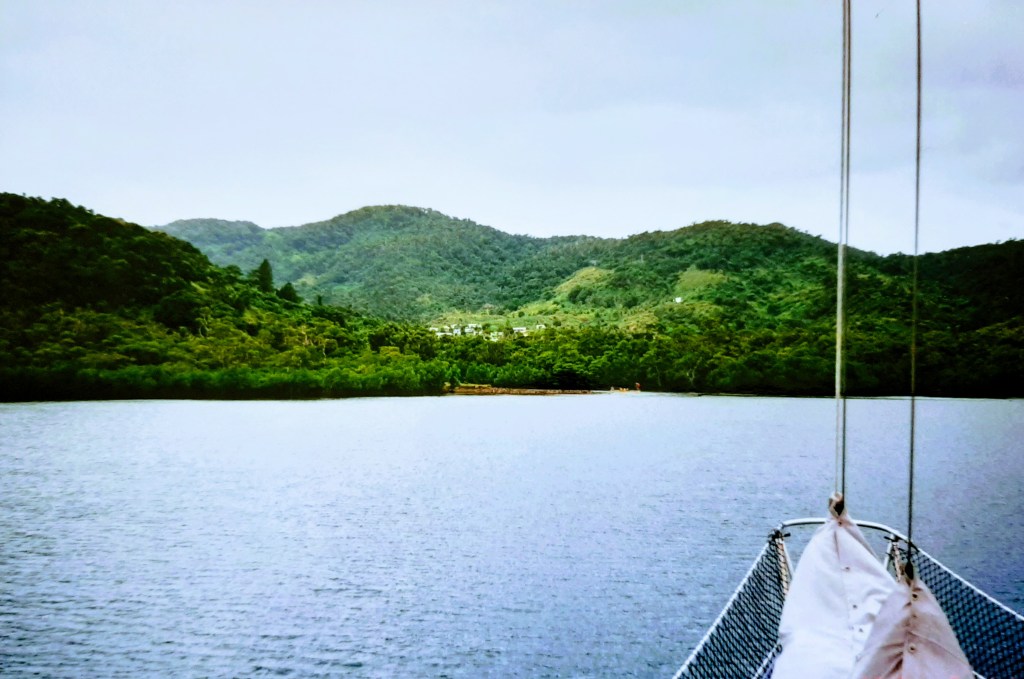
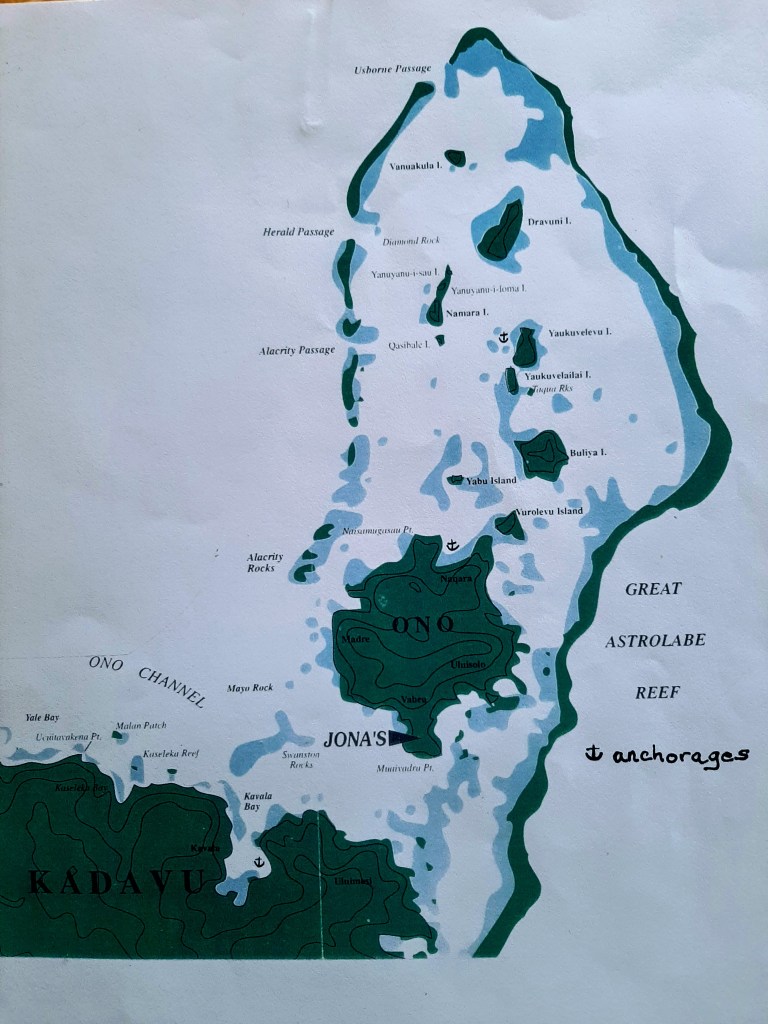
Shortly after dawn we raised the anchor from Ono and sailed White Dove 10 miles to Kandavu Island. Several villages were scattered along Kavala Bay’s shoreline. Interior mountains were blanketed in shades of green.
Within an hour of arrival Saiasi and his family motored out in their fishing panga. It turned out that they knew cruising friends of ours and had been expecting us. News travels fast in the Great Astrolabe’s small community! We became acquainted over tea and fresh papaya cake.

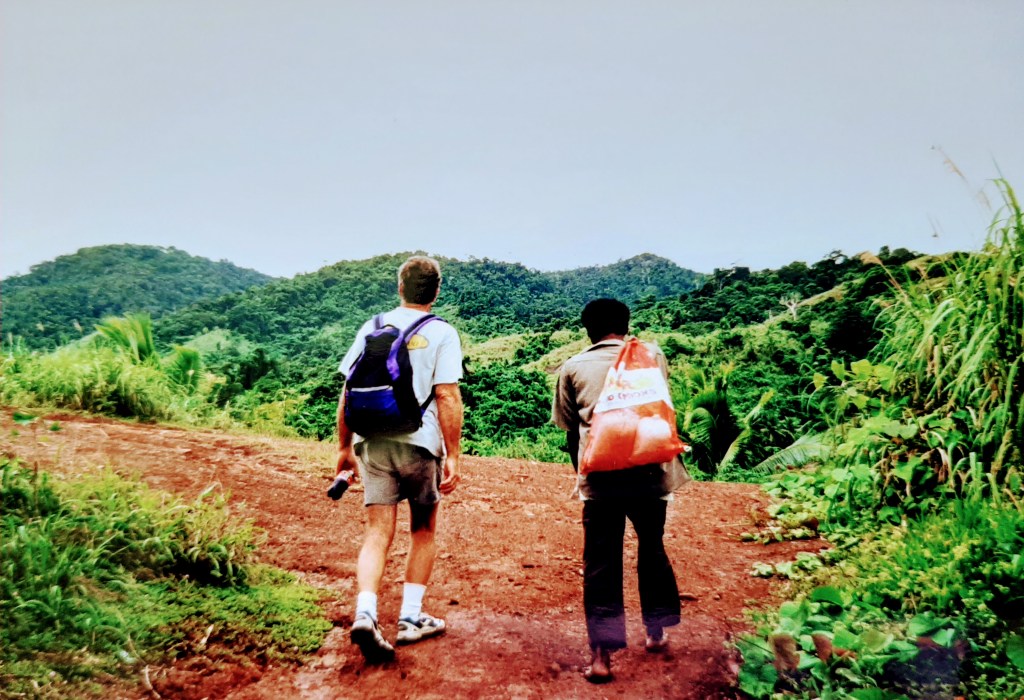
In the afternoon we presented kava to the main village’s chief, and then rowed to a rocky beach surrounded by mangroves. Traipsing up a steep red-dirt road, we gazed down upon a luxuriant “Garden of Eden” rich with palms entwined by medusa-like vines, and trees laden with breadfruit, bananas, mangoes, and papaya.

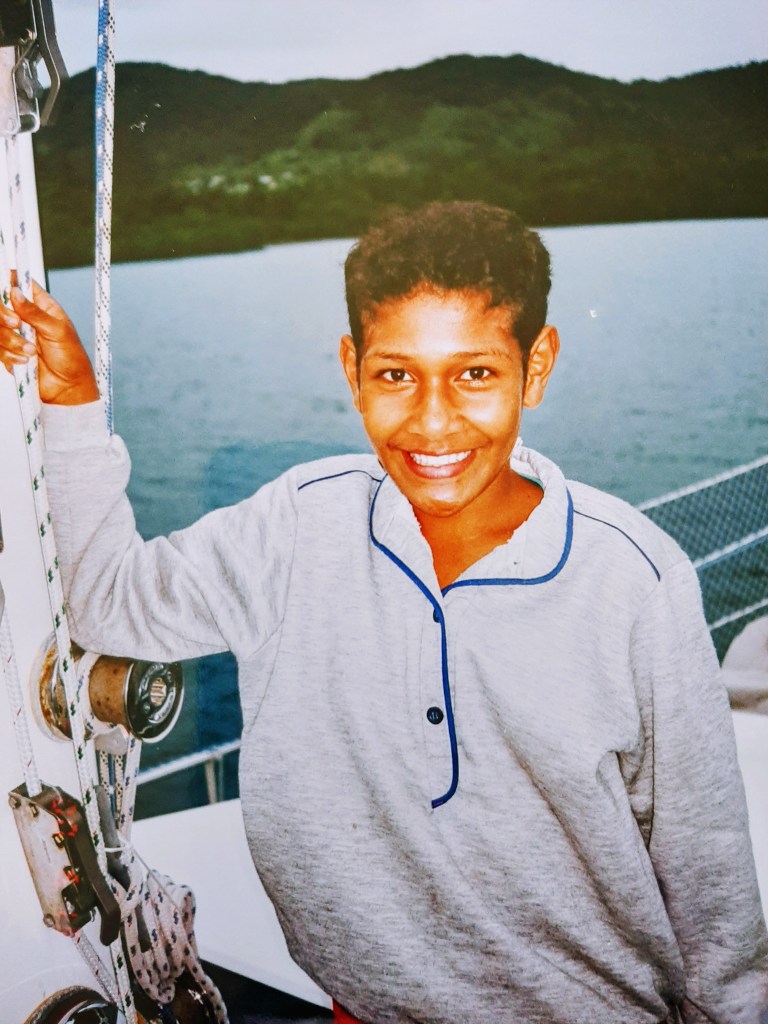
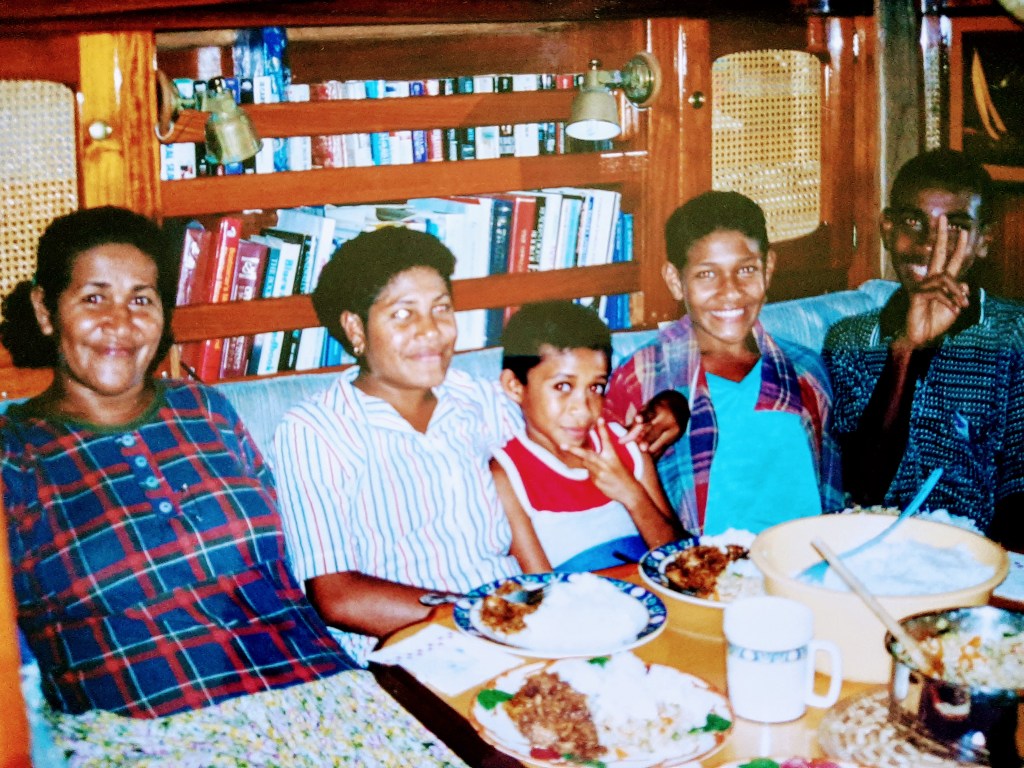
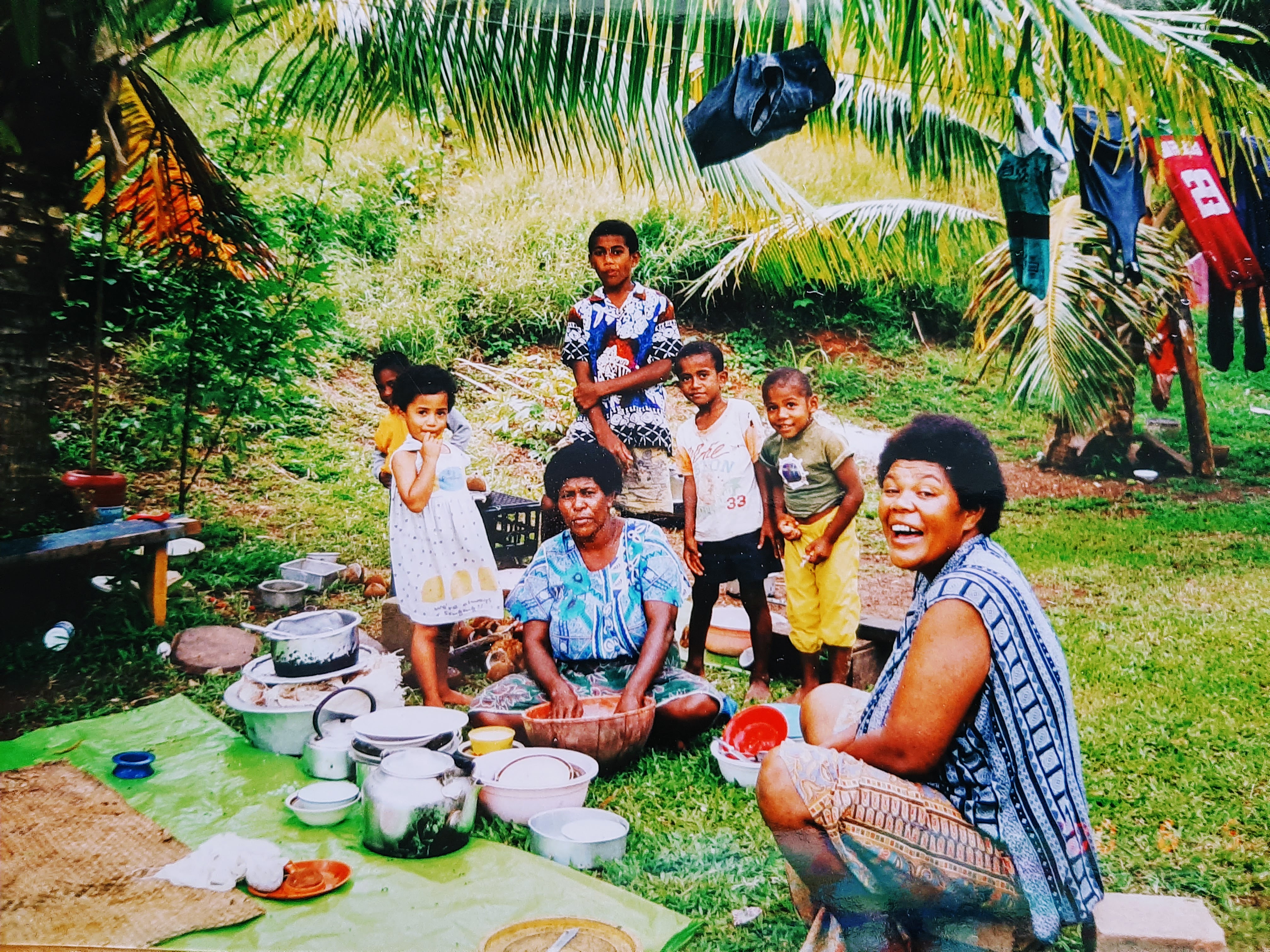
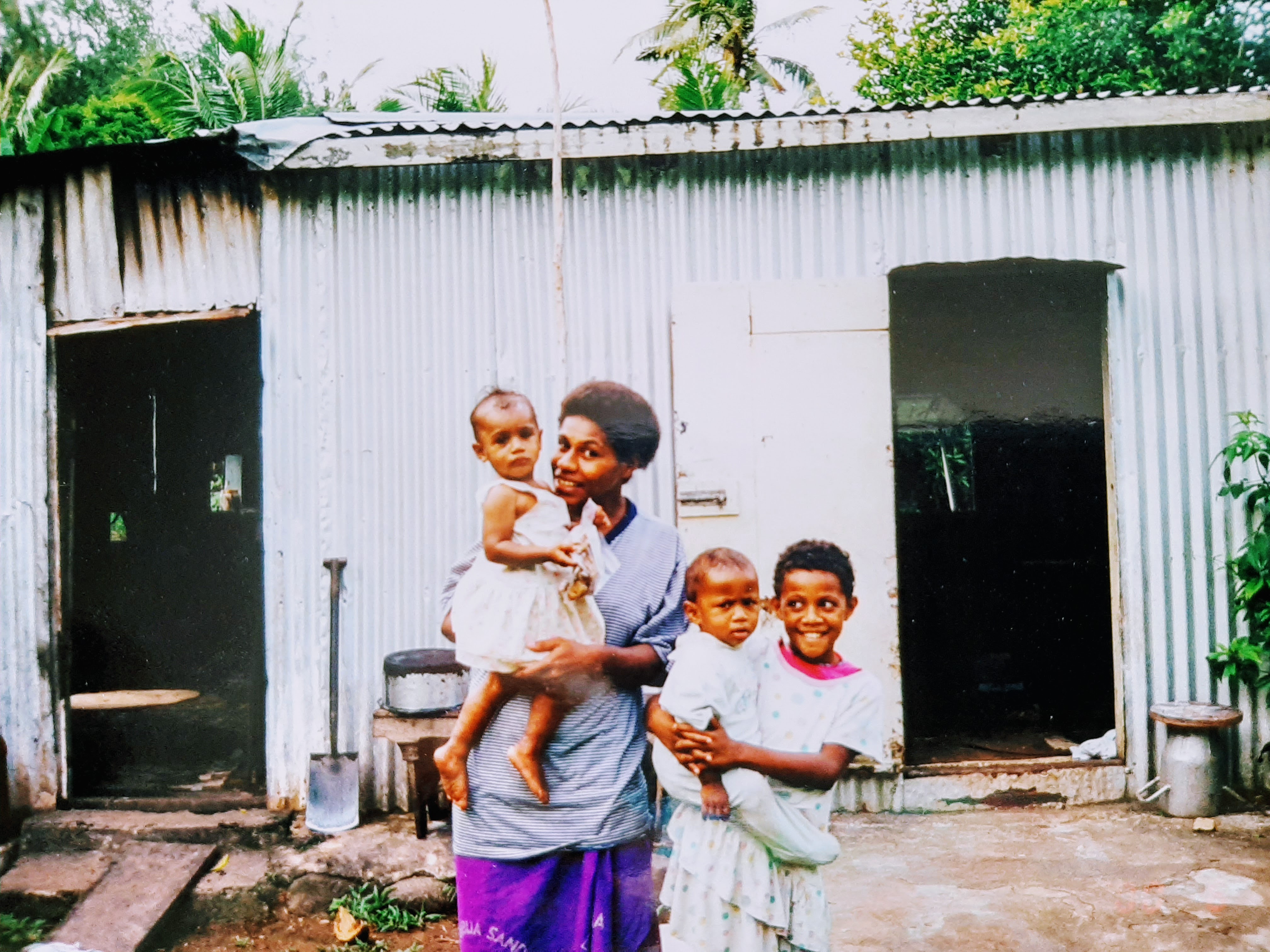
The modest dwelling of Saiasi, his wife Liku, and their 3 children: Louisa, Govu, and Daiana was set within a small village in the hills. Sitting on mats, we chatted, eating yams and crackers while chickens strutted and clucked through the tidy home and clothes fluttered on lines outside the window.

Saiasi was in the process of constructing a new house when he was fortunate enough to have building materials. In the cool air of morning he tended the village’s vegetable gardens and kava fields. He, like most Fijians, was proud of and loved his family, island, and nation.

Liku fished with the women along the shore and probed the shallow reefs for delicacies. She was a busy housewife and mother with none of our modern conveniences. It was a toilsome life, but with little stress.
18-year old Louisa gave us a tour of her secondary school where she’s the “smartest girl in the class.” There were several buildings including dorms since there were few schools and teens came from all over. Supplies were sparse and the tiny library’s shelves only half full. Both Louisa and Daiana plan to become teachers.

Neighbors of the family invited us over to tell our story and share a cup of kava. The earthy scent pervaded the air as we passed the coconut shell around, clapping and pretending to enjoy the tepid, dirty-dishwater looking and tasting refreshment that numbed our lips and tongues.

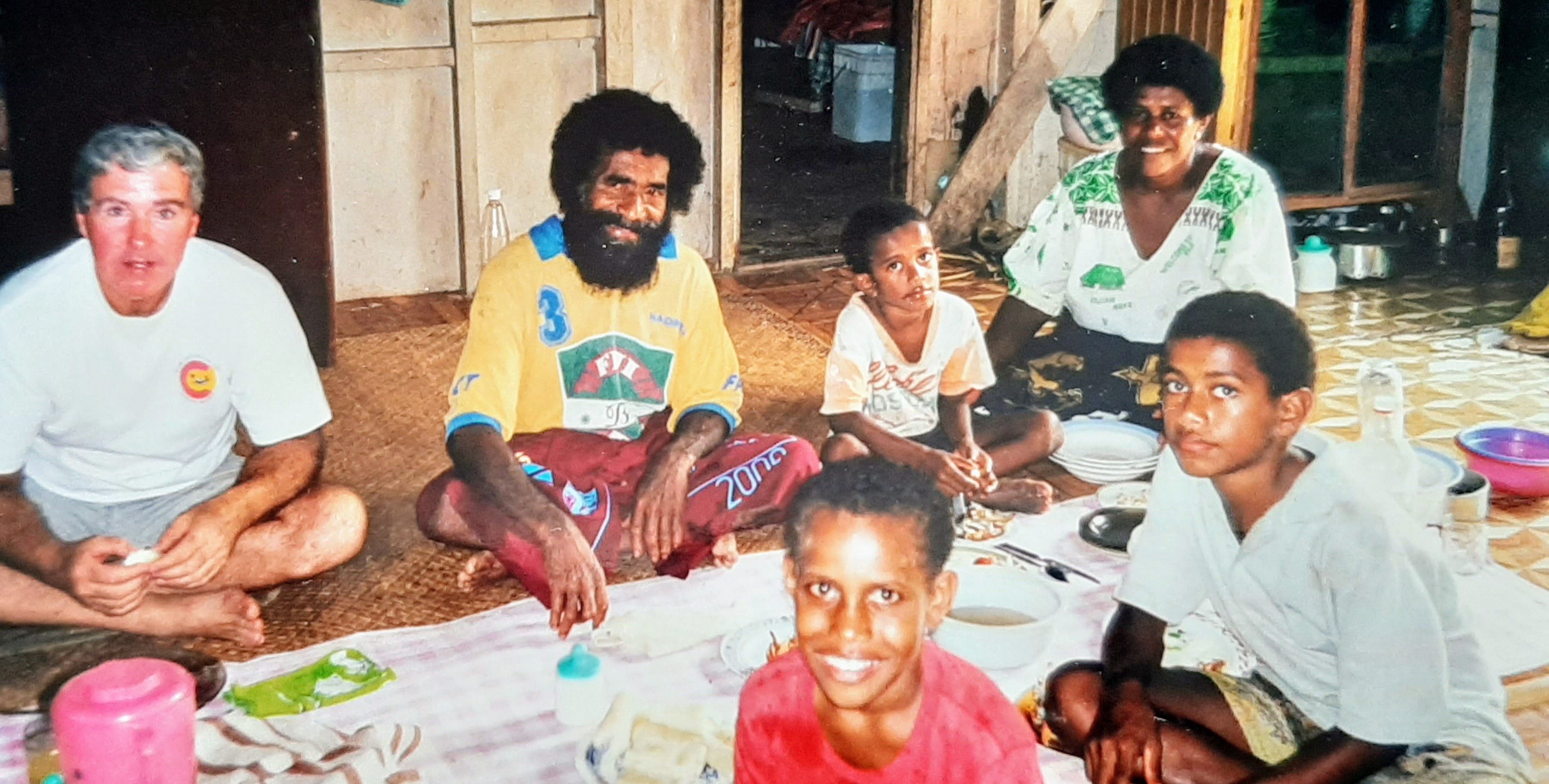
One early evening Saiasi’s family came for dinner on the boat, each of us preparing a traditional dish. Daiana was inquisitive about everything, especially our books and photos. Quiet 15-year old Govu informed us he didn’t care much for school and planned to be a farmer like his dad. His favorite pastime was fishing and driving the family panga. He and his dad were fascinated by our radios, GPS, and depth sounder displaying fish swimming beneath the boat.

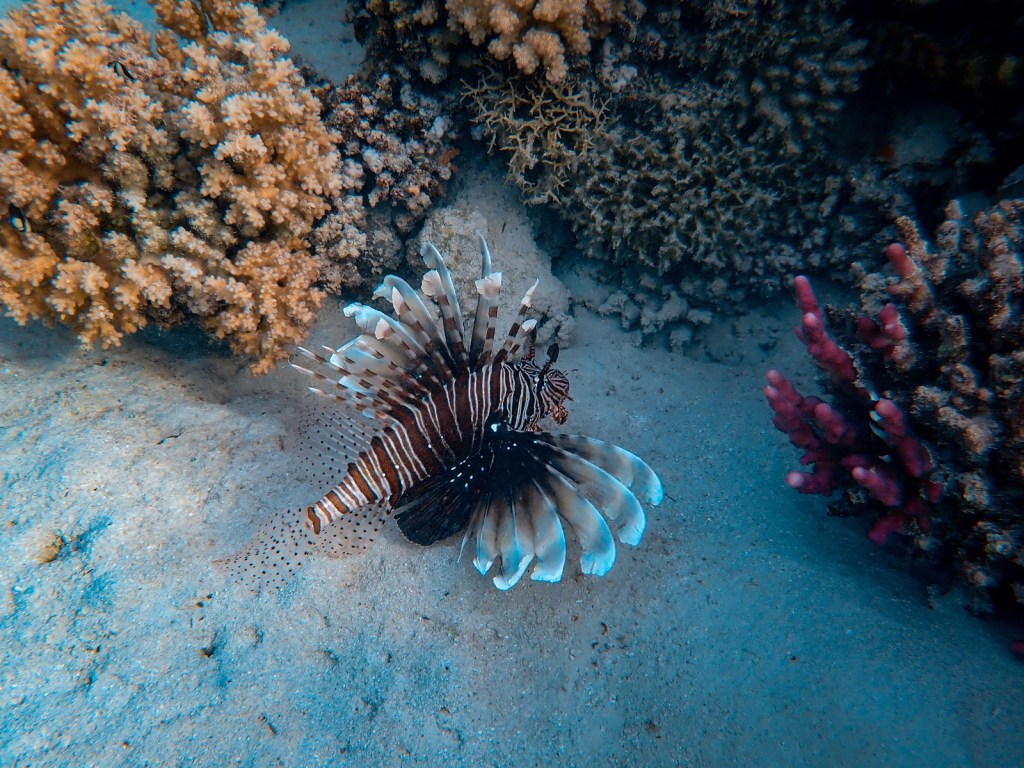
Taking a break from social activities, we spent a day snorkeling amid colorful sea fans, stag-horn, brain, mushroom, and other corals. Multitudes of bright tropical fish darted through underwater passageways and swirled around us. Eggshell cowries covered an enchanting area, their black velvety inhabitants partially encasing their smooth exterior shells. A venomous lion fish shied away from us in a rocky outcropping as we carefully swam away from its painful spines.

Another afternoon we discovered a village buried deep in the jungle from which a narrow path led to a waterfall. Two young girls with dark curly hair, enormous eyes, and shy smiles became our unofficial guides. The youngest never spoke, but Mary chattered away in perfect English. which is taught at school. The muddy trail took us up, down, and winding across lush valleys and sweltering jungle, using tree roots as steps and handholds. Within the stillness musk parrots squawked and their crimson chests, green and blue wings flashed through the treetops.

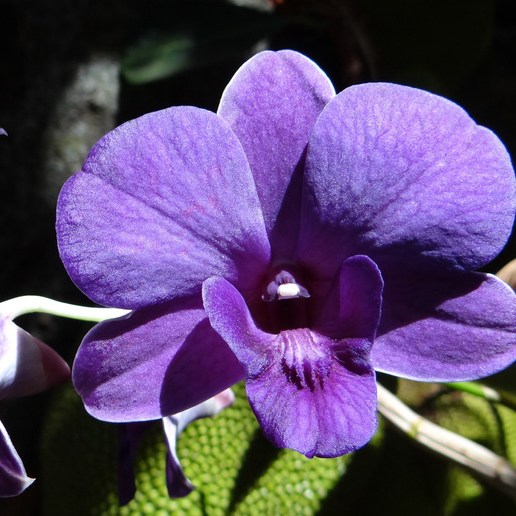
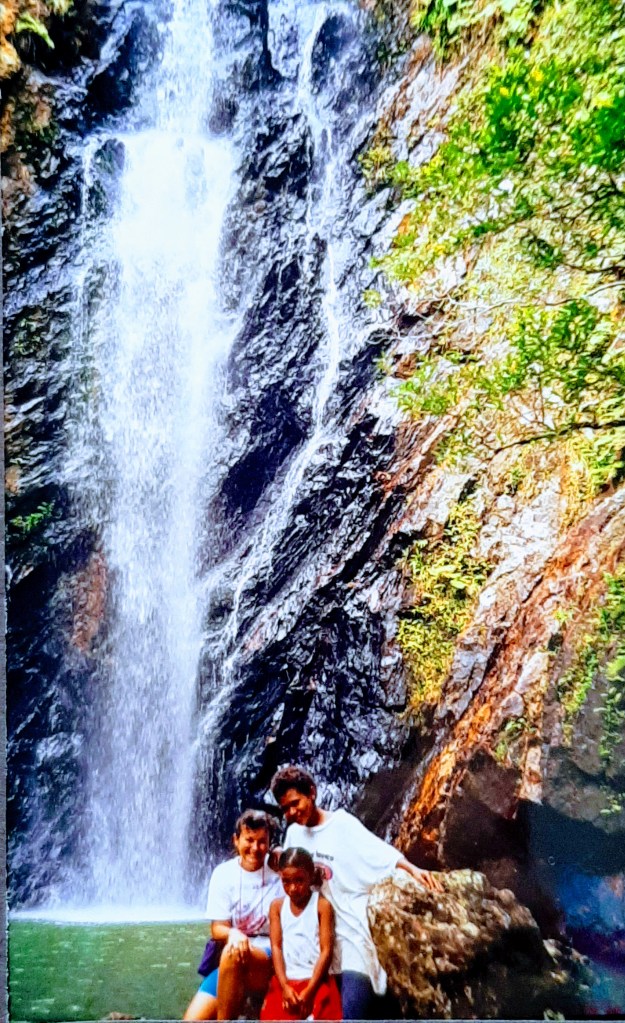
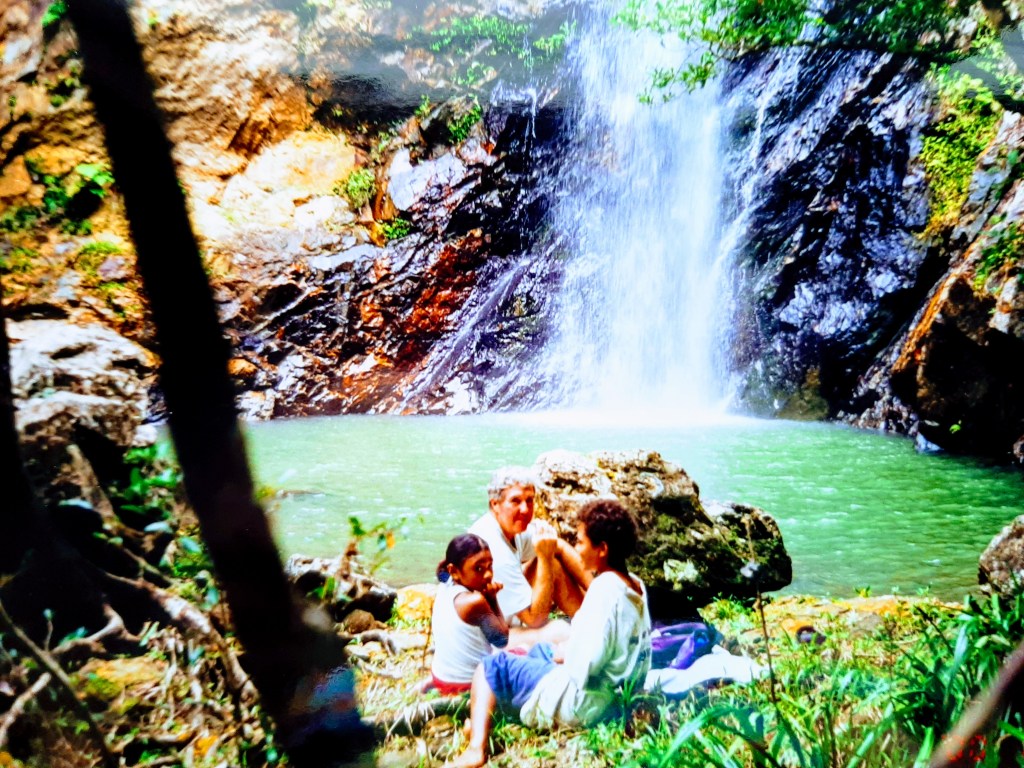
The roar of water enticed us to pick up the pace and soon we entered a clearing. Cascading falls dropped 50+ feet over rock into a deep green pool. Lacy ferns, climbing vines with delicate flowers, fragrant frangipani, pink and purple dendrobium orchids, and trees encircled us. We dropped to the moist earth, abandoned shoes, and waded into the coolness of our private pond. A picnic and brief siesta followed.

Our final afternoon before setting sail back to the reality of Suva, Saiasi and family paid a final visit. We laughed, cried, took photos, and shared gifts including building supplies and books. It was one of our most emotional farewells. Bear hugs, handclasps, and moces were reluctantly exchanged.

As we journeyed across oceans, anticipating what awaited us in countries yet to be explored, we wondered if we would ever recapture anything close to those magical days of friendship and beauty within the Great Astrolabe of Fiji.

A friend may well be reckoned the masterpiece of nature

—Ralph Waldo Emerson

Fiji—Where Time Stands Still

Among Fiji’s Great Astrolabe Reef, the world’s 4th largest barrier reef, not only is hospitality legendary, but deeply embedded rituals, culture, & ancient lore are intertwined with daily living-CF

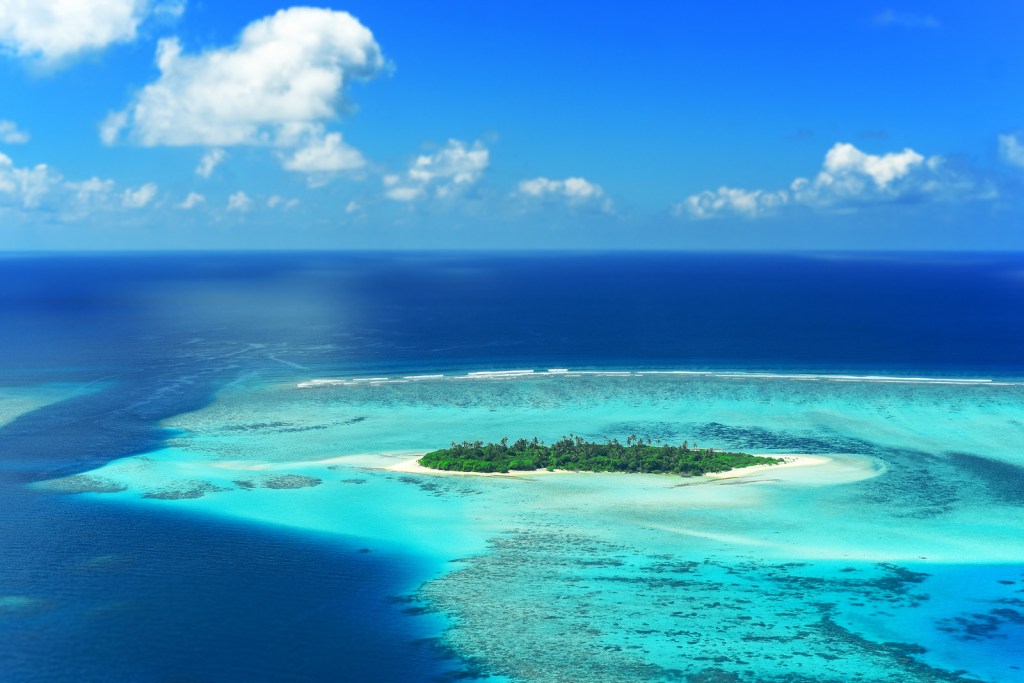
Arriving in Fiji during the May 2000 coup was not on the itinerary of White Dove’s world cruise. We anchored in Suva on Viti Levu, the capitol of Fiji, only long enough to check into the country and provision. After a full day of sailing we reached an isolated string of jeweled islands set in a crystalline sea, encircled by the Great Astrolabe Reef.

It requires good charts, GPS, and vigilance to navigate this coral labyrinth, famous for excellent fishing, diving, and impressive cruising. Or fly in and stay at a comfy resort. Not an option for us adventurous types! For 2 days we basked in solitude at deserted Yaukauvelevu Island, combing its beaches and snorkeling azure waters. We then moved to Ono, a medium-sized island with several scattered villages where extended families live by the motto, “Life is not a race, but a pleasurable pace.”

For a week at Nagarra Bay we were immersed in Fijian culture. First on the agenda was sevusevu-presenting a gift of kava roots to the village chief. *See note at end of article: “Visiting a village”. Next we delivered a letter from a woman we met in Suva to her Uncle Epinere and his family. Never did we imagine the depth of opportunities this simple act would lead to. While we passed out candy, Anna served banana cake and tea. When Jerry was invited indoors by the men for their afternoon kava, I remained with the women and children, conversing as they grated coconut and washed laundry and dishes in large bowls. The next afternoon we shared a meal. Wooden bowls and large shells filled with fried fish with onions, sweet land crab, diced giant clams in coconut milk, bananas, and rice were passed around, each of us plucking out pieces with our fingers. Afterwards stories and photos were partaken of.

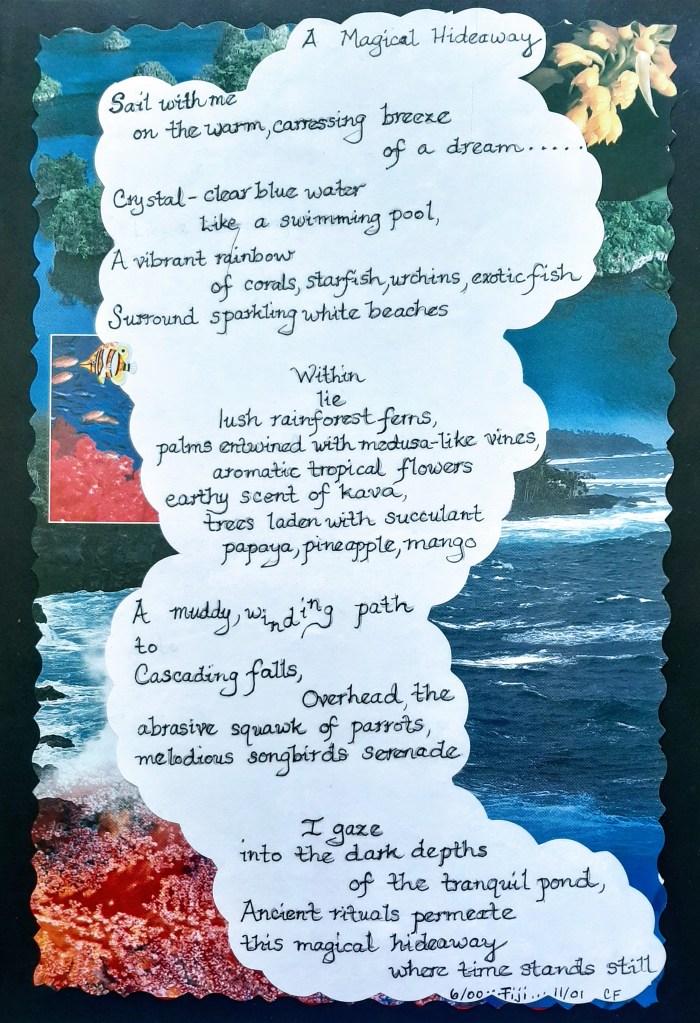
Day 3 we presented these new friends with freshly-baked pineapple cake before trekking across one end of the island. Figured we need some exercise after all that eating! Our guide, 11-year-old Sala, led us through dense rain forest where birds serenaded as multi-colored butterflies flittered among ferns, orange and black heliconia, vibrant red hibiscus, and delicate orchids. The slippery path was barely discernible, but the discomforts of sweating, mud, and mosquitoes vanished as we emerged onto a pristine white sand beach. No humans, but we were greeted by 100’s of “walking shells”, home to the cutest hermit crabs. Their antics entertained us as we reclined in the shade, sharing a picnic and the soothing ambience of this magical hideaway.

Snorkeling outside Nagarra Bay was amazing. Encircling 2 tiny islands a vibrant rainbow of corals, peacock-blue starfish, purple sea urchins, and an incredible kaleidoscope of exotic fish dazzled us. Fortunately we didn’t notice the poisonous black and yellow striped sea snake until we were safely aboard the dinghy!

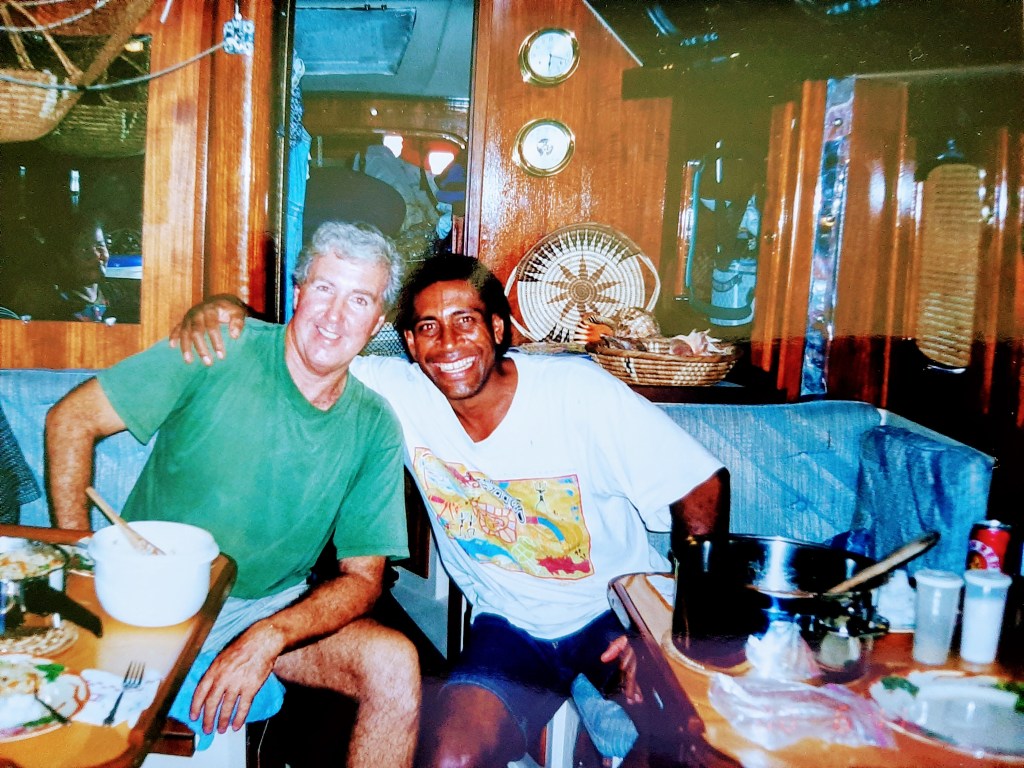
Several afternoons were spent visiting with locals. We dispersed books, magazines, material, toys, school supplies, and more to Epinere’s family and his sister-in-law, Bui plus her 3 children. She lived with extended family while her husband, stationed in the Middle East, served in the United Nations Army alongside many other Fijian men. Such simple gifts gave great pleasure. Although mainly living off the land and sea, the villagers never hesitated to share whatever they had, including invites for a cup of lemon leaf tea or kava. Joe, Epinere’s brother, thanked Jerry for repairing his spear gun and several antiquated spears by presenting him with a gorgeous Triton shell. Schools throughout the remote South Pacific islands lacked essential materials and books so we donated a portion of our dwindling supply to the local teacher.

We bid farewell to these new friends, exchanging addresses, hugs, and smiles. A final image forever engraved in our memories is of a group of islanders standing by a thatched hut, palms swaying, a backdrop of densely foliaged hills, and the bay gently lapping at a primitive stone seawall. All were waving and had wide grins. Their cries of “Moce” followed us across the peaceful lagoon.

Live in the sunshine, swim the sea, drink the wild air.

Ralph Waldo Emerson

Visiting a village:

-Ask for permission to present a gift of kava to the chief.

-Kava ceremony- Sit crossed-legged facing chief; never turn your back on or sit higher than chief; never walk across the circle of people; when offered kava clap once, say “Bula”, drink quickly, and clap 2-3 times.

-Visitors are treated with exceptional hospitality. Reciprocate with basic groceries, second-hand clothing, candy, small toys, building materials, etc…

-Modest dress-Knee length skirt or dress for women. It’s rude to wear a hat or sunglasses.

-Ask permission to take photos.

New Zealand #2—A Land of Paths

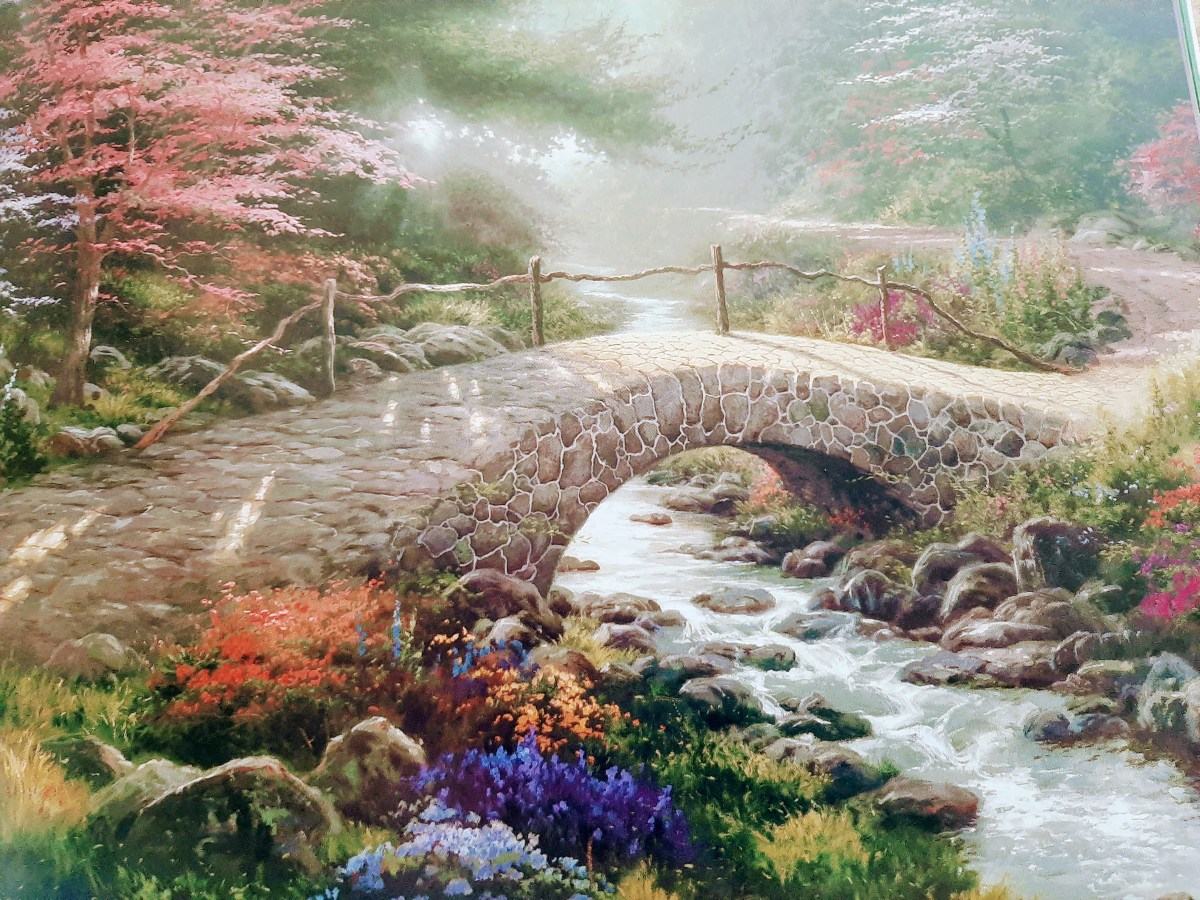
We all have a long road to walk. We have desires, dreams, destinations. We have hopes & goals. So we begin to map out a course for our lives. Some may map the logical routes; others might take the roads less traveled. However, we would do well to always hold our life map loosely. We may set our goals, lay out our courses, and map our lives, but when it’s all said & done, God is ultimately overseeing it all.

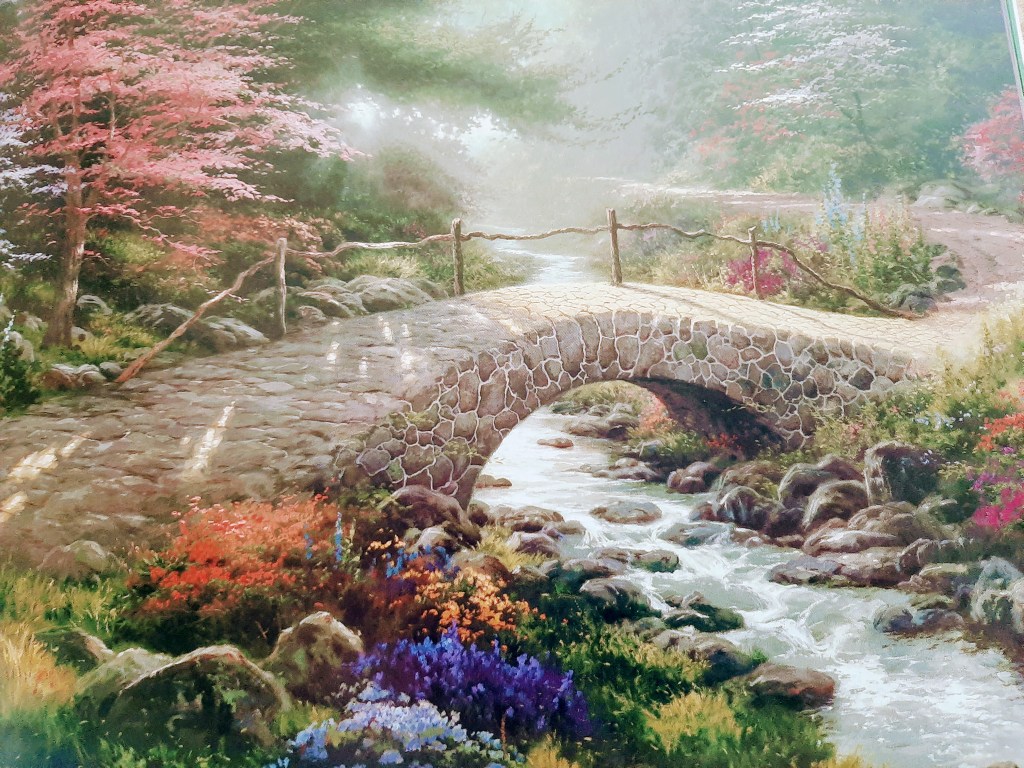
Painting & excerpt from “Glorious Refrains” by Thomas Kinkaid

Lovers of tramping are drawn to New Zealand’s numerous trails maintained by local Kiwis. The most difficult part is choosing from kauri forests, coastal panoramas, historical and archeological sites, bird and wildlife viewing, waterfalls and streams. So many choices, so little time. A few we ventured down on North Island were gotten to by car, but some were only accessible by boat.

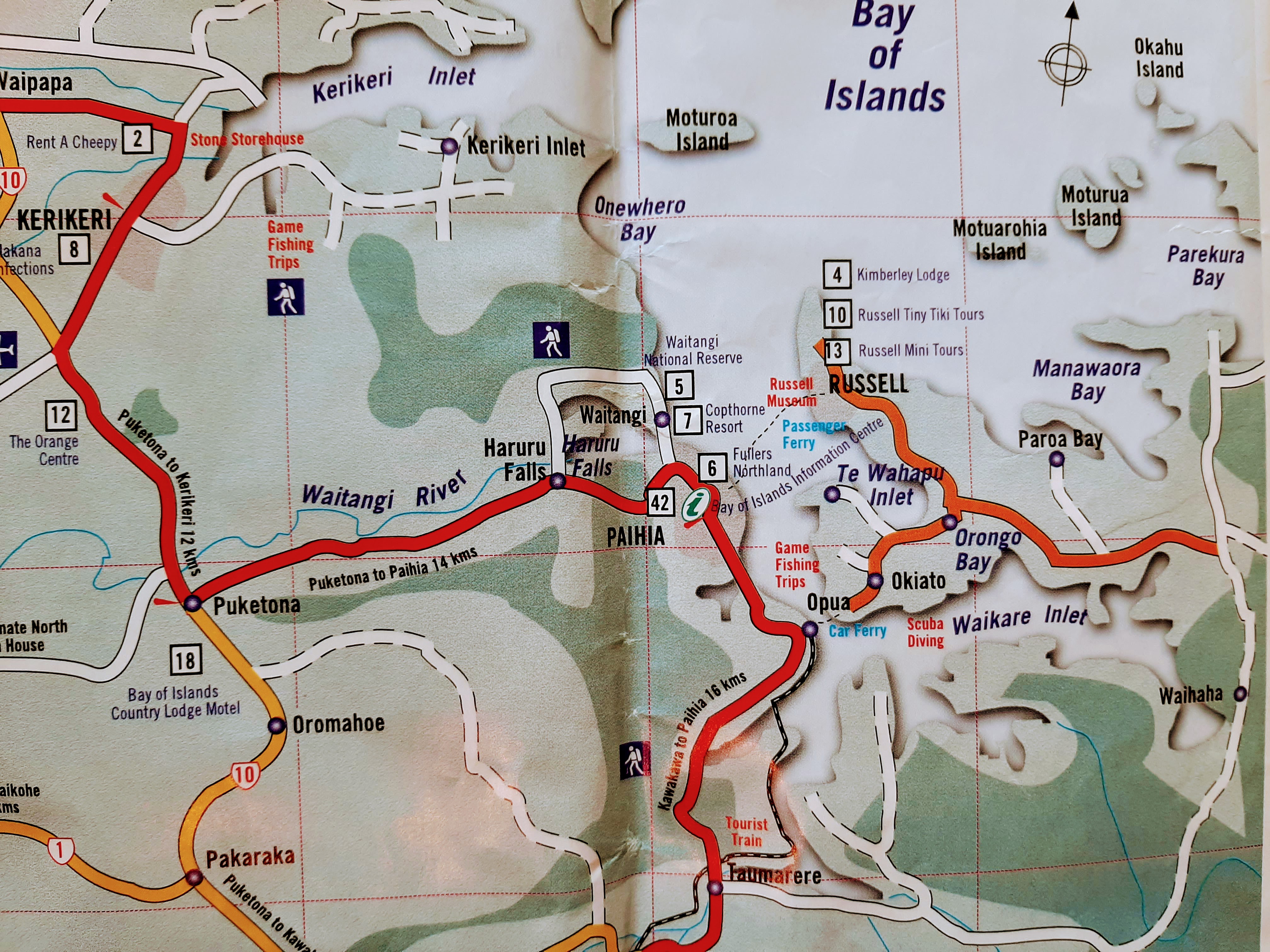
  1. Quaint, historical Russell lies across the bay from Opua. This haven for wanderers, artists, and romantics was where Zane Grey wrote about its world-class sport-fishing. Sea excursions were offered via kayak, square rigger, or yacht. For trampies there was a 2.5-km walking track that began near the boat ramp on the Strand, leading to Flagstaff Hill. Follow a grassy path 1-km further north for Tapeka Point to an ancient pa-historical fort, and delight in views over the Bay of Islands.

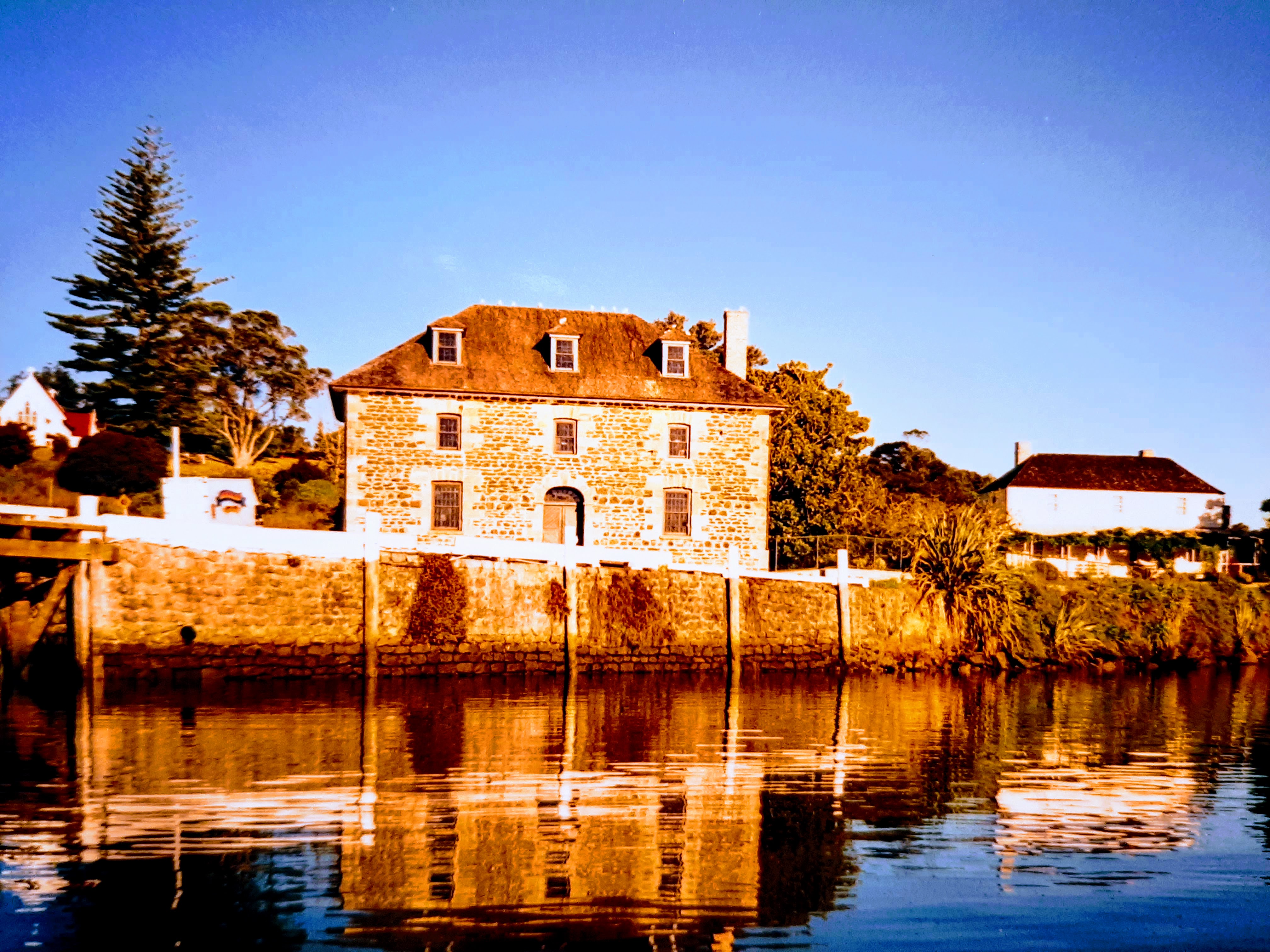
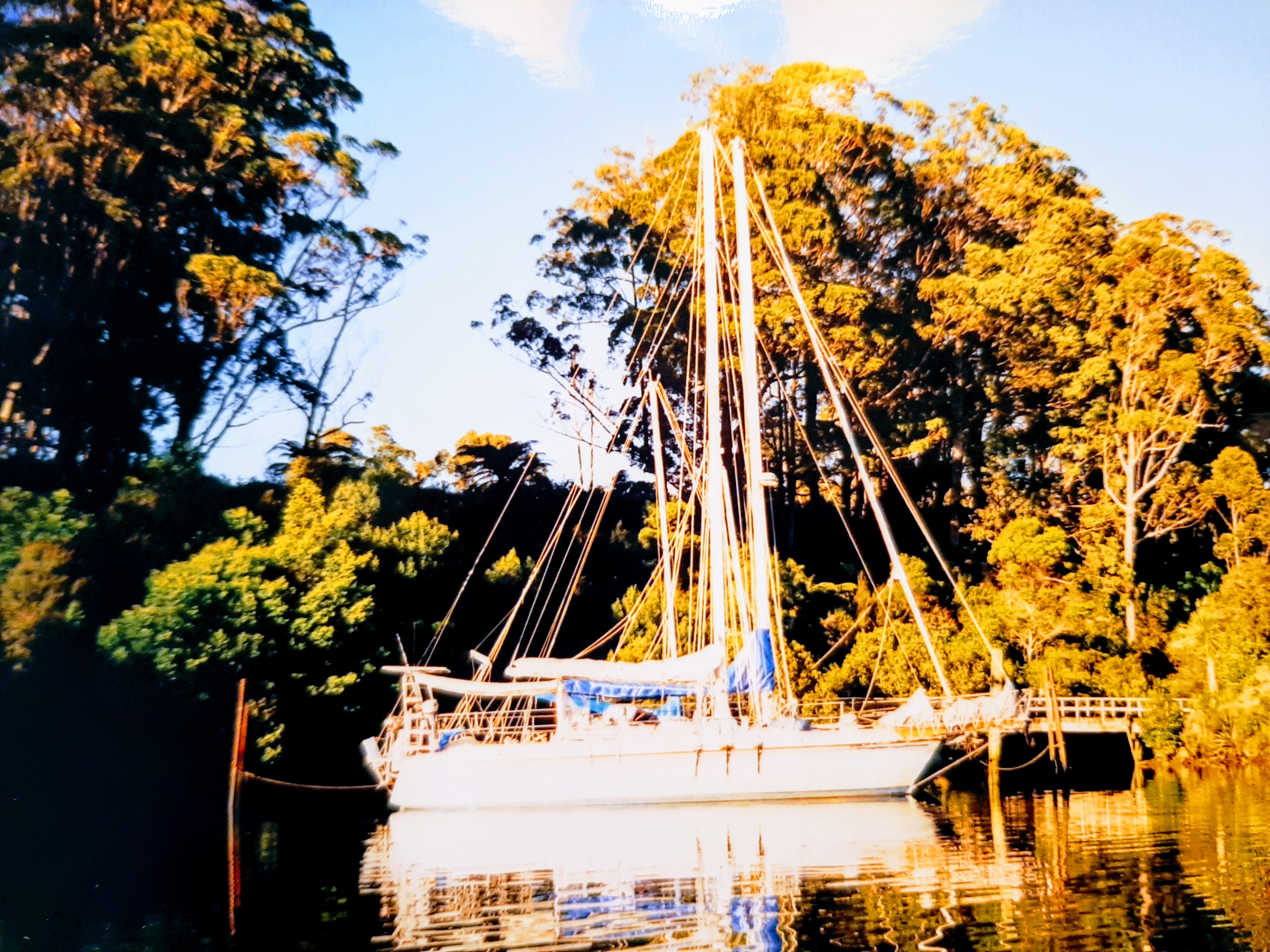
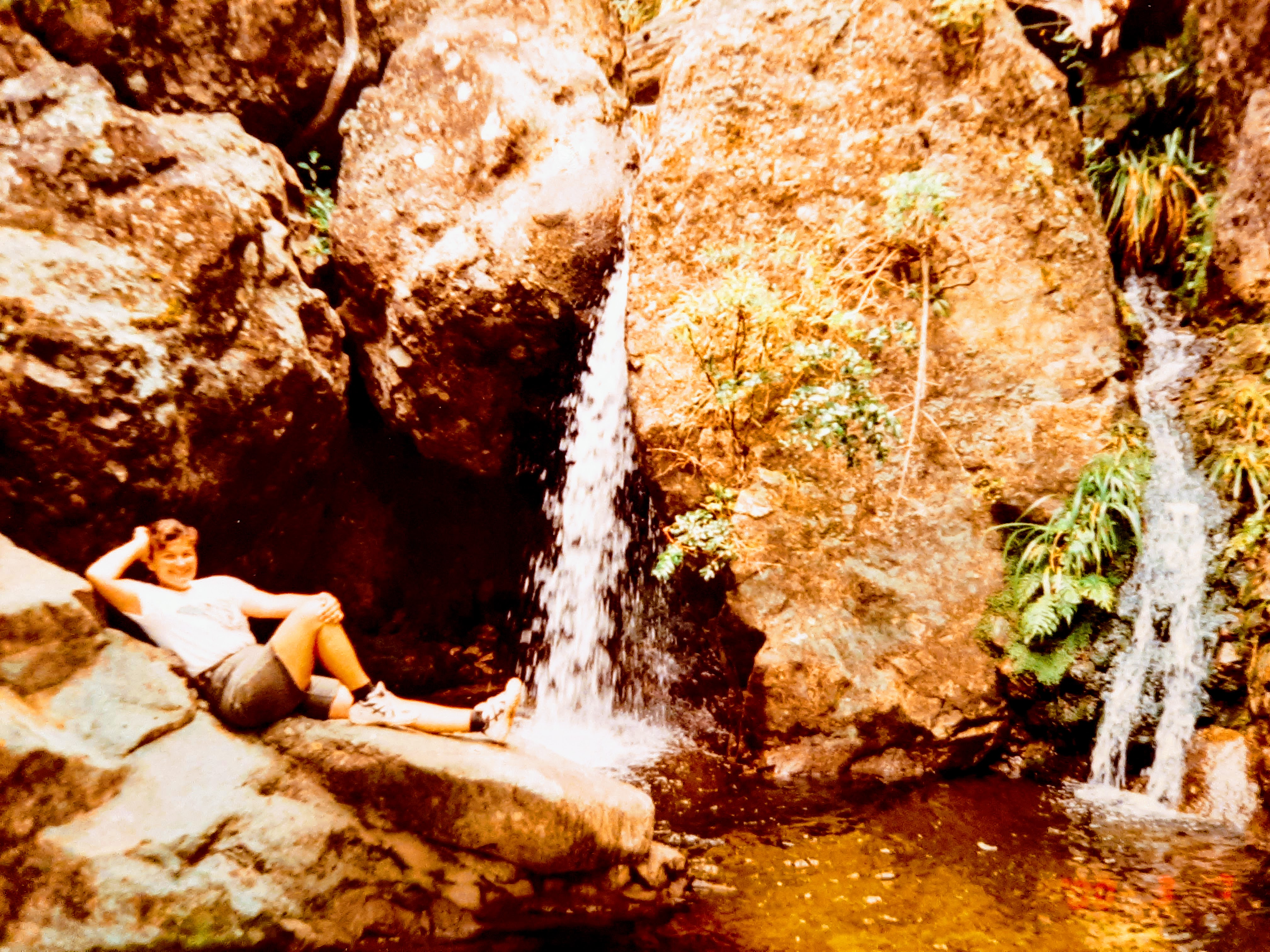
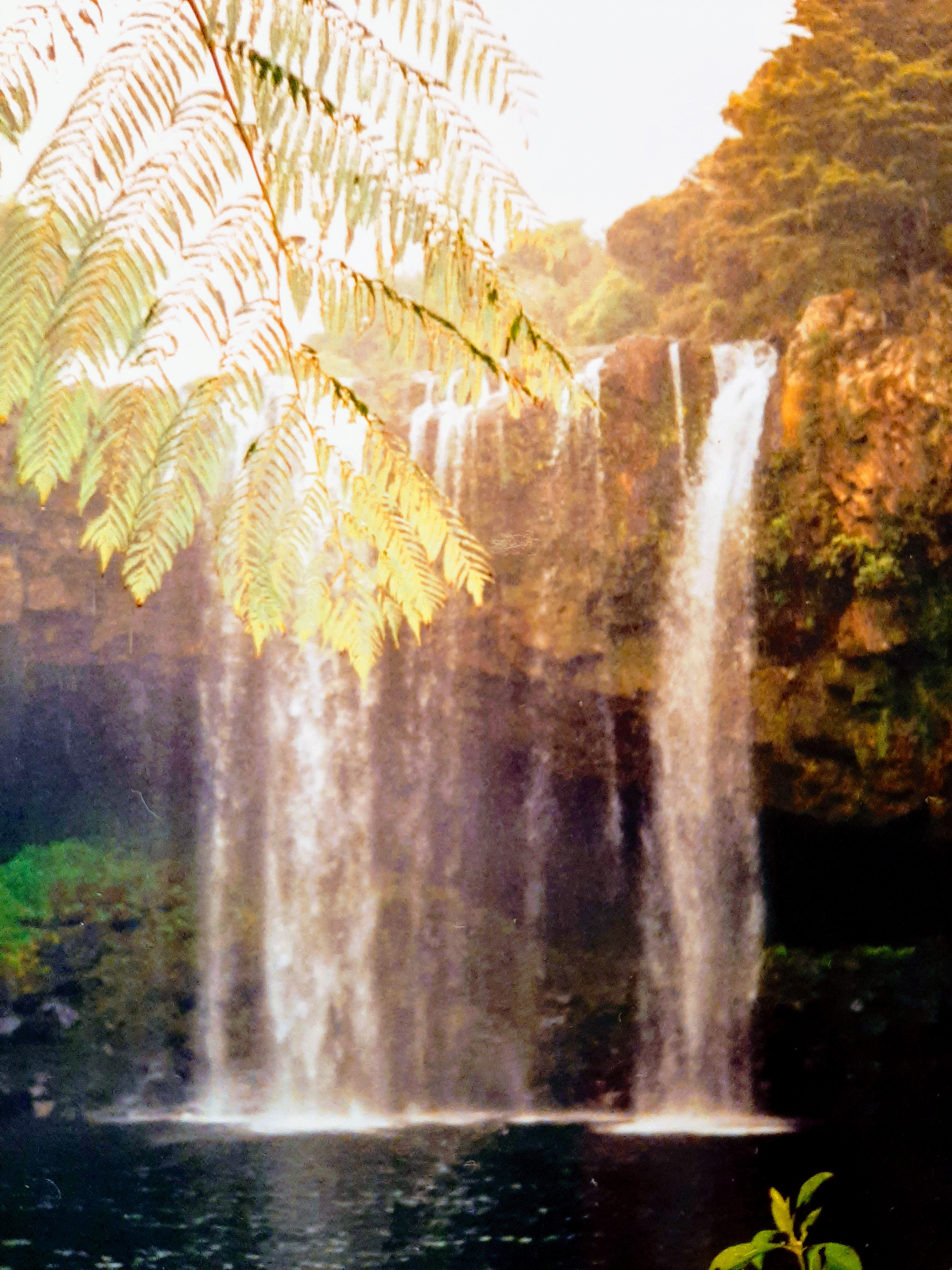
2. Kerikeri Basin harbors a network of paths ranging from 10-minutes to 1-1/2 hours. We side-tied to a friendly local’s sailboat adjacent to the Stone Store and nearby Mission House. Built in the early 1830s, Wesleyan missionary, John Hobbs intended it to house mission supplies, but was mainly used as a kauri gum trading store. From the Store a 30-minute walk headed downstream to Kororipo pa. Or from the carpark a 1-1/2-hour riverside path led upstream to serene Rainbow Falls. We never minded the 1-1/2-mile trek through a forest of Norfolk & other pines, eucalyptus, and fern archways to the town grocery.

3. State Highway 12 on Northland’s west coast led toward Waipoua Kauri Forest and Trounson Kauri Conservation Park where various hikes wound along boardwalks, protecting the tree’s shallow root system. Some of the oldest and largest Kauris in the world grow here. Several tracks also led through native trees of Taraire, Kohekohe, and Towhai to waterfalls and panoramic views across sub-tropical rain-forest to the Tasman Sea. The illusive kiwi bird, forest parrots, kingfishers, and large kauri snails were among the varied wildlife. To gain a broader understanding of these majestic trees and their history, we visited the Kauri Museum in Matakohe. There’s a working steam sawmill, logging equipment, displays depicting how gum was collected and specimens of NZ amber, fine kauri furniture, carvings, and more.

4. The Maori named Great Barrier Island Aotea, which translates to White Cloud, appropriate for the secluded cove we nestled in off Port Fitzroy Harbor. Above forest-clad mountain ranges, white clouds often formed on peaks during the afternoon. The diverse eco-system was a refuge for rare species of birds and lizards among spectacular bluffs, bush, beaches, and wetlands. Hiking was superb on this wilderness island. One day we followed Kaiaraara stream to a series of cascading falls. Deep pools invited a cool swim. A loud fantail followed our trek, gobbling up insects we disturbed. Also spotted was the iridescent green native wood pigeon. Pausing during our 5-hour hike for a rain shower in a tramping hut, we read guest book notes from hikers around the world. The trail ended at a kauri dam built by early Europeans who exploited the land for lumber and other resources.

5. Special memories were made at North Cove on Kawau Island. During Russell’s Tall Ships race and dinner we had encountered cruising legend friends, Lin and Larry Pardey. We took them up on their invitation and anchored near their lovely home and large workshop for a week of celebrations and non-stop stories. A providential introduction to friend and editor of Sail Magazine led to my first published article.

Nearby Bon Accord Harbor offered a beautiful tramp to Mansion House with views of an old cement factory and copper mine ruins. Through brush we glimpsed darling wallabies and on the luxurious grounds peacocks strutted and chicken-sized brown wekas clucked accompanied by tuis, known for their mimicry and lively songs.

Of all the countries we’ve explored, I’d return to New Zealand in a heartbeat. It’s friendly folk, diverse natural beauty, and labyrinth of trails beckon both yachties and trampies. Here quiet paths and anchorages await every seeking soul.

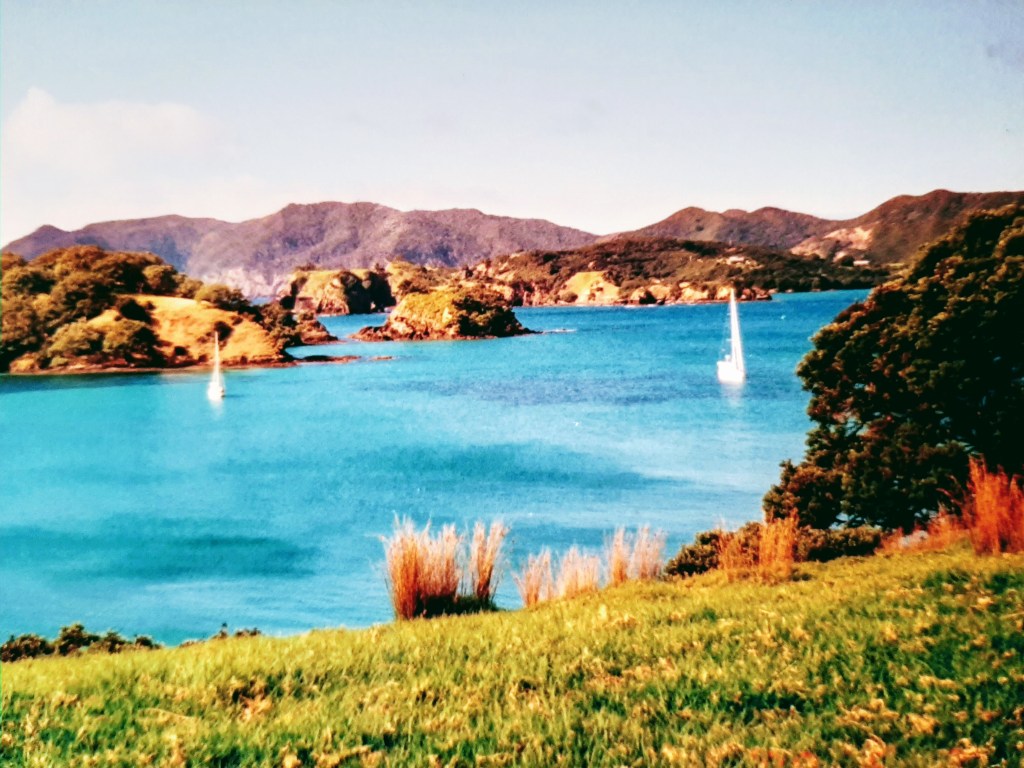
Rolling green hills on Urapukapuka Island held archeological tramps to several Maori sites.

He traveled light and often walked with no particular destination, because each inch of the path held answers and questions, the first step as rich as the last—from “John Muir, Nature’s Visionary “ by Gretel Ehrlich

Without A Rudder

God brings men into deep waters, not to drown them, but to cleanse them—James Aughey

Off watch in the aft cabin of White Dove, I awoke abruptly to footsteps overhead, snapping sails, and lines flogging. The sailboat heeled sharply to starboard as I struggled to sit up. My watch read 0030. I’d only slept for 45 minutes. Grrr…I yelled to my husband on deck, “What on earth is going on out there?” No response. Reluctantly I climbed off the cozy bunk and peered out the companionway. Jerry lunged across the cockpit, slicing the top of his hand open. Blood mixed with rain as he plopped down. “Don’t know what’s wrong, but can’t get the boat to steer.” He pulled the tiller toward him, then away. “There’s nothing there!” We gazed at each other, bewildered. It didn’t make sense. We had replaced the wheel with a tiller so there would be no cable to break and had replaced our spade rudder with a new one just 18 months ago. Jerry shone the flashlight on the tiller head and upper rudder post it connected to. All looked normal. Using a boat-hook, he felt around beneath the stern. There was only empty space where the rudder should have been. How had it sheared off? It was time to pray.

Our crossing to New Zealand from the Ha’apai Group in Tonga had begun on October 27, 1999. The first 3 days were wet and rolling with 25-35 knot winds and 9-foot swells crashing onto the beam. After listening to daily weather reports, we chose to stop at North Minerva Reef to wait out the low that was expected to hit NZ’s North Island on November 3rd. The 2-3 foot high coral ring with narrow opening was a mid-ocean oasis. It was surreal, cocooned in the calm bay while wind howled and waves pounded the exterior reef. Yachts that had continued on experienced 30-50 knot winds with 15-foot seas. No thank you!

Minerva Reef—Lobster hunting with friends

On November 4th, with a good weather window predicted, we resumed passage in company with friends, John and Aleta aboard Holding Pattern. Pleasant sailing winds ranged from 10-20 knots from the NE-ENE. Within 4 days we were 50 miles ahead of HP, averaging a speed of 6 knots, and due to arrive in Opua, Bay of Islands, before dark the next evening—one day ahead of the next forcasted low. Right on target until now. Just after midnight we suddenly faced an enormous problem. We sprang into action, adjusting sails until until the boat was heaved to. This slowed the violent lurching so we could go below and use the VHF to notify vessels in the immediate area to be on guard for us. Next, calling Taupo Radio on the ham radio, we reported our status. After changing into warm clothes and bandaging Jerry’s hand, we fortified ourselves with hot chocolate and formulated a plan while awaiting dawn.

At first light we dragged out 400-feet of anchor rope and deployed it off the stern as a warp to help with steerage, but with negligible results. Jerry took down the spinnaker pole and tightly lashed 2 opposing 12-inch by 20-inch sheets of plywood to the end of it with a spare halyard. With special hardware he secured it to the frame of our Monitor steering vane. All of this took hours and drained energy, especially wrestling the pole out over the stern. Its success was temporary as the fitting eventually twisted loose from the windvane frame. As the boat pitched violently about, we used remaining strength to haul the now water-filled pole back aboard. Thoroughly exhausted, we agreed it was time to stabilize WD, and deployed our 8-foot-diameter ParaTech sea anchor.

Our masthead strobe light flashed its warning as we slept fitfully through a falling barometer and deteriorating weather. In the early hours of November 10th Jerry and I gathered tools and materials after consulting with John from HP by radio. Amidst intermittent showers and Force 8 (35 knot) winds, we built an emergency rudder to bolt onto the servo oar of the Monitor. The dinette table was converted into a workbench. As the sawdust flew, our spirits rose. For the final shaping with the belt sander , I suggested that Jerry take the paddle into the cockpit. Poor guy had to straddle it like a bucking bronco, wearing a snorkeling mask to keep rain and sawdust out of his eyes. What a sight!

As I attempted to clean up the mess below, my husband got us underway with our new rudder. With a great sigh of relief we found it working properly and set a new course for NZ, experimenting with different sail and motor combinations until steering was balanced. We resecured the spinnaker pole (with paddle) halfway off the stern to help prevent rounding up. Steering required manually holding the Monitor’s vane as a sort of vertical tiller.

A stiff breeze blew from the NW allowing us to average 4-5 knots combined with motoring. In the pre-dawn of November 12th, the engine stopped abruptly with a terrifying bang. A loose line had wrapped around the prop. Proceeding under headsail alone made keeping our course more difficult. Westerly winds increased to 30 knots causing confused seas, making it impossible to dive on the prop to untangle the sheet. Des, from Russell Radio, suggested trying to unwind the mess from inside; I used a pipe wrench to turn the propeller shaft in reverse while Jerry laboriously cranked in the line on a winch. Thankfully, it worked and we were back in business, motor-sailing into near-gale conditions.

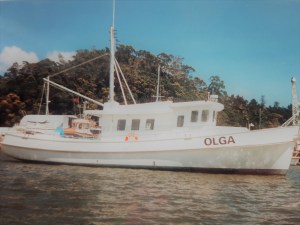
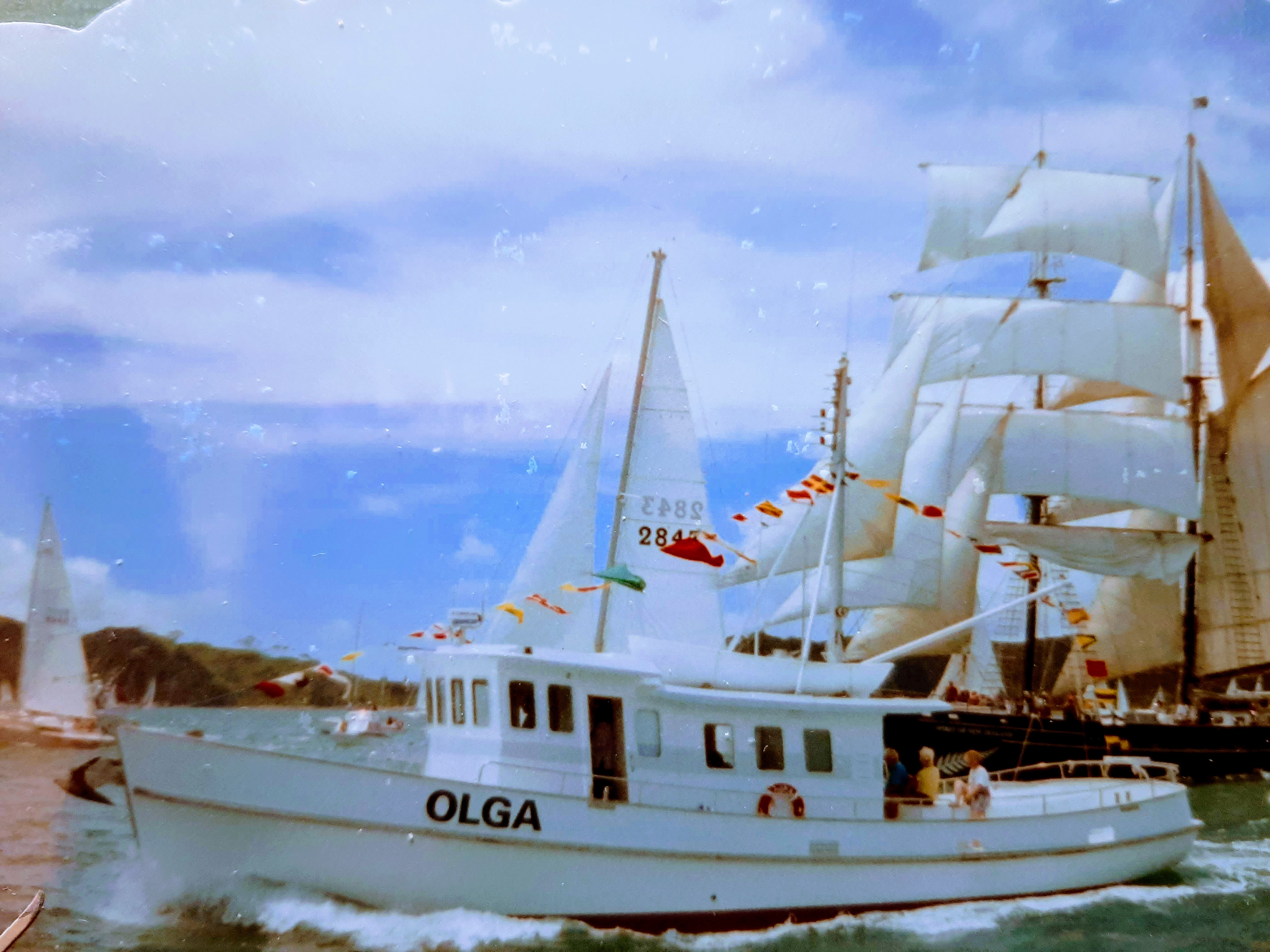
HP had reached Opua and John organized a meeting of locals and cruisers at the Boathouse to determine how best to help us. Jim Ashby, a local boatyard owner, volunteered to to take his trawler, Olga, out to tow us in. There was a tremendous show of hands for volunteers to assist as crew. By afternoon, cold, exhausted, and discouraged at not being able to tack into the Bay of Islands, only 18 miles away, we beheld a beautiful vision appear on the crest of a swell. It was Olga and her crew plowing through rough seas straight for us. As she circled us her stern rose violently out of the water, the 3-foot prop shaft exposed. It took several attempts to bring the towline on board and secure it. Jerry then spent 30 minutes at the head of our 6-foot bowsprit, crashing through green water as he lashed towels around the line to prevent chafe.

Released at last from the chore of steering, we relaxed and left the driving to Olga. We stumbled down the companionway steps, ate a quick meal, and passed out, oblivious to the jolting ride. Awaking at dusk, we poked our heads out the door. Land! Cape Brett lay to port. What a beautiful sight. At 2330 on November 12th, we picked up a mooring in the calm bay off Opua. God had led us to safety. We thanked Him and all those involved in our rescue. Then headed toward a long, deep sleep for the first time in four nights. We wouldn’t think about building a new rudder for a few days—one we could trust.

Opua, Bay of Islands

God brought us to this safe harbor, and through this and every storm that has and will come our way. He provides endurance, courage, and refuge for our country and the rest of the world during the current pandemic. And He will guide us to find the good in the midst of chaos, suffering, and trials.

New Zealand #1—Hearts of Gold

110 miles. That’s how far we were from Opua, our port of Entry to New Zealand, when the unthinkable happened. We lost our rudder. Solving that dilemma is another story which I’ll share on my next blog—”Rudderless in the S. Pacific.”

The next four days were an exhausting blur. With Jerry’s ingenuity he jury-rigged our self-steering windvane to act as a temporary boat rudder . We slowly resumed our voyage beating through 30+knot winds and confused 9-foot seas. Our introduction to Kiwi hospitality began via ham radio contact with Russell Radio. Every 2-4 hours the calm, uplifting voice of Des offered advice and encouragement plus connected us to other yachties and updated weather reports.

Unable to hold our course as we neared the Bay of Islands, friends and locals convened at The Boathouse, a referral center for NZ boaters and visiting cruisers. Everyone donated time and money, creating a rescue plan to tow White Dove the final 18-miles. Jim Ashbey, a local boatyard owner, volunteered Olga, his newly built 60+foot trawler. All he requested for the 12-hour trip in deteriorating conditions was a few deckhands and money for fuel. Thanks to our cruising brothers and many strangers whom shared the bond of boating, we reached our destination.

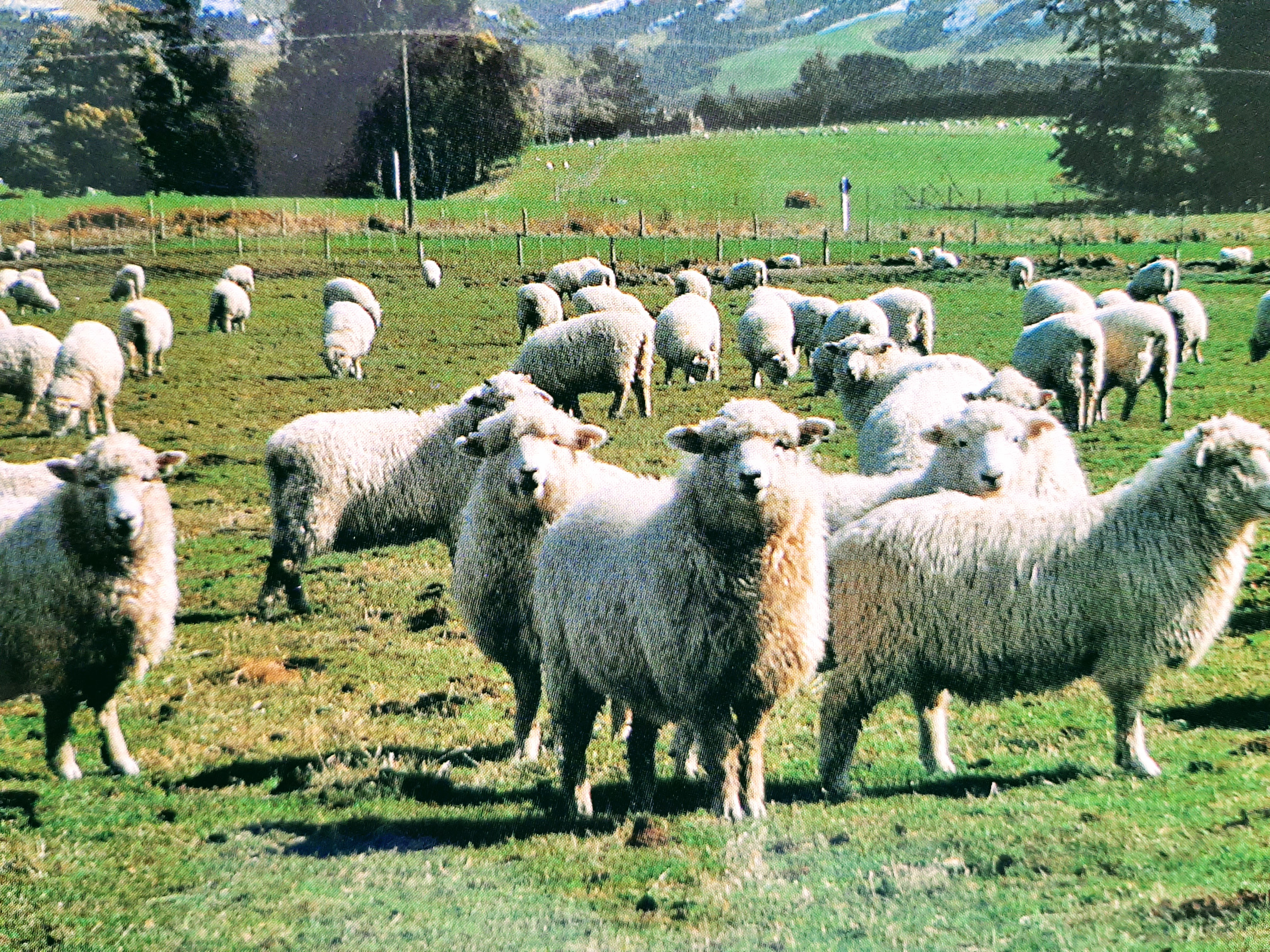
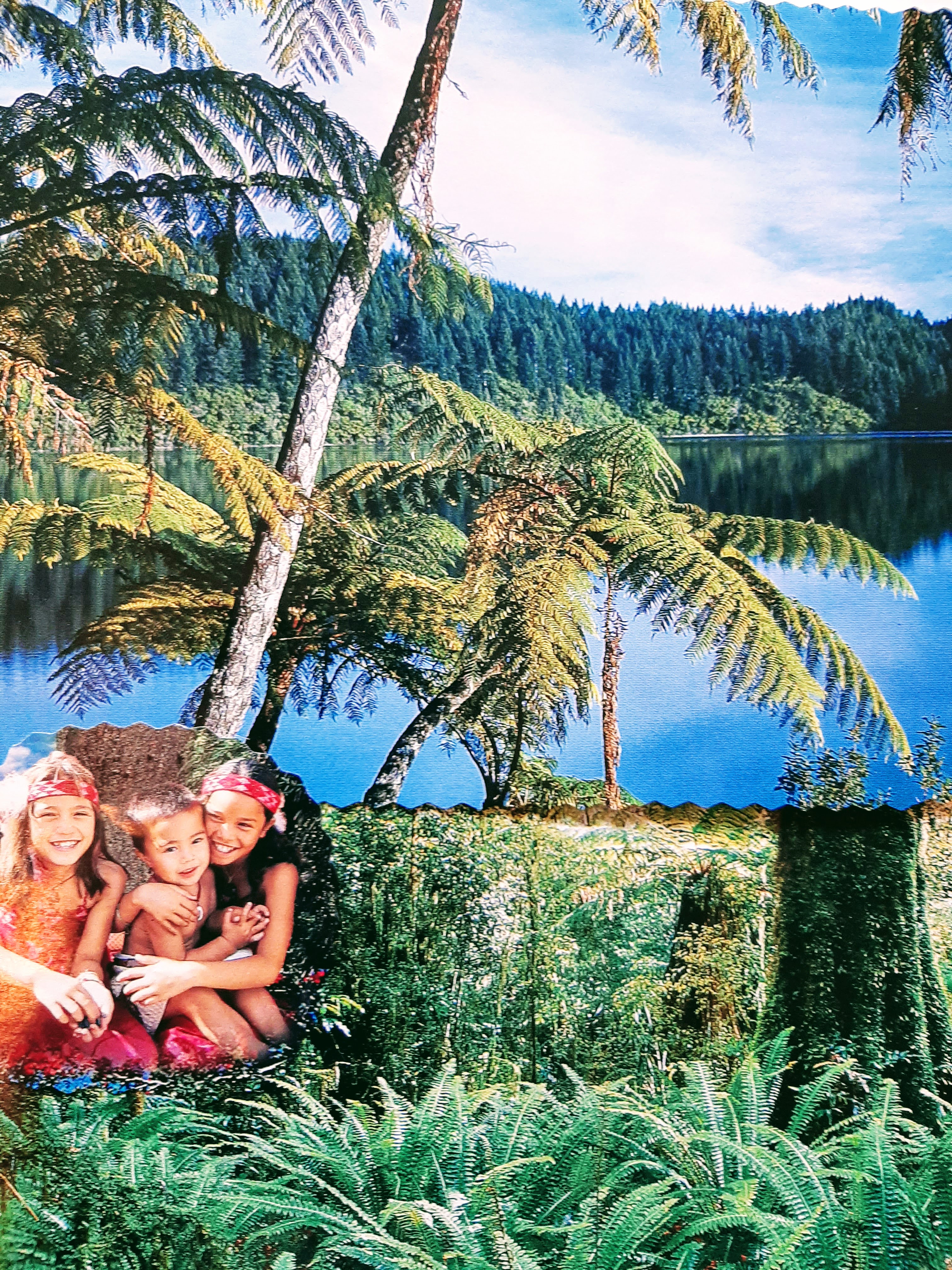
Opua and its surrounding region is all rugged shoreline, rolling hills and grassy pastures with grazing sheep. Rivers and forested trails meander through the lushness where Pohutukawa- the NZ Christmas tree, ancient Kauri, Norfolk Pine, and giant tree ferns thrive in the coastal climate. My favorite tramping path which I walked almost daily was the Opua-Pahia Coastal Walkway. It was 5-km following coastline from the car ferry ramp to Pahia’s beach. There were pleasant views over the bay, sandy beaches, and a mangrove boardwalk. Other nearby tramping included Harrison Scenic Reserve Walk, 1.4-km with some of the best coastal forest in the Bay of Islands. It’s accessible via the coastal walkway at Cherry Bay or Broadview Road, Opua. A 3rd choice is Opua Forest Lookout Track, a 1.5-km tramp through regenerating forest to a gorgeous lookout over the bay.

The small village of Opua is tucked into an inlet on the mainland of North Island. There is a tiny Post Office, a couple of boatyards with marine stores (of course!), and a general store. A 10-minute taxi gets you to Pahia where thankfully, there was a full-sized grocery, restaurants, and tourist shops hugging the beach and wharf.

Anchoring yachties parked their dinghies at the dock of the Opua Cruising Club. This favorite hangout provided cruisers with 25-cent hot showers which felt amazing after bucket and solar showers for months! There was also a book-trading library and long-awaited mail collection service. They hosted a Thanksgiving potluck for 200 cruisers with a barbecued pig and turkey followed by a lively Kiwi band for dancing. At Christmas our “cruising family” gathered for carols, lots of scrumptious food, of course, and a used boat parts gift exchange. Celebrating these holidays in a foreign land was made less painful due to this kind-hearted local community. It also helped that everyone spoke English!

Kiwi generosity again surfaced when tragedy struck a family we’d met while in the S. Pacific. Jack, and his son, John, while on a parts run with a local, were involved in a serious car accident. Jack died instantly and 16-year-old John was hospitalized with back injuries. This family had crossed oceans and battled many storms unscathed, only to reach what cruisers and landlubbers alike perceive as “the safety of land.” Only one of several reasons to pursue your dreams today, for we know not what tomorrow brings.

The Boathouse immediately offered a car so we could visit John and see to his needs until his mom arrived from the U.S. Linda had taken a couple months off Teresa J to spend time with her aging parents. A few days later we rode back to Whangarei with friends for another hospital visit along with other business. A cruising friend’s sister lived south of there. We not only spent a luxurious night in her home savoring a lovely meal, hours of conversation, a queen-sized bed, and full bath, but she left a key under the mat. Her home was open to us anytime—even if she wasn’t there!

People come from around the world for New Zealand’s beauty. But that’s not its only treasure. There’s also the Kiwi people; down to earth, genuine, friendly, generous, and gracious. They are also hardy, outdoorsy people who think 35-knot winds are a gentle breeze and who adore God’s natural beauty. To truly experience NZ, you must experience its people with their hearts of gold.

Have you had a kindness shown?
Pass it on;
'Twas not given for thee alone,
Pass it on;
Let it travel down the years,
Let it wipe another's tears,
'Til in Heaven the deed appears—
Pass it on.

Rev. Henry Burton