Finding White Dove

A strange email set in motion an unanticipated journey to Hilton Head Island marina a couple of months ago. In February I received a note from a couple stating they were about to purchase our old boat. They had tracked me down while searching the Internet for info on White Dove. It’s crazy scary what social media can do these days, but in this case they discovered my blog which is a good thing—right?
We landlocked Indiana sailors finally made it to the Atlantic Ocean in May. Actually 3 weeks before that I had enjoyed Pacific Ocean breezes while visiting family and friends in Southern CA. You can never have too much beach time. Any beach, any coast, that’s my motto. I love the crash and swish of waves, scents of the sea, glorious peace that surrounds me at sunset, and of course— seafood! Saltwater runs through my veins as I’ve spent two-thirds of my life living near an ocean. I felt right at home when we set up camp at Hunting Island State Park near Beaufort, South Carolina.

You could easily spend a week here without ever leaving the island. There are 10 miles of easy to moderate hiking and biking trails that wind along a lagoon, traverse maritime forests, and wander through sand dunes where loggerhead turtles were beginning to nest. One of our favorite activities is kayaking and there’s an abundance of nearby coastal lagoons, marshes, blackwater rivers, and swamps to paddle. Be sure to stop by the visitor center where you can have a virtual experience of the island’s historic lighthouse built in 1859. It was destroyed during the Civil War, then reconstructed in 1875. Or you can take a self-guided tour on the grounds of the real structure. To gain info about the flora and fauna of this diverse wonderland visit the nature center located at the fishing pier. Our favorites were white-tailed deer, bottlenose dolphins, and abundant bird life such as painted buntings, egrets, osprey, and eagles. But, beware—there also are alligators and snakes. Not on my Fav list.

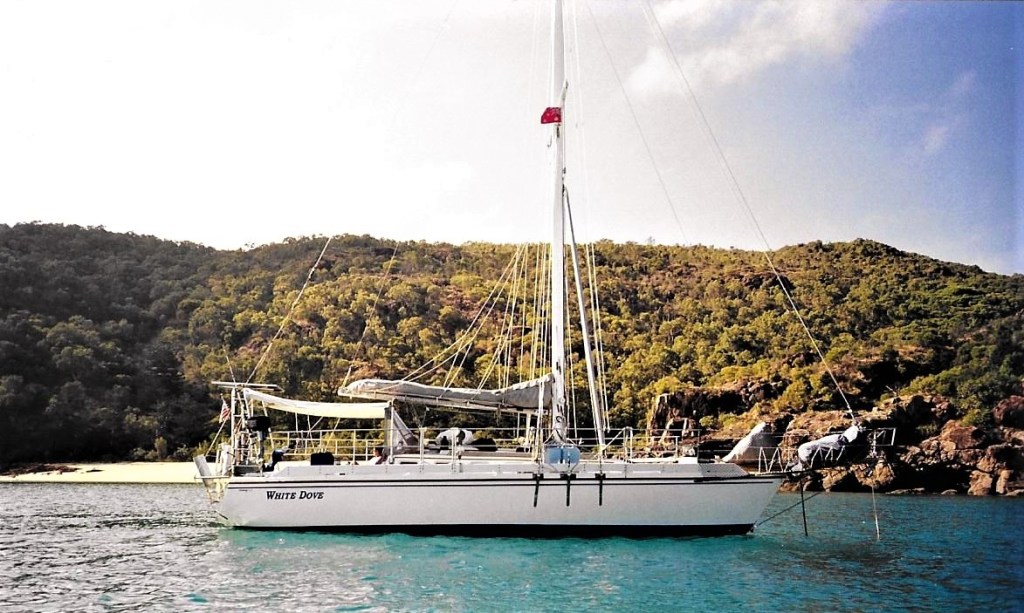
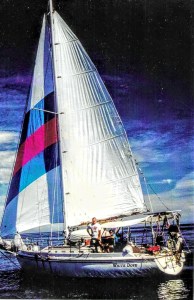
The purpose of this trip, however, wasn’t for exploration of an island, but for something we still held dear to our hearts—our old and cherished sailboat, White Dove which we sold in 2003. It not only served as our home for 10 years, but also as our mode of travel that blessed us with 3 years of cruising several of the earth’s oceans. We gave this special friend our blood, sweat, and sometimes tears and in return she gifted us with life experiences far beyond our expectations.
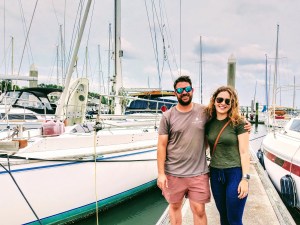
We developed an instant connection with Matt & Kayla DeVito, her new owners. Although they bought Unless, WD’s new name, for $1, they face countless hours, months, and probably years of challenging work as they repair, restore, and make her their own. Their first job entailed pulling out bags of trash along with rotten food, rodent carcasses, and alien mold forms. They also replaced several ancient thru-hull hoses that threatened to sink their new purchase.
Our time together forged a bond with this enterprising couple who is half our age , yet we share so much in common. Matt and Jerry are both mechanical geniuses who can fix or build almost anything, love woodworking, and all things boats. Kayla and I are creative beings. She’s a talented oil painter who also shares her artistic gift by teaching others. Although I’ve dabbled in oils, my passion is writing and I’m endeavoring to publish my first fiction novel about, you guessed it, sailing! All four of us love the sea, traveling to seek new adventures, and we seem to thrive on challenges.
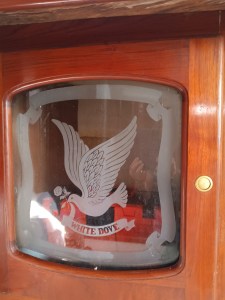
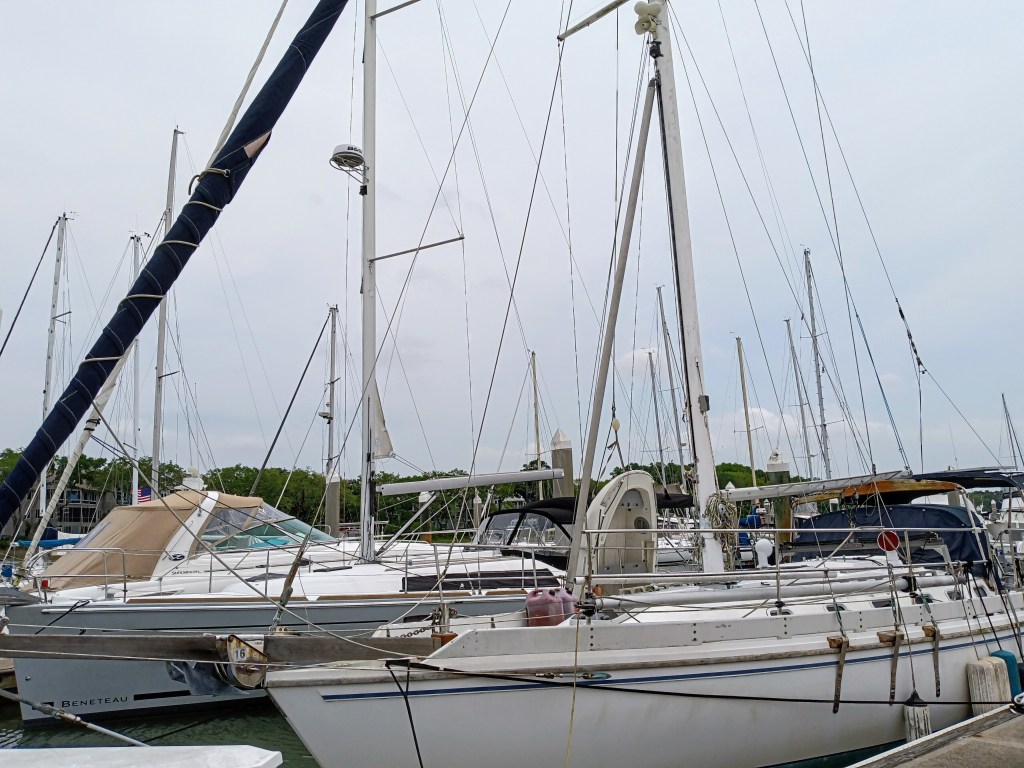
What was my first reaction to our reunion with WD? Tears of disbelief. Sadness as my eyes surveyed this abandoned yacht. Was this really the same boat we’d sailed around the world and shared so may joyful and occasionally difficult times? At first unrecognizable, soon certain details emerged, and with it a flood of memories. The bowsprit Jerry had sprawled across during our rescue off New Zealand and the Monitor windvane, another part of that same story that you can read about in a previous post. In the cabin below all the varnished custom woodworking had severe water damage except a glass door etched with a dove. It had somehow survived and shone in the shadows. It all felt familiar and foreign at the same time. Melancholy yet joyful.Peace and hope flowed through me as I visualized the transformation of this precious sailboat into an art studio and work of art as its new owners pursue their dreams.

A portion of our legacy is being preserved through this next generation of sailors as we witness this ugly duckling emerge into a beautiful new bird. Watch as dock lines are cast off, sails are raised, and the DeVitos embark on their own life adventures, wherever the winds and currents may carry them.

For more information and updates on Kayla & Matt DeVito visit their Instagram at living.devito.loca.
Treasures of South Africa’s Cape Peninsula

From Knysna White Dove motor-sailed to the tiny, rolly marina at Mossel Bay. While waiting for a weather window, we stayed busy with small projects, scenic walks, and exploration of museums and shops. With some trepidation, we then faced the 220-mile/42-hour sail around challenging Cape Agulhus, the southern-most point of S. Africa, where the frigid Atlantic meets the warm currents of the Indian Ocean. The first half was pleasant with light breezes and flat seas until three hours before the cape. A strong SW wind quickly built up 3-meter seas on our nose, sloshing the deck and found an open hatch. Whoops! After 4-hours of chaotic, potato patch seas, the 40-knot wind came around behind us and we surfed the swells into False Bay.

The peaceful settlement of Simon’s Town offered a protected marina and friendly yacht club, and proved much quieter than the marinas in Cape Town. A 15-minute walk to watch the African penguins became one of my favorite daily activities. They are nicknamed Jackass penguins because of their braying which became especially loud during their mating season and quite entertaining.

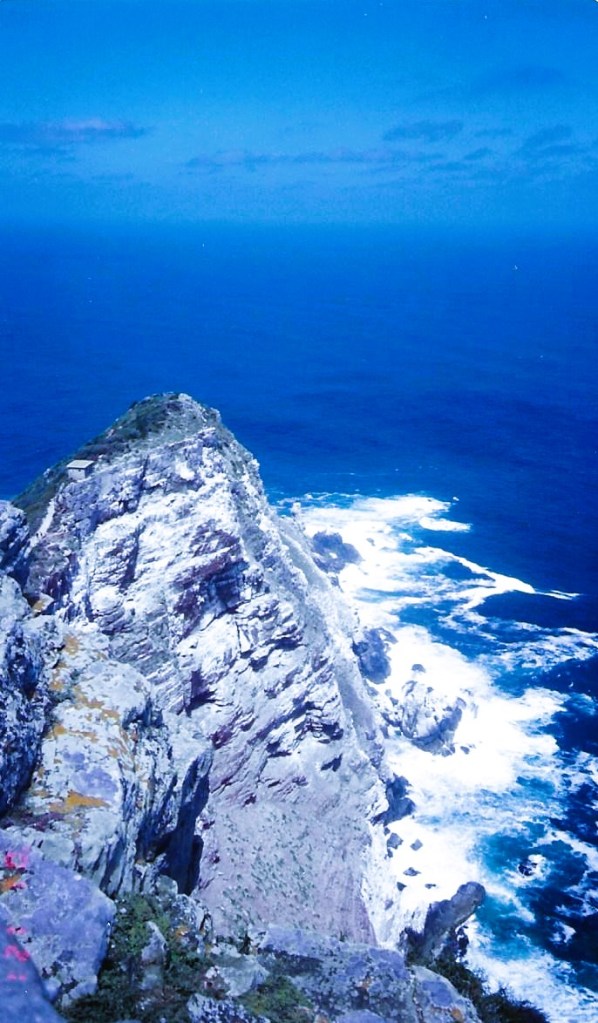
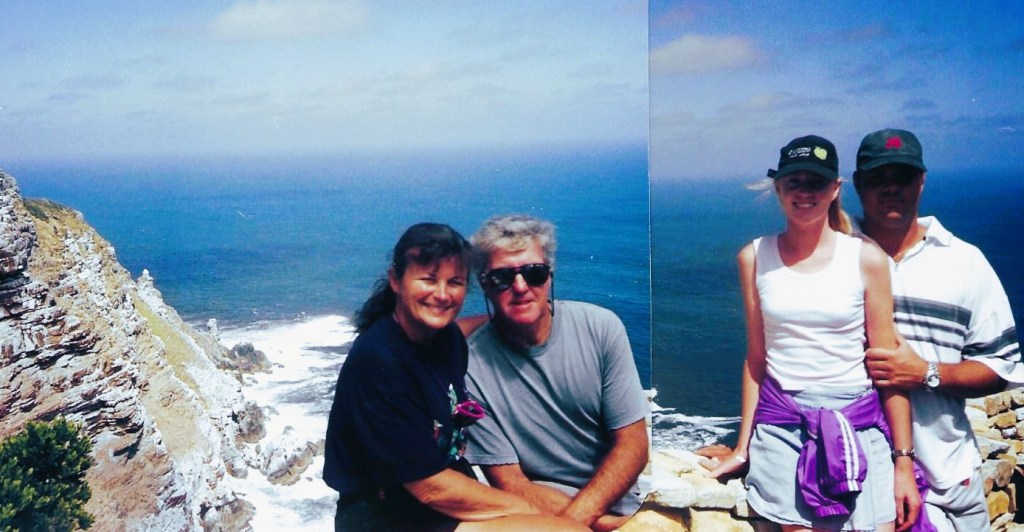
Brett and Jillian, an affable S.African sailing couple became our unofficial tour guides for several adventures. One day we drove out to Cape Point/Cape of Good Hope, situated within Cape Peninsula National Park. Over 250 species of birds have been sited in this nature reserve, but few animals due to limited vegetation, although we were warned to be careful of the sometimes aggressive baboons. Playing tourists, we rode the funicular to the highest point overlooking the rocky promontory which Jerry and I would be rounding once we left the African coast. The views from the top were spectacular.

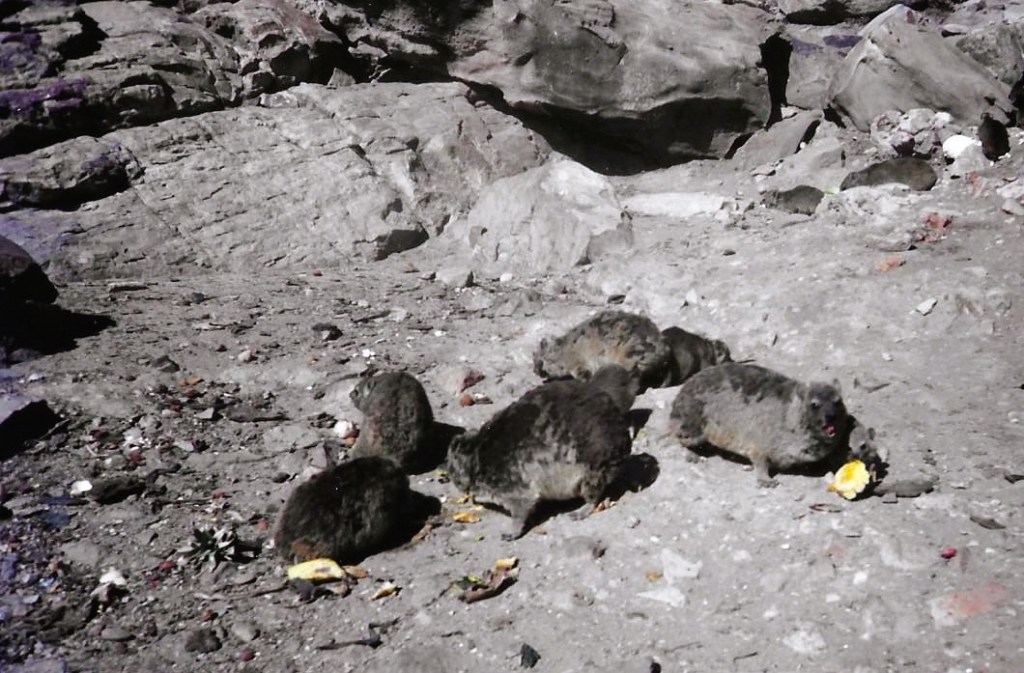
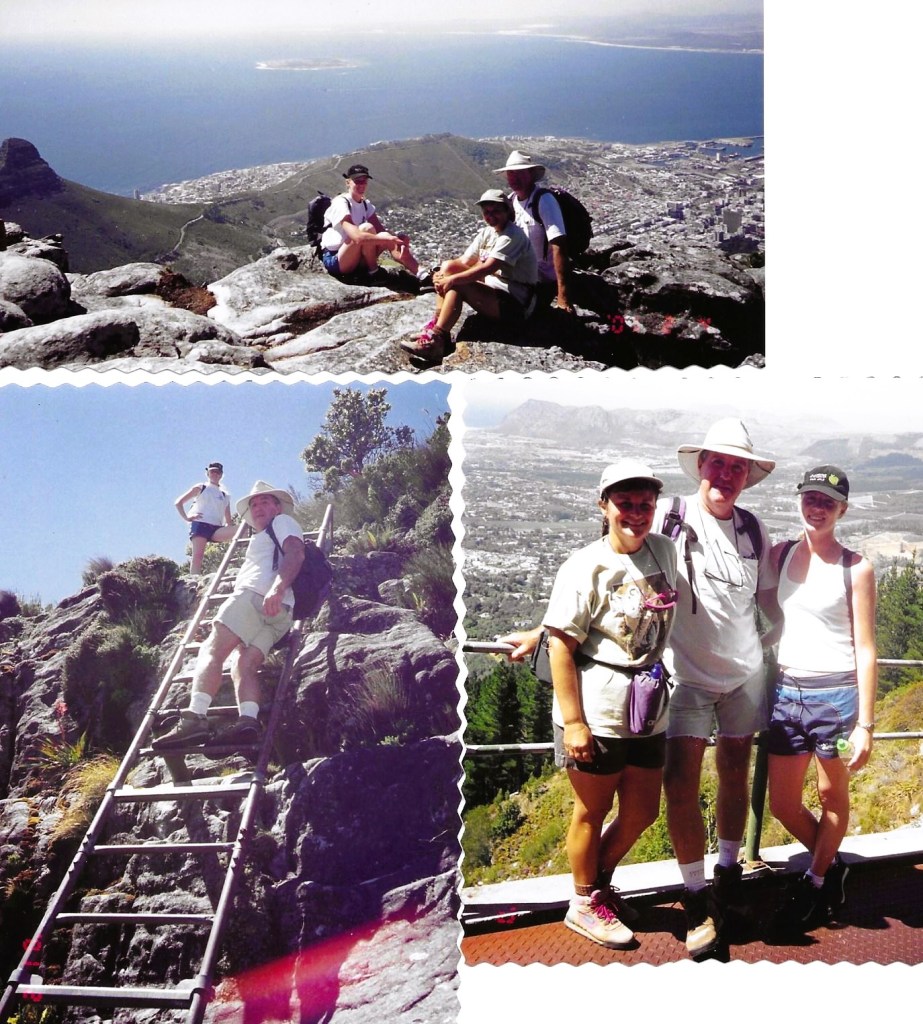
Table Mountain provided a full day of exploits with our S. African friends. We began a 5-1/2-hour hike on the Constantia Nek trail which took us up a curvy, pine tree-lined access road—all uphill, but shady and cooled by a gentle breeze. There were several small reservoirs constructed from stone blocks at the top of the first mountain. Along the route multitudes of wildflowers caught our attention including the elusive Red Disa which only blooms in February. Iridescent Sunbirds sip nectar from this vibrant flower and the Table Mtn Beauty Butterfly only feeds from it. This bio-diverse landscape grows over 2,000 species, many unique to the region, including the rhinoceros bush and several types of alien-looking proteas. We searched for Table Mtn ghost frogs, but they stayed invisible. However, several cute dassies scampered among the rocks.

The road ended at an old museum that displayed a steam locomotive and other artifacts that had been transported up the mountain by cart, cables, and manpower. These had all been used during the 1800s to build the dams. From here the real fun began.

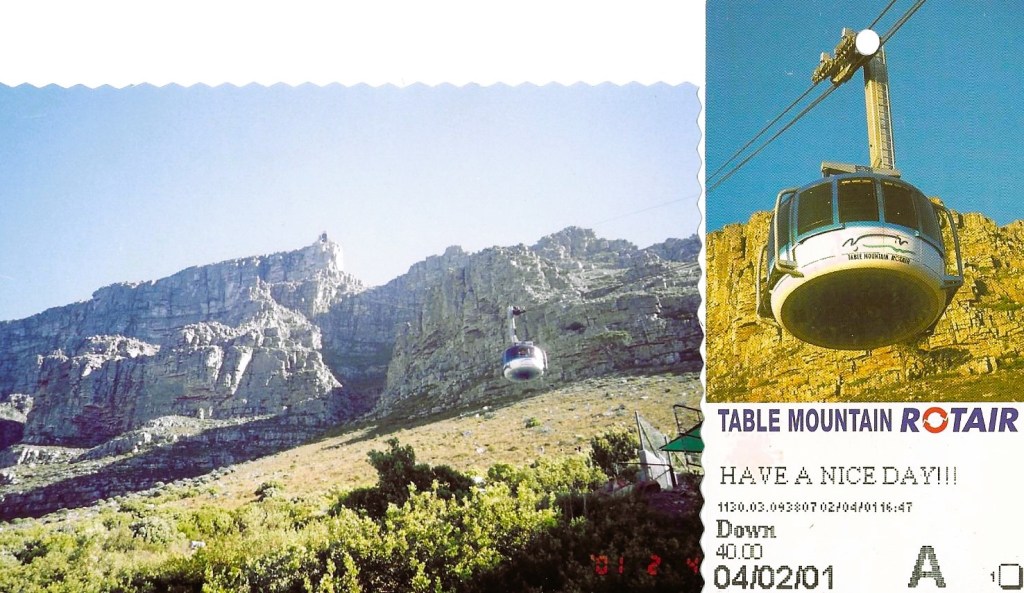
With help from some locals we finally located the right trailhead (there were 3). For the next 3-1/2-hours we tramped a narrow rocky path, clambering over boulders, down steep hillsides into Echo Valley which lived up to its name, crossed logs through marshy bogs, and wound up an even steeper slope while negotiating 3 ladders! Quivering muscles burned, but the sweat and dust were well worth the magnificent vistas of False Bay, Hout Bay, and once on The Table, the sprawling city of Cape Town with its massive harbor. We picnicked before taking the easy, 4-minute route down—the cable car with a rotating floor. The panoramic views were awesome.

No visit would be complete without visiting wine country. There were several areas to choose from: Constantia, Franschhoek, and Paarl, but we only had time for the centuries old village of Stellenbosch.

Vineyards and orchards climbed from valleys and up hillsides, with the dramatic backdrop of purple-hued mountain peaks and sheer cliffs. Dutch manors were set amid stands of oak trees and fragrant flowers. At Fort Simon we toured an authentic-looking castle complete with moat; tasted scrumptious cheeses at Simonsberg; and strolled historic buildings and picturesque gardens at Neethlingshof. Of course, wine-tasting was involved too!

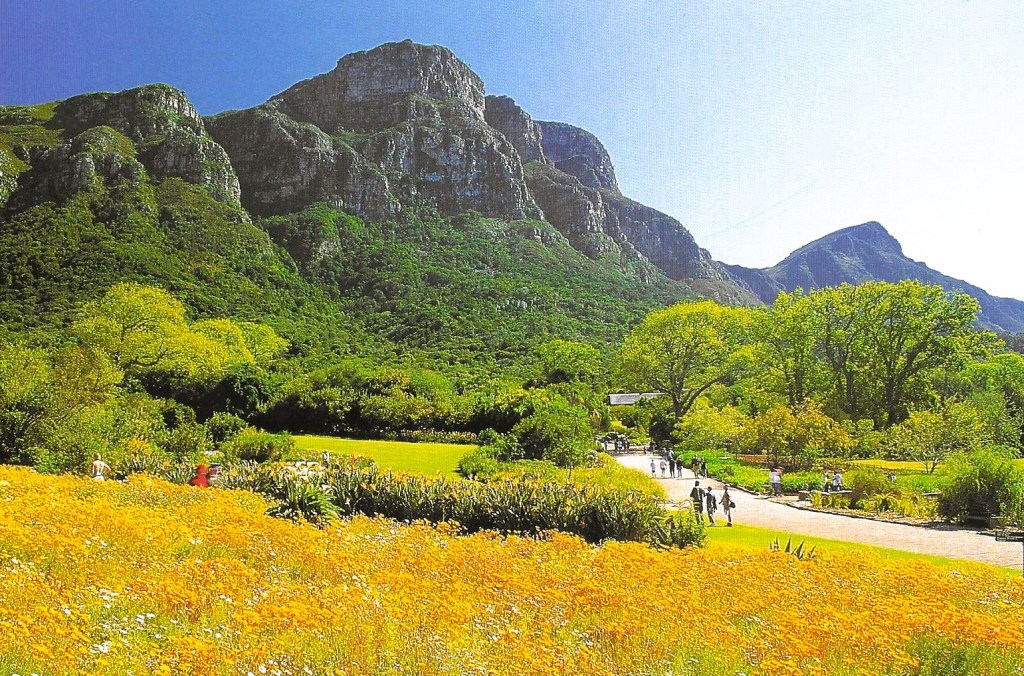
The grand finale: Kirstenbosch National Botanical Gardens. We ambled along winding, sometimes hilly paths, our senses bombarded by a kaleidoscope of smells and colors. Later, sheltered from the hot sun beneath tall trees, we spread our blanket and reclined on a wide grassy area. The sun sank slowly behind the grandiose backside of Table Mtn as we sipped our wine and melodious music from the S. Africa Navy Band wafted among the gardens.

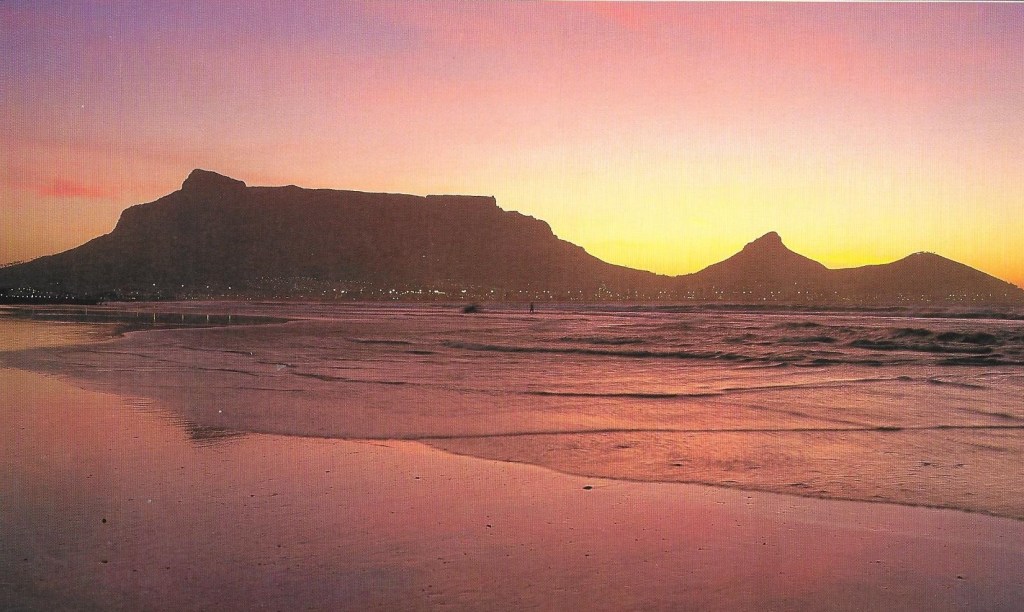
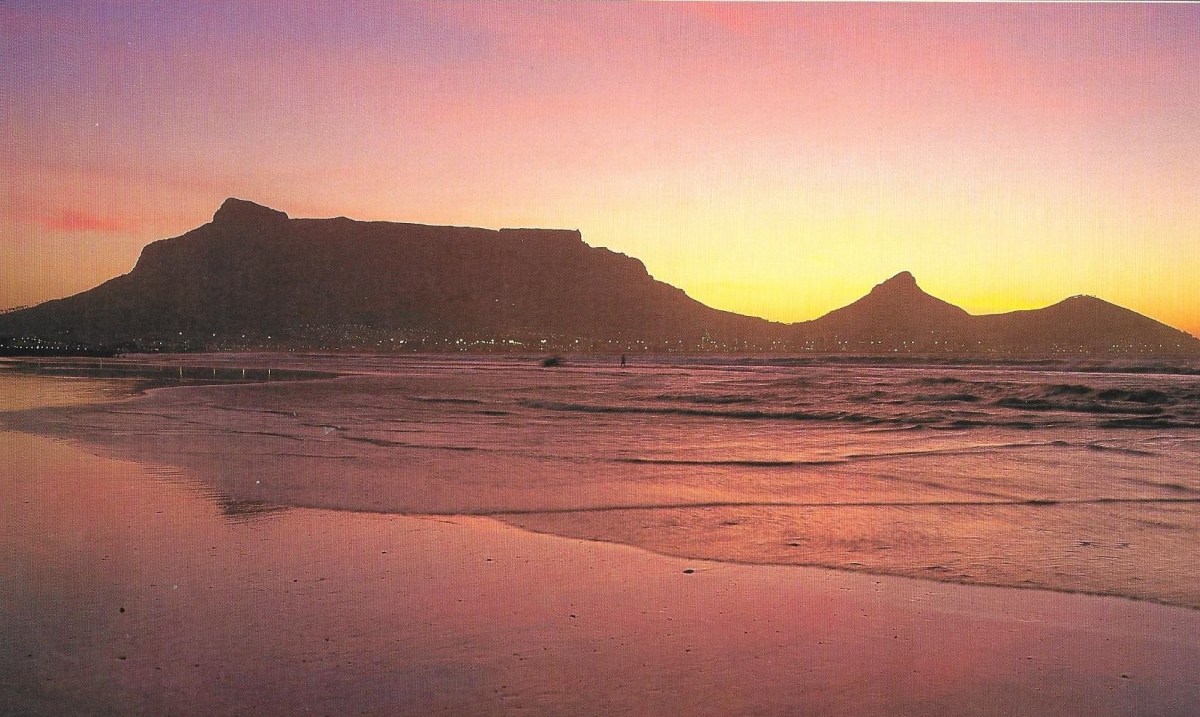
Final preparations were made the following day before setting sail for the long voyage up the Atlantic. Rounding the Cape of Good Hope, we were fortunate to have only light winds, small swells, and no drama! South Africa blessed our farewell with a memorable sunrise—red and gold horizontal bands silhouetted Table Mtn’s dark hulk. In the deep blue sky above, wispy cloud patterns played tag. Ahead, the vast ocean beckoned us to new lands, new cultures, and new adventures. Until next time…

Hoodoos, Arches, & More

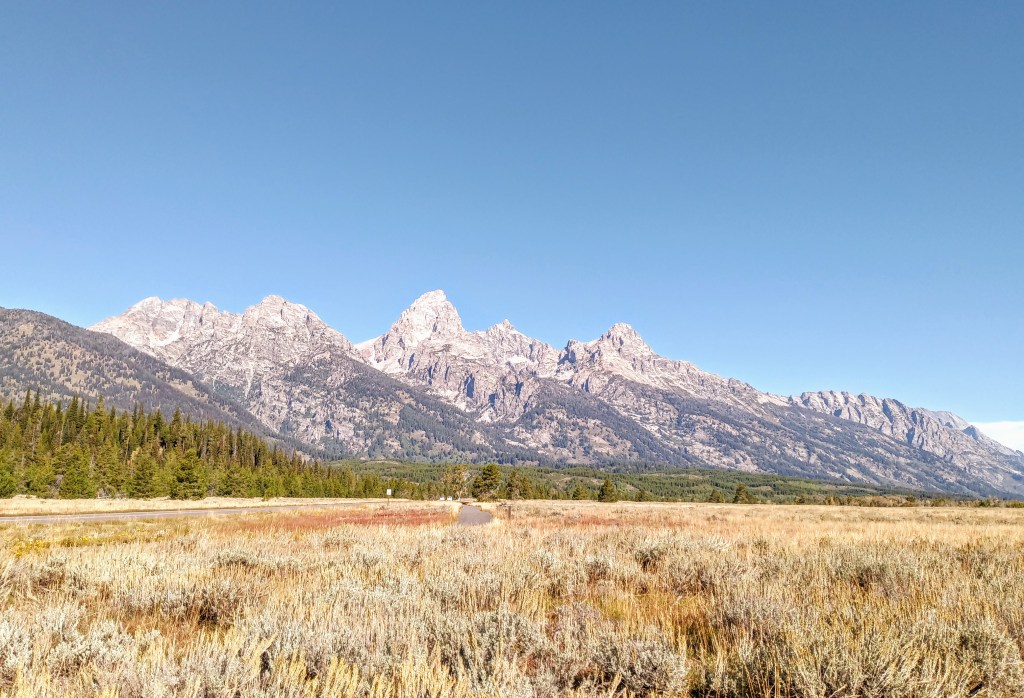
After 32 years, Jerry & I returned to Wyoming’s Grand Tetons National Park. We camped at Gros Ventre, situated amid a sagebrush prairie, beneath the cottonwoods. With almost 400 sites, the park provided opportunities to cycle and hike while moose grazed among the campsites.

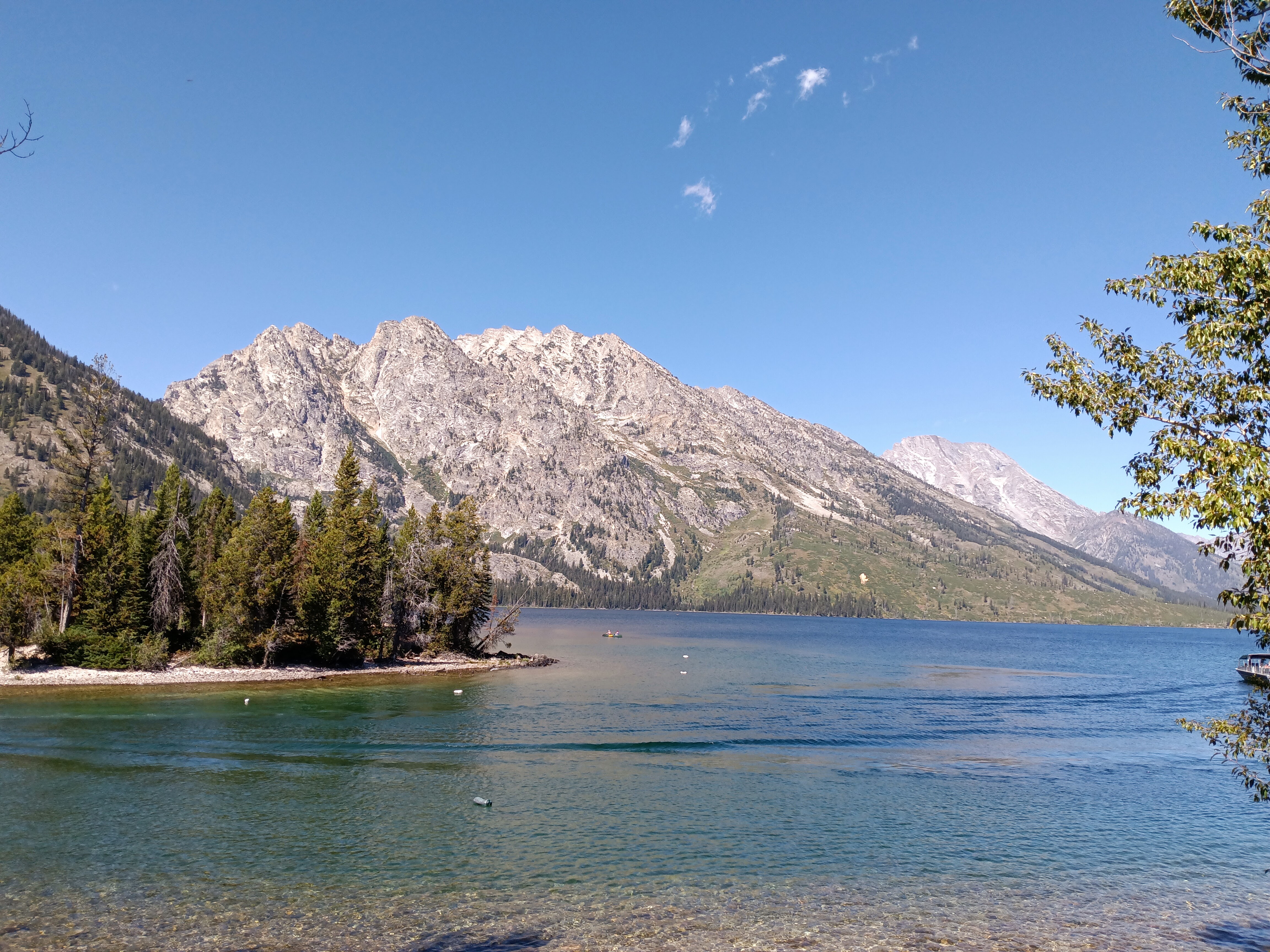
Plans for kayaking Jenny Lake were exchanged for a hike after we found out the cost of permits—$80 for 2 kayaks. We parked at the Lupine Meadows trailhead and tramped to the lake , then followed the forested, rocky path, up and down, for 3 hours. A welcome lunch break was taken atop a large boulder with soothing sounds of a rushing river with small waterfall. Coming across a shuttle-boat landing further down the trail, the vote was unanimous to enjoy a relaxing 10 minute ride back to the south end of the lake.

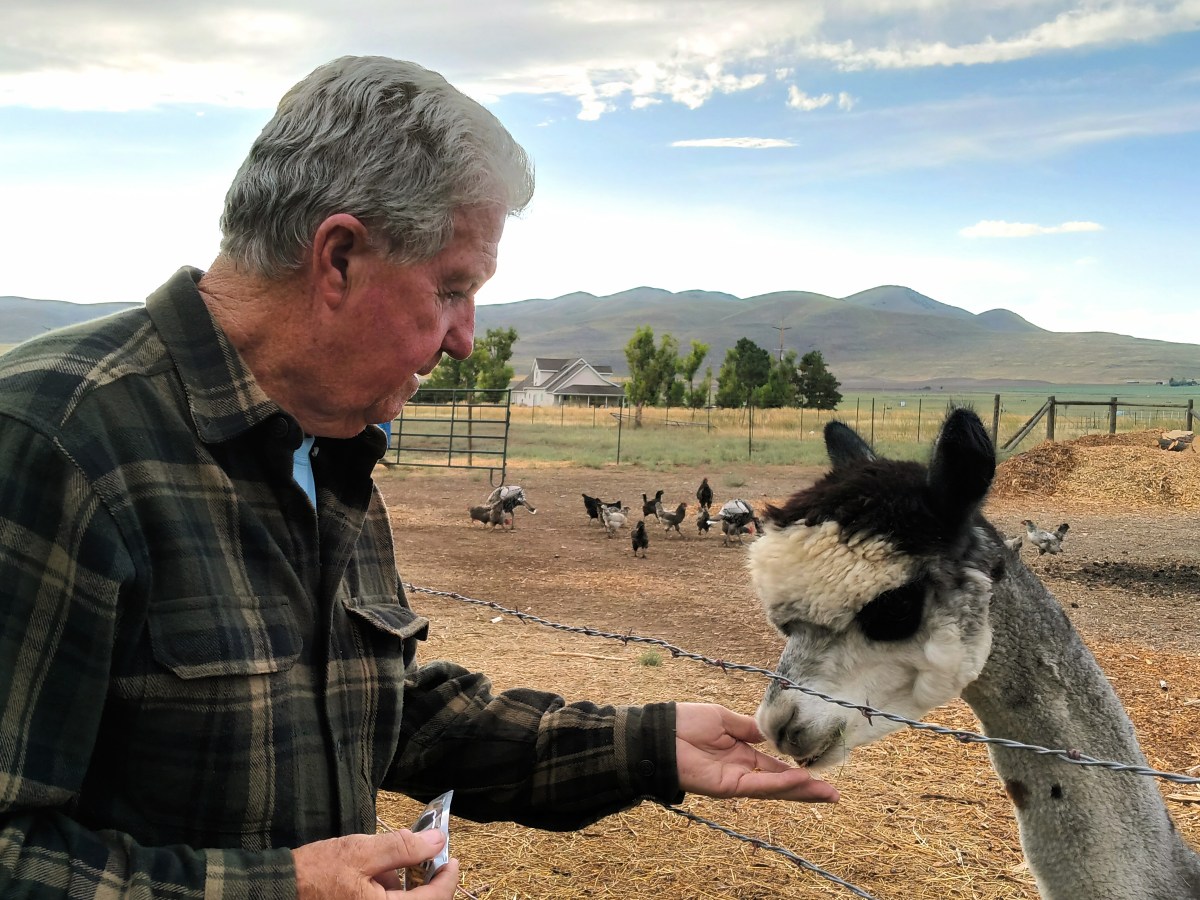
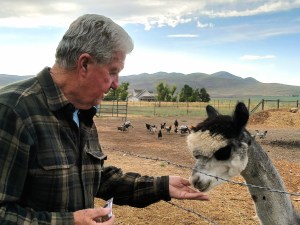
We resumed our journey south after a hearty breakfast at the Virginian in Jackson. Following Hwy 89 we wound alongside the Snake River among mountains and valleys. An interesting evening was spent feeding alpacas, goats, chickens, and other critters at Harland Homestead. On 9/11 we contemplated that tragic day of 2001 and all who perished while rolling down the road to Capitol Reef National Park in Utah. Found an isolated spot to boondock off Notom-Bullfrog Rd, and then miraculously met up with our CA sailing friends near the closed visitor center without the assist of cell phones. Service is extremely limited here.

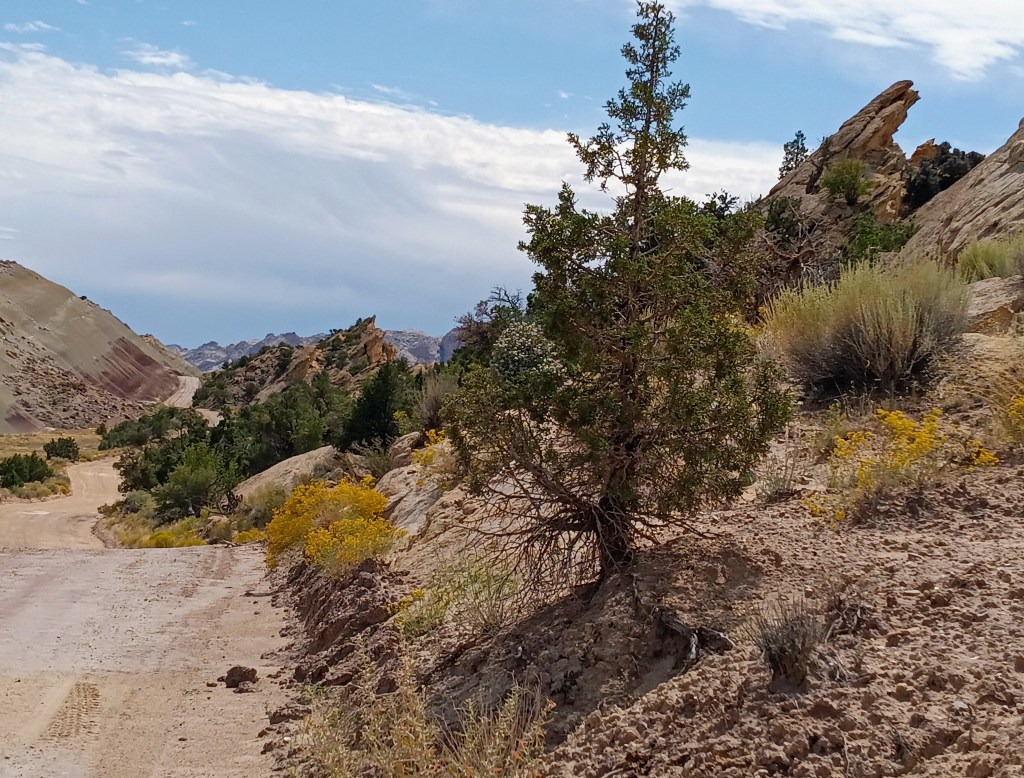
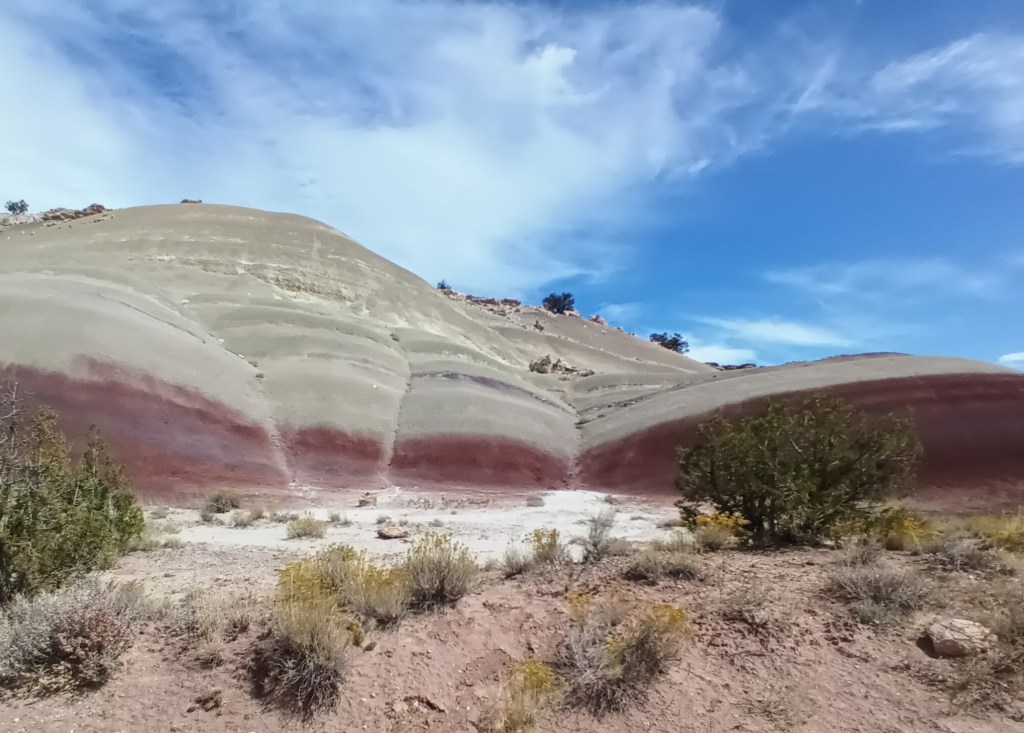
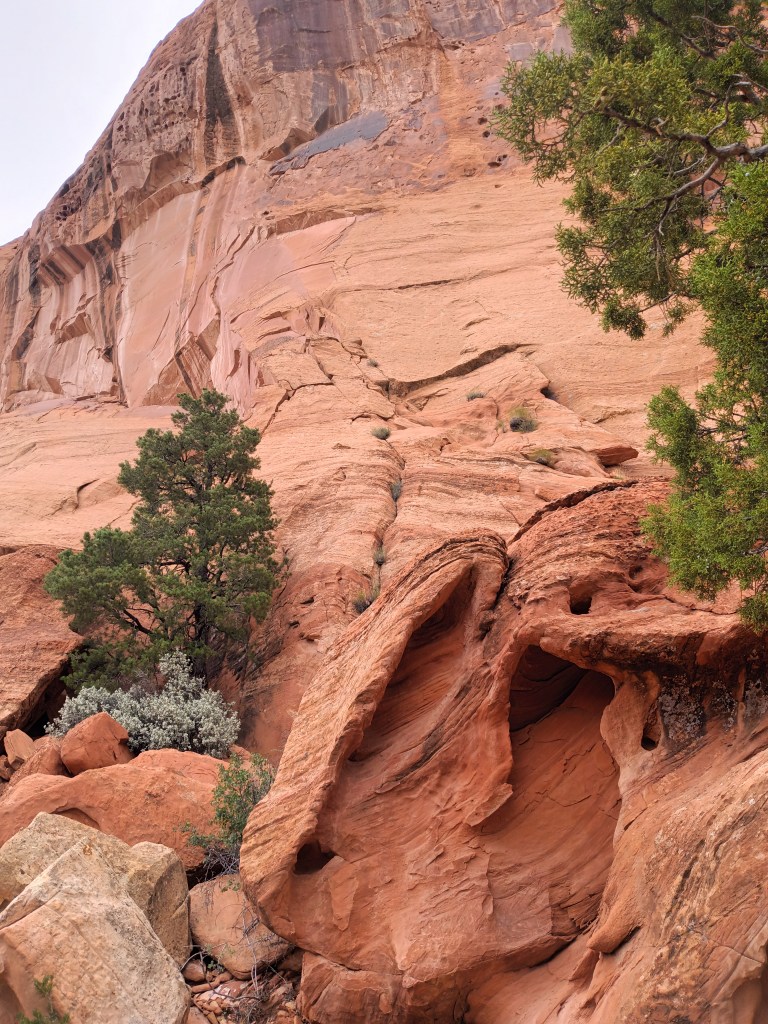
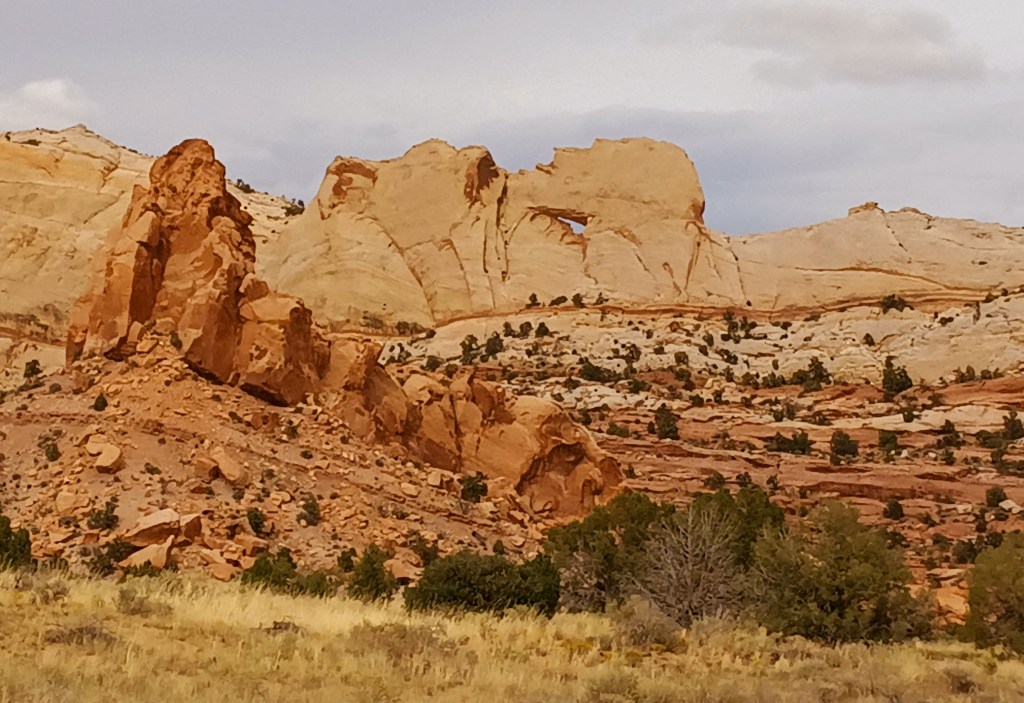
The highlight of our 3 days here was the partially paved Loop the Fold Rd. The all-day adventure in our jeep began on a dirt road leading across sandy gulches and through the Waterpocket Fold—a 100 mile wrinkle in the earth’s crust. Forces of erosion have sculpted the towering sandstone into wondrous shapes in vibrant shades of red, brown, ochre, and purple. We were addicted to discovering the surprise around each curve and didn’t stop until we’d completed the 115 mile scenic road at dusk.

The following day we’d planned to hike Grand Wash Trail. Sign at the trailhead: Dangerous flash floods can occur. If caught, climb to high ground.

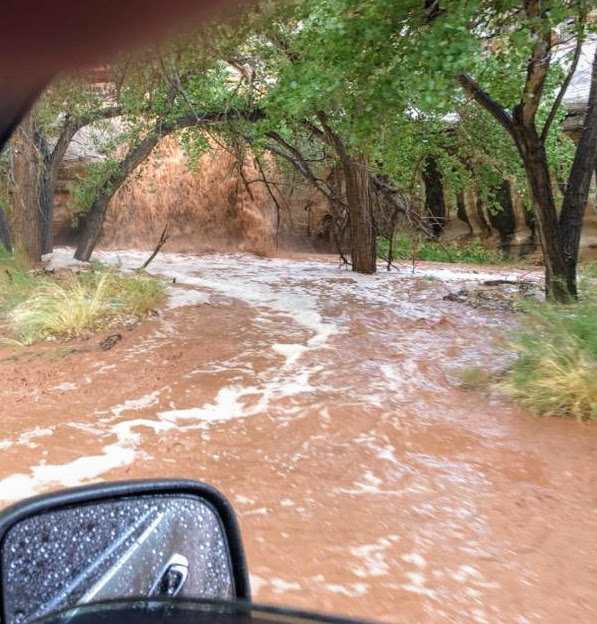
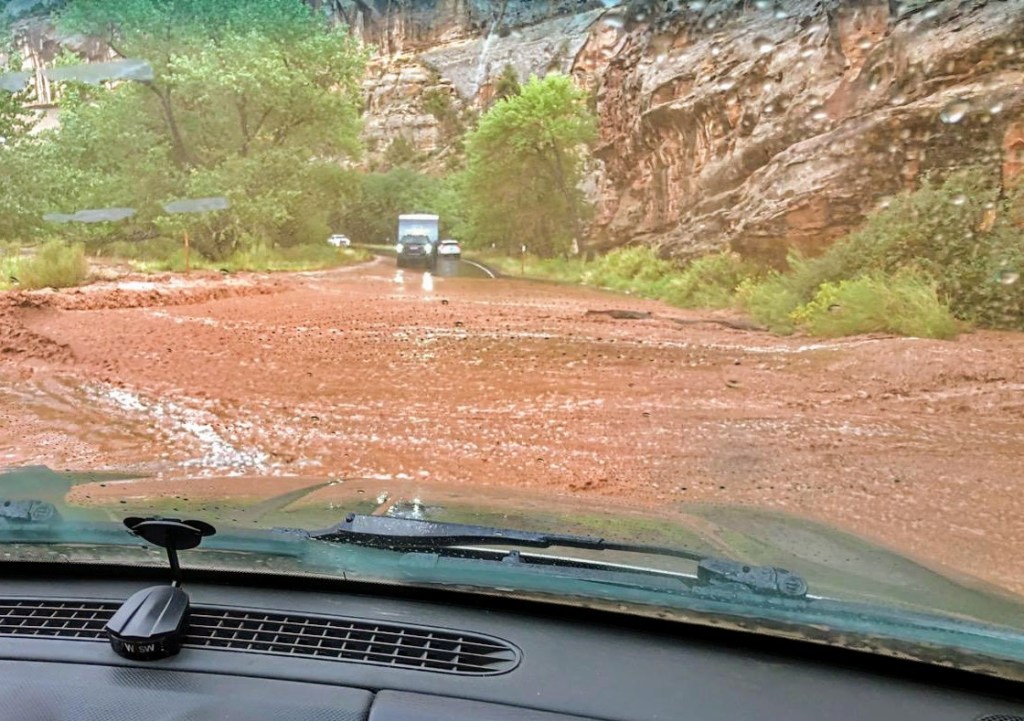
That’s fine if you’re a mountain goat I thought as we trudged the narrow slot canyon with the sun beating down. After several rest stops in skimpy patches of shade, Jerry and I turned back while Steve and Susan proceeded a bit further. Thankfully all four of us chose to end the trek before conditions deteriorated. Back at the visitor center a crazy storm hit. I’m talking hail and torrential rain. When the squall subsided for enough visibility to drive back to camp, we encountered road conditions like the pictures above. Dry riverbeds became raging rivers, overflowing their banks and burnt sienna waterfalls poured over cliffs. What would our dirt road into our campsite be like? It turned out we were gratefully blessed 3 times: 1) The storm veered away from camp and our area was dry. 2) We had ended hiking early or might have become trapped or worse. 3) The Fruita Campground where we’d originally planned to camp had encountered major flooding.

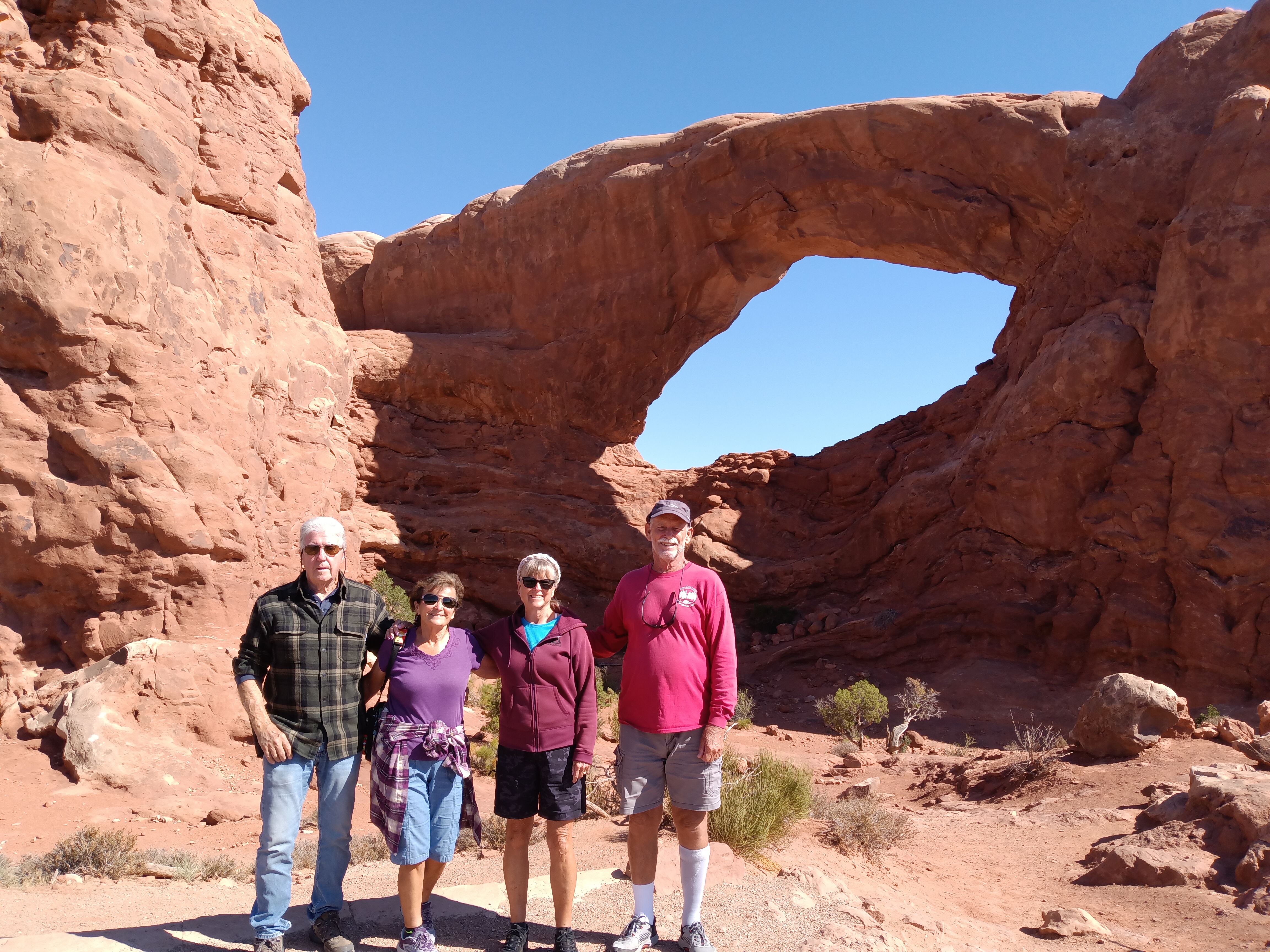
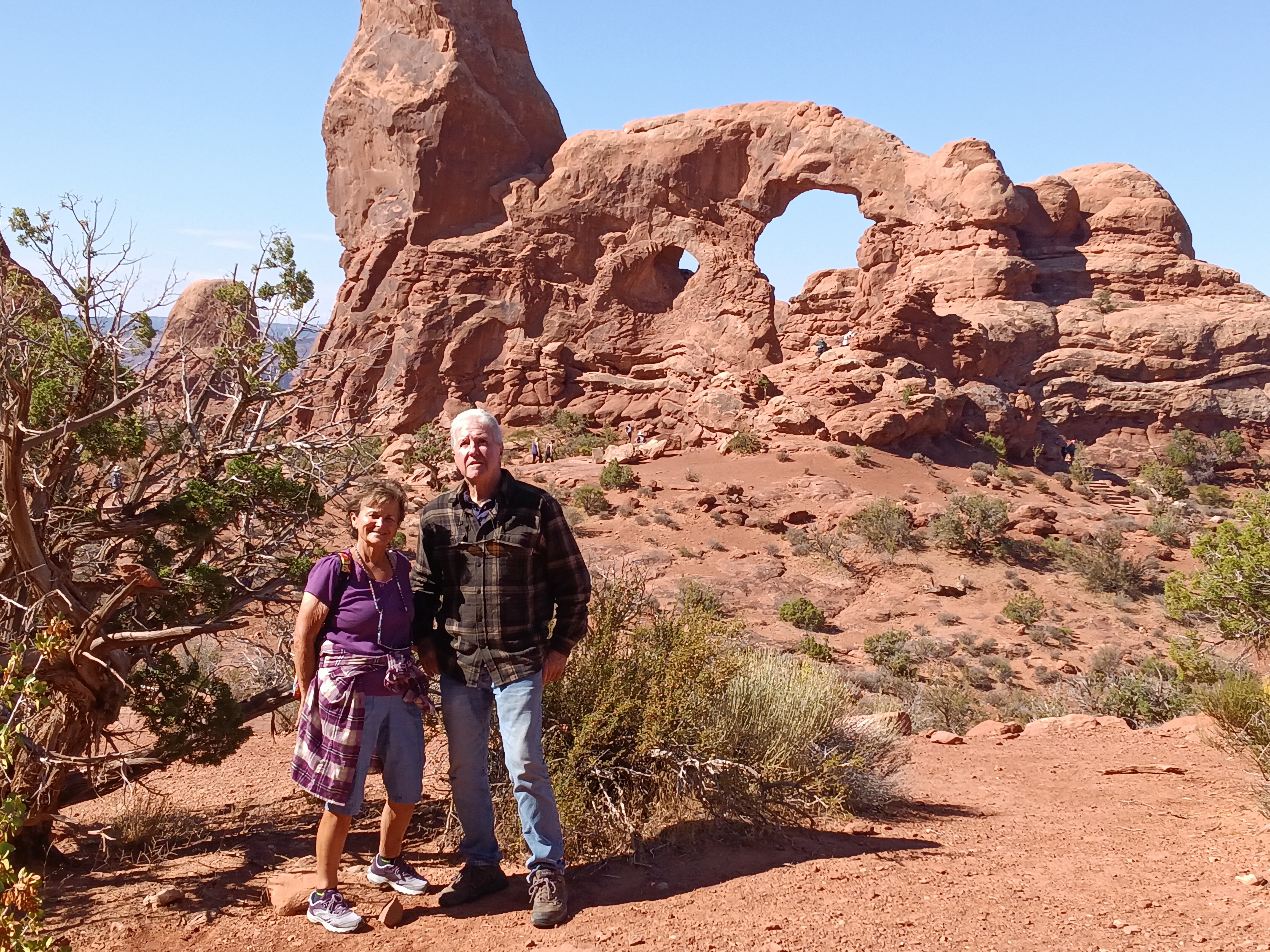
So many trails were left to tramp, petroglyphs to contemplate, and vistas to admire, but we needed to move on to Horse Thief Campground, a US Forest Service area nestled between Arches and Canyonlands NPs. Our super-friendly camp host instructed us on how to obtain the necessary timed pass for the very popular Arches. We found the amount of people to be the only downside to this magical realm of arches, windows, and monolithic formations created from layers of sandstone.

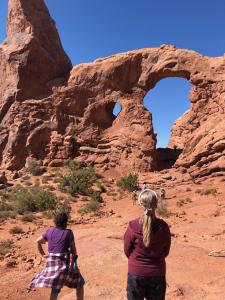
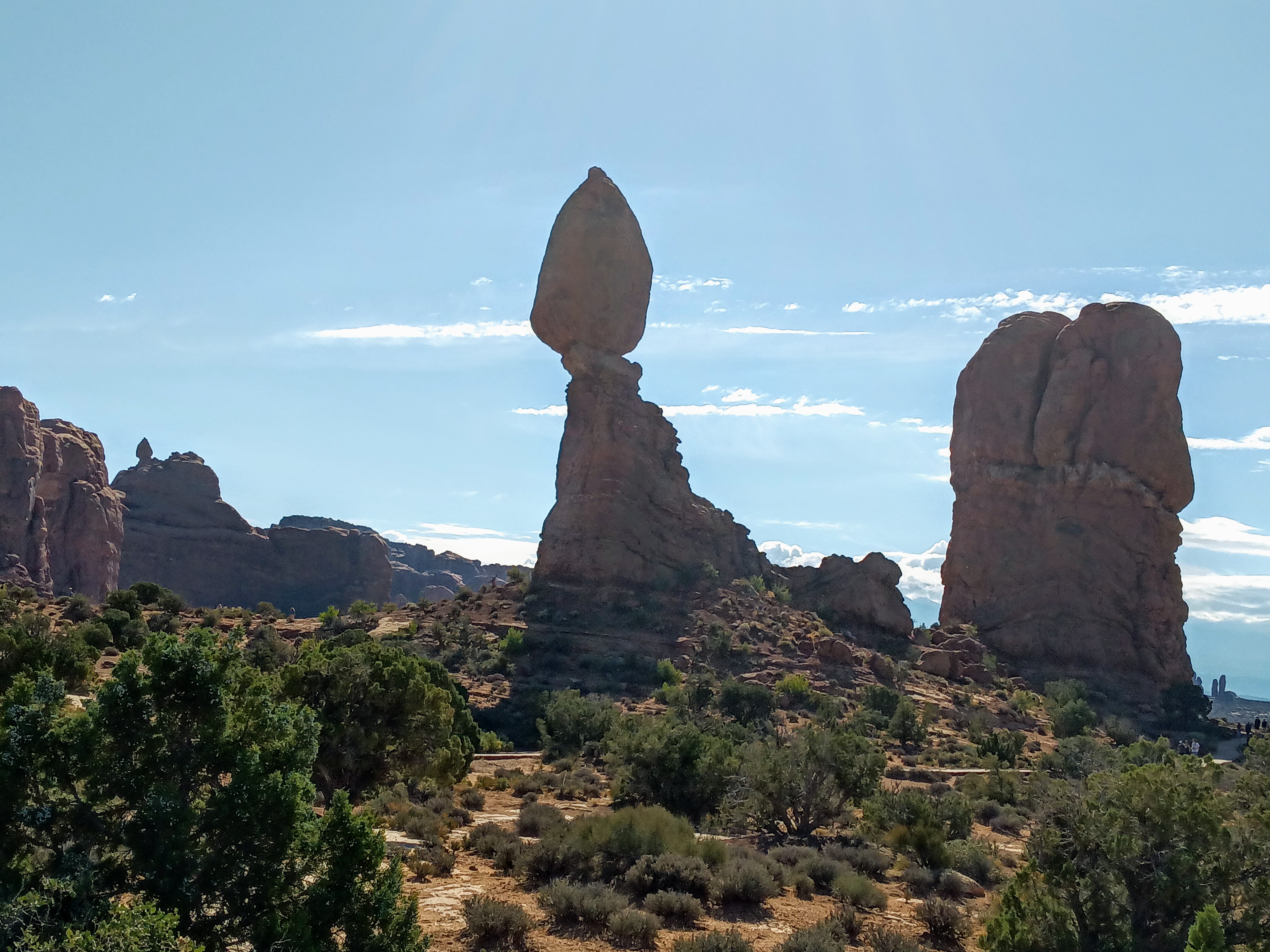
Among our exploits: Hiking the Windows trail; a scenic drive past the Garden of Eden, Balanced Rock, and Elephant Butte to Delicate Arch viewpoint. Parking was a challenge at busy Devil’s Garden, but eventually found one and wandered a less populated passageway between fins, boulders, and hoodoos.

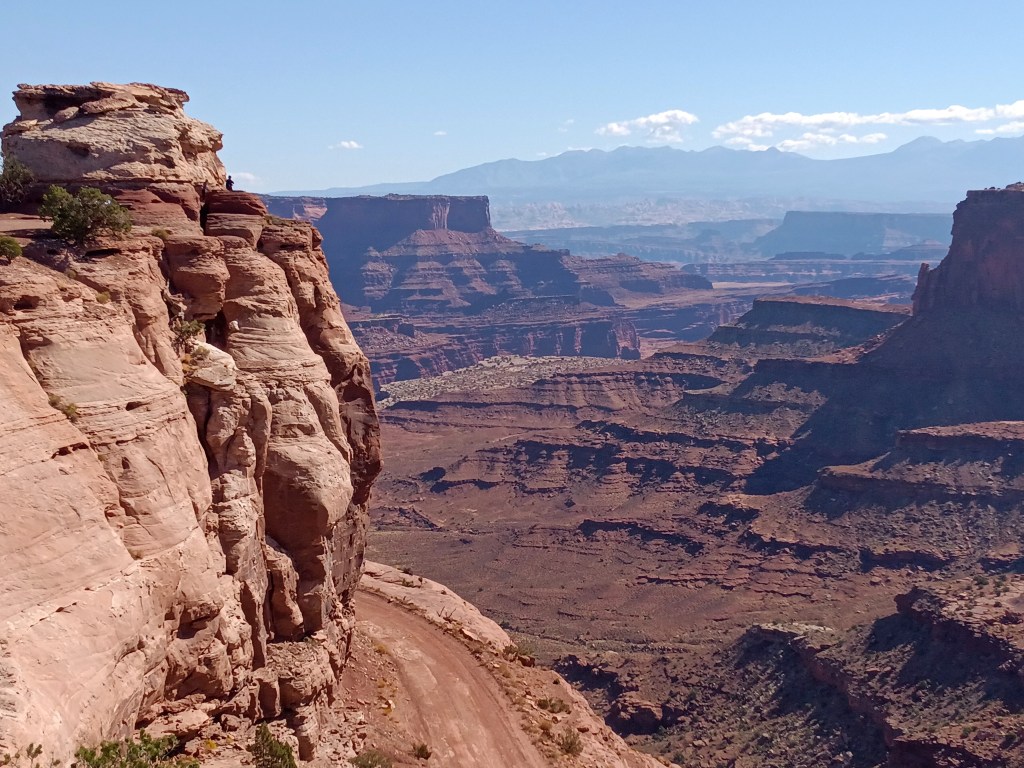
Escapades continued at the first of Canyonland’s first park—Islands in the Sky, a wide mesa sandwiched between the Green and Colorado Rivers. Its panoramic views offered glimpses of deep gorges and canyon walls reminiscent of the Grand Canyon. Ambled a couple of paths, not venturing too close to sharp vertical drop-offs. The night sky panoramas proved just as spectacular with a Milky Way glowing amid a lavish display of constellations, interrupted only by the occasional streak of a shooting star.

It was a shock to return to civilization, but drove into Moab for laundry duty, stocking up on supplies, and filling gas and water tanks. Steve forced us to stop at McDonalds for yummy mocha frappes, which I didn’t mind too much, before continuing on Hwy 191S to Hwy 211. Nine miles in, we paused at Canyonland’s Needles boundary to read the info signs. A local couple gave us directions to a nearby boondocking spot off the main road. With 30 miles to the park campground and being late afternoon, it sounded ideal. But 10 miles of weaving up Bear Ear mountain, we weren’t so sure as we parked on a large paved viewpoint. However, it did gift us with a beautiful sunset and rainbow the next morning. When we discovered one of the inner tires on our RV was almost flat, the obscure road turned out to be a real blessing. It led into the small town of Monticello. If we’d continued into the national park we would have been stranded without any facilities. By pure intuition (and guidance from above), we stopped at the Welcome Center/Frontier museum, which I highly recommend. The cheerful manager pointed us to Dependable Automotive, a couple of blocks away where the honest and experienced owner had us back on the road quickly. 

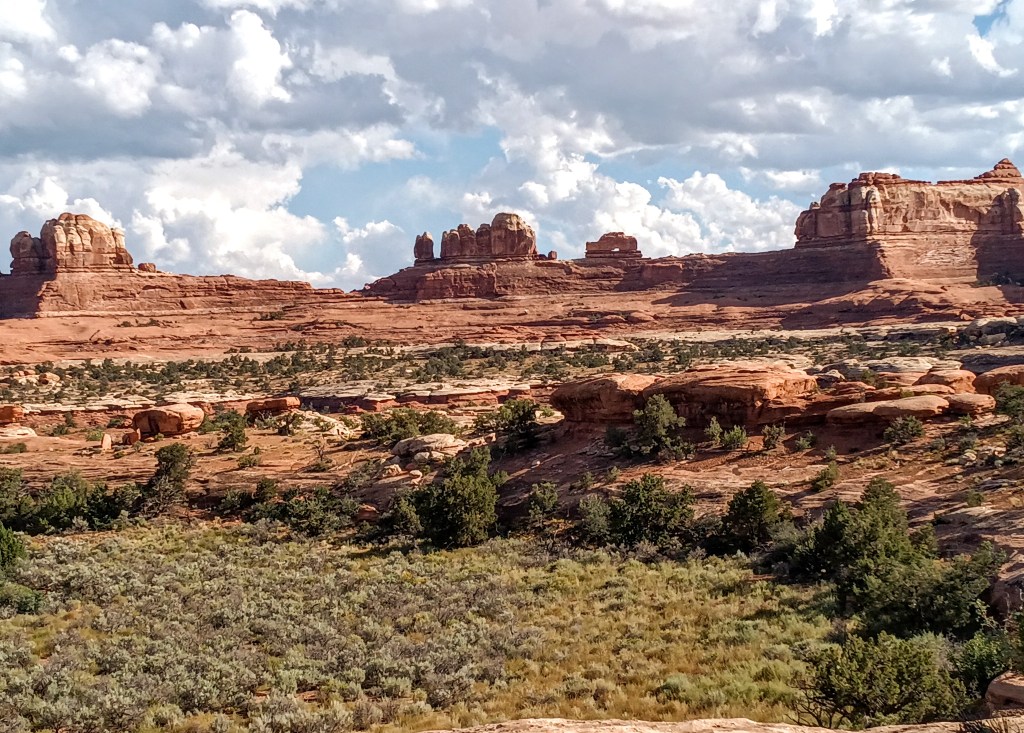
Whew—Made it to the Needles campground and obtained one of the last available campsites. Beneath sunny skies, surrounded by a red rock wilderness and vast sage-scented prairie, we admired the perfect view of Wooden Shoe Arch in the distance. Lively conversation accompanied taco salad and fresh melon slices our 1st evening.

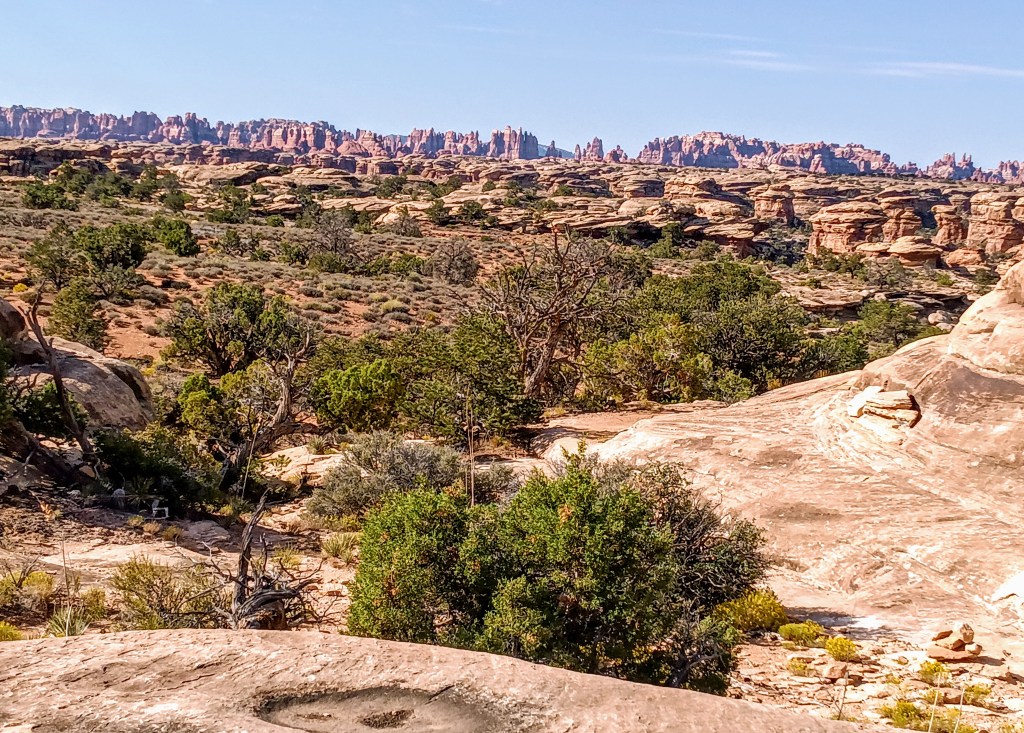
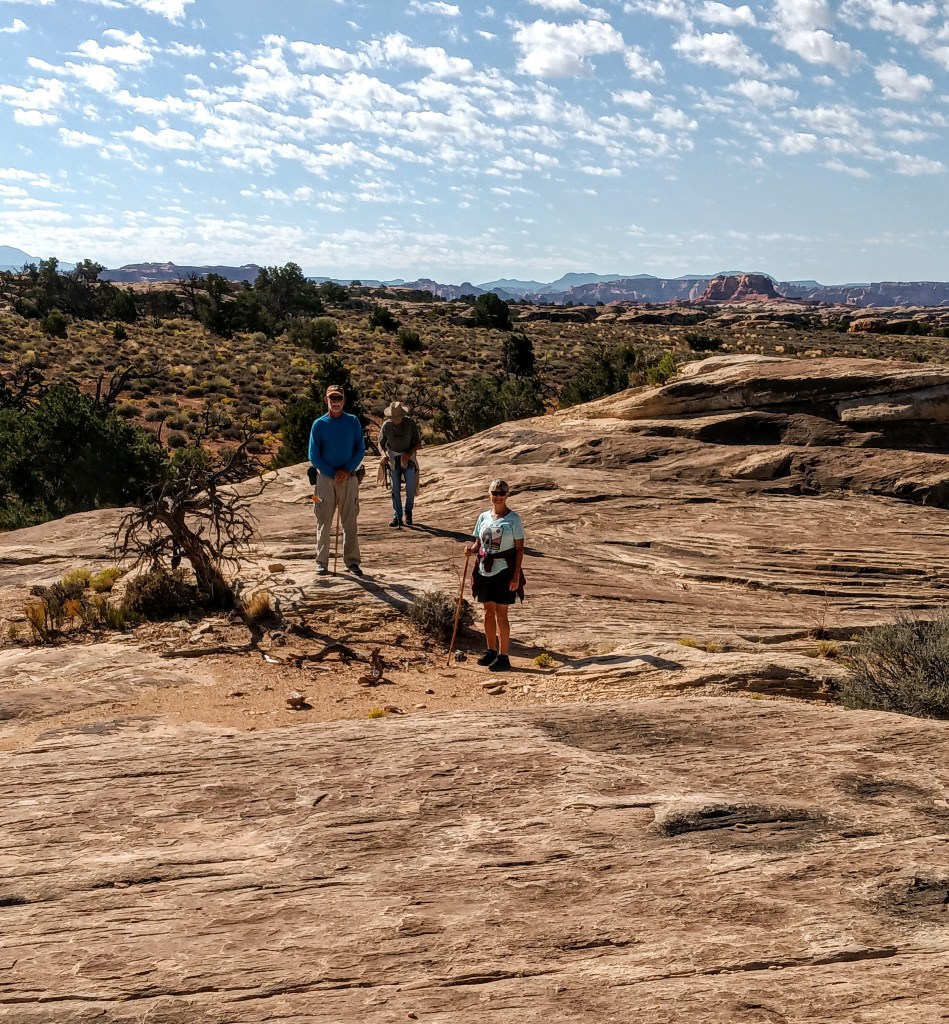
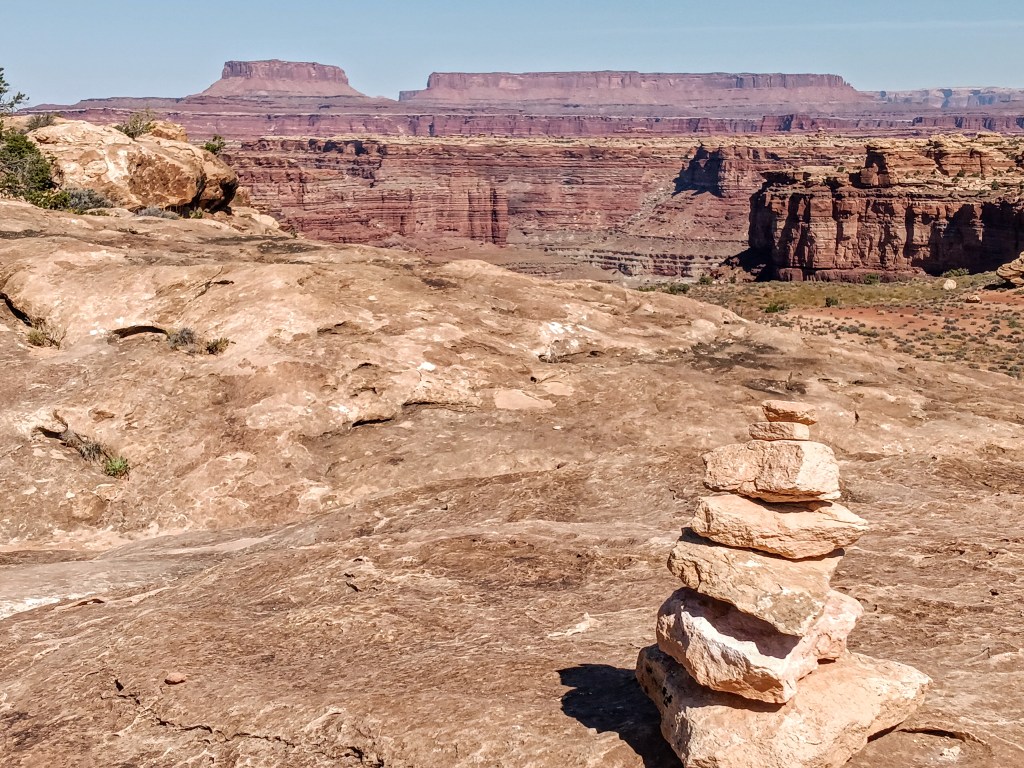
The following morning we meandered the Slick Rock Canyon Trail, basically a walk on rock that’s marked by stone cairns. Atop this surreal landscape our attention drifted from potholes to sculptured pinnacles and a distant “hoodoo city.” The 2 hour hike turned into 4 with several breaks due to rising temps and lowering energy. We hadn’t brought enough water or food, but the thirst and low blood sugar we suffered was totally worth the experience. On our final evening, after a supper of broccoli casserole and the last of our garden tomatoes, we reclined beneath a blanket of stars in the dark Utah desert. We were privileged to witness the most amazing sight—Starlink’s satellite train, with at least 20 glowing orbs gliding across the sky. What a grand finale to our adventures in 3 of Utah’s captivating parks. We were disappointed not to have time to explore Canyonland’s 3rd and wildest region, The Maze. More remote and only accessible by 2-and-4-wheel drive, its canyons plunge 600 feet to trails that wander into a strange and quiet world of fins, grottoes, minarets and more. Hopefully we ‘ll be back to explore all of these areas and new ones. 

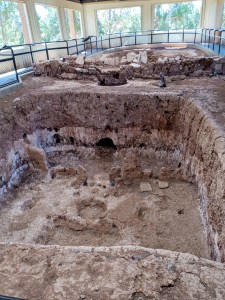
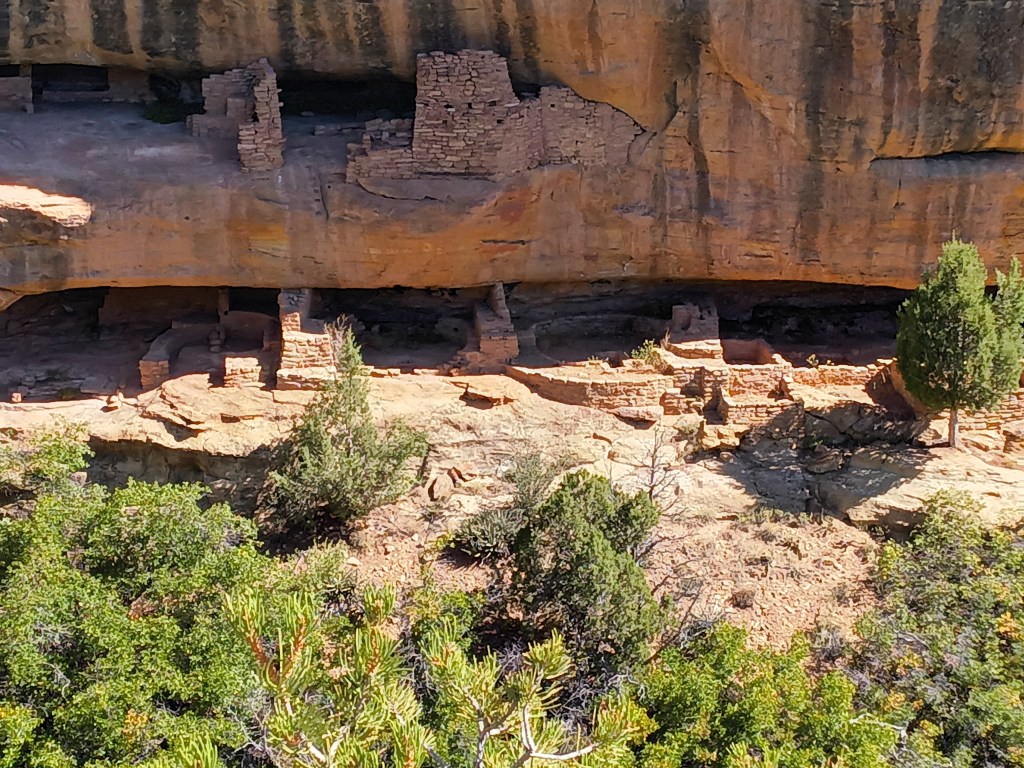
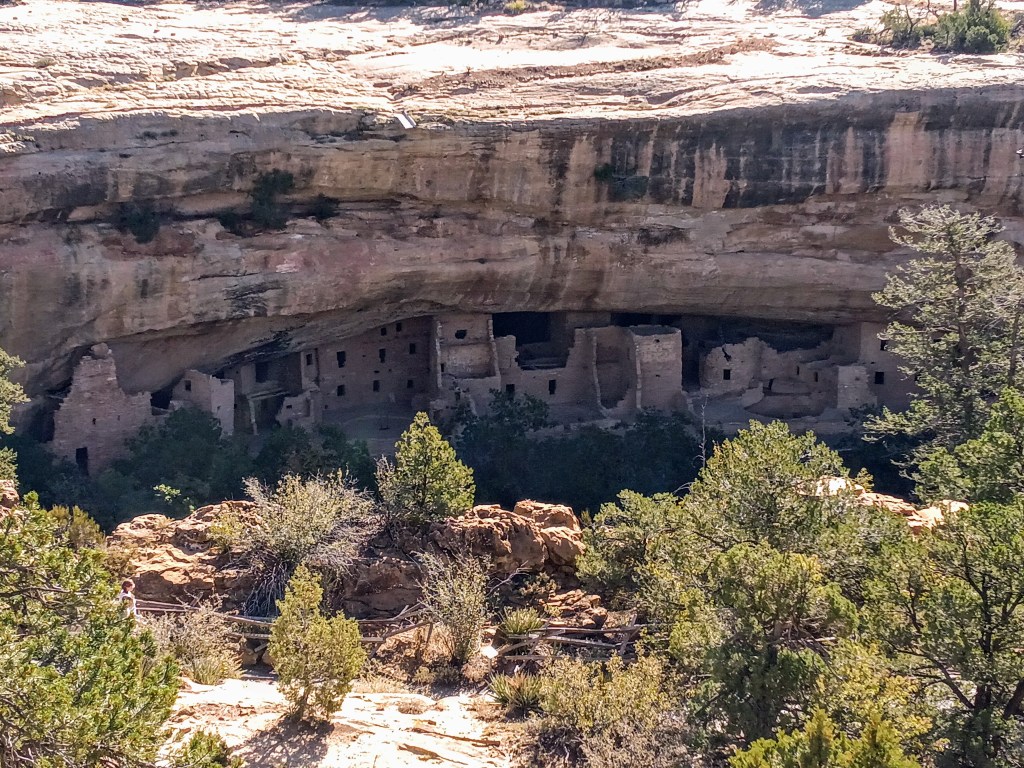
The final week of our journey included long drives, a couple of days with family in TN, and a half-day investigating portions of Mesa Verde NP, definitely not enough time. With binoculars we scrutinized extraordinary cliff dwellings, strolled some short paths, and studied museum artifacts plus early style homes dug into the ground. 

There’s just too much to see and do in our wonderful country and throughout the world. Even being retired doesn’t allow enough time. However, I’m grateful for each experience along life’s highways, byways, and off its beaten track.

…It seems to me that the strangeness & wonder of existence are emphasized here, in the desert…not crowded upon life as in other places but scattered abroad in spareness and simplicity, with a generous gift of space for each herb and bush and tree, each stem of grass, so that the living organism stands out bold and brave and vivid against the lifeless sand and barren rock.

—Edward Abbey, Desert Solitaire-A Season in the Wilderness