

Several months have passed since I have written about our sailing adventures. Sorry about that! I had to adjust course as my novel Colors of the Ocean has been sloshing through the turbulent seas of publishing and marketing. We are nearing the end of White Dove’s 3-year voyage. This stretch will take us to the natural splendor of Trinidad.
Our passage from St Helena to Tobago took 30 days and covered over 3,600 miles—our longest crossing! After 2 days regrouping, we had an easy 11 hour sail to Trinidad. We’re on the fast track up the Atlantic to Florida due to encroaching hurricane season beginning in June. It is already April! Here are a few highlights of our 2-week stay:
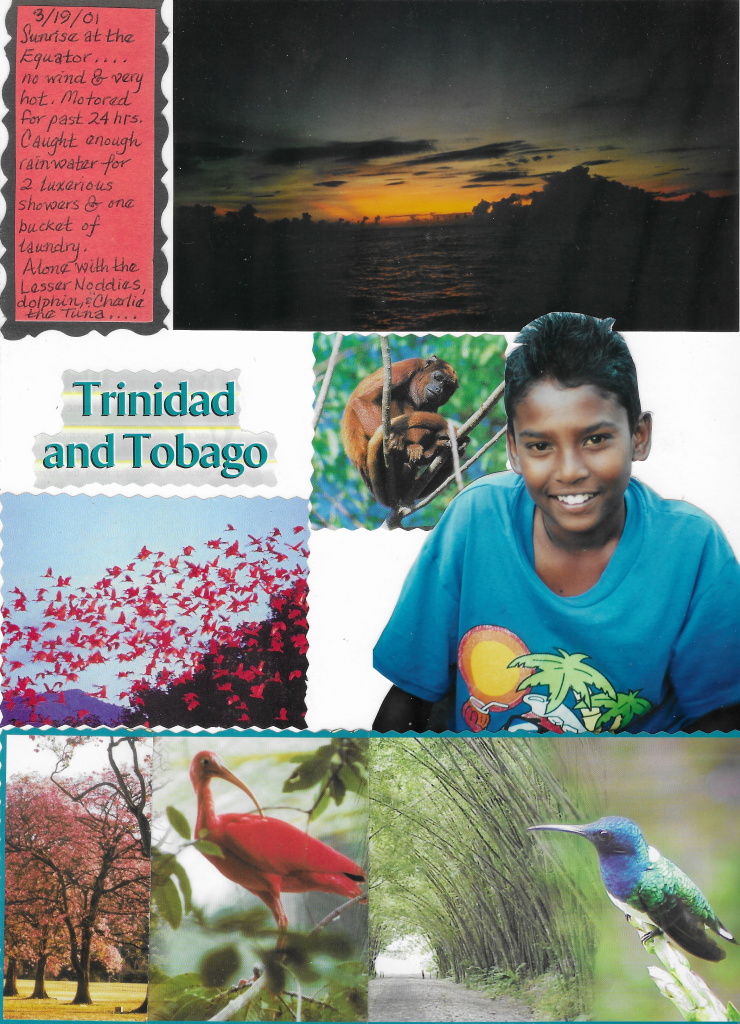
We glided through the Caroni Swamp in a skiff with a 13-year-old boy and his uncle as guides. Amid spooky mangrove trees draped in vines curled venomous snakes and napping silky anteaters on branches. The haunting cry of the potoo bird sent shivers down my spine. Turtles popped their heads above the brackish water as snakes slithered past, serenaded by croaking frogs. By far, the most fascinating portion of this expedition were the flocks of vivid scarlet ibis that congregated in shallow bays at dusk. Mesmerizing.
Something that was not mesmerizing or a highlight happened a few nights later. I awakened around midnight to the sensation of wings flapping past my face. Something had invaded our peaceful domain … a bat! Of course I let out a blood-curdling scream, waking Jerry who jumped up and closed every porthole and hatch, making the interior even more steamy. In the morning I discovered that the nocturnal creature, a fruit bat, had snacked on a couple of our bananas.
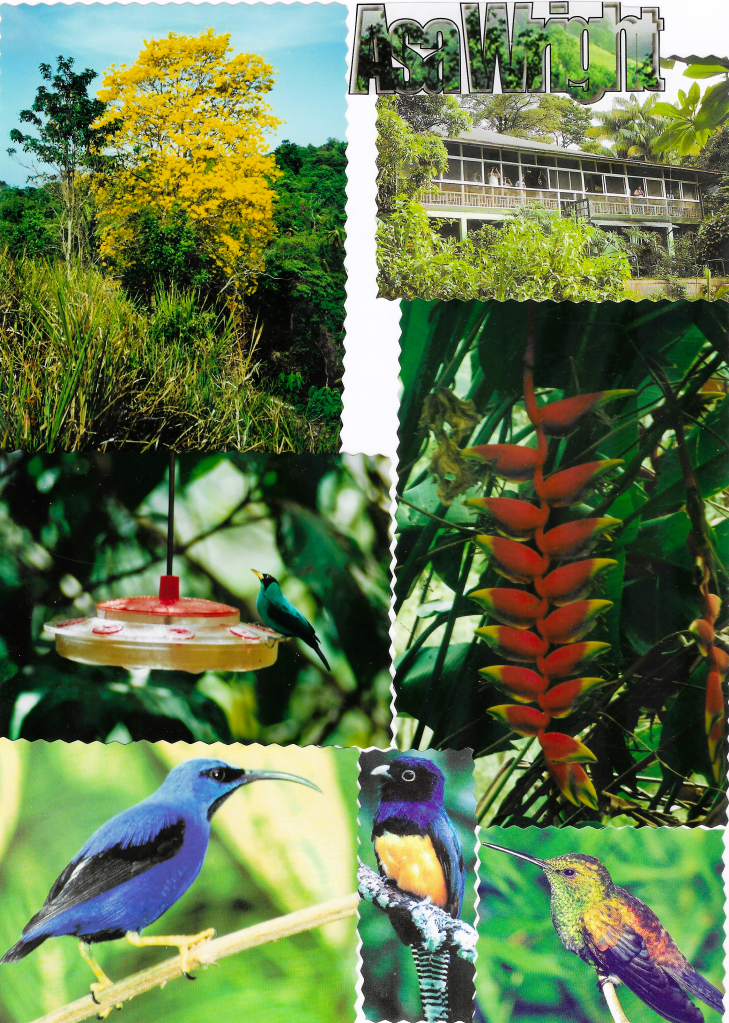
Our next adventure took us across the island on narrow, winding, pot-holed roads, through rural villages, and finally up into the northern rainforest of Trinidad where we entered Asa Wright Nature Center. We walked through a converted early 1900s plantation house onto a second story veranda, and stepped into a magical world with flashes of vibrant colors. Hundreds of birds performed an intricate ballet, flitting between spiky gru gru palms, fiery orange-flowered immortelles, cedars and more, pausing at fruit-laden feeding tables and hanging feeders. Among the astonishing variety of feathered friends were iridescent green, blue, red, and purple hummingbirds and honeycreepers, yellow-tailed cornbirds, trilling tanagers, alongside magnificent butterflies. Rays of sunlight danced along a meandering garden path that we strolled until discovering a hidden picnic area within the forest of flowering plants and shrubs. Fun facts: There are more than 430 bird species; 620 species of butterflies; and 2,300 types of flowering plants in Trinidad!
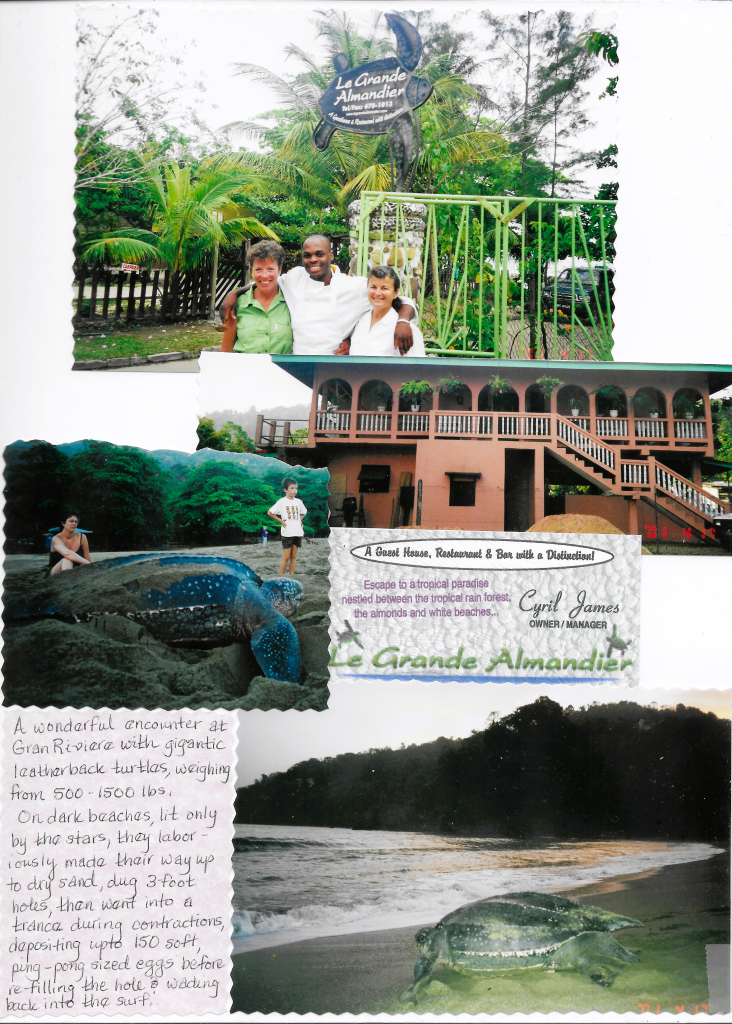
Our final destination was Gran Riviere, where the river meets the sea. We spent the night at Le Grande Almandier, a B&B that blended old fashioned with modern. Overhead fans spun slowly, mosquito netting hung gracefully over our bed, and hammocks swayed gently on the balcony, beckoning. After a candlelit dinner of contemporary Creole and French cuisine, we ventured down to a beach lit only by stars and phosphorescent waves.
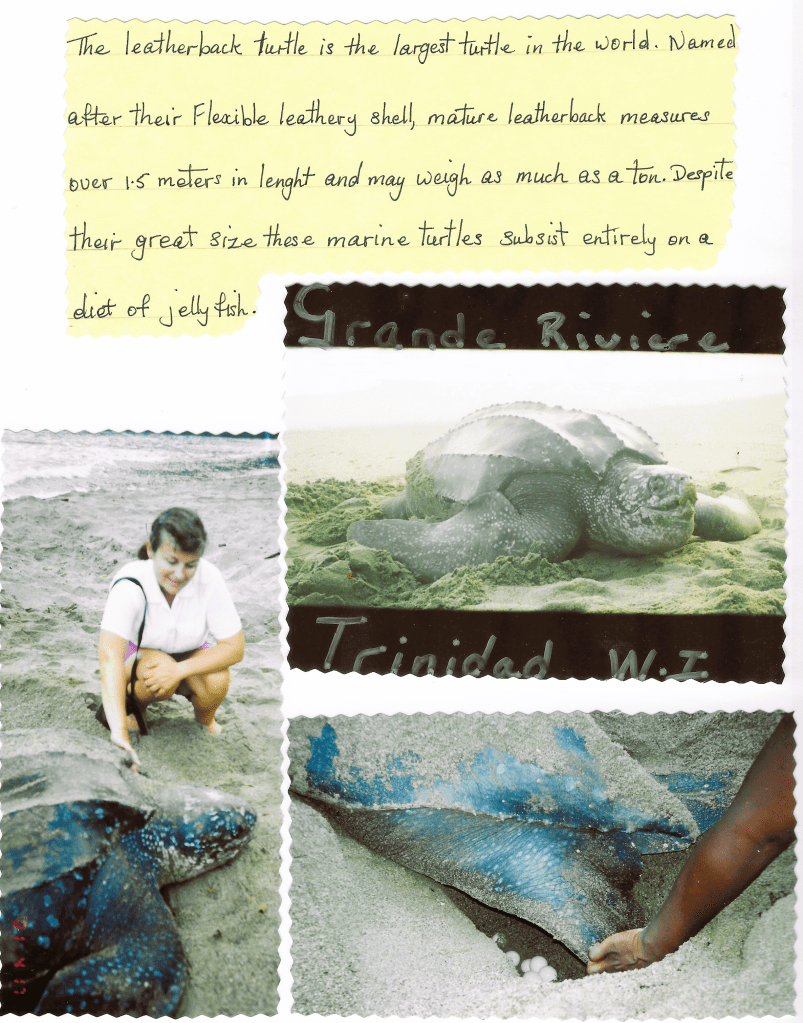
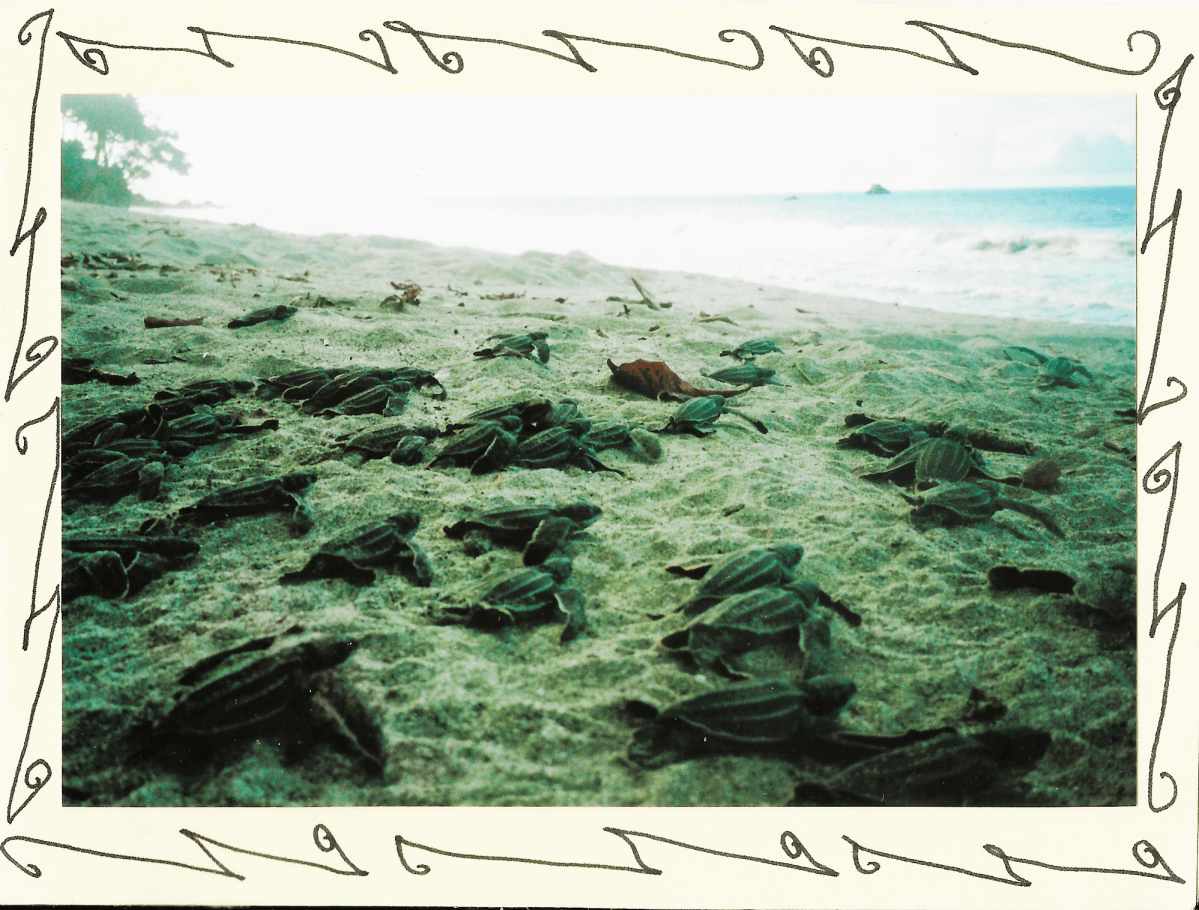
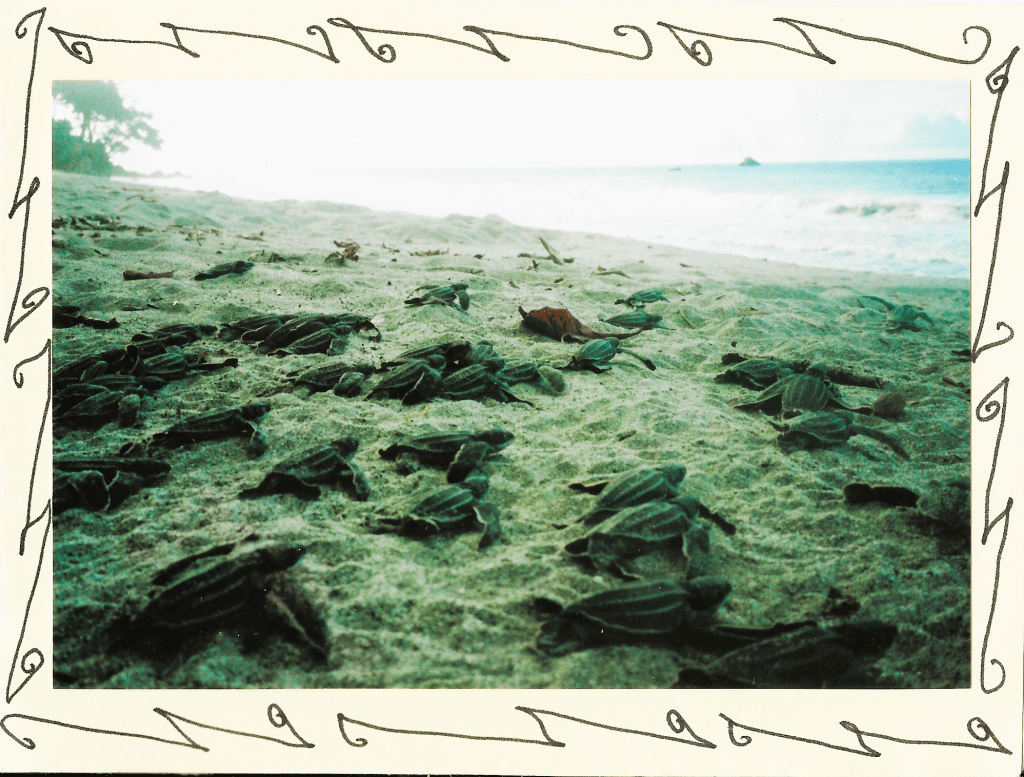
Spellbound, we sunk to the sand as leatherback turtles, weighing up to 1,500 lbs, battled through the surf up to dry sand where their real work began—first digging with large flippers to clear an area. Then using small back flippers to scoop out a 3-foot deep pit. Going into a trance-like state, the females started contractions, laying 80-150 ping-pong ball sized soft eggs, When finished, she filled the hole with sand, then swept the area using her large flippers to camouflage the spot before beginning the laborious journey back to the sea. 60-70 days later, 1,000s of baby turtles will hatch and fight their way to the sandy surface , and if they’re lucky, down to the ocean. In 20-25 years they will return to lay the next generation of eggs.
No thought, human or divine, can be conveyed from man to man except through the symbolism of creation. The heavens & the earth are around us that it may be possible for us to speak of the unseen by the seen, for the outermost husk of creation has correspondence with the deepest things of the Creator.

